Building Blocks
Esta sección contiene productos fundamentales para la síntesis de compuestos orgánicos y biológicos. Building blocks son los materiales de partida esenciales utilizados para construir moléculas complejas a través de diversas reacciones químicas. Desempeñan un papel crítico en el descubrimiento de fármacos, la ciencia de materiales y la investigación química. En CymitQuimica, ofrecemos una gama diversa de building blocks de alta calidad para apoyar sus investigaciones innovadoras y proyectos industriales, asegurando que tenga los componentes esenciales para una síntesis exitosa.
Subcategorías de "Building Blocks"
- Ácidos borónicos y derivados del ácido borónico(5.778 productos)
- Building Blocks quirales(1.243 productos)
- Building Blocks de hidrocarburos(6.097 productos)
- Building Blocks orgánicos(61.048 productos)
Se han encontrado 203115 productos de "Building Blocks"
Ordenar por
Pureza (%)
0
100
|
0
|
50
|
90
|
95
|
100
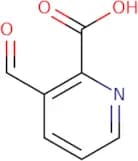
3-formylpyridine-2-carboxylic acid
CAS:<p>3-formylpyridine-2-carboxylic acid is a phenylhydrazine derivative, which is a white crystalline solid. It is soluble in solvents such as chloroform and methanol, but insoluble in water. 3-Formylpyridine-2-carboxylic acid can be prepared by the chlorination of pyridine or by alkaline hydrolysis of its esters with sodium hydroxide. It can also be synthesized from the reaction of phenylhydrazine with formaldehyde in organic solvents. 3-Formylpyridine-2-carboxylic acid has been shown to react with carbonyl compounds to form a conjugated system through an addition reaction and to form esters that are soluble in organic solvents. The yield of this reaction depends on the solvent used and the temperature at which it is carried out.</p>Fórmula:C7H5NO3Pureza:Min. 95%Peso molecular:151.1 g/mol4-Nitro-2-(prop-2-en-1-yl)phenol
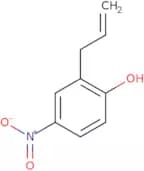
CAS:4-Nitro-2-(prop-2-en-1-yl)phenol is a reactive chemical that can be synthesized from eugenol. It has been used as a monomer in the synthesis of polymers. The rate at which 4-Nitro-2-(prop-2-en-1-yl)phenol reacts increases when it is in the presence of a reoxidant, such as oxygen or hydrogen peroxide. The rate also increases when it is in the presence of an antioxidant, such as αtocopherol. This product has been shown to have antioxidant properties and can be used to scavenge free radicals.Fórmula:C9H9NO3Pureza:Min. 95%Peso molecular:179.17 g/mol2-(Bromomethyl)-2-(hydroxymethyl)-1,3-propanediol
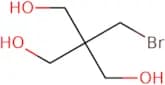
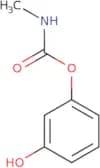
CAS:2-(Bromomethyl)-2-(hydroxymethyl)-1,3-propanediol is a synthetic compound that is used as a stabilizer in polymers. It has magnetic properties and crystallizes in an orthorhombic system. This substance also has an aryl group and a chlorine substituent. 2-(Bromomethyl)-2-(hydroxymethyl)-1,3-propanediol reacts with the phosphite trialkyl to form polyvalent phosphorus compounds, which are residues of the trialkyl. The insecticidal properties of this compound may be due to its ability to inhibit the growth of insects by affecting the metabolism of arthropods. The hydrocarbon residue may be due to its synthesis from bromoethane and methanol.Fórmula:C5H11BrO3Pureza:Min. 95%Peso molecular:199.04 g/mol3-Hydroxyphenyl N-methylcarbamate
CAS:<p>Versatile small molecule scaffold</p>Fórmula:C8H9NO3Pureza:Min. 95%Peso molecular:167.16 g/mol4-Methyl-1H-benzo[d]imidazol-2(3H)-one
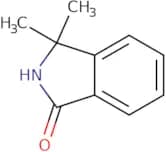
CAS:<p>4-Methyl-1H-benzo[d]imidazol-2(3H)-one is a chemical that belongs to the group of agrochemicals. It is used as a yield enhancer for crops and is biologically active. 4-Methyl-1H-benzo[d]imidazol-2(3H)-one has been shown to be an active molecule in science, but also a cyanate. There are no known human health effects from exposure to this chemical.</p>Fórmula:C8H8N2OPureza:Min. 95%Peso molecular:148.17 g/mol2,3-Dihydro-3,3-dimethyl-1H-isoindol-1-one
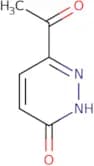
CAS:Versatile small molecule scaffoldFórmula:C10H11NOPureza:Min. 95%Peso molecular:161.2 g/mol6-Acetyl-2,3-dihydropyridazin-3-one
CAS:<p>Versatile small molecule scaffold</p>Fórmula:C6H6N2O2Pureza:Min. 95%Peso molecular:138.12 g/molTetrazolo[1,5-b]pyridazin-6-ylamine
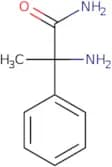
CAS:Tetrazolo[1,5-b]pyridazin-6-ylamine is a chemical compound with the molecular formula C6H2N6. It has a mass spectrum that shows characteristic peaks at m/z 155, 121 and 107. This compound was first synthesized in 1885 and was found to have activity as an antipyretic agent. Tetrazolo[1,5-b]pyridazin-6-ylamine is used in experiments to study the effects of different substances on protein synthesis and DNA replication. The positioning of this molecule can be determined using the algorithm for molecular ion, which is based on the position of the signal in the mass spectrum.Fórmula:C4H4N6Pureza:Min. 95%Peso molecular:136.12 g/mol2-Amino-2-phenylpropanamide
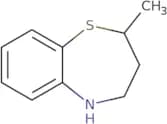
CAS:Versatile small molecule scaffoldFórmula:C9H12N2OPureza:Min. 95%Peso molecular:164.2 g/mol2-Methyl-2,3,4,5-tetrahydro-1,5-benzothiazepine
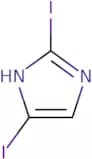
CAS:Versatile small molecule scaffoldFórmula:C10H13NSPureza:Min. 95%Peso molecular:179.28 g/mol2,4-Diiodo-1H-imidazole
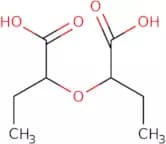
CAS:2,4-Diiodo-1H-imidazole (DIIM) is a heterocyclic compound that can be obtained by cross-coupling of an imidazole with a diamine. It is an annular compound that tautomerizes between the two possible structures. DIIM has been used as a ligand in palladium-catalyzed cross-coupling reactions. In these reactions, DIIM mediates the coupling of organic molecules with palladium complexes to form new carbon–carbon bonds. The nucleophilic properties of the imidazole ring have also been exploited in its use as a reactant in hydrogen peroxide oxidation reactions to produce sulphite, which is often used as a food preservative.Fórmula:C3H2I2N2Pureza:Min. 95%Peso molecular:319.87 g/mol2-(1-Carboxypropoxy)butanoic acid
CAS:Versatile small molecule scaffoldFórmula:C8H14O5Pureza:Min. 95%Peso molecular:190.19 g/mol1-(2-Phenylacetyl)piperidin-4-one
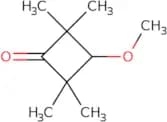
CAS:Producto controladoVersatile small molecule scaffoldFórmula:C13H15NO2Pureza:Min. 95%Peso molecular:217.3 g/mol3-Methoxy-2,2,4,4-tetramethylcyclobutan-1-one
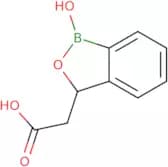
CAS:<p>Versatile small molecule scaffold</p>Fórmula:C9H16O2Pureza:Min. 95%Peso molecular:156.2 g/mol2-(1-Hydroxy-1,3-dihydro-2,1-benzoxaborol-3-yl)acetic acid
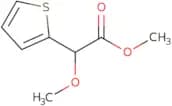
CAS:Versatile small molecule scaffoldFórmula:C9H9BO4Pureza:Min. 95%Peso molecular:191.98 g/molMethyl 2-methoxy-2-(thiophen-2-yl)acetate
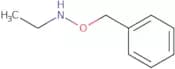
CAS:Versatile small molecule scaffoldFórmula:C8H10O3SPureza:Min. 95%Peso molecular:186.23 g/mol(Benzyloxy)(ethyl)amine
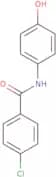
CAS:<p>Versatile small molecule scaffold</p>Fórmula:C9H13NOPureza:Min. 95%Peso molecular:151.21 g/mol4-Chloro-N-(4-hydroxyphenyl)benzamide
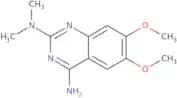
CAS:<p>Versatile small molecule scaffold</p>Fórmula:C13H10ClNO2Pureza:Min. 95%Peso molecular:247.67 g/mol6,7-Dimethoxy-N2,N2-dimethylquinazoline-2,4-diamine
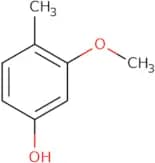
CAS:<p>Versatile small molecule scaffold</p>Fórmula:C12H16N4O2Pureza:Min. 95%Peso molecular:248.28 g/mol3-Methoxy-4-methylphenol
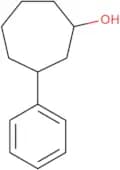
CAS:<p>3-Methoxy-4-methylphenol is a fatty acid that has been found to be an effective feedstock for the production of octane and other alkanes. It is produced by treatment of hexane with mandelonitrile followed by acetylation and alkylation. This chemical can also be used in the production of polyaromatic compounds, such as naphthalene, anthracene, phenanthrene, and pyrene. 3-Methoxy-4-methylphenol can be modified by peroxide treatment to produce a variety of products including methyl methacrylate.</p>Fórmula:C8H10O2Pureza:Min. 95%Peso molecular:138.16 g/mol3-Phenylcycloheptan-1-ol
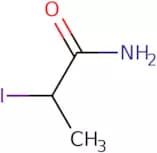
CAS:<p>Versatile small molecule scaffold</p>Fórmula:C13H18OPureza:Min. 95%Peso molecular:190.28 g/mol2-Iodopropanamide
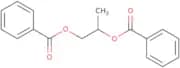
CAS:<p>2-Iodopropanamide is a polymeric compound that is obtained from the reaction of 2-iodobenzene with triethylborane in the presence of polystyrene. The product has a high yield and can be used to make laminates that are semipermeable, osmotic, and environmentally friendly. The polymeric composition is also cyclisable.</p>Fórmula:C3H6INOPureza:Min. 95%Peso molecular:198.99 g/mol2-(Benzoyloxy)propyl benzoate
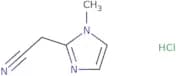
CAS:<p>2-(Benzoyloxy)propyl benzoate is a dibenzoate ester with a hydroxy group. It is an organic solvent that is minimizes the spreading of coatings and has optical properties. This compound reduces the viscosity of various polymers, such as polystyrene and polyvinyl chloride, when mixed in water. 2-(Benzoyloxy)propyl benzoate can be used to make coatings for plastics and paper products, including those that are biodegradable. This compound has been shown to have health effects like irritation on skin and mucous membranes, but it is not toxic to aquatic organisms.</p>Fórmula:C17H16O4Pureza:Min. 95%Peso molecular:284.31 g/mol2-(1-Methyl-1H-imidazol-2-yl)acetonitrile hydrochloride
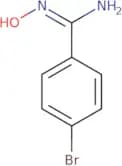
CAS:Versatile small molecule scaffoldFórmula:C6H8ClN3Pureza:Min. 95%Peso molecular:157.6 g/mol(E)-4-Bromo-N'-hydroxybenzimidamide
CAS:<p>(E)-4-Bromo-N'-hydroxybenzimidamide is a synthetic antifungal agent that is resistant to many microorganisms. It is a potent inhibitor of the uptake of β-amyloid peptide in rat cortical neurons and also inhibits the modification of β-amyloid. This drug has been shown to have pharmacological effects on bacterial cells, including inhibition of protein synthesis and DNA synthesis. The molecular basis for these interactions is not known, but it has been suggested that (E)-4-Bromo-N'-hydroxybenzimidamide interacts with the pharmacophore site on bacteria and binds to nitrogen atoms that are important for binding. These interactions are bioisosteric with oxadiazole derivatives such as clotrimazole, which have been shown to inhibit protein synthesis in fungi. The drug has also been used as a radiotracer to study the uptake of β-amyloid peptides by neurons</p>Fórmula:C7H7BrN2OPureza:Min. 95%Peso molecular:215.05 g/molN-Boc-3-aminothiophene
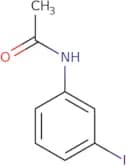
CAS:<p>Versatile small molecule scaffold</p>Fórmula:C9H13NO2SPureza:Min. 95%Peso molecular:199.27 g/molN-(3-Iodophenyl)acetamide
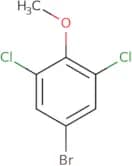
CAS:N-(3-Iodophenyl)acetamide is a chemical compound that is used in organic synthesis. It is soluble in water and has a melting point of 154°C. N-(3-Iodophenyl)acetamide can be synthesized by reacting 3-iodoaniline with acetic anhydride. The yield of this reaction is typically high, with a product purity of over 99%. This compound is used as an energy source when it undergoes photolysis, which results in the formation of CO2 and I2. N-(3-Iodophenyl)acetamide can also be synthesized through the aliphatic amine synthesis process by reacting ethylamine with acetaldehyde. This reaction produces a yellow liquid that can be purified by adding water to it and then boiling off the excess water. The resulting liquid should be cooled before use and stored under nitrogen gas for long periods of time.Fórmula:C8H8INOPureza:Min. 95%Peso molecular:261.06 g/mol4-Bromo-2,6-dichloroanisole
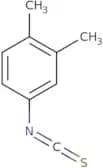
CAS:<p>4-Bromo-2,6-dichloroanisole (4BDCA) is a polychlorinated biphenyl congeners. It is used as a chemical intermediate in the synthesis of boronic acids and their derivatives. 4BDCA has high selectivity for human plasma over other tissues and can be used to study the metabolism of this compound in humans. The high selectivity of this compound may be due to its ability to form hydroxylated metabolites that are less toxic than the parent compound, which may be due to its ability to form hydroxy anisoles.</p>Fórmula:C7H5BrCl2OPureza:Min. 95%Peso molecular:255.92 g/mol3,4-Dimethylphenyl isothiocyanate
CAS:<p>Versatile small molecule scaffold</p>Fórmula:C9H9NSPureza:Min. 95%Peso molecular:163.24 g/mol1-Ethyl-3-isothiocyanatobenzene
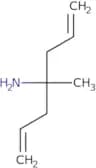
CAS:<p>Versatile small molecule scaffold</p>Fórmula:C9H9NSPureza:Min. 95%Peso molecular:163.24 g/mol1-Allyl-1-methyl-but-3-enylamine
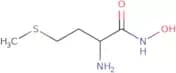
CAS:<p>Versatile small molecule scaffold</p>Fórmula:C8H15NPureza:Min. 95%Peso molecular:125.21 g/mol(2S)-2-Amino-N-hydroxy-4-(methylsulfanyl)butanamide
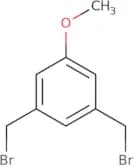
CAS:(2S)-2-Amino-N-hydroxy-4-(methylsulfanyl)butanamide is a ligand that binds to metal ions. It has been shown to bind to the axial coordination site of some transition metals, such as nickel, copper, and zinc. It is classified as a hydroxamic acid and can be used in coordination chemistry. The affinity of (2S)-2-amino-N-hydroxy-4-(methylsulfanyl)butanamide for copper is approximately 100 times stronger than its affinity for nickel. In addition, the red shift of (2S)-2-amino-N-hydroxy-4-(methylsulfanyl)butanamide is a sensitive indicator of the orientation of the ligand in coordination compounds with metal ions.Fórmula:C5H12N2O2SPureza:Min. 95%Peso molecular:164.23 g/mol1,3-Bis(bromomethyl)-5-methoxybenzene
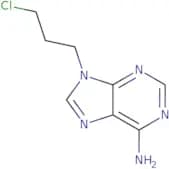
CAS:<p>Versatile small molecule scaffold</p>Fórmula:C9H10Br2OPureza:Min. 95%Peso molecular:293.98 g/mol9-(3-Chloropropyl)-9H-purin-6-amine
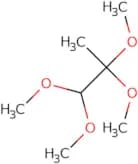
CAS:<p>Versatile small molecule scaffold</p>Fórmula:C8H10ClN5Pureza:Min. 95%Peso molecular:211.65 g/mol1,1,2,2-Tetramethoxypropane
CAS:Versatile small molecule scaffoldFórmula:C7H16O4Pureza:Min. 95%Peso molecular:164.2 g/molDibenzo[b,d]furan-4-ol
CAS:<p>Dibenzo[b,d]furan-4-ol is a biodegradable compound that can be synthesized in a stepwise manner. The compound can be assayed by using different methods including mass spectrometric and hplc analyses to determine the number of carbon atoms and functional groups present in the molecule. Dibenzo[b,d]furan-4-ol is used as a carbon source for many microorganisms. The compound has been shown to hydroxylate under aerobic conditions and also reacts with nitro groups to form nitroso derivatives. Magnetic resonance spectroscopy has been used to study the molecular structure of dibenzo[b,d]furan-4-ol, which has revealed that it is monosubstituted with two methyl groups. This compound is naturally found in filamentous fungi found in tropical regions.</p>Fórmula:C12H8O2Pureza:Min. 95%Peso molecular:184.19 g/mol2-[(2-Methylphenyl)methyl]butanedioic acid
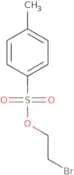
CAS:2-[(2-Methylphenyl)methyl]butanedioic acid is a nitrate that is produced by the conversion of 2-methylbenzylsuccinic acid. It can be used as an electron acceptor in microbial assays and has been shown to have the ability to mineralize carbon sources such as xylene. It has also been shown to be capable of transforming benzoate, benzylsuccinic acid, and other substrates, but it does not form benzaldehyde or other metabolic products. The enzyme responsible for its conversion is a dehydrogenase.Fórmula:C12H14O4Pureza:Min. 95%Peso molecular:222.24 g/mol2-Bromoethyl 4-methylbenzenesulfonate
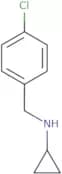
CAS:2-Bromoethyl 4-methylbenzenesulfonate is a molecule that binds to the benzodiazepine receptor and is used in clinical studies. It has been shown to have an uptake of 0.16% per hour, which is much slower than other benzodiazepines such as diazepam. 2-Bromoethyl 4-methylbenzenesulfonate has also been shown to be effective in treating anxiety and depression. The effective dose for this drug is 50 mg/kg, which is much higher than the 10 mg/kg dose of diazepam. This drug has been found to be safe in animals and humans at high doses, but its efficacy against pancreatic cancer remains unknown.Fórmula:C9H11BrO3SPureza:Min. 95%Peso molecular:279.15 g/molN-(4-Chlorobenzyl)-N-cyclopropylamine
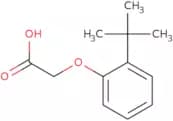
CAS:<p>Versatile small molecule scaffold</p>Fórmula:C10H12ClNPureza:Min. 95%Peso molecular:181.66 g/mol(2-tert-Butyl-phenoxy)-acetic acid
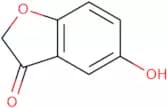
CAS:<p>2-tert-Butyl-phenoxyacetic acid is a chain compound that has a crystal structure with hydrogen bonds. This compound has a disordered conformation and is composed of two dimers connected by hydrogen bonds. The dimers are linked by a benzene ring and form hydrogen-bonded chains. The molecule also has an asymmetric dihedral conformation. 2-tert-Butylphenoxyacetic acid can exist as either of the two conformations, depending on the environment it is in.<br>2-tert-Butylphenoxyacetic acid is soluble in alcohols, ethers, acetone, and chloroform. It has been shown to inhibit the growth of bacteria when used as a preservative agent in food products.</p>Fórmula:C12H16O3Pureza:Min. 95%Peso molecular:208.25 g/mol5-Hydroxy-2,3-dihydro-1-benzofuran-3-one
CAS:Versatile small molecule scaffoldFórmula:C8H6O3Pureza:Min. 95%Peso molecular:150.13 g/mol3-{2,4-Dioxo-1,3-diazaspiro[4.5]decan-3-yl}propanoic acid
CAS:Versatile small molecule scaffoldFórmula:C11H16N2O4Pureza:Min. 95%Peso molecular:240.26 g/mol3-{2,4-Dioxo-1,3-diazaspiro[4.5]decan-3-yl}propanenitrile
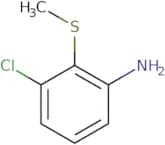
CAS:Versatile small molecule scaffoldFórmula:C11H15N3O2Pureza:Min. 95%Peso molecular:221.26 g/mol3-Chloro-2-(methylsulfanyl)aniline
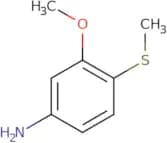
CAS:Versatile small molecule scaffoldFórmula:C7H8ClNSPureza:Min. 95%Peso molecular:173.66 g/mol3-Methoxy-4-(methylsulfanyl)aniline
CAS:Versatile small molecule scaffoldFórmula:C8H11NOSPureza:Min. 95%Peso molecular:169.24 g/molN-[(Pentafluorophenyl)methylidene]hydroxylamine
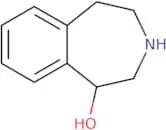
CAS:N-[(Pentafluorophenyl)methylidene]hydroxylamine is a gas that is used as an antibacterial agent. It is proposed to be a triazole derivative and has been shown to inhibit the growth of bacteria by binding to their cell membranes. The mechanism of action may be due to the formation of reactive oxygen species in the bacterial cell membrane, which are generated by cycloadditions with an electron-deficient olefin, such as styrene. This gas is also able to bind with n-oxide groups on benzene molecules, which may explain its effectiveness against benzoyl-containing bacteria.Fórmula:C7H2F5NOPureza:Min. 95%Peso molecular:211.09 g/mol2,3,4,5-Tetrahydro-1H-3-benzazepin-1-ol
CAS:Versatile small molecule scaffoldFórmula:C10H13NOPureza:Min. 95%Peso molecular:163.22 g/molBenzo[b]thiophen-5-ol
CAS:<p>Benzo[b]thiophen-5-ol is a chiral molecule that has been synthesized to be homochiral. It has an active site and selective epoxide hydration activity, which is the rate-limiting step of epoxide ring opening reactions. The mechanism of this reaction is the cleavage of a C–C bond in an epoxide substrate by an O–H or S–H bond in benzo[b]thiophen-5-ol. The nature of this mechanistic bond cleavage reaction is unknown, but it may be due to catalysis by a benzyl group.</p>Fórmula:C8H6OSPureza:Min. 95%Peso molecular:150.2 g/mol8-Methylnaphthalene-1-carboxylic acid
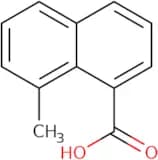
CAS:8-Methylnaphthalene-1-carboxylic acid is an intermediate in the synthesis of acenaphthylene. It is a lactone that can be obtained by irradiation of methanol and acetone with ultraviolet light. 8-Methylnaphthalene-1-carboxylic acid is a dione that can be synthesized from naphthalene and formaldehyde. The chemical reaction involves the formation of a carbene, which reacts with an oxygen molecule to produce a carboxyl group. This intermediate can then undergo pyrolysis to produce acenaphthylene.Fórmula:C12H10O2Pureza:Min. 95%Peso molecular:186.21 g/mol3-Chloro-N-(4-methoxyphenyl)propanamide
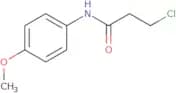
CAS:3-Chloro-N-(4-methoxyphenyl)propanamide (PCMP) is a ligand that binds to aromatic systems. PCMP has been shown to react with alkylating agents, such as methyl iodide and dimethyl sulfate, to form a tetradentate ligand with two chloro groups and two methoxy groups. This compound can be used as a counterion for dianionic complexes, or it can be used for the synthesis of amides by deprotonation followed by intramolecular reaction.Fórmula:C10H12ClNO2Pureza:Min. 95%Peso molecular:213.66 g/mol

![4-Methyl-1H-benzo[d]imidazol-2(3H)-one](/_next/image/?url=https%3A%2Fstatic.cymitquimica.com%2Fproducts%2F3D%2Fthumb-webp%2FUAA19068.webp&w=3840&q=75)
![Tetrazolo[1,5-b]pyridazin-6-ylamine](/_next/image/?url=https%3A%2Fstatic.cymitquimica.com%2Fproducts%2F3D%2Fthumb-webp%2FUAA19543.webp&w=3840&q=75)

![Dibenzo[b,d]furan-4-ol](/_next/image/?url=https%3A%2Fstatic.cymitquimica.com%2Fproducts%2F3D%2Fthumb-webp%2FUAA26106.webp&w=3840&q=75)
![2-[(2-Methylphenyl)methyl]butanedioic acid](/_next/image/?url=https%3A%2Fstatic.cymitquimica.com%2Fproducts%2F3D%2Fthumb-webp%2FUAA26311.webp&w=3840&q=75)
![3-{2,4-Dioxo-1,3-diazaspiro[4.5]decan-3-yl}propanoic acid](/_next/image/?url=https%3A%2Fstatic.cymitquimica.com%2Fproducts%2F3D%2Fthumb-webp%2FUAA28294.webp&w=3840&q=75)
![3-{2,4-Dioxo-1,3-diazaspiro[4.5]decan-3-yl}propanenitrile](/_next/image/?url=https%3A%2Fstatic.cymitquimica.com%2Fproducts%2F3D%2Fthumb-webp%2FUAA28300.webp&w=3840&q=75)
![N-[(Pentafluorophenyl)methylidene]hydroxylamine](/_next/image/?url=https%3A%2Fstatic.cymitquimica.com%2Fproducts%2F3D%2Fthumb-webp%2FUAA29227.webp&w=3840&q=75)
![Benzo[b]thiophen-5-ol](/_next/image/?url=https%3A%2Fstatic.cymitquimica.com%2Fproducts%2F3D%2Fthumb-webp%2FUAA30135.webp&w=3840&q=75)