


Building Blocks
Subcategorías de "Building Blocks"
- Ácidos borónicos y derivados del ácido borónico(5.778 productos)
- Building Blocks quirales(1.243 productos)
- Building Blocks de hidrocarburos(6.099 productos)
- Building Blocks orgánicos(61.038 productos)
Se han encontrado 205376 productos de "Building Blocks"
N-{1-Cyano-1-[(4-methoxyphenyl)methyl]ethyl}acetamide
CAS:Versatile small molecule scaffoldFórmula:C13H16N2O2Pureza:Min. 95%Peso molecular:232.28 g/mol2-[Methyl(2-nitrophenyl)amino]acetic acid
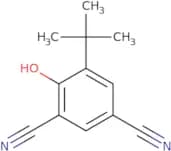
CAS:Versatile small molecule scaffoldFórmula:C9H10N2O4Pureza:Min. 95%Peso molecular:210.19 g/mol5-tert-Butyl-4-hydroxybenzene-1,3-dicarbonitrile
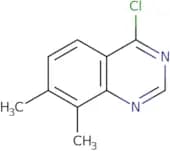
CAS:Versatile small molecule scaffoldFórmula:C12H12N2OPureza:Min. 95%Peso molecular:200.24 g/mol4-Chloro-7,8-dimethylquinazoline
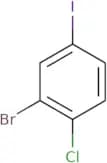
CAS:Versatile small molecule scaffoldFórmula:C10H9ClN2Pureza:Min. 95%Peso molecular:192.64 g/mol2-Bromo-1-chloro-4-iodobenzene
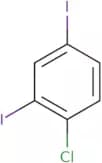
CAS:Versatile small molecule scaffoldFórmula:C6H3BrClIPureza:Min. 95%Peso molecular:317.35 g/mol1-Chloro-2,4-diiodobenzene
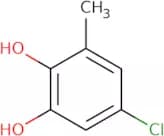
CAS:Versatile small molecule scaffoldFórmula:C6H3ClI2Pureza:Min. 95%Peso molecular:364.35 g/mol5-Chloro-3-methylcatechol
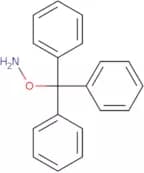
CAS:5-Chloro-3-methylcatechol is a chemical that is produced as a byproduct during the chlorination of benzene. The conversion of 5-chloro-3,4-dihydroxybenzene to 5-chloro-3,4,5-trihydroxybenzene and 5,6-dichloroquinone is the first step in the production of this chemical. The second step involves the oxidation of 3,4,5-trihydroxybenzene to 3,4,5,-trihydroxyphenol by using oxygen or chlorine. This process produces 5-(chloromethyl)phenol as well as other products. The third step involves the decarboxylation of 5-(chloromethyl)phenol to produce methylcatechol. Methylcatechol can be dehydrogenated to catechol or oxidized to hydroquinone under different conditions.Fórmula:C7H7ClO2Pureza:Min. 95%Peso molecular:158.58 g/molO-Tritylhydroxylamine
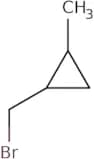
CAS:O-Tritylhydroxylamine is a synthetic compound that is used as a reagent in organic synthesis. It is a hydrogen-bond donor and nitrogen nucleophile with the ability to form stable complexes with magnesium salts. O-Tritylhydroxylamine has been shown to inhibit leukemia cells by acting as an inhibitor of matrix metalloproteinase (MMP) activity, which prevents cancer cell invasion and metastasis. This compound has also been used in clinical studies for the treatment of infectious diseases such as pneumonia, tuberculosis, and malaria. The scalable synthesis of this molecule has been achieved using palladium complexes.Fórmula:C19H17NOPureza:Min. 95%Peso molecular:275.35 g/mol1-(Bromomethyl)-2-methylcyclopropane, iastereomers
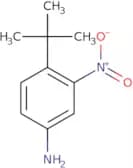
CAS:Versatile small molecule scaffoldFórmula:C5H9BrPureza:Min. 95%Peso molecular:149.03 g/mol4-tert-Butyl-3-nitroaniline
CAS:Versatile small molecule scaffold
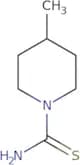
Fórmula:C10H14N2O2Pureza:Min. 95%Peso molecular:194.23 g/mol4-Methylpiperidine-1-carbothioamide
CAS:Versatile small molecule scaffoldFórmula:C7H14N2SPureza:Min. 95%Peso molecular:158.27 g/mol1H-Pyrazole-3,4-dicarboxylic acid
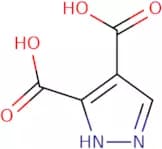
CAS:1H-Pyrazole-3,4-dicarboxylic acid is an organic compound that is a white solid. It is a proton acceptor and stabilizer in ammonium formate. In the presence of amide and cyanoformate, it has been shown to inhibit neprilysin activity. 1H-Pyrazole-3,4-dicarboxylic acid also has membrane properties and can be used as a viscosity modifier for polyphosphoric acid. This compound also has some acid moieties that can modulate its solubility in organic solvents.
Fórmula:C5H4N2O4Pureza:Min. 95%Peso molecular:156.1 g/mol2-(2-aminopyrimidin-4-yl)phenol
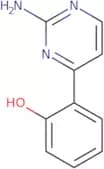
CAS:2-(2-Aminopyrimidin-4-yl)phenol is an inhibitor of enzymes that catalyze the synthesis of nucleic acids. It inhibits the activity of DNA polymerase, RNA polymerase and ribonucleotide reductase. 2-(2-Aminopyrimidin-4-yl)phenol inhibits cell growth by blocking the production of nucleic acids, which are necessary for cellular division. This compound has potent inhibitory activity against tumor cells and may be useful as an antitumor agent.Fórmula:C10H9N3OPureza:Min. 95%Peso molecular:187.19 g/molBicyclo[4.2.0]oct-2-en-7-one
CAS:Versatile small molecule scaffoldFórmula:C8H10OPureza:Min. 95%Peso molecular:122.16 g/mol2-Cyano-N-{[(3,4-dichlorophenyl)carbamothioyl]amino}acetamide
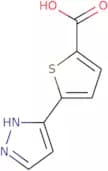
CAS:2-Cyano-N-[(3,4-dichlorophenyl)carbamothioyl]acetamide (CDPTA) is a biochemical that belongs to the class of antifungal drugs. It is an inhibitor of transcription activators, which are required for the production of proteins in fungal cells. CDPTA has been shown to have pleiotropic effects on bacteria and is effective against both human and animal pathogens. CDPTA also inhibits the synthesis of protein, which may be due to its ability to inhibit efflux pumps in Candida glabrata.Fórmula:C10H8Cl2N4OSPureza:Min. 95%Peso molecular:303.17 g/mol5-(1H-Pyrazol-3-yl)thiophene-2-carboxylic acid
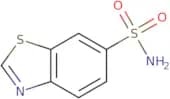
CAS:Versatile small molecule scaffoldFórmula:C8H6N2O2SPureza:Min. 95%Peso molecular:194.21 g/mol1,3-Benzothiazole-6-sulfonamide
CAS:Versatile small molecule scaffold
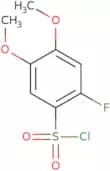
Fórmula:C7H6N2O2S2Pureza:Min. 95%Peso molecular:214.3 g/mol2-Fluoro-4,5-dimethoxybenzene-1-sulfonyl chloride
CAS:Versatile small molecule scaffoldFórmula:C8H8ClFO4SPureza:Min. 95%Peso molecular:254.66 g/mol3-Oxo-3,4-dihydro-2H-benzo[b][1,4]thiazine-6-carboxylic acid 1,1-dioxide
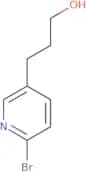
CAS:Versatile small molecule scaffoldFórmula:C9H7NO5SPureza:Min. 95%Peso molecular:241.22 g/mol3-(6-Bromopyridin-3-yl)propan-1-ol
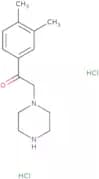
CAS:Versatile small molecule scaffoldFórmula:C8H10BrNOPureza:Min. 95%Peso molecular:216.08 g/mol1-(3,4-Dimethylphenyl)-2-(piperazin-1-yl)ethan-1-one dihydrochloride
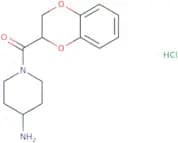
CAS:Producto controladoVersatile small molecule scaffoldFórmula:C14H22Cl2N2OPureza:Min. 95%Peso molecular:305.2 g/mol1-(2,3-Dihydro-1,4-benzodioxine-2-carbonyl)piperidin-4-amine hydrochloride
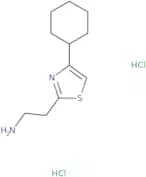
CAS:Versatile small molecule scaffoldFórmula:C14H19ClN2O3Pureza:Min. 95%Peso molecular:298.76 g/mol2-(4-Cyclohexyl-1,3-thiazol-2-yl)ethan-1-amine dihydrochloride
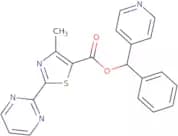
CAS:Versatile small molecule scaffoldFórmula:C11H20Cl2N2SPureza:Min. 95%Peso molecular:283.3 g/molPhenyl(pyridin-4-yl)methyl 4-methyl-2-(pyrimidin-2-yl)-1,3-thiazole-5-carboxylate
CAS:Versatile small molecule scaffold
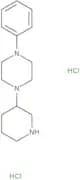
Fórmula:C21H16N4O2SPureza:Min. 95%Peso molecular:388.4 g/mol1-Phenyl-4-(piperidin-3-yl)piperazine dihydrochloride
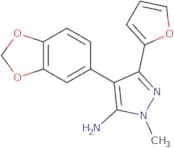
CAS:Versatile small molecule scaffoldFórmula:C15H25Cl2N3Pureza:Min. 95%Peso molecular:318.3 g/mol4-(1,3-Dioxaindan-5-yl)-5-(furan-2-yl)-2-methyl-2,3-dihydro-1H-pyrazol-3-imine
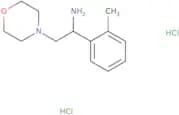
CAS:Versatile small molecule scaffoldFórmula:C15H13N3O3Pureza:Min. 95%Peso molecular:283.28 g/mol1-(2-Methylphenyl)-2-(morpholin-4-yl)ethan-1-amine dihydrochloride
CAS:Versatile small molecule scaffoldFórmula:C13H22Cl2N2OPureza:Min. 95%Peso molecular:293.23 g/molPotassium 3-[4-(oxolane-2-carbonyl)piperazin-1-yl]propanoate
CAS:Versatile small molecule scaffoldFórmula:C12H19KN2O4Pureza:Min. 95%Peso molecular:294.39 g/molN-(3-Aminopropyl)-4-fluorobenzamide hydrochloride
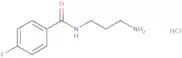
CAS:Versatile small molecule scaffoldFórmula:C10H14ClFN2OPureza:Min. 95%Peso molecular:232.68 g/mol1-{3-[(4-Methylphenyl)methoxy]phenyl}piperazine hydrochloride
CAS:Versatile small molecule scaffoldFórmula:C18H23ClN2OPureza:Min. 95%Peso molecular:318.8 g/molN-[3-(2-Aminoethoxy)phenyl]-4-methoxybenzamide hydrochloride
CAS:Versatile small molecule scaffoldFórmula:C16H19ClN2O3Pureza:Min. 95%Peso molecular:322.78 g/mol4-[5-(5-Aminopentyl)-1,2,4-oxadiazol-3-yl]-2-methoxyphenol hydrochloride
CAS:Versatile small molecule scaffoldFórmula:C14H20ClN3O3Pureza:Min. 95%Peso molecular:313.78 g/mol1-{3-[(4-Chlorophenyl)methoxy]phenyl}piperazine hydrochloride
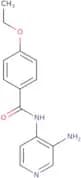
CAS:Versatile small molecule scaffoldFórmula:C17H20Cl2N2OPureza:Min. 95%Peso molecular:339.3 g/molN-(3-Aminopyridin-4-yl)-4-ethoxybenzamide
CAS:Versatile small molecule scaffoldFórmula:C14H15N3O2Pureza:Min. 95%Peso molecular:257.29 g/mol[1-(2-Ethoxyethyl)cyclopentyl]methanamine
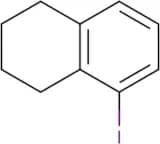
CAS:Versatile small molecule scaffoldFórmula:C10H21NOPureza:Min. 95%Peso molecular:171.28 g/mol5-Iodo-1,2,3,4-tetrahydro-naphthalene
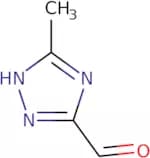
CAS:Versatile small molecule scaffoldFórmula:C10H11IPureza:Min. 95%Peso molecular:258.09 g/mol5-Methyl-4H-1,2,4-triazole-3-carbaldehyde
CAS:5-Methyl-4H-1,2,4-triazole-3-carbaldehyde is a benzophenone analogue that has been shown to cause nervous system side effects in animals. It has been used as a pharmacological tool to study the effects of benzophenones on the central nervous system. 5-Methyl-4H-1,2,4-triazole-3-carbaldehyde is an amide derivative of triazolam. It is also an alprazolam and quinazoline class compound with a condensation reaction between methylamino and monoclinic acid.
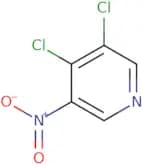
Fórmula:C4H5N3OPureza:Min. 95%Peso molecular:111.1 g/mol3,4-Dichloro-5-nitropyridine
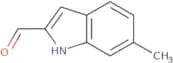
CAS:Versatile small molecule scaffoldFórmula:C5H2Cl2N2O2Pureza:Min. 95%Peso molecular:192.99 g/mol6-Methyl-1H-indole-2-carbaldehyde
CAS:Versatile small molecule scaffoldFórmula:C10H9NOPureza:Min. 95%Peso molecular:159.18 g/mol7-chloroimidazo[1,2-c]pyrimidin-5(6h)-one
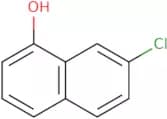
CAS:Versatile small molecule scaffoldFórmula:C6H4ClN3OPureza:Min. 95%Peso molecular:169.57 g/mol7-Chloro-1-hydroxynaphthalene
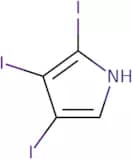
CAS:7-Chloro-1-hydroxynaphthalene is a polycyclic aromatic hydrocarbon. It has been used to synthesize triazenes and solid phase polymers. 7-Chloro-1-hydroxynaphthalene is insoluble in the solvents used for most chemical reactions, but can be dissolved with tosyl chloride or arynes. It has been shown that substituents on the benzene ring have an effect on reactivity and lifetime. The substitution pattern of 7-chloro-1-hydroxynaphthalene affects its reactivity as well as other properties such as solubility, melting point, boiling point, density, and viscosity.Fórmula:C10H7ClOPureza:Min. 95%Peso molecular:178.62 g/mol2,3,4-Triiodo-1H-pyrrole
CAS:2,3,4-Triiodo-1H-pyrrole is a model compound that is used to study the reactivity of the functional groups on the molecule. The functional groups include an olefinic group (double bond) and a carbonyl group (single bond). The reactivity of these functional groups depends on their position in the molecule. If they are on adjacent carbon atoms, they will have similar reactivity. This model compound is classified as a reductant because it can be reduced by glutathione and other reductants. It has been shown that 2,3,4-Triiodo-1H-pyrrole can be synthesized from salicylic acid and lead iodide in a reaction with catalytic amounts of sodium borohydride.
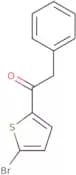
Fórmula:C4H2I3NPureza:Min. 95%Peso molecular:444.78 g/mol1-(5-Bromothiophen-2-yl)-2-phenylethan-1-one
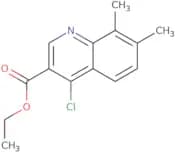
CAS:Versatile small molecule scaffoldFórmula:C12H9BrOSPureza:Min. 95%Peso molecular:281.17 g/molEthyl 4-Chloro-7,8-dimethylquinoline-3-carboxylate
CAS:Versatile small molecule scaffold
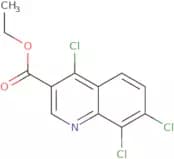
Fórmula:C14H14NO2ClPureza:Min. 95%Peso molecular:263.71 g/molEthyl 4,7,8-trichloroquinoline-3-carboxylate
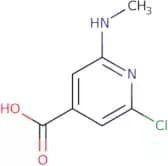
CAS:Versatile small molecule scaffoldFórmula:C12H8Cl3NO2Pureza:Min. 95%Peso molecular:304.6 g/mol2-Chloro-6-(methylamino)pyridine-4-carboxylic acid
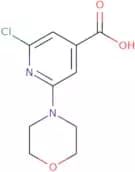
CAS:Versatile small molecule scaffoldFórmula:C7H7ClN2O2Pureza:Min. 95%Peso molecular:186.59 g/mol2-Chloro-6-(morpholin-4-yl)pyridine-4-carboxylic acid
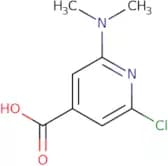
CAS:Versatile small molecule scaffoldFórmula:C10H11ClN2O3Pureza:Min. 95%Peso molecular:242.66 g/mol2-Chloro-6-(dimethylamino)pyridine-4-carboxylic acid
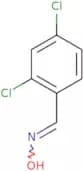
CAS:Versatile small molecule scaffoldFórmula:C8H9ClN2O2Pureza:Min. 95%Peso molecular:200.62 g/mol2,4-Dichlorobenzaldoxime
CAS:2,4-Dichlorobenzaldoxime is a molecule that contains two oxime groups, one of which has been stabilized by the formation of a hydrogen bond. The 2,4-dichlorobenzaldoxime isomer is centrosymmetric and can be stabilized in the solid state by dimerization.
Fórmula:C7H5Cl2NOPureza:Min. 95%Peso molecular:190.02 g/mol4-Chloro-2-ethylthieno[2,3-d]pyrimidine
CAS:Versatile small molecule scaffoldFórmula:C8H7ClN2SPureza:Min. 95%Peso molecular:198.67 g/mol
![N-{1-Cyano-1-[(4-methoxyphenyl)methyl]ethyl}acetamide](/_next/image/?url=https%3A%2Fstatic.cymitquimica.com%2Fproducts%2F3D%2Fthumb-webp%2FGBA91539.webp&w=3840&q=75)

![2-[Methyl(2-nitrophenyl)amino]acetic acid](/_next/image/?url=https%3A%2Fstatic.cymitquimica.com%2Fproducts%2F3D%2Fthumb-webp%2FGBA91824.webp&w=3840&q=75)
![Bicyclo[4.2.0]oct-2-en-7-one](/_next/image/?url=https%3A%2Fstatic.cymitquimica.com%2Fproducts%2F3D%2Fthumb-webp%2FGBA99668.webp&w=3840&q=75)
![2-Cyano-N-{[(3,4-dichlorophenyl)carbamothioyl]amino}acetamide](/_next/image/?url=https%3A%2Fstatic.cymitquimica.com%2Fproducts%2F3D%2Fthumb-webp%2FGBB22254.webp&w=3840&q=75)
![3-Oxo-3,4-dihydro-2H-benzo[b][1,4]thiazine-6-carboxylic acid 1,1-dioxide](/_next/image/?url=https%3A%2Fstatic.cymitquimica.com%2Fproducts%2F3D%2Fthumb-webp%2FGBB81953.webp&w=3840&q=75)
![Potassium 3-[4-(oxolane-2-carbonyl)piperazin-1-yl]propanoate](/_next/image/?url=https%3A%2Fstatic.cymitquimica.com%2Fproducts%2F3D%2Fthumb-webp%2FGBC15460.webp&w=3840&q=75)
![1-{3-[(4-Methylphenyl)methoxy]phenyl}piperazine hydrochloride](/_next/image/?url=https%3A%2Fstatic.cymitquimica.com%2Fproducts%2F3D%2Fthumb-webp%2FGBC18041.webp&w=3840&q=75)
![N-[3-(2-Aminoethoxy)phenyl]-4-methoxybenzamide hydrochloride](/_next/image/?url=https%3A%2Fstatic.cymitquimica.com%2Fproducts%2F3D%2Fthumb-webp%2FGBC18246.webp&w=3840&q=75)
![4-[5-(5-Aminopentyl)-1,2,4-oxadiazol-3-yl]-2-methoxyphenol hydrochloride](/_next/image/?url=https%3A%2Fstatic.cymitquimica.com%2Fproducts%2F3D%2Fthumb-webp%2FGBC19235.webp&w=3840&q=75)
![1-{3-[(4-Chlorophenyl)methoxy]phenyl}piperazine hydrochloride](/_next/image/?url=https%3A%2Fstatic.cymitquimica.com%2Fproducts%2F3D%2Fthumb-webp%2FGBC19355.webp&w=3840&q=75)
![[1-(2-Ethoxyethyl)cyclopentyl]methanamine](/_next/image/?url=https%3A%2Fstatic.cymitquimica.com%2Fproducts%2F3D%2Fthumb-webp%2FGBC22910.webp&w=3840&q=75)
![7-chloroimidazo[1,2-c]pyrimidin-5(6h)-one](/_next/image/?url=https%3A%2Fstatic.cymitquimica.com%2Fproducts%2F3D%2Fthumb-webp%2FGCA81709.webp&w=3840&q=75)
![4-Chloro-2-ethylthieno[2,3-d]pyrimidine](/_next/image/?url=https%3A%2Fstatic.cymitquimica.com%2Fproducts%2F3D%2Fthumb-webp%2FGCA84411.webp&w=3840&q=75)