Building Blocks
Subcategorías de "Building Blocks"
- Ácidos borónicos y derivados del ácido borónico(5.778 productos)
- Building Blocks quirales(1.243 productos)
- Building Blocks de hidrocarburos(6.098 productos)
- Building Blocks orgánicos(61.036 productos)
Se han encontrado 205240 productos de "Building Blocks"
3-Aminomethyl-1-BOC-3-methylpyrrolidine
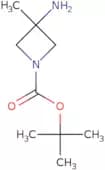
CAS:Versatile small molecule scaffoldFórmula:C11H22N2O2Pureza:Min. 95%Peso molecular:214.3 g/moltert-Butyl 3-amino-3-methylazetidine-1-carboxylate
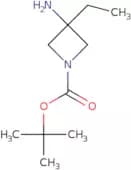
CAS:Versatile small molecule scaffoldFórmula:C9H18N2O2Pureza:Min. 95%Peso molecular:186.3 g/mol1-Boc-3-amino-3-ethylazetidine
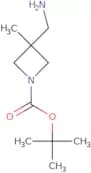
CAS:Versatile small molecule scaffoldFórmula:C10H20N2O2Pureza:Min. 95%Peso molecular:200.28 g/moltert-butyl 3-(aminomethyl)-3-methylazetidine-1-carboxylate
CAS:Versatile small molecule scaffold
Fórmula:C10H20N2O2Pureza:Min. 95%Peso molecular:200.3 g/mol1-Boc-3-(aminomethyl)-3-ethylazetidine
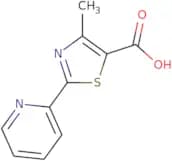
CAS:Versatile small molecule scaffoldFórmula:C11H22N2O2Pureza:Min. 95%Peso molecular:214.3 g/mol2-(2-Pyridyl)-4-methylthiazole-5-carboxylic acid
CAS:2-Pyridyl-4-methylthiazole-5-carboxylic acid is a ligand that can be used to study the molecular orbitals of coordination complexes. The ligand binds to metal ions and forms metalloproteins, which are compounds that contain metals and proteins. 2-Pyridyl-4-methylthiazole-5-carboxylic acid has been shown to form dinuclear complexes with metal ions such as rhenium, which are important for chemical processes including catalytic reactions. The ligand also has an electron configuration that is similar to those of molecules in the group 18 elements in the periodic table, making it a good candidate for studying the electronic structure of these elements. X-ray crystallography studies have shown that this ligand binds to a metal ion at one end and coordinates with two other atoms at the other end. Functional theory calculations have been used to elucidate the electronic spectrum of this ligand.Fórmula:C10H8N2O2SPureza:Min. 95%Peso molecular:220.25 g/mol2-Azatricyclo[7.3.0.0,3,7]dodeca-1,3(7),8-triene
CAS:2-Azatricyclo[7.3.0.0,3,7]dodeca-1,3(7),8-triene is a mesoporous material with three dimensional channels that can adsorb molecules such as formaldehyde and pyridine. The zeolites in this material have been shown to catalyze the conversion of formaldehyde to methanol by reacting with a transition metal ion and a thioamide. This material has also been shown to be able to adsorb metal ions such as copper and zinc from solutions using its porous structure. 2-Azatricyclo[7.3.0.0,3,7]dodeca-1,3(7),8-triene can be used as a catalyst for the removal of toxic substances from water or air, or as a selective adsorbent for the separation of metal ions in industrial processes.
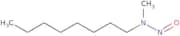
Fórmula:C11H13NPureza:Min. 95%Peso molecular:159.23 g/molMethyl(nitroso)octylamine
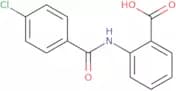
CAS:Methyl(nitroso)octylamine (MNTOA) is a chemical that is used in animal research to induce cancer. MNTOA acts by nitrosating DNA, which induces mutations and leads to the formation of cholangiocarcinomas in rats. It also interacts with other molecules in the body, such as bladder proteins and hemoglobin, leading to an increased risk of death. MNTOA has been shown to be carcinogenic in animals, inducing tumors in the nasal cavity and bladder. The carcinogenicity of MNTOA may be caused by its ability to damage DNA through nitrosation reactions.Fórmula:C9H20N2OPureza:Min. 95%Peso molecular:172.27 g/mol2-(4-Chlorobenzamido)benzoic acid
CAS:2-(4-Chlorobenzamido)benzoic acid is a symmetric dimer with a hydrogen bond between the two benzene rings. The hydrogen bond is formed by the substituent on one benzene ring interacting with the hydrogen on the other one. The molecule has a conformation that allows it to form hydrogen bonds and is centrosymmetric. 2-(4-Chlorobenzamido)benzoic acid has been synthesized from benzaldehyde and substituted amides, which are synthons for an amide linkage. It crystallizes as a centrosymmetric dimer in space group P2(1)2(1).
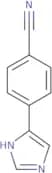
Fórmula:C14H10ClNO3Pureza:Min. 95%Peso molecular:275.68 g/mol4-(1H-Imidazol-4-yl)benzonitrile
CAS:Versatile small molecule scaffoldFórmula:C10H7N3Pureza:Min. 95%Peso molecular:169.18 g/mol3-Iodobenzene-1,2-diamine
CAS:Versatile small molecule scaffold
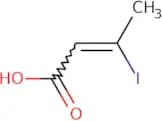
Fórmula:C6H7IN2Pureza:Min. 95%Peso molecular:234.04 g/mol(2Z)-3-Iodobut-2-enoic acid
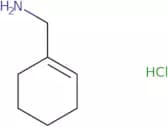
CAS:Versatile small molecule scaffoldFórmula:C4H5IO2Pureza:Min. 95%Peso molecular:211.99 g/molCyclohex-1-en-1-ylmethanamine hydrochloride
CAS:Versatile small molecule scaffold
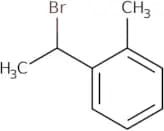
Fórmula:C7H14ClNPureza:Min. 95%Peso molecular:147.64 g/mol1-(1-Bromoethyl)-2-methylbenzene
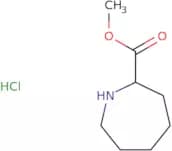
CAS:Versatile small molecule scaffoldFórmula:C9H11BrPureza:Min. 95%Peso molecular:199.09 g/molMethyl azepane-2-carboxylate hydrochloride
CAS:Versatile small molecule scaffold
Fórmula:C8H16ClNO2Pureza:Min. 95%Peso molecular:193.67 g/molEthyl 5,6-dihydroimidazo[2,1-b][1,3]thiazol-3-ylacetate
CAS:Versatile small molecule scaffoldFórmula:C9H12N2O2SPureza:Min. 95%Peso molecular:212.27 g/mol2-{3-Oxo-2H,3H,5H,6H-imidazo[2,1-b][1,3]thiazol-2-yl}acetic acid
CAS:Versatile small molecule scaffoldFórmula:C7H8N2O3SPureza:Min. 95%Peso molecular:200.22 g/molN-(2-Bromophenyl)-2-nitrobenzamide
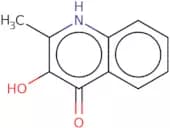
CAS:Versatile small molecule scaffoldFórmula:C13H9BrN2O3Pureza:Min. 95%Peso molecular:321.13 g/mol3-Hydroxy-2-methylquinolin-4(1H)-one
CAS:3-Hydroxy-2-methylquinolin-4(1H)-one (3HMQ) is a compound that has optical properties. It can be used as a biological sample in dextran sulfate and mitochondrial membrane potential assays. 3HMQ has been shown to have redox potentials that are similar to those of the elements copper, iron, and zinc. This compound is also used for wastewater treatment and as a matrix effect agent in biocompatible polymers. 3HMQ is also a polymerase chain reaction (PCR) reagent that contains two disulfide bonds. The thermal expansion of this molecule has been shown to be close to that of human erythrocytes, making it useful for high-temperature applications such as disease activity studies and cellular physiology experiments.
Fórmula:C10H9NO2Pureza:Min. 95%Peso molecular:175.18 g/mol1-[2-Chloro-5-(trifluoromethyl)phenyl]-2,5-dihydro-1H-pyrrole-2,5-dione
CAS:Versatile small molecule scaffold
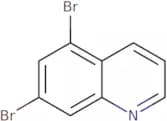
Fórmula:C11H5ClF3NO2Pureza:Min. 95%Peso molecular:275.61 g/mol5,7-Dibromoquinoline
CAS:5,7-Dibromoquinoline is a ligand that has an antiproliferative effect on cancer cells. It is a quinoline derivative that has been shown to have cytotoxic activity against the mouse fibroblast cell line MCF-7. The photophysical and fluorescence properties of 5,7-dibromoquinoline have been extensively studied and found to be dependent on the number of bromine substituents. This compound has also been shown to inhibit cancer cells in vitro. 5,7-Dibromoquinoline may act by interfering with cellular processes such as protein synthesis and DNA replication.Fórmula:C9H5Br2NPureza:Min. 95%Peso molecular:286.95 g/mol1H,2H,3H-Pyrrolo[3,4-b]quinolin-3-one
CAS:1H,2H,3H-Pyrrolo[3,4-b]quinolin-3-one is a natural product that inhibits the growth of cancer cells. It has been shown to be cytotoxic against human breast cancer cells in vitro and in vivo. The mechanism of action of this compound is not known but it has been shown to inhibit the growth of human breast cancer cells by deprotonation of a chloride anion. This compound may also be related to the anthranilic acid class of compounds and is an alkaloid with a bicyclic structure. 1H,2H,3H-Pyrrolo[3,4-b]quinolin-3-one is synthesized by cyclocondensation from luotonin and microwave irradiation. It can be obtained in high yields from anthranilic acid under alkaline conditions. Irradiation with microwaves is also used for its synthesis which produces unambiguous results.
Fórmula:C11H8N2OPureza:Min. 95%Peso molecular:184.19 g/molPhenylcyclopropylamine
CAS:Phenylcyclopropylamine is an antimicrobial agent that is a prodrug of phenylhydrazine. It is used to treat inflammatory diseases such as arthritis and other rheumatic conditions, as well as cancer, lymphoproliferative disorders, and fatty acid metabolism disorders. Phenylcyclopropylamine inhibits the enzyme catalysis of ticagrelor by binding to the hydroxy group of the enzyme's active site. This irreversible inhibition prevents ticagrelor from breaking down arachidonic acid into prostaglandins. Phenylcyclopropylamine is also used in magnetic resonance spectroscopy experiments to study histones H3 and H4 in cells infected with viruses or anhydrous sodium.
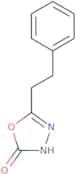
Fórmula:C9H11NPureza:Min. 95%Peso molecular:133.19 g/mol5-(2-Phenylethyl)-2,3-dihydro-1,3,4-oxadiazol-2-one
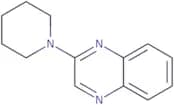
CAS:Versatile small molecule scaffoldFórmula:C10H10N2O2Pureza:Min. 95%Peso molecular:190.2 g/mol2-(Piperidin-1-yl)quinoxaline
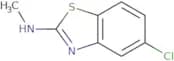
CAS:2-(Piperidin-1-yl)quinoxaline is a piperidine derivative that has been synthesized by catalyzed reactions. It has been shown to have constant kinetic parameters and an optimum in the range of 1.0-2.0 M in solvents with the following properties: polar, protic, or ionic. 2-(Piperidin-1-yl)quinoxaline has also been shown to exhibit solvent effects on its spectra, kinetics, and optimal parameters. The experimental transition states for this compound are unknown because it has not yet been studied experimentally. Theoretical studies have shown that 2-(piperidin-1-yl)quinoxaline can be formed from a variety of pathways involving the following steps: hydrolysis of 2-(pyrrolidin-1-yl)quinoxaline, reductive amination of pyrrolidine with nitroethane, and reductive aminationFórmula:C13H15N3Pureza:Min. 95%Peso molecular:213.28 g/mol5-Chloro-N-methyl-1,3-benzothiazol-2-amine
CAS:Versatile small molecule scaffold
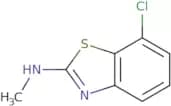
Fórmula:C8H7ClN2SPureza:Min. 95%Peso molecular:198.67 g/mol7-Chloro-N-methyl-1,3-benzothiazol-2-amine
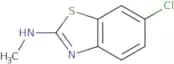
CAS:Versatile small molecule scaffoldFórmula:C8H7ClN2SPureza:Min. 95%Peso molecular:198.67 g/mol6-Chloro-N-methyl-1,3-benzothiazol-2-amine
CAS:Versatile small molecule scaffold
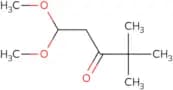
Fórmula:C8H7ClN2SPureza:Min. 95%Peso molecular:198.67 g/mol1,1-Dimethoxy-4,4-dimethylpentan-3-one
CAS:Versatile small molecule scaffold
Fórmula:C9H18O3Pureza:Min. 95%Peso molecular:174.24 g/molMethyl 5-methyl-4-oxohexanoate
CAS:Methyl 5-methyl-4-oxohexanoate is an unsaturated, branched-chain fatty acid found in tobacco. It has been shown to be produced by the oxidation of nicotine and cotinine. Methyl 5-methyl-4-oxohexanoate has been detected in tobacco leaves, as well as in smoke from cigarettes. The compound has been used as a marker for tobacco use, but it is not yet known if this compound is carcinogenic. Spectroscopic methods have shown that methyl 5-methyl-4-oxohexanoate can undergo photochemical reactions with oxygen to produce radicals that react with DNA and other biomolecules. Methyl 5-methyl-4-oxohexanoate reacts with DNA and proteins to form adducts that may be carcinogenic or mutagenic.Fórmula:C8H14O3Pureza:Min. 95%Peso molecular:158.19 g/mol[3-(Dimethylamino)-2-hydroxypropyl](methyl)amine
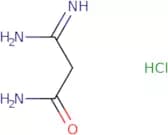
CAS:Versatile small molecule scaffoldFórmula:C6H16N2OPureza:Min. 95%Peso molecular:132.2 g/molMalonamamidine Hydrochloride
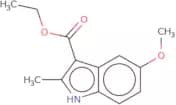
CAS:Malonamamidine Hydrochloride is a formyl-containing nitro-nitrosourea derivative which has been shown to inhibit the development of choroidal neovascularization in rats. This drug also has an inhibitory effect on the inflammatory response, and may be useful for treating inflammatory diseases such as rheumatoid arthritis. Malonamamidine Hydrochloride is metabolized by hydrolysis to formaldehyde and aminomethyl malonic acid, which gives it its biological properties. It also contains a nitro group that can be reduced to hydroxylamine, which reacts with DNA and leads to DNA strand breaks.Fórmula:C3H8ClN3OPureza:Min. 95%Peso molecular:137.57 g/molEthyl 5-methoxy-2-methyl-1H-indole-3-carboxylate
CAS:Producto controladoVersatile small molecule scaffoldFórmula:C13H15NO3Pureza:Min. 95%Peso molecular:233.26 g/molChloromethyl 2-{[(tert-butoxy)carbonyl]amino}acetate
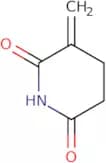
CAS:Versatile small molecule scaffoldFórmula:C8H14ClNO4Pureza:Min. 95%Peso molecular:223.65 g/mol3-Methylidenepiperidine-2,6-dione
CAS:3-Methylidenepiperidine-2,6-dione is an unsaturated compound that has been isolated from coal tar. It is a colorless solid that melts at temperatures between 200 and 220 degrees Celsius. 3-Methylidenepiperidine-2,6-dione has been shown to be aliphatic and inorganic in nature. It is soluble in water, but insoluble in ether or chloroform. 3-Methylidenepiperidine-2,6-dione reacts with acid to form a cyclic dinitrile that hydrolyzes to form an organic acid (e.g., glutarimide) and diamide. The reaction is more pronounced when the concentration of acid is increased and when the pH of the solution is neutralized with a base such as sodium hydroxide or potassium hydroxide. 3-Methylidenepiperidine-2,6-dione also preferentially hydrolyzes d
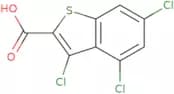
Fórmula:C6H7NO2Pureza:Min. 95%Peso molecular:125.13 g/mol3,4,6-Trichloro-1-benzothiophene-2-carboxylic acid
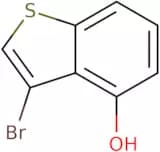
CAS:Versatile small molecule scaffoldFórmula:C9H3Cl3O2SPureza:Min. 95%Peso molecular:281.5 g/mol3-Bromo-1-benzothiophen-4-ol
CAS:Versatile small molecule scaffold
Fórmula:C8H5BrOSPureza:Min. 95%Peso molecular:229.1 g/mol3-[Methyl(phenyl)amino]propan-1-ol
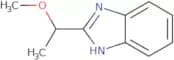
CAS:Versatile small molecule scaffoldFórmula:C10H15NOPureza:Min. 95%Peso molecular:165.2 g/mol2-(1-Methoxyethyl)-1H-benzimidazole
CAS:Versatile small molecule scaffold
Fórmula:C10H12N2OPureza:Min. 95%Peso molecular:176.21 g/mol1-[1-(Pyridin-2-yl)ethyl]piperazine
CAS:Versatile small molecule scaffold
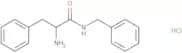
Fórmula:C11H17N3Pureza:Min. 95%Peso molecular:191.27 g/mol2-Amino-N-benzyl-3-phenylpropanamide hydrochloride
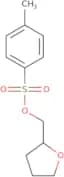
CAS:Versatile small molecule scaffoldFórmula:C16H19ClN2OPureza:Min. 95%Peso molecular:290.79 g/molTetrahydro-2-furanylmethyl4-methylbenzenesulfonate
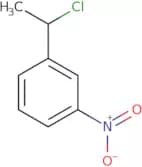
CAS:The Tetrahydro-2-furanylmethyl4-methylbenzenesulfonate ligand is a metal complex that can be used to form allyl complexes with Zirconium and Germanium. It also forms a stable cyclopentyl methyl allyl ligand, which is an important component of the catalytic cycle. This ligand has been shown to bind to alkali metals, such as sodium and potassium, and phosphines. It has a nucleophilic nature and can be used in metallocene reactions.Fórmula:C12H16O4SPureza:Min. 95%Peso molecular:256.32 g/mol1-(1-Chloroethyl)-3-nitrobenzene
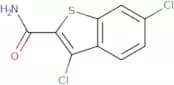
CAS:Versatile small molecule scaffoldFórmula:C8H8ClNO2Pureza:Min. 95%Peso molecular:185.61 g/mol3,6-Dichloro-1-benzothiophene-2-carboxamide
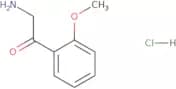
CAS:Versatile small molecule scaffoldFórmula:C9H5Cl2NOSPureza:Min. 95%Peso molecular:246.11 g/mol2-Amino-1-(2-methoxyphenyl)ethanone hydrochloride
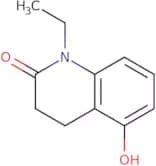
CAS:Producto controladoVersatile small molecule scaffoldFórmula:C9H12ClNO2Pureza:Min. 95%Peso molecular:201.65 g/mol1-Ethyl-5-hydroxy-1,2,3,4-tetrahydroquinolin-2-one
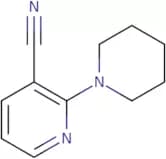
CAS:Versatile small molecule scaffoldFórmula:C11H13NO2Pureza:Min. 95%Peso molecular:191.23 g/mol2-Piperidin-1-ylnicotinonitrile
CAS:Versatile small molecule scaffold
Fórmula:C11H13N3Pureza:Min. 95%Peso molecular:187.24 g/mol3-(Benzylamino)-1-phenylpropan-1-ol
CAS:Versatile small molecule scaffold
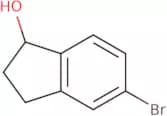
Fórmula:C16H19NOPureza:Min. 95%Peso molecular:241.33 g/mol5-Bromoindan-1-ol
CAS:Versatile small molecule scaffold
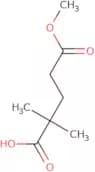
Fórmula:C9H9BrOPureza:Min. 95%Peso molecular:213.07 g/mol5-Methoxy-2,2-dimethyl-5-oxopentanoic acid
CAS:Versatile small molecule scaffoldFórmula:C8H14O4Pureza:Min. 95%Peso molecular:174.19 g/mol



![2-Azatricyclo[7.3.0.0,3,7]dodeca-1,3(7),8-triene](/_next/image/?url=https%3A%2Fstatic.cymitquimica.com%2Fproducts%2F3D%2Fthumb-webp%2FJBA42199.webp&w=3840&q=75)
![Ethyl 5,6-dihydroimidazo[2,1-b][1,3]thiazol-3-ylacetate](/_next/image/?url=https%3A%2Fstatic.cymitquimica.com%2Fproducts%2F3D%2Fthumb-webp%2FJBA46714.webp&w=3840&q=75)
![2-{3-Oxo-2H,3H,5H,6H-imidazo[2,1-b][1,3]thiazol-2-yl}acetic acid](/_next/image/?url=https%3A%2Fstatic.cymitquimica.com%2Fproducts%2F3D%2Fthumb-webp%2FJBA47750.webp&w=3840&q=75)

![1-[2-Chloro-5-(trifluoromethyl)phenyl]-2,5-dihydro-1H-pyrrole-2,5-dione](/_next/image/?url=https%3A%2Fstatic.cymitquimica.com%2Fproducts%2F3D%2Fthumb-webp%2FJBA52060.webp&w=3840&q=75)
![1H,2H,3H-Pyrrolo[3,4-b]quinolin-3-one](/_next/image/?url=https%3A%2Fstatic.cymitquimica.com%2Fproducts%2F3D%2Fthumb-webp%2FJBA53542.webp&w=3840&q=75)


amine](/_next/image/?url=https%3A%2Fstatic.cymitquimica.com%2Fproducts%2F3D%2Fthumb-webp%2FJBA56934.webp&w=3840&q=75)
![Chloromethyl 2-{[(tert-butoxy)carbonyl]amino}acetate](/_next/image/?url=https%3A%2Fstatic.cymitquimica.com%2Fproducts%2F3D%2Fthumb-webp%2FJBA57336.webp&w=3840&q=75)
![3-[Methyl(phenyl)amino]propan-1-ol](/_next/image/?url=https%3A%2Fstatic.cymitquimica.com%2Fproducts%2F3D%2Fthumb-webp%2FJBA57944.webp&w=3840&q=75)
![1-[1-(Pyridin-2-yl)ethyl]piperazine](/_next/image/?url=https%3A%2Fstatic.cymitquimica.com%2Fproducts%2F3D%2Fthumb-webp%2FJBA58120.webp&w=3840&q=75)