Building Blocks
Subcategorías de "Building Blocks"
- Ácidos borónicos y derivados del ácido borónico(5.780 productos)
- Building Blocks quirales(1.241 productos)
- Building Blocks de hidrocarburos(6.100 productos)
- Building Blocks orgánicos(61.024 productos)
Se han encontrado 205297 productos de "Building Blocks"
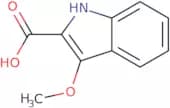
3-Methoxy-1H-indole-2-carboxylic acid
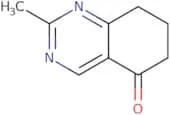
CAS:Versatile small molecule scaffoldFórmula:C10H9NO3Pureza:Min. 95%Peso molecular:191.18 g/mol2-Methyl-5,6,7,8-tetrahydroquinazolin-5-one
CAS:Versatile small molecule scaffoldFórmula:C9H10N2OPureza:Min. 95%Peso molecular:162.19 g/mol8a-Methyl-hexahydro-pyrrolo[1,2-a]pyrimidin-6-one
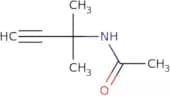
CAS:Versatile small molecule scaffoldFórmula:C8H14N2OPureza:Min. 95%Peso molecular:154.21 g/molN-(2-Methylbut-3-yn-2-yl)acetamide
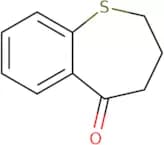
CAS:Versatile small molecule scaffoldFórmula:C7H11NOPureza:Min. 95%Peso molecular:125.17 g/mol2,3,4,5-Tetrahydro-1-benzothiepin-5-one
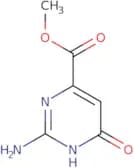
CAS:2,3,4,5-Tetrahydro-1-benzothiepin-5-one is a chemical compound that belongs to the class of chromanones. The molecule has three chiral centers and can exist as four stereoisomers. It is synthesized by reacting an allylic alcohol with sulfur and base in the presence of bromine. This chemical has been shown to have antituberculosis activity.Fórmula:C10H10OSPureza:Min. 95%Peso molecular:178.25 g/molMethyl 2-amino-6-hydroxypyrimidine-4-carboxylate
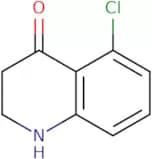
CAS:Versatile small molecule scaffoldFórmula:C6H7N3O3Pureza:Min. 95%Peso molecular:169.14 g/mol5-Chloro-1,2,3,4-tetrahydroquinolin-4-one
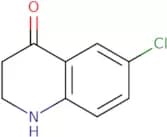
CAS:Versatile small molecule scaffoldFórmula:C9H8ClNOPureza:Min. 95%Peso molecular:181.62 g/mol6-Chloro-2,3-dihydroquinolin-4(1H)-one
CAS:6-Chloro-2,3-dihydroquinolin-4(1H)-one is a congestive heart remedy. It is an oxime that is used to treat acute or chronic congestion in the lungs, nose or throat. 6-Chloro-2,3-dihydroquinolin-4(1H)-one may also be used as a diluent for other medicines. This drug has been shown to cause hypotension and diuresis; however, it can also have adverse effects on the heart, such as arrhythmias and congestive heart failure.Fórmula:C9H8ClNOPureza:Min. 95%Peso molecular:181.62 g/molDiethyl 3-Cyclopentene-1,1-dicarboxylate
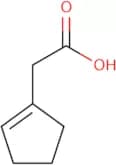
CAS:Diethyl 3-Cyclopentene-1,1-dicarboxylate is a chemical compound that is used as an intermediate in the synthesis of other organic compounds. It can be obtained by reacting hexane with malonate in the presence of a chiral catalyst. The reaction proceeds via alkylation and solvents are not required for this process. Diethyl 3-Cyclopentene-1,1-dicarboxylate has been shown to promote the reaction between diethyl ester and eluting in coordination chemistry. This compound has also been shown to be catalytic for metathesis reactions involving ethylene, propylene, and butadiene.Fórmula:C11H16O4Pureza:Min. 95%Peso molecular:212.24 g/mol2-(Cyclopent-1-en-1-yl)acetic acid
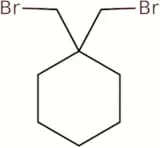
CAS:2-(Cyclopent-1-en-1-yl)acetic acid (CPEAA) is a molecule that is found in food. It is an alkoxy radical, which are molecules with oxygen atoms attached to an alicyclic carbon atom. CPEAA has been shown to have various health benefits when taken as a functional food additive. It can stimulate the uptake of glucose from the blood into cells and reduce insulin resistance. CPEAA also has beneficial effects on liver cells by reducing hepatic steatosis, or fatty liver disease, and tuberculatus, a type of tuberculosis caused by Mycobacterium tuberculosis. The biosynthesis of 2-(Cyclopent-1-en-1-yl)acetic acid begins with acetate and ends with cyclopentanol.Fórmula:C7H10O2Pureza:Min. 95%Peso molecular:126.15 g/mol1,1-Bis(bromomethyl)cyclohexane
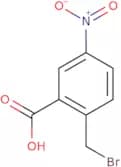
CAS:Versatile small molecule scaffoldFórmula:C8H14Br2Pureza:Min. 95%Peso molecular:270 g/mol2-(Bromomethyl)-5-nitrobenzoic acid
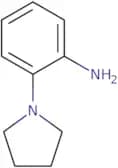
CAS:Versatile small molecule scaffoldFórmula:C8H6BrNO4Pureza:Min. 95%Peso molecular:260.04 g/mol2-(Pyrrolidin-1-yl)aniline
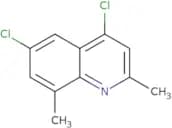
CAS:2-(Pyrrolidin-1-yl)aniline is a natural alkaloid that belongs to the group of pyrrolidines. It is a substrate for coupling reactions. 2-(Pyrrolidin-1-yl)aniline can be used as an oxidant and electrochemical catalyst. It is also used in the preparation of quinolinones, benzimidazoles, and dehydrogenation products such as vasicinone. 2-(Pyrrolidin-1-yl)aniline has nitrogen functional groups and can be used in metal catalyzed reactions.Fórmula:C10H14N2Pureza:Min. 95%Peso molecular:162.24 g/mol4,6-Dichloro-2,8-dimethylquinoline
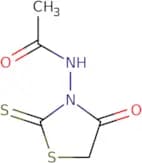
CAS:Versatile small molecule scaffoldFórmula:C11H9NCl2Pureza:Min. 95%Peso molecular:226.1 g/molN-(4-Oxo-2-sulfanylidene-1,3-thiazolidin-3-yl)acetamide
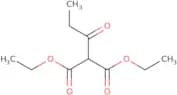
CAS:Versatile small molecule scaffoldFórmula:C5H6N2O2S2Pureza:Min. 95%Peso molecular:190.2 g/mol1,3-Diethyl 2-propanoylpropanedioate
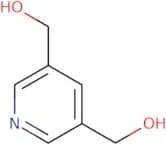
CAS:1,3-Diethyl 2-propanoylpropanedioate is a chiral drug that can be used for the treatment of respiratory diseases. It acts by inhibiting the muscarinic acetylcholine receptors in the lungs, which prevents bronchoconstriction and reduces mucus production. 1,3-Diethyl 2-propanoylpropanedioate is an active substance that belongs to a group of c1-6 alkyl drugs labeled with radioactive iodine-131. The labeling process involves substituting an atom of either carbon or hydrogen with an atom of iodine-131 to create a radioactive compound. This process can be used to identify substances that have similar properties, such as immunoassays and pharmacophores. The main difference between 1,3-diethyl 2-propanoylpropanedioate and its geometric isomers is the orientation of two methyl groups on the propanediol molecule. TheFórmula:C10H16O5Pureza:Min. 95%Peso molecular:216.23 g/molPyridine-3,5-diyldimethanol
CAS:Pyridine-3,5-diyldimethanol is a supramolecular compound that can be encapsulated in the form of palladium macrocycles. It has been shown to have high regioisomeric purity and excellent ligand efficiency. Pyridine-3,5-diyldimethanol is also a coordination compound with tridentate ligands. It can be used as a catalyst for organic reactions. Pyridine-3,5-diyldimethanol has been shown to react with various anions and halides in the presence of palladium as a catalyst. The reaction mixture is then purified by column chromatography or recrystallization. This chemical is also known by keywords such as "pyridinium", "pyridinium chloride", and "pyridine".Fórmula:C7H9NO2Pureza:Min. 95%Peso molecular:139.15 g/mol3-Methyl-1-azabicyclo[2.2.2]octan-3-amine
CAS:Versatile small molecule scaffoldFórmula:C8H17BrN2Pureza:Min. 95%Peso molecular:221.14 g/mol3-Methyl-1-azabicyclo[2.2.2]octan-3-amine dihydrochloride
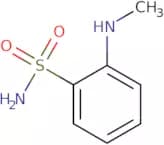
CAS:Versatile small molecule scaffoldFórmula:C8H18Cl2N2Pureza:Min. 95%Peso molecular:213.15 g/mol2-(Methylamino)benzene-1-sulfonamide
CAS:Versatile small molecule scaffold
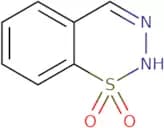
Fórmula:C7H10N2O2SPureza:Min. 95%Peso molecular:186.23 g/mol2H-1,2,3-Benzothiadiazine 1,1-dioxide
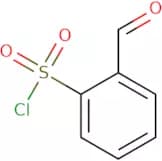
CAS:2H-1,2,3-Benzothiadiazine 1,1-dioxide is a molecule that binds to and inhibits the activity of the glutamatergic N-methyl-D-aspartate (NMDA) receptor. It is a stereoselective agent that binds to the receptor in a specific orientation. 2H-1,2,3-Benzothiadiazine 1,1-dioxide is an allosteric modulator that has been shown to attenuate glutamate excitotoxicity in vitro and in vivo. In animal studies it has been shown to reverse cognitive deficits induced by NMDA antagonists and potentiates the effects of aniracetam. 2H-1,2,3-Benzothiadiazine 1,1-dioxide is also a competitive inhibitor of cholinesterase with IC50 values of 4.5 µM and 3 µM for acetylcholinesterase and butFórmula:C7H6N2O2SPureza:Min. 95%Peso molecular:182.2 g/mol2-Formylbenzene-1-sulfonyl chloride
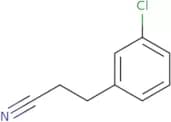
CAS:2-Formylbenzene-1-sulfonyl chloride is a molecule that contains sulfur. It is used as an intermediate in the synthesis of other molecules. 2-Formylbenzene-1-sulfonyl chloride has been shown to be able to react with primary amines and chlorides, sulfuryl chloride, or alcohols to form azides, imidazoles, and sulfonates respectively. This reaction was studied using spectroscopic techniques.Fórmula:C7H5ClO3SPureza:Min. 95%Peso molecular:204.63 g/mol3-(3-Chlorophenyl)propionitrile
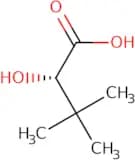
CAS:Versatile small molecule scaffoldFórmula:C9H8ClNPureza:Min. 95%Peso molecular:165.62 g/mol(S)-(-)-2-Hydroxy-3,3-dimethylbutyric acid
CAS:Versatile small molecule scaffoldFórmula:C6H12O3Pureza:Min. 95%Peso molecular:132.16 g/mol[1-(2,3-Dihydro-1-benzofuran-2-yl)ethyl](methyl)amine hydrochloride
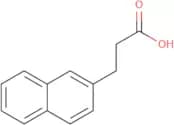
CAS:Versatile small molecule scaffoldFórmula:C11H16ClNOPureza:Min. 95%Peso molecular:213.7 g/mol3-(Naphthalen-2-yl)propanoic acid
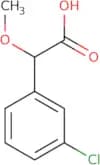
CAS:3-(Naphthalen-2-yl)propanoic acid is a phenolic compound that has been shown to inhibit the activity of tyrosinase. Tyrosinase is an enzyme that catalyzes the first step in melanin synthesis and is known to play a role in skin pigmentation. 3-(Naphthalen-2-yl)propanoic acid inhibits tyrosinase by binding to its active site, thereby blocking it from catalyzing the conversion of tyrosine to dopaquinone. The compound also has inhibitory effects on melanoma cells, which may be due to its ability to decrease the production of melanin. 3-(Naphthalen-2-yl)propanoic acid is structurally similar to hydroquinone, but lacks hydroxyl groups on its aromatic ring.Fórmula:C13H12O2Pureza:Min. 95%Peso molecular:200.24 g/mol2-(3-Chlorophenyl)-2-methoxyacetic acid
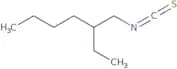
CAS:Versatile small molecule scaffoldFórmula:C9H9ClO3Pureza:Min. 95%Peso molecular:200.62 g/mol3-(Isothiocyanatomethyl)heptane
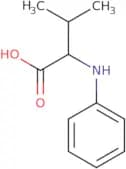
CAS:Versatile small molecule scaffoldFórmula:C9H17NSPureza:Min. 95%Peso molecular:171.31 g/mol(2S)-3-Methyl-2-(phenylamino)butanoic acid
CAS:(2S)-3-Methyl-2-(phenylamino)butanoic acid is a chemical that belongs to the group of aminobutanoic acids. It is used in the production of pharmaceuticals, agrochemicals, and plastics. (2S)-3-Methyl-2-(phenylamino)butanoic acid has been shown to be reactive with aryl halides, including benzene exposure, which may lead to oxidative stress. The compound has been used as a ligand for metal ions such as copper(II) and zinc(II). The ligand can be detected by gas chromatography/mass spectrometry. The stereoselectivity of (2S)-3-Methyl-2-(phenylamino)butanoic acid is determined by the position of the hydrophobic group on the molecule. This compound's hydrophobic group is positioned on one side of the molecule due to itsFórmula:C11H15NO2Pureza:Min. 95%Peso molecular:193.24 g/mol2-{[(4-Chlorophenyl)methyl]sulfanyl}acetonitrile
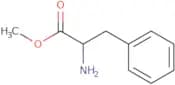
CAS:Versatile small molecule scaffoldFórmula:C9H8ClNSPureza:Min. 95%Peso molecular:197.69 g/molD-Phenylalanine methyl ester
CAS:D-Phenylalanine methyl ester is an analogue of the amino acid phenylalanine. It inhibits fatty acid synthesis by competitively binding to the enzyme acyl carrier protein, which regulates the incorporation of fatty acids into phospholipids. This inhibition prevents the production of cell membrane lipids and leads to cell death. D-Phenylalanine methyl ester has been used as a diagnostic agent for cancer because it can be detected in urine samples. It has also been shown to have growth factor activity, which may be responsible for its anticancer properties.
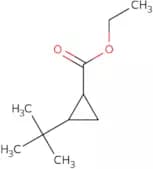
Fórmula:C10H13NO2Pureza:Min. 95%Forma y color:PowderPeso molecular:179.22 g/molEthyl 2-tert-butylcyclopropane-1-carboxylate
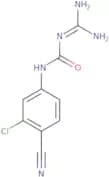
CAS:Versatile small molecule scaffoldFórmula:C10H18O2Pureza:Min. 95%Peso molecular:170.25 g/mol3-Carbamimidoyl-1-(3-chloro-4-cyanophenyl)urea
CAS:3-Carbamimidoyl-1-(3-chloro-4-cyanophenyl)urea is a drug that has been shown to have an inhibitory effect on the growth of malaria parasites in vitro. It has also been shown to be effective against other organisms such as bacteria and fungi, including methicillin resistant Staphylococcus aureus (MRSA). 3-Carbamimidoyl-1-(3-chloro-4-cyanophenyl)urea is typically used with a diluent, which can be either water or ethanol. The drug is insoluble in water but soluble in ethanol, so it must be reconstituted before injection. This drug is targeted to the circumferential region of the parasite by an alkyl substituent that attaches to the erythrocyte membrane surface. 3-Carbamimidoyl-1-(3-chloro-4-
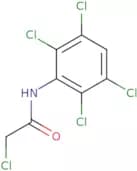
Fórmula:C9H8ClN5OPureza:Min. 95%Peso molecular:237.64 g/mol2-Chloro-N-(2,3,5,6-tetrachlorophenyl)acetamide
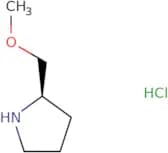
CAS:Versatile small molecule scaffoldFórmula:C8H4Cl5NOPureza:Min. 95%Peso molecular:307.4 g/mol(R)-2-(Methoxymethyl)pyrrolidine hydrochloride
CAS:Versatile small molecule scaffoldFórmula:C6H13NO·HClPureza:Min. 95%Peso molecular:151.64 g/mol4-Bromo-3,5-dimethoxyphenol
CAS:Versatile small molecule scaffold
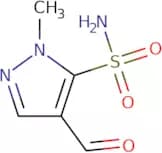
Fórmula:C8H9BrO3Pureza:Min. 95%Peso molecular:233.06 g/mol4-Formyl-1-methyl-1H-pyrazole-5-sulfonamide
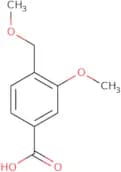
CAS:Versatile small molecule scaffoldFórmula:C5H7N3O3SPureza:Min. 95%Peso molecular:189.2 g/mol3-Methoxy-4-(methoxymethyl)benzoic acid
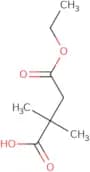
CAS:Versatile small molecule scaffoldFórmula:C10H12O4Pureza:Min. 95%Peso molecular:196.2 g/mol4-Ethoxy-2,2-dimethyl-4-oxobutanoic acid
CAS:Versatile small molecule scaffold
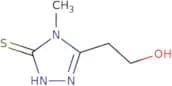
Fórmula:C8H14O4Pureza:Min. 95%Peso molecular:174.19 g/mol2-(4-Methyl-5-sulfanyl-4H-1,2,4-triazol-3-yl)ethan-1-ol
CAS:Versatile small molecule scaffoldFórmula:C5H9N3OSPureza:Min. 95%Peso molecular:159.21 g/mol3-[(tert-Butyldimethylsilyl)oxy]aniline
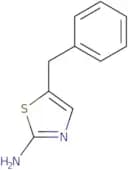
CAS:Versatile small molecule scaffoldFórmula:C12H21NOSiPureza:Min. 95%Peso molecular:223.39 g/mol5-Benzyl-thiazol-2-ylamine
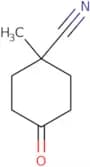
CAS:5-Benzyl-thiazol-2-ylamine is a nitrogenous compound that has been shown to interact with ferrite, a magnetic material. It has proapoptotic effects on human glioblastoma cells, t98g cells, and mouse fibroblasts. The interactions of 5-benzyl-thiazol-2-ylamine with ferrite are reportedly stabilized by the presence of iron ions. This interaction can be studied using resonance energy techniques such as fluorescence microscopy, nuclear magnetic resonance spectroscopy, and electron paramagnetic resonance spectroscopy.Fórmula:C10H10N2SPureza:Min. 95%Peso molecular:190.26 g/mol1-Methyl-4-oxocyclohexane-1-carbonitrile
CAS:Versatile small molecule scaffoldFórmula:C8H11NOPureza:Min. 95%Peso molecular:137.18 g/mol2-[(3-Aminopropyl)sulfanyl]-1,3-thiazole
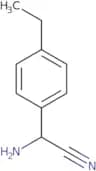
CAS:Versatile small molecule scaffoldFórmula:C6H10N2S2Pureza:Min. 95%Peso molecular:174.3 g/mol2-Amino-2-(4-ethylphenyl)acetonitrile
CAS:Versatile small molecule scaffoldFórmula:C10H12N2Pureza:Min. 95%Peso molecular:160.22 g/mol3-[(5-Nitrofuran-2-yl)formamido]propanoic acid
CAS:Versatile small molecule scaffoldFórmula:C8H8N2O6Pureza:Min. 95%Peso molecular:228.16 g/mol2-Chloro-N-{[(2-ethylphenyl)carbamoyl]methyl}-N-methylpropanamide
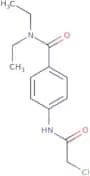
CAS:Versatile small molecule scaffoldFórmula:C14H19ClN2O2Pureza:Min. 95%Peso molecular:282.76 g/mol4-(2-Chloroacetamido)-N,N-diethylbenzamide
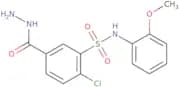
CAS:Versatile small molecule scaffoldFórmula:C13H17ClN2O2Pureza:Min. 95%Peso molecular:268.74 g/mol2-Chloro-5-(hydrazinecarbonyl)-N-(2-methoxyphenyl)benzene-1-sulfonamide
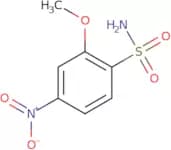
CAS:Versatile small molecule scaffoldFórmula:C14H14ClN3O4SPureza:Min. 95%Peso molecular:355.8 g/mol2-Methoxy-4-nitrobenzene-1-sulfonamide
CAS:Versatile small molecule scaffoldFórmula:C7H8N2O5SPureza:Min. 95%Peso molecular:232.22 g/mol

![8a-Methyl-hexahydro-pyrrolo[1,2-a]pyrimidin-6-one](/_next/image/?url=https%3A%2Fstatic.cymitquimica.com%2Fproducts%2F3D%2Fthumb-webp%2FWAA60368.webp&w=3840&q=75)
![3-Methyl-1-azabicyclo[2.2.2]octan-3-amine](/_next/image/?url=https%3A%2Fstatic.cymitquimica.com%2Fproducts%2F3D%2Fthumb-webp%2FWAA63813.webp&w=3840&q=75)
![3-Methyl-1-azabicyclo[2.2.2]octan-3-amine dihydrochloride](/_next/image/?url=https%3A%2Fstatic.cymitquimica.com%2Fproducts%2F3D%2Fthumb-webp%2FWAA63814.webp&w=3840&q=75)
amine hydrochloride](/_next/image/?url=https%3A%2Fstatic.cymitquimica.com%2Fproducts%2F3D%2Fthumb-webp%2FWAA64593.webp&w=3840&q=75)
![2-{[(4-Chlorophenyl)methyl]sulfanyl}acetonitrile](/_next/image/?url=https%3A%2Fstatic.cymitquimica.com%2Fproducts%2F3D%2Fthumb-webp%2FWAA68187.webp&w=3840&q=75)

![3-[(tert-Butyldimethylsilyl)oxy]aniline](/_next/image/?url=https%3A%2Fstatic.cymitquimica.com%2Fproducts%2F3D%2Fthumb-webp%2FWEA94275.webp&w=3840&q=75)
![2-[(3-Aminopropyl)sulfanyl]-1,3-thiazole](/_next/image/?url=https%3A%2Fstatic.cymitquimica.com%2Fproducts%2F3D%2Fthumb-webp%2FWEB54311.webp&w=3840&q=75)
![3-[(5-Nitrofuran-2-yl)formamido]propanoic acid](/_next/image/?url=https%3A%2Fstatic.cymitquimica.com%2Fproducts%2F3D%2Fthumb-webp%2FWEB60827.webp&w=3840&q=75)
![2-Chloro-N-{[(2-ethylphenyl)carbamoyl]methyl}-N-methylpropanamide](/_next/image/?url=https%3A%2Fstatic.cymitquimica.com%2Fproducts%2F3D%2Fthumb-webp%2FWEB60839.webp&w=3840&q=75)