


Building Blocks
Esta sección contiene productos fundamentales para la síntesis de compuestos orgánicos y biológicos. Building blocks son los materiales de partida esenciales utilizados para construir moléculas complejas a través de diversas reacciones químicas. Desempeñan un papel crítico en el descubrimiento de fármacos, la ciencia de materiales y la investigación química. En CymitQuimica, ofrecemos una gama diversa de building blocks de alta calidad para apoyar sus investigaciones innovadoras y proyectos industriales, asegurando que tenga los componentes esenciales para una síntesis exitosa.
Subcategorías de "Building Blocks"
- Ácidos borónicos y derivados del ácido borónico(5.780 productos)
- Building Blocks quirales(1.241 productos)
- Building Blocks de hidrocarburos(6.100 productos)
- Building Blocks orgánicos(61.024 productos)
Se han encontrado 205297 productos de "Building Blocks"
Ordenar por
Pureza (%)
0
100
|
0
|
50
|
90
|
95
|
100
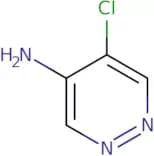
5-Chloropyridazin-4-amine
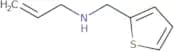
CAS:5-Chloropyridazin-4-amine is a medicinal compound. It contains an aromatic ring and a heterocyclic amine group, which are connected by a nitrogen atom. 5-Chloropyridazin-4-amine has been used for the production of other compounds such as aminopyridazines, quinones, and betaines. 5-Chloropyridazin-4-amine can be used in research on the synthesis of cinnolines, azides, and pyridazines. This compound is also used to study the chemistry of sulfur.Fórmula:C4H4ClN3Pureza:Min. 95%Peso molecular:129.55 g/mol(Prop-2-en-1-yl)(thiophen-2-ylmethyl)amine
CAS:Versatile small molecule scaffold
Fórmula:C8H11NSPureza:Min. 95%Peso molecular:153.25 g/molThieno[2,3-b]pyridine-2-carbaldehyde
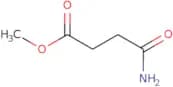
CAS:Thieno[2,3-b]pyridine-2-carbaldehyde is a chemical compound that is structurally related to nicotine. It has been shown to be an inhibitor of CYP2A6 and coumarin 7-hydroxylase, the enzymes that catalyze the hydroxylation of coumarin to form 7-hydroxycoumarin. Thieno[2,3-b]pyridine-2-carbaldehyde has also shown inhibitory effects on the metabolism of formyl lead molecules. The IC50 values for thieno[2,3-b]pyridine-2-carbaldehyde are 0.01 μM for CYP2A6 and 0.1 μM for coumarin 7-hydroxylase.Fórmula:C8H5NOSPureza:Min. 95%Peso molecular:163.2 g/molMethyl Succinamate
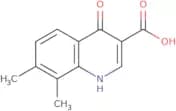
CAS:Methyl succinate is a heterocyclic compound that has been shown to be effective in the treatment of autoimmune diseases. It has also been shown to inhibit cancer cells, as well as infectious diseases. Methyl Succinamate is an amide and intramolecular hydrogen bond donor. This chemical ionization technique can be used for the specific determination of this compound in biological fluids such as blood plasma or serum. The NMR spectra of methyl succinate are consistent with its structure, which consists of an amide group and three methyl groups. Methyl succinate binds to the bradykinin B2 receptor and inhibits its activity by blocking the binding site.Fórmula:C5H9NO3Pureza:Min. 95%Peso molecular:131.13 g/mol7,8-Dimethyl-4-hydroxyquinoline-3-carboxylic acid
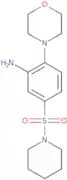
CAS:Versatile small molecule scaffoldFórmula:C12H11NO3Pureza:Min. 95%Peso molecular:217.22 g/mol2-(Morpholin-4-yl)-5-(piperidine-1-sulfonyl)aniline
CAS:Versatile small molecule scaffoldFórmula:C15H23N3O3SPureza:Min. 95%Peso molecular:325.4 g/molN,N-Dimethyl-3-(morpholin-4-yl)propanamide
CAS:Versatile small molecule scaffoldFórmula:C9H18N2O2Pureza:Min. 95%Peso molecular:186.25 g/mol(But-2-yn-1-yl)(prop-2-yn-1-yl)amine hydrochloride
CAS:Versatile small molecule scaffoldFórmula:C7H10ClNPureza:Min. 95%Peso molecular:143.61 g/mol3-Bromo-N,N-diethylaniline
CAS:Versatile small molecule scaffold
Fórmula:C10H14BrNPureza:Min. 95%Peso molecular:228.13 g/mol2,4-Dimethylthiazole-5-carboxylic Acid
CAS:2,4-Dimethylthiazole-5-carboxylic Acid is a class of organic compounds that are used as a building block for the synthesis of polymers. The surface analysis of this compound reveals that it is a supramolecular polymer with an irregular crystal structure. This compound can be synthesized from 2,4-dimethylthiazol and 5-carboxylic acid in two steps. The X-ray diffraction analysis shows that the crystalline form is single and belongs to the orthorhombic system with space group Pbnm. Hydrogen bonds between the aromatic rings and carboxylate esters are present. This polymer has been shown to be active against graminis sclerotiorum and Sclerotinia graminicola.Fórmula:C6H7NO2SPureza:Min. 95%Peso molecular:157.19 g/mol3-Isopropoxyprop-1-yne
CAS:Versatile small molecule scaffoldFórmula:C6H10OPureza:Min. 95%Peso molecular:98.14 g/mol3,3-Dimethylpentane-1,5-diol
CAS:3,3-Dimethylpentane-1,5-diol is an active molecule that is synthesized in vivo. It has been shown to inhibit the growth of cancer cells. This cytostatic effect is most likely due to its ability to activate β-catenin and inhibit its degradation by the proteasome. 3,3-Dimethylpentane-1,5-diol also inhibits hemolytic activity in rat liver microsomes and has a low degree of cytotoxicity against L1210 cells. The molecule's cytostatic effects have been studied in vitro and in vivo and found to be mediated through inhibition of cyclopentanoid biosynthesis.Fórmula:C7H16O2Pureza:Min. 95%Peso molecular:132.2 g/mol2,4-Dibromo-3-methylthiophene
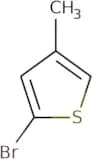
CAS:Versatile small molecule scaffoldFórmula:C5H4Br2SPureza:Min. 95%Peso molecular:255.96 g/mol2-Bromo-4-methylthiophene
CAS:2-Bromo-4-methylthiophene is a monomer used in optical polymerization. It has been shown to have high yields, good optical properties and low cost. 2-Bromo-4-methylthiophene polymerizes in the presence of benzyl groups to form polymers with hexamer sequences. This monomer can also be synthesized through electrochemical polymerization techniques, yielding polymers with decamer sequences. The conformation of 2-bromo-4-methylthiophene can be determined by techniques such as nuclear magnetic resonance spectroscopy or infrared spectroscopy. It is also possible to use cross-coupling reactions to synthesize this compound.Fórmula:C5H5BrSPureza:Min. 95%Peso molecular:177.06 g/mol2,5-Dibromo-3-ethylthiophene
CAS:Versatile small molecule scaffoldFórmula:C6H6Br2SPureza:Min. 95%Peso molecular:269.99 g/mol1-(Hydrazinecarbonyl)-N-(pyridin-2-yl)formamide
CAS:Versatile small molecule scaffoldFórmula:C7H8N4O2Pureza:Min. 95%Peso molecular:180.16 g/mol2-[(Pyridin-2-yl)methyl]aniline
CAS:Versatile small molecule scaffoldFórmula:C12H12N2Pureza:Min. 95%Peso molecular:184.24 g/mol3-Bromo-N,N,4-trimethylaniline
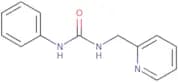
CAS:Versatile small molecule scaffoldFórmula:C9H12BrNPureza:Min. 95%Peso molecular:214.1 g/molN-Phenyl((2-pyridylmethyl)amino)formamide
CAS:Versatile small molecule scaffoldFórmula:C13H13N3OPureza:Min. 95%Peso molecular:227.26 g/mol5-Chloro-N,N-dimethylpentanamide
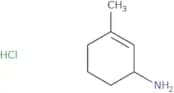
CAS:Versatile small molecule scaffoldFórmula:C7H14ClNOPureza:Min. 95%Peso molecular:163.64 g/mol3-Methylcyclohex-2-en-1-amine hydrochloride
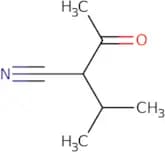
CAS:Versatile small molecule scaffoldFórmula:C7H14ClNPureza:Min. 95%Peso molecular:147.6 g/mol2-Acetyl-3-methylbutanenitrile
CAS:Versatile small molecule scaffoldFórmula:C7H11NOPureza:Min. 95%Peso molecular:125.2 g/mol5-Methoxy-1,3-dimethyl-1H-pyrazole
CAS:Versatile small molecule scaffoldFórmula:C6H10N2OPureza:Min. 95%Peso molecular:126.16 g/molEthyl 3-[4-(benzyloxy)phenyl]-3-oxopropanoate
CAS:Versatile small molecule scaffoldFórmula:C18H18O4Pureza:Min. 95%Peso molecular:298.3 g/mol2-(4-bromophenyl)propanoic acid
CAS:Versatile small molecule scaffold
Fórmula:C9H9BrO2Pureza:Min. 95%Peso molecular:229.1 g/mol3-[4-(propan-2-yl)phenyl]butanoic Acid
CAS:Versatile small molecule scaffoldFórmula:C13H18O2Pureza:Min. 95%Peso molecular:206.28 g/mol3-(4-Bromophenyl)butanoic acid
CAS:Versatile small molecule scaffoldFórmula:C10H11BrO2Pureza:Min. 95%Peso molecular:243.1 g/mol3-(3-Bromophenyl)butanoic acid
CAS:Versatile small molecule scaffoldFórmula:C10H11BrO2Pureza:Min. 95%Peso molecular:243.1 g/mol3-[3-(Trifluoromethyl)phenyl]butanoic acid
CAS:Versatile small molecule scaffoldFórmula:C11H11F3O2Pureza:Min. 95%Peso molecular:232.2 g/mol6-Chloro-3-methyl-[1,2,4]triazolo[4,3-b]pyridazin-8-amine
CAS:Versatile small molecule scaffoldFórmula:C6H6ClN5Pureza:Min. 95%Peso molecular:183.6 g/molEthyl 2-Hydrazinyl-2-iminoacetate
CAS:Versatile small molecule scaffoldFórmula:C4H9N3O2Pureza:Min. 95%Peso molecular:131.13 g/mol4-Methoxy-3-methylbenzonitrile
CAS:Versatile small molecule scaffold
Fórmula:C9H9NOPureza:Min. 95%Peso molecular:147.18 g/mol4-(3,4-Dimethoxyphenethyl)-3-thiosemicarbazide
CAS:Versatile small molecule scaffold
Fórmula:C11H17N3O2SPureza:Min. 95%Peso molecular:255.34 g/mol(2-Chloroethoxy)cyclohexane
CAS:Versatile small molecule scaffoldFórmula:C8H15ClOPureza:Min. 95%Peso molecular:162.66 g/mol2-Bromo-2-methanesulfonyl-1-phenylethan-1-one
CAS:Versatile small molecule scaffoldFórmula:C9H9BrO3SPureza:Min. 95%Peso molecular:277.14 g/mol(1,3-Thiazol-2-yl)methanethiol
CAS:Versatile small molecule scaffoldFórmula:C4H5NS2Pureza:Min. 95%Peso molecular:131.2 g/mol(1,3,3-Trimethylcyclohexyl)methanamine
CAS:Versatile small molecule scaffoldFórmula:C10H21NPureza:Min. 95%Peso molecular:155.28 g/mol(3-Methoxy-2-nitrophenyl)methanol
CAS:Versatile small molecule scaffoldFórmula:C8H9NO4Pureza:Min. 95%Peso molecular:183.16 g/mol5,6-Dihydro-4H-cyclopentathiazol-2-ylamine
CAS:Versatile small molecule scaffoldFórmula:C6H8N2SPureza:Min. 95%Peso molecular:140.2 g/mol(2-Anilinophenyl)methanol
CAS:Versatile small molecule scaffoldFórmula:C13H13NOPureza:Min. 95%Peso molecular:199.25 g/mol4-Isocyanatooxane
CAS:Versatile small molecule scaffold
Fórmula:C6H9NO2Pureza:Min. 95%Peso molecular:127.14 g/mol4-[(Dimethylamino)methyl]benzene-1-carboximidamide
CAS:Versatile small molecule scaffoldFórmula:C10H15N3Pureza:Min. 95%Peso molecular:177.25 g/mol2-(1,3,4-Thiadiazol-2-ylsulfanyl)acetic acid
CAS:Versatile small molecule scaffoldFórmula:C4H4N2O2S2Pureza:Min. 95%Peso molecular:176.2 g/molEthyl 2-(chloromethyl)furan-3-carboxylate
CAS:Versatile small molecule scaffoldFórmula:C8H9ClO3Pureza:Min. 95%Peso molecular:188.61 g/molMethyl 2-(bromomethyl)-3-furoate
CAS:Methyl 2-(bromomethyl)-3-furoate is a muscarinic acetylcholine receptor agonist. It has been shown to bind to the M1 and M3 subtypes of the muscarinic acetylcholine receptors, but is not active against the M2 subtype. This drug has been shown to be an allosteric modulator of the acetylcholine receptors and will decrease the rate at which they are desensitized after binding to acetylcholine. Methyl 2-(bromomethyl)-3-furoate binds to a different site on the receptor than other agonists, such as carbachol and bethanechol, and offers advantages in terms of selectivity and optimization for both chemotypes and profiles.Fórmula:C7H7BrO3Pureza:Min. 95%Peso molecular:219.03 g/molMethyl 2-(chloromethyl)furan-3-carboxylate
CAS:Methyl 2-(chloromethyl)furan-3-carboxylate is a heterocyclic compound that can be synthesized by cyclization of methyl 2-chlorobenzoylacetate with nitroethane and formaldehyde. It is a heterocyclic system with a six-membered ring containing two double bonds.
Fórmula:C7H7ClO3Pureza:Min. 95%Peso molecular:174.58 g/mol(3-Methylcyclohexyl)methanol
CAS:Methylcyclohexanol is an esterification product that can be used in the production of isophthalate and hydrogenated products. It is produced through the reaction of methanol with isophthalic acid, which is a monomer in the production of polyester. The esterification reaction produces methylcyclohexyl methanoate, which reacts with hydrogen gas to form methylcyclohexylmethanol. This process also produces water as a by-product.Fórmula:C8H16OPureza:Min. 95%Peso molecular:128.21 g/mol2-(1,2,3,4-Tetrahydroisoquinolin-1-yl)acetic acid hydrochloride
CAS:Versatile small molecule scaffoldFórmula:C11H14ClNO2Pureza:Min. 95%Peso molecular:227.69 g/molMethyl 2-formyl-4,5-dimethoxybenzoate
CAS:Versatile small molecule scaffoldFórmula:C11H12O5Pureza:Min. 95%Peso molecular:224.21 g/mol3-(Bromomethyl)-1,2,5-thiadiazole
CAS:Versatile small molecule scaffoldFórmula:C3H3BrN2SPureza:Min. 95%Peso molecular:179.04 g/mol

![Thieno[2,3-b]pyridine-2-carbaldehyde](/_next/image/?url=https%3A%2Fstatic.cymitquimica.com%2Fproducts%2F3D%2Fthumb-webp%2FDCA17498.webp&w=3840&q=75)




![2-[(Pyridin-2-yl)methyl]aniline](/_next/image/?url=https%3A%2Fstatic.cymitquimica.com%2Fproducts%2F3D%2Fthumb-webp%2FDCA11400.webp&w=3840&q=75)



![Ethyl 3-[4-(benzyloxy)phenyl]-3-oxopropanoate](/_next/image/?url=https%3A%2Fstatic.cymitquimica.com%2Fproducts%2F3D%2Fthumb-webp%2FDCA09045.webp&w=3840&q=75)

![3-[4-(propan-2-yl)phenyl]butanoic Acid](/_next/image/?url=https%3A%2Fstatic.cymitquimica.com%2Fproducts%2F3D%2Fthumb-webp%2FDCA08650.webp&w=3840&q=75)


![3-[3-(Trifluoromethyl)phenyl]butanoic acid](/_next/image/?url=https%3A%2Fstatic.cymitquimica.com%2Fproducts%2F3D%2Fthumb-webp%2FDCA08644.webp&w=3840&q=75)
![6-Chloro-3-methyl-[1,2,4]triazolo[4,3-b]pyridazin-8-amine](/_next/image/?url=https%3A%2Fstatic.cymitquimica.com%2Fproducts%2F3D%2Fthumb-webp%2FDCA08552.webp&w=3840&q=75)


![4-[(Dimethylamino)methyl]benzene-1-carboximidamide](/_next/image/?url=https%3A%2Fstatic.cymitquimica.com%2Fproducts%2F3D%2Fthumb-webp%2FDCA03293.webp&w=3840&q=75)


