


Building Blocks
Subcategorías de "Building Blocks"
- Ácidos borónicos y derivados del ácido borónico(5.784 productos)
- Building Blocks quirales(1.242 productos)
- Building Blocks de hidrocarburos(6.105 productos)
- Building Blocks orgánicos(61.061 productos)
Se han encontrado 205399 productos de "Building Blocks"
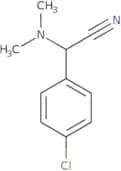
(4-Chlorophenyl)(dimethylamino)acetonitrile
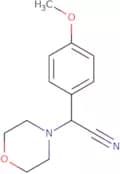
CAS:Versatile small molecule scaffoldFórmula:C10H11ClN2Pureza:Min. 95%Peso molecular:194.66 g/mol2-(4-Methoxyphenyl)-2-morpholino-acetonitrile
CAS:Versatile small molecule scaffoldFórmula:C13H16N2O2Pureza:Min. 95%Peso molecular:232.28 g/mol2-Bromo-4,6-dimethylphenol
CAS:2-Bromo-4,6-dimethylphenol is a reactive compound that has bromination as one of its mechanisms. Bromine reacts with 2-bromo-4,6-dimethylphenol to form 2,6-dibromophenol. The reaction between bromine and dienone occurs to form the isomer of brominated dienone. Dienones are compounds that contain two carbonyl groups and one double bond in the molecule.
Fórmula:C8H9BrOPureza:Min. 95%Peso molecular:201.06 g/mol4,4,4-Trifluoro-1-(2-methoxyphenyl)butane-1,3-dione
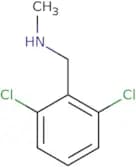
CAS:Versatile small molecule scaffoldFórmula:C11H9F3O3Pureza:Min. 95%Peso molecular:246.19 g/molN-(2,6-Dichlorobenzyl)-N-methylamine
CAS:N-(2,6-Dichlorobenzyl)-N-methylamine is a colorless liquid with the chemical formula C8H9Cl2N. It is used as a solvent for extraction, and has been shown to be an experimental anti-cancer drug candidate in screening tests. The two chlorines on the benzyl group are electron withdrawing groups that form hydrogen bonds with water molecules. This compound is a carboxylic acid that can interact with other carboxylic acids to form salts or esters. N-(2,6-Dichlorobenzyl)-N-methylamine has the potential to cause environmental damage, although this has not been definitively established.Fórmula:C8H9Cl2NPureza:Min. 95%Peso molecular:190.07 g/mol8-Amino-7-chloro-[1,2,4]triazolo[4,3-c]pyrimidin-3-ol
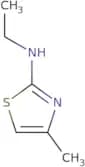
CAS:Versatile small molecule scaffoldFórmula:C5H4ClN5OPureza:Min. 95%Peso molecular:185.57 g/molN-Ethyl-4-methyl-1,3-thiazol-2-amine
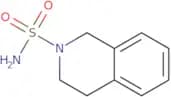
CAS:N-Ethyl-4-methyl-1,3-thiazol-2-amine is a chemical compound that belongs to the class of aminothiazoles. It is used in the synthesis of diazo compounds and alkylation coupling reactions. N-Ethyl-4-methyl-1,3-thiazol-2-amine can be used as a precursor for the synthesis of dyes, pharmaceuticals, and other organic compounds.Fórmula:C6H10N2SPureza:Min. 95%Peso molecular:142.22 g/mol1,2,3,4-Tetrahydroisoquinoline-2-sulfonamide
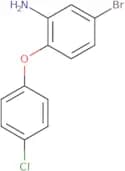
CAS:1,2,3,4-Tetrahydroisoquinoline-2-sulfonamide is an antibacterial drug that inhibits bacterial growth by the formation of a hydrogen bond with the amide group of the bacteria's cell wall. The hydrogen bonds are formed between intermolecular oxygen atoms and the sulfonamide nitrogens in 1,2,3,4-tetrahydroisoquinoline-2-sulfonamide. This antibacterial drug has been shown to be active against β-cyclodextrin as well as penicillin resistant strains of Staphylococcus aureus. Molecular modeling studies have shown that this drug interacts with the protein cytochrome bc1 complex and inhibits its activity by binding to a specific region on the protein. These interactions were confirmed experimentally using molecular modeling software and parameters such as molecular weight and shape.Fórmula:C9H12N2O2SPureza:Min. 95%Peso molecular:212.27 g/mol5-Bromo-2-(4-chlorophenoxy)aniline
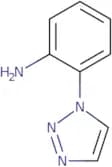
CAS:Versatile small molecule scaffoldFórmula:C12H9BrClNOPureza:Min. 95%Peso molecular:298.56 g/mol2-(1H-1,2,3-Triazol-1-yl)aniline
CAS:Versatile small molecule scaffold
Fórmula:C8H8N4Pureza:Min. 95%Peso molecular:160.18 g/molEthyl 2-(prop-2-en-1-yloxy)acetate
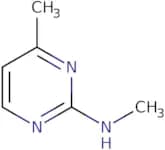
CAS:Versatile small molecule scaffoldFórmula:C7H12O3Pureza:Min. 95%Peso molecular:144.2 g/mol4-Methyl-2-methylaminopyrimidine
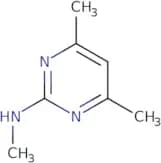
CAS:Versatile small molecule scaffoldFórmula:C6H9N3Pureza:Min. 95%Peso molecular:123.16 g/molN,4,6-Trimethylpyrimidin-2-amine
CAS:Versatile small molecule scaffold
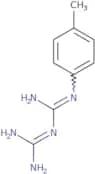
Fórmula:C7H11N3Pureza:Min. 95%Peso molecular:137.18 g/mol1-Carbamimidamido-N-(4-methylphenyl)methanimidamide
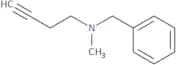
CAS:Versatile small molecule scaffoldFórmula:C9H13N5Pureza:Min. 95%Peso molecular:191.23 g/molBenzyl(but-3-yn-1-yl)methylamine
CAS:Versatile small molecule scaffoldFórmula:C12H15NPureza:Min. 95%Peso molecular:173.25 g/molTriruthenium Dodecacarbonyl
CAS:Triruthenium dodecacarbonyl is a group p2 metal carbonyl. It has a thermal expansion of 5.5 x 10⁻⁶ K-1 and an enthalpy of formation of -12.7 kJ mol-1. This compound undergoes reactions with amines, resulting in the formation of diazonium salts. FTIR spectroscopy has been used to identify the presence of nitrogen atoms in this molecule, which are responsible for its strong absorption bands in the region between 3200 and 3400 cm-1. The carbonyl group found in triruthenium dodecacarbonyl reacts with fatty acids to produce tiglic acid, a chemical substance that can be used as a raw material for the production of synthetic ruthenium. Picolinic acid, a natural product found in plants, also reacts with triruthenium dodecacarbonyl and copper complex to form an ion pair knownFórmula:C12O12Ru3Pureza:Min. 95%Peso molecular:639.33 g/molEthyl 3-ethylpent-2-enoate
CAS:Ethyl 3-ethylpent-2-enoate is a molecule that is synthesised in organic chemistry. It has been shown to have vasculitis, which is an inflammation of the blood vessels. This molecule also has anti-inflammatory properties and can be used as a drug in clinical trials. Ethyl 3-ethylpent-2-enoate is synthesised from the two amino acids valine and allylamines. The synthesis of this compound requires dehydration, which removes one of the alcohol groups on the molecule.
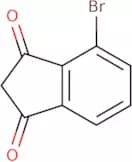
Fórmula:C9H16O2Pureza:Min. 95%Peso molecular:156.22 g/mol4-Bromo-2,3-dihydro-1H-indene-1,3-dione
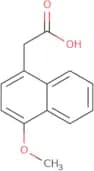
CAS:Versatile small molecule scaffoldFórmula:C9H5BrO2Pureza:Min. 95%Peso molecular:225.04 g/mol2-(4-Methoxynaphthalen-1-yl)acetic acid
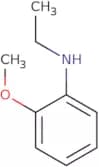
CAS:Versatile small molecule scaffoldFórmula:C13H12O3Pureza:Min. 95%Peso molecular:216.24 g/molN-Ethyl-2-methoxyaniline
CAS:Versatile small molecule scaffold
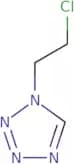
Fórmula:C9H13NOPureza:Min. 95%Peso molecular:151.21 g/mol1-(2-Chloroethyl)-1H-1,2,3,4-tetrazole
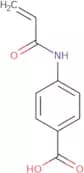
CAS:1-(2-Chloroethyl)-1H-1,2,3,4-tetrazole is a ligand that can be used in crystallography. It has a low spin state, which can be determined by the diffraction techniques. This ligand is usually studied in the group p2 space group and shown as an orthorhombic system. The parameters for this molecule are calculated using different techniques such as synchrotron radiation and computational algorithms.Fórmula:C3H5ClN4Pureza:Min. 95%Peso molecular:132.55 g/mol4-(Prop-2-enamido)benzoic acid
CAS:4-(Prop-2-enamido)benzoic acid is an antimicrobial agent that is used in the synthesis of polymers. 4-(Prop-2-enamido)benzoic acid reacts with ammonium persulfate to form a monomer which can be polymerized with other compounds such as dioxane. The reaction time and activation energy for this compound are determined by the type of solvent used. This compound is biodegradable and has been shown to be easily copolymerized with other substances. 4-(Prop-2-enamido)benzoic acid is soluble in water, dioxane, and dimethylformamide (DMF). It also has a high refractive index under ultraviolet light microscopy when gelatinized. The molecular weight of this compound increases when it is heated due to water loss, but it does not change when it is cooled down or mixed with other chemicals. 4-(Prop-2-Fórmula:C10H9NO3Pureza:Min. 95%Peso molecular:191.18 g/mol3-(Trimethylsilyl)benzoic acid
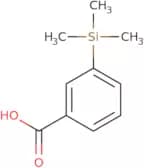
CAS:Versatile small molecule scaffoldFórmula:C10H14O2SiPureza:Min. 95%Peso molecular:194.3 g/mol4-(Trimethylsilyl)benzoic Acid
CAS:4-(Trimethylsilyl)benzoic Acid is a modification of the benzoic acid molecule. It is an organosilicon compound that can be synthesized by reacting trimethylsilyl chloride with 4-aminobenzoic acid in hydrochloric acid at low temperature. This modification has been shown to form nanoribbons when used as a photoelectron emitter, which changes the nature of the molecule. The functional theory and acetylation analysis have been done on this compound, and it has been shown to be centrosymmetric with a diameter of 1 nm. Synthetic yields are not high because temperatures must be maintained below -78°C.
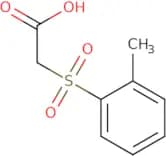
Fórmula:C10H14O2SiPureza:Min. 95%Peso molecular:194.3 g/mol2-(2-Methylbenzenesulfonyl)acetic acid
CAS:2-(2-Methylbenzenesulfonyl)acetic acid is a heterocycle that belongs to the group of organic compounds. It is a chloride, which is a reactive functional group. The chloride can be found in the subunits of proteins and nucleic acids, which are involved in cell division and metabolism. The chloride ion has been shown to function as an antioxidant by scavenging reactive oxygen species such as hydroxyl radicals and peroxides. 2-(2-Methylbenzenesulfonyl)acetic acid also has anti-inflammatory properties, which may be due to its ability to inhibit prostaglandin synthesis. This compound has been shown to have neuroprotective effects against Alzheimer's disease and Parkinson's disease, as well as cancerous tumours. 2-(2-Methylbenzenesulfonyl)acetic acid is prepared by reacting hydrochloric acid with an alkylsulfonyl chloride in the presence of an organic
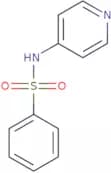
Fórmula:C9H10O4SPureza:Min. 95%Peso molecular:214.24 g/molN-(Pyridin-4-yl)benzenesulfonamide
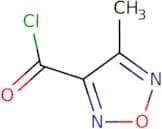
CAS:Versatile small molecule scaffoldFórmula:C11H10N2O2SPureza:Min. 95%Peso molecular:234.28 g/mol4-Methyl-1,2,5-oxadiazole-3-carbonyl chloride
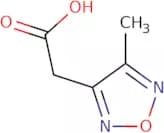
CAS:Versatile small molecule scaffoldFórmula:C4H3ClN2O2Pureza:Min. 95%Peso molecular:146.53 g/mol(4-Methyl-furazan-3-yl)-acetic acid
CAS:Versatile small molecule scaffold
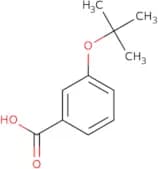
Fórmula:C5H6N2O3Pureza:Min. 95%Peso molecular:142.1 g/mol3-(tert-Butoxy)benzenecarboxylic acid
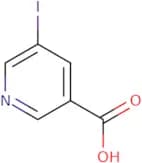
CAS:Versatile small molecule scaffoldFórmula:C11H14O3Pureza:Min. 95%Peso molecular:194.23 g/mol5-iodopyridine-3-carboxylic acid
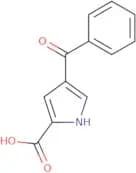
CAS:5-Iodopyridine-3-carboxylic acid is a monoclonal antibody that binds to the epidermal growth factor receptor. It is used in vitro and in vivo as a tool for identifying the epidermal growth factor receptor and its interaction with other proteins. 5-Iodopyridine-3-carboxylic acid has been shown to have high affinity for the epidermal growth factor receptor, and it can be used to identify the presence of this receptor on cells or tissues. The compound has also been conjugated to different molecules, such as carboxylates, which can be used to study their effects on cell uptake.Fórmula:C6H4INO2Pureza:Min. 95%Peso molecular:249 g/mol4-Benzoyl-1H-pyrrole-2-carboxylic acid
CAS:Versatile small molecule scaffoldFórmula:C12H9NO3Pureza:Min. 95%Peso molecular:215.2 g/mol1H,2H,3H,4H,7H,8H-Pyrido[2,3-d]pyridazin-8-one
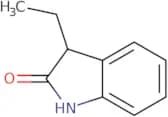
CAS:Versatile small molecule scaffoldFórmula:C7H9N3OPureza:Min. 95%Peso molecular:151.17 g/mol3-ethylindolin-2-one
CAS:3-Ethylindolin-2-one is a synthetic compound that has been shown to be able to alkylate olefins. It is not yet known what the biological function of 3-ethylindolin-2-one might be. It has been found in leaves, but its presence there is not well understood. The reaction of 3-ethylindolin-2-one with amines gives the corresponding amides, while acylation reactions with alcohols yield esters and other compounds. The addition of 3-ethylindolin-2-one to benzene or butyllithium results in the formation of a new ring system containing three carbons and two nitrogens.
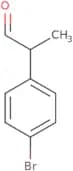
Fórmula:C10H11NOPureza:Min. 95%Peso molecular:161.2 g/mol2-(4-Bromophenyl)propanal
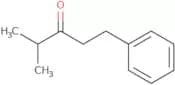
CAS:Versatile small molecule scaffoldFórmula:C9H9BrOPureza:Min. 95%Peso molecular:213.07 g/mol4-Methyl-1-phenylpentan-3-one
CAS:Versatile small molecule scaffoldFórmula:C12H16OPureza:Min. 95%Peso molecular:176.25 g/mol2-Methoxy-6,7,8,9-tetrahydro-5H-benzo[7]annulen-6-one
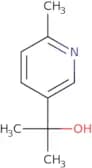
CAS:Versatile small molecule scaffoldFórmula:C12H14O2Pureza:Min. 95%Peso molecular:190.24 g/mol2-(6-Methylpyridin-3-yl)propan-2-ol
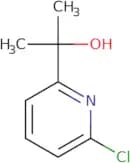
CAS:Versatile small molecule scaffoldFórmula:C9H13NOPureza:Min. 95%Peso molecular:151.21 g/mol2-(6-Chloropyridin-2-yl)propan-2-ol
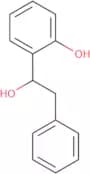
CAS:Versatile small molecule scaffoldFórmula:C8H10ClNOPureza:Min. 95%Peso molecular:171.62 g/mol2-(1-Hydroxy-2-phenylethyl)phenol
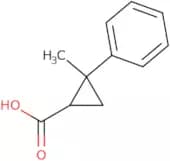
CAS:Versatile small molecule scaffoldFórmula:C14H14O2Pureza:Min. 95%Peso molecular:214.26 g/mol2-Methyl-2-phenylcyclopropane-1-carboxylic acid
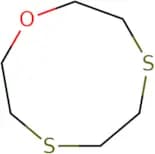
CAS:Versatile small molecule scaffoldFórmula:C11H12O2Pureza:Min. 95%Peso molecular:176.21 g/mol1,4,7-Oxadithionane
CAS:Versatile small molecule scaffold
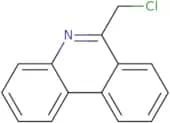
Fórmula:C6H12OS2Pureza:Min. 95%Peso molecular:164.3 g/mol6-(Chloromethyl)phenanthridine
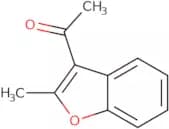
CAS:6-(Chloromethyl)phenanthridine is a fatty acid that has been shown to have anti-inflammatory effects. It has also been shown to be effective in the treatment of humans and animals with musculoskeletal disorders. 6-(Chloromethyl)phenanthridine is soluble in deionized water and hydroxide solution, but insoluble in ethanol and acetone. This compound can be used as an ingredient in detergent compositions for use on clothes. It can also be used as a microcapsule coating material or as an acid catalyst in the production of soybean extract.Fórmula:C14H10ClNPureza:Min. 95%Peso molecular:227.69 g/mol1-(2-Methyl-1-benzofuran-3-yl)ethan-1-one
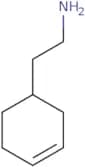
CAS:Versatile small molecule scaffoldFórmula:C11H10O2Pureza:Min. 95%Peso molecular:174.2 g/mol2-(Cyclohex-3-en-1-yl)ethan-1-amine
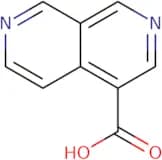
CAS:Versatile small molecule scaffoldFórmula:C8H15NPureza:Min. 95%Peso molecular:125.21 g/mol2,7-Naphthyridine-4-carboxylic acid
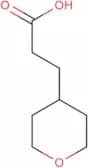
CAS:Versatile small molecule scaffoldFórmula:C9H6N2O2Pureza:Min. 95%Peso molecular:174.16 g/mol3-(Tetrahydro-2H-pyran-4-yl)propanoic acid
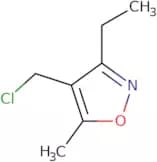
CAS:Versatile small molecule scaffoldFórmula:C8H14O3Pureza:Min. 95%Peso molecular:158.19 g/mol4-(Chloromethyl)-3-ethyl-5-methyl-1,2-oxazole
CAS:Versatile small molecule scaffoldFórmula:C7H10ClNOPureza:Min. 95%Peso molecular:159.61 g/molMethyl 4'-hydroxy-[1,1'-biphenyl]-4-carboxylate
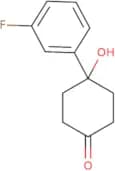
CAS:Methyl 4'-hydroxy-[1,1'-biphenyl]-4-carboxylate is a liquid crystal with a molecular weight of 244.3 g/mol. It is synthesized from benzaldehyde and 4-bromobenzaldehyde in the presence of sodium hydroxide and potassium carbonate in methanol at reflux temperature. The compound crystallizes as an asymmetric carbon atom with a biphenyl skeleton. It has been shown to be soluble in chloroform and benzene, but not in ether or acetone. The compound exhibits ferroelectric properties and has been used for the synthesis of dendrimers and supramolecular structures.Fórmula:C14H12O3Pureza:Min. 95%Peso molecular:228.24 g/mol4-(3-Fluorophenyl)-4-hydroxycyclohexan-1-one
CAS:Versatile small molecule scaffoldFórmula:C12H13FO2Pureza:Min. 95%Peso molecular:208.23 g/mol4-[3-(Trifluoromethyl)phenyl]cyclohexan-1-one
CAS:Versatile small molecule scaffoldFórmula:C13H13F3OPureza:Min. 95%Peso molecular:242.24 g/mol



![8-Amino-7-chloro-[1,2,4]triazolo[4,3-c]pyrimidin-3-ol](/_next/image/?url=https%3A%2Fstatic.cymitquimica.com%2Fproducts%2F3D%2Fthumb-webp%2FQAA20633.webp&w=3840&q=75)




![1H,2H,3H,4H,7H,8H-Pyrido[2,3-d]pyridazin-8-one](/_next/image/?url=https%3A%2Fstatic.cymitquimica.com%2Fproducts%2F3D%2Fthumb-webp%2FQAA37578.webp&w=3840&q=75)
![2-Methoxy-6,7,8,9-tetrahydro-5H-benzo[7]annulen-6-one](/_next/image/?url=https%3A%2Fstatic.cymitquimica.com%2Fproducts%2F3D%2Fthumb-webp%2FQBA46328.webp&w=3840&q=75)
![Methyl 4'-hydroxy-[1,1'-biphenyl]-4-carboxylate](/_next/image/?url=https%3A%2Fstatic.cymitquimica.com%2Fproducts%2F3D%2Fthumb-webp%2FQBA50141.webp&w=3840&q=75)
![4-[3-(Trifluoromethyl)phenyl]cyclohexan-1-one](/_next/image/?url=https%3A%2Fstatic.cymitquimica.com%2Fproducts%2F3D%2Fthumb-webp%2FQBA50393.webp&w=3840&q=75)