Building Blocks
Subcategorías de "Building Blocks"
- Ácidos borónicos y derivados del ácido borónico(5.784 productos)
- Building Blocks quirales(1.244 productos)
- Building Blocks de hidrocarburos(6.105 productos)
- Building Blocks orgánicos(61.070 productos)
Se han encontrado 205437 productos de "Building Blocks"
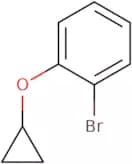
1-Bromo-2-cyclopropoxybenzene
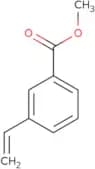
CAS:Versatile small molecule scaffoldFórmula:C9H9BrOPureza:Min. 95%Peso molecular:213.07 g/molMethyl 3-vinylbenzoate
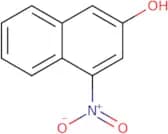
CAS:Versatile small molecule scaffoldFórmula:C10H10O2Pureza:Min. 95%Peso molecular:162.19 g/mol4-Nitronaphthalen-2-ol
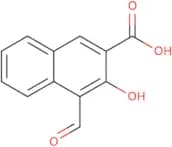
CAS:Versatile small molecule scaffoldFórmula:C10H7NO3Pureza:Min. 95%Peso molecular:189.17 g/mol4-Formyl-3-hydroxynaphthalene-2-carboxylic acid
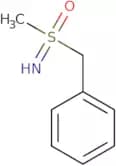
CAS:4-Formyl-3-hydroxynaphthalene-2-carboxylic acid (4FHN) is an antibacterial agent. It is bacteriostatic and has been shown to be effective against gram-negative bacteria such as Escherichia coli and Pseudomonas aeruginosa, but not against gram-positive bacteria such as Staphylococcus aureus. 4FHN was found to inhibit the growth of both gram-positive and gram-negative bacteria by binding to the ribosomal RNA in the bacterial cell wall, thereby inhibiting protein synthesis and cell division. 4FHN also shows antimicrobial activity due to its ability to form stable hydrazones with nucleophilic centers in the bacterial cell wall. These compounds react with cellular macromolecules, leading to cell death.Fórmula:C12H8O4Pureza:Min. 95%Peso molecular:216.19 g/molbenzyl(imino)methyl-sulfanone
CAS:Versatile small molecule scaffold
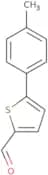
Fórmula:C8H11NOSPureza:Min. 95%Peso molecular:169.24 g/mol5-(4-Methylphenyl)thiophene-2-carbaldehyde
CAS:Versatile small molecule scaffoldFórmula:C12H10OSPureza:Min. 95%Peso molecular:202.27 g/mol5-(4-Bromophenyl)thiophene-2-carbaldehyde
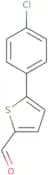
CAS:Versatile small molecule scaffoldFórmula:C11H7BrOSPureza:Min. 95%Peso molecular:267.14 g/mol5-(4-Chlorophenyl)thiophene-2-carbaldehyde
CAS:Versatile small molecule scaffold
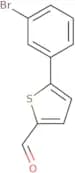
Fórmula:C11H7ClOSPureza:Min. 95%Peso molecular:222.69 g/mol5-(3-Bromo-phenyl)-thiophene-2-carbaldehyde
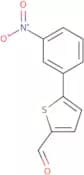
CAS:Versatile small molecule scaffoldFórmula:C11H7BrOSPureza:Min. 95%Peso molecular:267.14 g/mol5-(3-Nitrophenyl)thiophene-2-carbaldehyde
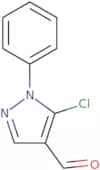
CAS:Versatile small molecule scaffoldFórmula:C11H7NO3SPureza:Min. 95%Peso molecular:233.25 g/mol5-Chloro-1-phenyl-1H-pyrazole-4-carbaldehyde
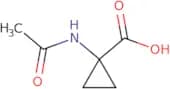
CAS:Versatile small molecule scaffoldFórmula:C10H7ClN2OPureza:Min. 95%Peso molecular:206.63 g/mol1-Acetamidocyclopropanecarboxylic acid
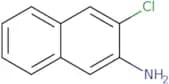
CAS:Versatile small molecule scaffoldFórmula:C6H9NO3Pureza:Min. 95%Peso molecular:143.14 g/mol3-Chloronaphthalen-2-amine
CAS:3-Chloronaphthalen-2-amine is a high concentration, organic solvent that is soluble in water and stable. It has been shown to be a reductant, which is a substance that donates electrons to another reactant in a chemical reaction. 3-Chloronaphthalen-2-amine can be used as a solvent for underwater applications and may have the ability to reduce nitrogen gas into ammonia. The residue of 3-chloronaphthalen-2-amine can be removed by solvents such as chloroform or ether.
Fórmula:C10H8ClNPureza:Min. 95%Peso molecular:177.63 g/mol5-[(Oxiran-2-yl)methoxy]-1,3-dioxaindane
CAS:Versatile small molecule scaffold
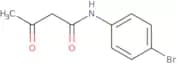
Fórmula:C10H10O4Pureza:Min. 95%Peso molecular:194.18 g/molN-(4-Bromophenyl)-3-oxobutanamide
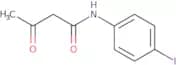
CAS:N-(4-Bromophenyl)-3-oxobutanamide is a complex molecule that belongs to the class of organocatalysts. It has been shown to show antitubercular activity in vitro, with an MIC of 2.5 µg/mL against Mycobacterium tuberculosis and a MIC of 0.05 µg/mL against Mycobacterium avium complex. It also has been shown to be active as an organocatalyst for the carbonylative synthesis of cyclic carbonate esters from simple alkyl dicarbonates and lithium diisopropylamide, which can be used in organic synthesis. The chemical name for this product is N-(4-bromophenyl)-3-oxobutanamide (NBPBA).Fórmula:C10H10BrNO2Pureza:Min. 95%Peso molecular:256.1 g/molN-(4-Iodophenyl)-3-oxobutanamide
CAS:Versatile small molecule scaffold
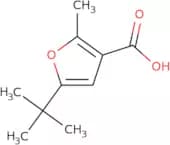
Fórmula:C10H10INO2Pureza:Min. 95%Peso molecular:303.1 g/mol5-tert-Butyl-2-methyl-3-furoic acid
CAS:Versatile small molecule scaffold
Fórmula:C10H14O3Pureza:Min. 95%Peso molecular:182.22 g/mol2-(2,3-Dihydro-1H-inden-1-yl)acetic acid
CAS:2-(2,3-Dihydro-1H-inden-1-yl)acetic acid (DHIAA) is an organic compound that belongs to the group of heterocyclic compounds. It is a plant cell growth regulator and has been shown to inhibit inflammatory diseases in animal models. DHIAA has a stepwise mechanism that starts with the formation of an alkoxy radical by hydrogen bond between the hydroxyl group and the double bond. This mechanism leads to the production of a reactive oxygen species, which causes oxidative damage in cells. DHIAA also inhibits fatty acid synthesis, which may be due to its interaction with peroxisome proliferator-activated receptor alpha (PPAR-α).Fórmula:C11H12O2Pureza:Min. 95%Peso molecular:176.21 g/mol2-(2,3-Dihydro-1H-inden-1-yl)ethan-1-ol
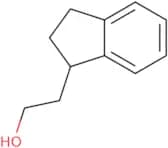
CAS:Versatile small molecule scaffoldFórmula:C11H14OPureza:Min. 95%Peso molecular:162.23 g/moltert-Butyl N-(2-phenylethyl)carbamate
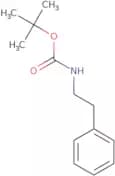
CAS:tert-Butyl N-(2-phenylethyl)carbamate is a reagent for the synthesis of amines and amine salts. It is prepared by treating benzonitrile with primary amines in the presence of hydrogen, which mediates the reaction. This tert-butyl carbamate can be isolated in high yield when a solvent such as diethyl ether or tetrahydrofuran is used. The tert-butyl carbamate can be hydrogenated to form an acid chloride, which is then reacted with an alcohol to form an ester. This method has been used in synthesizing many functionalized compounds, including anti-inflammatory drugs. Tert-butyl N-(2-phenylethyl)carbamate also has a conformational effect on solvents, where it causes immiscible solvents to become miscible due to its acidic nature.Fórmula:C13H19NO2Pureza:Min. 95%Peso molecular:221.29 g/mol1-(2-Bromoethyl)-2,3-dihydro-1H-indene
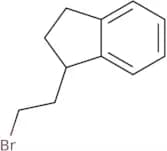
CAS:Versatile small molecule scaffoldFórmula:C11H13BrPureza:Min. 95%Peso molecular:225.12 g/molEthyl 2-(ethylamino)benzoate
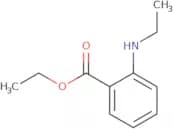
CAS:Ethyl 2-(ethylamino)benzoate is an organic compound that is classified as a hydrocarbon. It has a chemical formula of C6H11NO2 and it is colorless and odorless. This substance can be ingested orally or applied topically. Ethyl 2-(ethylamino)benzoate has been shown to have antifungal, antibacterial, antidiabetic, anti-inflammatory, and antipyretic properties. The metal chelate of ethyl 2-(ethylamino)benzoate has been shown to cause cardiotoxicity in rats by inhibiting the synthesis of myocardial contractile proteins. This compound also inhibits the synthesis of collagen, which can lead to inflammatory diseases such as arthritis.
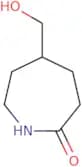
Fórmula:C11H15NO2Pureza:Min. 95%Peso molecular:193.24 g/mol5-(Hydroxymethyl)azepan-2-one
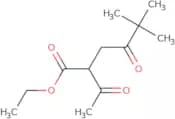
CAS:Versatile small molecule scaffoldFórmula:C7H13NO2Pureza:Min. 95%Peso molecular:143.18 g/molEthyl 2-acetyl-5,5-dimethyl-4-oxohexanoate
CAS:Versatile small molecule scaffoldFórmula:C12H20O4Pureza:Min. 95%Peso molecular:228.28 g/mol10-Undecenoyl chloride
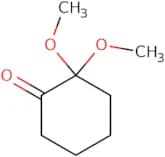
CAS:10-Undecenoyl chloride is a fatty acid that is used as a chemical modifier. It has been shown to increase the efficiency of borohydride reduction, which can be used for the synthesis of pharmaceuticals, such as morphine and codeine. 10-Undecenoyl chloride is also stable in basic conditions, making it suitable for use in reactive environments. In addition, 10-undecenoyl chloride has been shown to be effective against HIV and other viruses by interfering with the virus's ability to bind to cells.Fórmula:C11H19ClOPureza:Min. 95%Peso molecular:202.72 g/mol2,2-Dimethoxycyclohexan-1-one
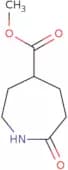
CAS:2,2-Dimethoxycyclohexan-1-one is a ketoxime used as an intermediate in the synthesis of lysine. It can be used to chlorinate and oxime, or halogenate aromatic compounds.Fórmula:C8H14O3Pureza:Min. 95%Peso molecular:158.19 g/molMethyl 7-oxoazepane-4-carboxylate
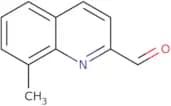
CAS:Versatile small molecule scaffoldFórmula:C8H13NO3Pureza:Min. 95%Peso molecular:171.19 g/mol8-Methylquinoline-2-carbaldehyde
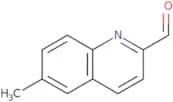
CAS:Versatile small molecule scaffoldFórmula:C11H9NOPureza:Min. 95%Peso molecular:171.19 g/mol6-Methyl-2-quinolinecarboxaldehyde
CAS:Versatile small molecule scaffold
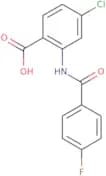
Fórmula:C11H9NOPureza:Min. 95%Peso molecular:171.19 g/mol4-Chloro-2-(4-fluorobenzamido)benzoic acid
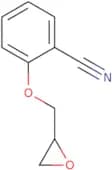
CAS:Versatile small molecule scaffoldFórmula:C14H9ClFNO3Pureza:Min. 95%Peso molecular:293.68 g/mol2-(Oxiran-2-ylmethoxy)benzonitrile
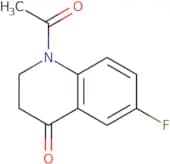
CAS:Versatile small molecule scaffoldFórmula:C10H9NO2Pureza:Min. 95%Peso molecular:175.18 g/mol1-Acetyl-6-fluoro-1,2,3,4-tetrahydroquinolin-4-one
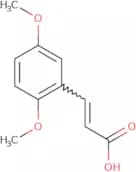
CAS:Versatile small molecule scaffoldFórmula:C11H10FNO2Pureza:Min. 95%Peso molecular:207.2 g/mol(2E)-3-(2,5-Dimethoxyphenyl)acrylic acid
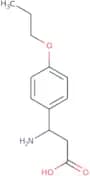
CAS:2E-3-(2,5-Dimethoxyphenyl)acrylic acid is a molecule that has been synthesised. It has an unsymmetrical carboxylic acid group, and is not a natural product. 2E-3-(2,5-Dimethoxyphenyl)acrylic acid can be made by irradiation of vanillic acid and epigallocatechin. The molecule is the chromophore in the profile of irradiated (2E)-3-(2,5-dimethoxyphenyl)acrylic acid. The compound was synthesised using nitrogen atoms and uv irradiation to break down the vanillic acid and epigallocatechin molecules into smaller fragments of molecules. This process takes around 24 hours to complete.Fórmula:C11H12O4Pureza:Min. 95%Peso molecular:208.21 g/mol3-Amino-3-(4-propoxyphenyl)propanoic acid
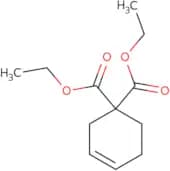
CAS:Versatile small molecule scaffoldFórmula:C12H17NO3Pureza:Min. 95%Peso molecular:223.27 g/mol1,1-Diethyl cyclohex-3-ene-1,1-dicarboxylate
CAS:Versatile small molecule scaffoldFórmula:C12H18O4Pureza:Min. 95%Peso molecular:226.27 g/mol4-[2-(Diethylamino)ethoxy]aniline
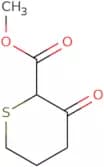
CAS:Producto controlado4-[2-(Diethylamino)ethoxy]aniline is a probe used in the detection of nicotinamide. It is a potent inhibitor of protein kinases and can be used as an antiemetic agent. 4-[2-(Diethylamino)ethoxy]aniline has been shown to inhibit the activity of multiple types of protein kinases, including serine/threonine, tyrosine, and dual-specificity kinases. This probe also inhibits the activity of chloride channels and has been shown to induce intramolecular hydrogen bonding.Fórmula:C12H20N2OPureza:Min. 95%Peso molecular:208.31 g/molMethyl 3-oxothiane-2-carboxylate
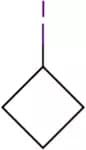
CAS:Versatile small molecule scaffoldFórmula:C7H10O3SPureza:Min. 95%Peso molecular:174.22 g/molIodocyclobutane
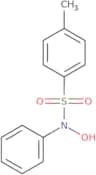
CAS:Iodocyclobutane is an aryl halide that is used in the synthesis of retinoic acid. It is synthesized by reacting iodine with cyclobutane and a magnesium salt. Iodocyclobutane has been shown to have potent anti-cancer activity in cell culture experiments, which may be due to its ability to inhibit the production of retinoic acid receptors α (RAR). Iodocyclobutane is synthesized by reacting iodine with cyclobutane and a magnesium salt. Iodocyclobutane has been shown to have potent anti-cancer activity in cell culture experiments, which may be due to its ability to inhibit the production of retinoic acid receptors α (RAR).Fórmula:C4H7IPureza:Min. 95%Peso molecular:182 g/molN-Hydroxy-4-methyl-N-phenylbenzene-1-sulfonamide
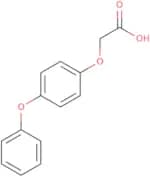
CAS:Versatile small molecule scaffoldFórmula:C13H13NO3SPureza:Min. 95%Peso molecular:263.31 g/mol2-(4-Phenoxyphenoxy)acetic acid
CAS:Versatile small molecule scaffoldFórmula:C14H12O4Pureza:Min. 95%Peso molecular:244.24 g/mol2-[4-(benzyloxy)phenoxy]acetic acid
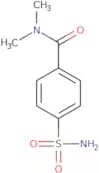
CAS:GW7647 is a novel compound that has been shown to activate Peroxisome proliferator-activated receptor gamma (PPARγ), which is a nuclear hormone receptor involved in lipid metabolism and the development of insulin resistance. GW7647 activates PPARγ by binding to the ligand-binding domain of the receptor and activating transcriptional activity. This activation was observed in human cells, as well as subtypes of human PPARγ. It has been shown to be selective for PPARγ over other receptors, such as Peroxisome proliferator-activated receptor delta (PPARδ). GW7647 acts on dyslipidemia by lowering triglyceride levels and increasing HDL cholesterol levels without affecting LDL cholesterol levels. This drug has also been shown to have lipid-lowering effects in mice fed a high-fat diet.Fórmula:C15H14O4Pureza:Min. 95%Peso molecular:258.27 g/molN,N-Dimethyl-4-sulfamoylbenzamide
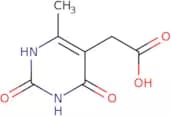
CAS:Versatile small molecule scaffoldFórmula:C9H12N2O3SPureza:Min. 95%Peso molecular:228.27 g/mol(6-Methyl-2,4-dioxo-1,2,3,4-tetrahydropyrimidin-5-yl)acetic acid
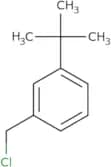
CAS:Versatile small molecule scaffoldFórmula:C7H8N2O4Pureza:Min. 95%Peso molecular:184.15 g/mol1-tert-Butyl-3-(chloromethyl)benzene
CAS:Versatile small molecule scaffold
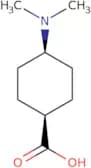
Fórmula:C11H15ClPureza:Min. 95%Peso molecular:182.69 g/molrac-(1S,4S)-4-(Dimethylamino)cyclohexane-1-carboxylic acid
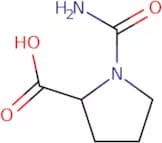
CAS:Versatile small molecule scaffoldFórmula:C9H17NO2Pureza:Min. 95%Peso molecular:171.2 g/mol1-(Aminocarbonyl)-L-proline
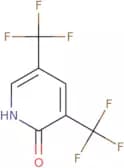
CAS:1-(Aminocarbonyl)-L-proline is a molecule that contains an aminocarbonyl group, which is a nucleophilic functional group. It is a cyclic compound with a ring structure consisting of three carbons and two amino groups. The 1-(aminocarbonyl)-L-proline molecule has been studied using Raman spectroscopy, vibrational spectroscopy, X-ray diffraction, and other techniques. This molecule has been shown to have the potential to be used as an anti-cancer drug by inhibiting the synthesis of DNA and RNA in cells. The conformation of this compound may also be important for understanding its reactivity.Fórmula:C6H10N2O3Pureza:Min. 95%Peso molecular:158.16 g/mol3,5-Bis(trifluoromethyl)pyridin-2-ol
CAS:Versatile small molecule scaffoldFórmula:C7H3F6NOPureza:Min. 95%Peso molecular:231.09 g/mol6-Chlorohexan-3-one
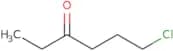
CAS:6-Chlorohexan-3-one is a pyrrole, which is an organic compound that has a six-membered ring. It can be found as the potassium salt and can be used to synthesize indole alkaloids. 6-Chlorohexan-3-one also reacts with potassium and Wittig reagent to form a 1:1 mixture of cis and trans isomers. The insecticide, pyrethrin, is produced from this reaction. This compound can also be used in the synthesis of alkylates when reacted with potassium hydride in an incompletely known manner.
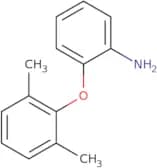
Fórmula:C6H11ClOPureza:Min. 95%Peso molecular:134.6 g/mol2-(2,6-Dimethylphenoxy)aniline
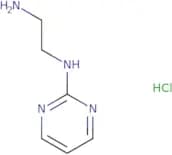
CAS:Versatile small molecule scaffoldFórmula:C14H15NOPureza:Min. 95%Peso molecular:213.27 g/molN-(2-Aminoethyl)pyrimidin-2-amine hydrochloride
CAS:Versatile small molecule scaffoldFórmula:C6H11ClN4Pureza:Min. 95%Peso molecular:174.63 g/mol


![5-[(Oxiran-2-yl)methoxy]-1,3-dioxaindane](/_next/image/?url=https%3A%2Fstatic.cymitquimica.com%2Fproducts%2F3D%2Fthumb-webp%2FNBA41765.webp&w=3840&q=75)


![4-[2-(Diethylamino)ethoxy]aniline](/_next/image/?url=https%3A%2Fstatic.cymitquimica.com%2Fproducts%2F3D%2Fthumb-webp%2FNBA51963.webp&w=3840&q=75)
![2-[4-(benzyloxy)phenoxy]acetic acid](/_next/image/?url=https%3A%2Fstatic.cymitquimica.com%2Fproducts%2F3D%2Fthumb-webp%2FNBA55992.webp&w=3840&q=75)