Building Blocks
Esta sección contiene productos fundamentales para la síntesis de compuestos orgánicos y biológicos. Building blocks son los materiales de partida esenciales utilizados para construir moléculas complejas a través de diversas reacciones químicas. Desempeñan un papel crítico en el descubrimiento de fármacos, la ciencia de materiales y la investigación química. En CymitQuimica, ofrecemos una gama diversa de building blocks de alta calidad para apoyar sus investigaciones innovadoras y proyectos industriales, asegurando que tenga los componentes esenciales para una síntesis exitosa.
Subcategorías de "Building Blocks"
- Ácidos borónicos y derivados del ácido borónico(5.778 productos)
- Building Blocks quirales(1.243 productos)
- Building Blocks de hidrocarburos(6.097 productos)
- Building Blocks orgánicos(61.045 productos)
Se han encontrado 203842 productos de "Building Blocks"
Ordenar por
Pureza (%)
0
100
|
0
|
50
|
90
|
95
|
100
Propan-2-yl (2S,3S)-2-amino-3-methylpentanoate
CAS:Versatile small molecule scaffoldFórmula:C9H19NO2Pureza:Min. 95%Peso molecular:173.3 g/molEthyl 3-bromo-1,2-oxazole-4-carboxylate
CAS:Ethyl 3-bromo-1,2-oxazole-4-carboxylate is a reactive compound that can react with bromonitrile to form an isoxazole. It reacts with other dipolarophiles such as dimerization of bromonitriles to give the desired product in high yield. This compound can also be used for the synthesis of 1,3-dipolar cycloadducts. The active compounds are often used as starting materials for the synthesis of other organic compounds.Fórmula:C6H6BrNO3Pureza:Min. 95%Peso molecular:220.02 g/mol5-Chloro-1,3-dihydro-2,1-benzisothiazole 2,2-dioxide
CAS:Versatile small molecule scaffoldFórmula:C7H6ClNO2SPureza:Min. 95%Peso molecular:203.65 g/mol4-Chloro-N-(2,2-dimethoxyethyl)aniline
CAS:Versatile small molecule scaffoldFórmula:C10H14ClNO2Pureza:Min. 95%Peso molecular:215.67 g/mol[1-(Propan-2-yl)-1H-1,2,4-triazol-5-yl]methanol
CAS:<p>Versatile small molecule scaffold</p>Fórmula:C6H11N3OPureza:Min. 95%Peso molecular:141.17 g/mol1-Methyl-1H-1,2,4-triazole-5-carbaldehyde oxime
CAS:<p>Versatile small molecule scaffold</p>Fórmula:C4H6N4OPureza:Min. 95%Peso molecular:126.1 g/mol1-(Propan-2-yl)-1H-1,2,4-triazole-5-carbaldehyde
CAS:<p>Versatile small molecule scaffold</p>Fórmula:C6H9N3OPureza:Min. 95%Peso molecular:139.16 g/mol1-[(tert-Butyldimethylsilyl)oxy]cyclohexane-1-carbaldehyde
CAS:Versatile small molecule scaffoldFórmula:C13H26O2SiPureza:Min. 95%Peso molecular:242.4 g/mol4-[(tert-Butyldimethylsilyl)oxy]aniline
CAS:<p>4-[(tert-Butyldimethylsilyl)oxy]aniline is a structural analog of the anti-hepatitis drug thalidomide. It has been shown to have antiviral activity against HIV, Hepatitis C and SARS. This compound has high affinity for the viral capsid protein and prevents viral assembly by inhibiting the production of progeny virions. 4-[(tert-Butyldimethylsilyl)oxy]aniline also has anti-inflammatory effects that are similar to those of thalidomide and can be used as a lead compound in the search for new drugs to treat hepatitis B infections.</p>Fórmula:C12H21NOSiPureza:Min. 95%Peso molecular:223.39 g/mol5-Amino-2-chloro-N-phenylbenzamide
CAS:Versatile small molecule scaffoldFórmula:C13H11ClN2OPureza:Min. 95%Peso molecular:246.69 g/mol2-(1-Piperazinyl)benzonitrile
CAS:2-(1-Piperazinyl)benzonitrile is a neuroprotective drug that has been shown to be effective in the treatment of neuropathic and traumatic brain injury. It is a dopamine receptor agonist that binds to the d4 receptor, which is found in high concentrations in the central nervous system. 2-(1-Piperazinyl)benzonitrile enhances dopamine release by increasing calcium levels in cells, which leads to increased dopamine production and improved cognitive function. This drug also prevents neuronal death by preventing oxidative stress and apoptosis. The synthesis of this molecule can be achieved through solid-phase synthesis or chloroformate coupling reactions.Fórmula:C11H13N3Pureza:Min. 95%Peso molecular:187.25 g/mol3-Methoxy-1H-pyrazolo[3,4-d]pyrimidin-4-amine
CAS:3-Methoxy-1H-pyrazolo[3,4-d]pyrimidin-4-amine is a soluble guanylate cyclase (sGC) inhibitor that inhibits the production of cyclic guanosine monophosphate (cGMP) in smooth muscle cells. 3MPPD inhibits intracellular cGMP and therefore causes the blood vessels to relax, which leads to an increase in blood pressure. This inhibition is selective for sGC, as it does not inhibit adenosine kinase or other intracellular enzymes. 3MPPD also has a contractile effect on vascular smooth muscle cells, which may be due to its ability to inhibit calcium release from intracellular stores. The maximal response of 3MPPD was found using mesenteric vascular strips in vitro, where it was shown to produce a concentration-dependent relaxation of VSMCs. In addition, this drug is able to reduce the severity of injury caused by a balloonFórmula:C6H7N5OPureza:Min. 95%Peso molecular:165.15 g/mol1h-pyrazole-4-carboxamide, 3-amino-5-methoxy-
CAS:Versatile small molecule scaffoldFórmula:C5H8N4O2Pureza:Min. 95%Peso molecular:156.15 g/mol3-[3-(Methoxycarbonyl)phenyl]propanoic acid
CAS:<p>Versatile small molecule scaffold</p>Fórmula:C11H12O4Pureza:Min. 95%Peso molecular:208.21 g/mol[(1,3,4-Thiadiazol-2-yl)amino]formonitrile
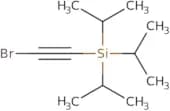
CAS:<p>[(1,3,4-Thiadiazol-2-yl)amino]formonitrile is a cytostatic agent that inhibits the synthesis of cellular proteins. It has been shown to be effective against influenza virus and some other viruses. [(1,3,4-Thiadiazol-2-yl)amino]formonitrile also has anti-inflammatory properties and can be used as a diagnostic agent for tissue culture. This drug binds to DNA at the nucleotide level and prevents the formation of protein by inhibiting RNA synthesis in cells. It has been shown to be effective against tissue culture cells infected with hepatitis B virus or influenza A virus. [(1,3,4-Thiadiazol-2-yl)amino]formonitrile is reconstituted in water or DMSO before use in experiments with animals such as mice (CD1 strain).</p>Fórmula:C3H2N4SPureza:Min. 95%Peso molecular:126.14 g/mol(2-Bromoethynyl)tris(propan-2-yl)silane
CAS:<p>(2-Bromoethynyl)tris(propan-2-yl)silane is a synthetically useful compound that has been used in the synthesis of amines, as well as in the preparation of triazoles. It can be used to produce chaperones and antitumoural drugs, such as solvents and palladium-catalyzed cross-coupling reactions. This compound is an efficient source of ethynyl groups for cross-coupling reactions with a wide range of amine partners. The ring-opening reaction of this compound with pyrroles provides two equivalents of propargyl alcohols, which can then be converted into an array of products including amino acids and pharmaceuticals.</p>Fórmula:C11H21SiBrPureza:Min. 95%Peso molecular:261.27 g/mol3-(Thiophen-2-yl)morpholine
CAS:<p>Versatile small molecule scaffold</p>Fórmula:C8H11NOSPureza:Min. 95%Peso molecular:169.25 g/mol3-Ethyl-1,2,3,4-tetrahydroisoquinoline
CAS:Versatile small molecule scaffoldFórmula:C11H15NPureza:Min. 95%Peso molecular:161.24 g/mol2-Ethoxy-9H-purin-6-amine
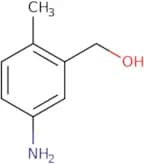
CAS:Versatile small molecule scaffoldFórmula:C7H9N5OPureza:Min. 95%Peso molecular:179.18 g/mol(5-Amino-2-methylphenyl)methanol
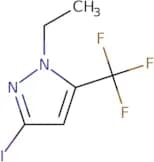
CAS:Versatile small molecule scaffoldFórmula:C8H11NOPureza:Min. 95%Peso molecular:137.18 g/mol1-Ethyl-3-iodo-5-(trifluoromethyl)-1H-pyrazole
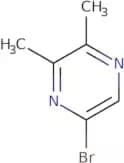
CAS:<p>Versatile small molecule scaffold</p>Fórmula:C6H6F3IN2Pureza:Min. 95%Peso molecular:290.02 g/mol5-Bromo-2,3-dimethylpyrazine
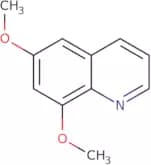
CAS:<p>Versatile small molecule scaffold</p>Fórmula:C6H7BrN2Pureza:Min. 95%Peso molecular:187.04 g/mol6,8-Dimethoxyquinoline
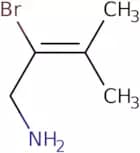
CAS:<p>6,8-Dimethoxyquinoline is a quinoline derivative that has been used to synthesize a number of other drugs. It has shown activity against cancer cells in vitro and in vivo and has been shown to have an anticholinergic effect on the central nervous system. 6,8-Dimethoxyquinoline also inhibits bacterial growth and is active against Gram-positive bacteria such as Enterococcus faecalis, Staphylococcus aureus, Streptococcus pyogenes, and Bacillus subtilis. This compound binds to the enzyme carbonic anhydrase II with high affinity. The binding of 6,8-dimethoxyquinoline with carbonic anhydrase II prevents the conversion of CO2 into carbonic acid, which may lead to cell death by inhibiting respiration.</p>Fórmula:C11H11NO2Pureza:Min. 95%Peso molecular:189.21 g/mol2-Bromo-3-methylbut-2-en-1-amine
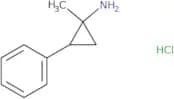
CAS:<p>Versatile small molecule scaffold</p>Fórmula:C5H10BrNPureza:Min. 95%Peso molecular:164.04 g/molrac-(1R,2S)-1-Methyl-2-phenylcyclopropan-1-amine hydrochloride
CAS:Versatile small molecule scaffoldFórmula:C10H14ClNPureza:Min. 95%Peso molecular:183.7 g/mol(Hept-6-en-1-yl)(methyl)amine
CAS:Versatile small molecule scaffoldFórmula:C8H17NPureza:Min. 95%Peso molecular:127.23 g/mol{Imidazo[1,2-a]pyridin-8-yl}methanol hydrochloride
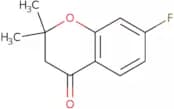
CAS:Versatile small molecule scaffoldFórmula:C8H9ClN2OPureza:Min. 95%Peso molecular:184.62 g/mol7-Fluoro-2,3-dihydro-2,2-dimethylchromen-4-one
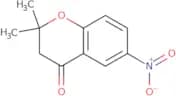
CAS:Versatile small molecule scaffoldFórmula:C11H11FO2Pureza:Min. 95%Peso molecular:194.2 g/mol2,2-Dimethyl-6-nitrochroman-4-one
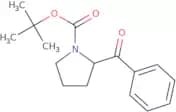
CAS:<p>2,2-Dimethyl-6-nitrochroman-4-one is an active compound that belongs to the group of serotonin antagonists. It binds to the 5-HT1A, 5-HT2C, and 5-HT7 receptors, with high affinity. The 5-HT6 receptor has also been shown to be expressed in the nervous system. This drug is used to treat psychotic disorders and dementia. 2,2-Dimethyl-6-nitrochroman-4-one inhibits dopamine receptors and can cause depression or worsen schizophrenia symptoms when it is taken for a long time.</p>Fórmula:C11H11NO4Pureza:Min. 95%Peso molecular:221.21 g/moltert-Butyl (2S)-2-benzoylpyrrolidine-1-carboxylate
CAS:Producto controlado<p>Versatile small molecule scaffold</p>Fórmula:C16H21NO3Pureza:Min. 95%Peso molecular:275.34 g/mol(R)-Phenyl[(2S)-pyrrolidin-2-yl]methanol hydrochloride
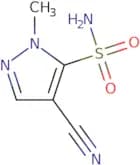
CAS:Versatile small molecule scaffoldFórmula:C11H16ClNOPureza:Min. 95%Peso molecular:213.7 g/mol4-Cyano-1-methyl-1H-pyrazole-5-sulfonamide
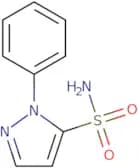
CAS:<p>Versatile small molecule scaffold</p>Fórmula:C5H6N4O2SPureza:Min. 95%Peso molecular:186.19 g/mol1-Phenyl-1H-pyrazole-5-sulfonamide
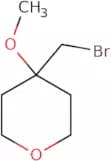
CAS:<p>Versatile small molecule scaffold</p>Fórmula:C9H9N3O2SPureza:Min. 95%Peso molecular:223.25 g/mol4-(Bromomethyl)-4-methoxyoxane
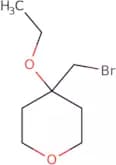
CAS:<p>Versatile small molecule scaffold</p>Fórmula:C7H13BrO2Pureza:Min. 95%Peso molecular:209.08 g/mol4-(Bromomethyl)-4-ethoxyoxane
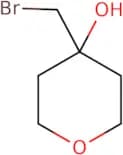
CAS:<p>Versatile small molecule scaffold</p>Fórmula:C8H15BrO2Pureza:Min. 95%Peso molecular:223.11 g/mol4-(Bromomethyl)oxan-4-ol
CAS:<p>Versatile small molecule scaffold</p>Fórmula:C6H11BrO2Pureza:Min. 95%Peso molecular:195.05 g/mol[4-(Aminomethyl)oxan-4-yl]methanamine dihydrochloride
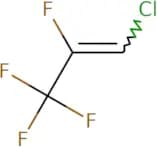
CAS:Versatile small molecule scaffoldFórmula:C7H18Cl2N2OPureza:Min. 95%Peso molecular:217.13 g/mol(Z)-1-Chloro-2,3,3,3-tetrafluoropropene
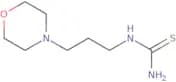
CAS:(Z)-1-Chloro-2,3,3,3-tetrafluoropropene is a chemical used in commercial solvents. It is a colorless gas with an odor similar to that of hexane. It has been shown to have cardiac effects in chronic exposure studies and it can also cause chronic oral toxicity in animals. Studies on the toxicology of (Z)-1-chloro-2,3,3,3-tetrafluoropropene have been conducted using fruit extract and protein synthesis assays. The results show that this compound may be useful for the treatment of cancer and other diseases caused by protein aggregation.Fórmula:C3HClF4Pureza:Min. 95%Peso molecular:148.49 g/mol1-(3-Morpholinopropyl)-2-thiourea
CAS:<p>Versatile small molecule scaffold</p>Fórmula:C8H17N3OSPureza:Min. 95%Peso molecular:203.31 g/mol1-[(2R)-Piperidin-2-yl]ethan-1-one hydrochloride
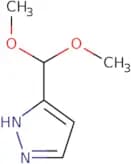
CAS:Versatile small molecule scaffoldFórmula:C7H14ClNOPureza:Min. 95%Peso molecular:163.64 g/mol3-(Dimethoxymethyl)-1H-pyrazole
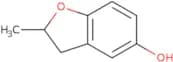
CAS:<p>3-(Dimethoxymethyl)-1H-pyrazole is a natural product that is produced by the reaction of acetals with catalytic amounts of trifluoromethanesulfonic acid. This chemical is synthesised by reacting orthoformates and functional groups. 3-(Dimethoxymethyl)-1H-pyrazole is found in catalytic amounts in the synthesis of pyrazoles and cyclic compounds. The yield of 3-(dimethoxymethyl)-1H-pyrazole can be increased by adding an oxidant to the reaction mixture.</p>Fórmula:C6H10N2O2Pureza:Min. 95%Peso molecular:142.16 g/mol2-Methyl-2,3-dihydro-1-benzofuran-5-ol
CAS:Versatile small molecule scaffoldFórmula:C9H10O2Pureza:Min. 95%Peso molecular:150.17 g/mol5-Ethynyl-4-methyl-1,3-thiazole
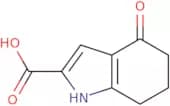
CAS:<p>Versatile small molecule scaffold</p>Fórmula:C6H5NSPureza:Min. 95%Peso molecular:123.18 g/mol4-Oxo-4,5,6,7-tetrahydro-1H-indole-2-carboxylic acid
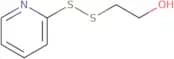
CAS:Versatile small molecule scaffoldFórmula:C9H9NO3Pureza:Min. 95%Peso molecular:179.17 g/mol2-(Pyridin-2-yldisulfanyl)ethan-1-ol
CAS:<p>This linker, 2-(Pyridin-2-yldisulfanyl)ethan-1-ol, forms a disulfide bond with thiol-containing molecules. It can be cleaved intracellularly in a reductive environment, allowing controlled payload release.</p>Fórmula:C7H9NOS2Pureza:Min. 95%Peso molecular:187.3 g/mol1-Benzenesulfonyl-piperidine-4-carboxylic acid ethyl ester
CAS:<p>1-Benzenesulfonyl-piperidine-4-carboxylic acid ethyl ester is an inhibitor of acetylcholinesterase. It is a white solid that can be synthesized in two steps from commercially available starting materials. Inhibition of this enzyme leads to the accumulation of acetylcholine, which causes increased stimulation of nicotinic and muscarinic receptors. This drug has been shown to have IC50 values that are similar to those of the reference inhibitor donepezil. 1-Benzenesulfonyl-piperidine-4-carboxylic acid ethyl ester also interacts with sulfonyl chlorides, butyrylcholinesterase, and other proteins in a manner similar to donepezil. The molecular docking studies suggest that this compound binds competitively with the active site of acetylcholinesterase.</p>Fórmula:C14H19NO4SPureza:Min. 95%Peso molecular:297.37 g/mol9-Azatricyclo[6.2.1.0,2,7]undeca-2,4,6-triene hydrochloride
CAS:<p>Versatile small molecule scaffold</p>Fórmula:C10H12ClNPureza:Min. 95%Peso molecular:181.66 g/molEthyl 4-hydroxy-4-phenylbutanoate
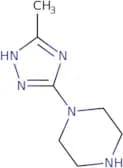
CAS:<p>Versatile small molecule scaffold</p>Fórmula:C12H16O3Pureza:Min. 95%Peso molecular:208.25 g/mol1-(5-Methyl-4H-1,2,4-triazol-3-yl)piperazine
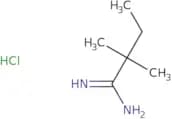
CAS:Versatile small molecule scaffoldFórmula:C7H13N5Pureza:Min. 95%Peso molecular:167.21 g/mol2,2-Dimethylbutanimidamide hydrochloride
CAS:Versatile small molecule scaffoldFórmula:C6H15ClN2Pureza:Min. 95%Peso molecular:150.6 g/mol


![[1-(Propan-2-yl)-1H-1,2,4-triazol-5-yl]methanol](/_next/image/?url=https%3A%2Fstatic.cymitquimica.com%2Fproducts%2F3D%2Fthumb-webp%2FLEA34039.webp&w=3840&q=75)


![1-[(tert-Butyldimethylsilyl)oxy]cyclohexane-1-carbaldehyde](/_next/image/?url=https%3A%2Fstatic.cymitquimica.com%2Fproducts%2F3D%2Fthumb-webp%2FLEA35178.webp&w=3840&q=75)
![4-[(tert-Butyldimethylsilyl)oxy]aniline](/_next/image/?url=https%3A%2Fstatic.cymitquimica.com%2Fproducts%2F3D%2Fthumb-webp%2FLEA35974.webp&w=3840&q=75)


![3-Methoxy-1H-pyrazolo[3,4-d]pyrimidin-4-amine](/_next/image/?url=https%3A%2Fstatic.cymitquimica.com%2Fproducts%2F3D%2Fthumb-webp%2FLEA37522.webp&w=3840&q=75)

![3-[3-(Methoxycarbonyl)phenyl]propanoic acid](/_next/image/?url=https%3A%2Fstatic.cymitquimica.com%2Fproducts%2F3D%2Fthumb-webp%2FLEA37650.webp&w=3840&q=75)
![[(1,3,4-Thiadiazol-2-yl)amino]formonitrile](/_next/image/?url=https%3A%2Fstatic.cymitquimica.com%2Fproducts%2F3D%2Fthumb-webp%2FLEA39384.webp&w=3840&q=75)



![{Imidazo[1,2-a]pyridin-8-yl}methanol hydrochloride](/_next/image/?url=https%3A%2Fstatic.cymitquimica.com%2Fproducts%2F3D%2Fthumb-webp%2FLEA47718.webp&w=3840&q=75)
![(R)-Phenyl[(2S)-pyrrolidin-2-yl]methanol hydrochloride](/_next/image/?url=https%3A%2Fstatic.cymitquimica.com%2Fproducts%2F3D%2Fthumb-webp%2FLEA49262.webp&w=3840&q=75)
![[4-(Aminomethyl)oxan-4-yl]methanamine dihydrochloride](/_next/image/?url=https%3A%2Fstatic.cymitquimica.com%2Fproducts%2F3D%2Fthumb-webp%2FLEA51191.webp&w=3840&q=75)
![1-[(2R)-Piperidin-2-yl]ethan-1-one hydrochloride](/_next/image/?url=https%3A%2Fstatic.cymitquimica.com%2Fproducts%2F3D%2Fthumb-webp%2FLEA55621.webp&w=3840&q=75)


![9-Azatricyclo[6.2.1.0,2,7]undeca-2,4,6-triene hydrochloride](/_next/image/?url=https%3A%2Fstatic.cymitquimica.com%2Fproducts%2F3D%2Fthumb-webp%2FLEA63504.webp&w=3840&q=75)