Building Blocks
Esta sección contiene productos fundamentales para la síntesis de compuestos orgánicos y biológicos. Building blocks son los materiales de partida esenciales utilizados para construir moléculas complejas a través de diversas reacciones químicas. Desempeñan un papel crítico en el descubrimiento de fármacos, la ciencia de materiales y la investigación química. En CymitQuimica, ofrecemos una gama diversa de building blocks de alta calidad para apoyar sus investigaciones innovadoras y proyectos industriales, asegurando que tenga los componentes esenciales para una síntesis exitosa.
Subcategorías de "Building Blocks"
- Ácidos borónicos y derivados del ácido borónico(5.778 productos)
- Building Blocks quirales(1.243 productos)
- Building Blocks de hidrocarburos(6.098 productos)
- Building Blocks orgánicos(61.046 productos)
Se han encontrado 203857 productos de "Building Blocks"
Ordenar por
Pureza (%)
0
100
|
0
|
50
|
90
|
95
|
100
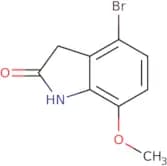
4-Bromo-7-methoxyindolin-2-one
CAS:Versatile small molecule scaffoldFórmula:C9H8BrNO2Pureza:Min. 95%Peso molecular:242.07 g/mol2-[4-(Difluoromethoxy)-3-fluorophenyl]-4,4,5,5-tetramethyl-1,3,2-dioxaborolane
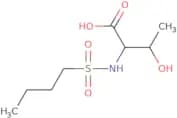
CAS:Versatile small molecule scaffoldFórmula:C13H16BF3O3Pureza:Min. 95%Peso molecular:288.07 g/mol2-(Butane-1-sulfonamido)-3-hydroxybutanoic acid
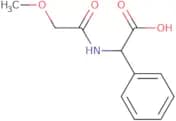
CAS:Versatile small molecule scaffoldFórmula:C8H17NO5SPureza:Min. 95%Peso molecular:239.29 g/mol2-(2-Methoxyacetamido)-2-phenylacetic acid
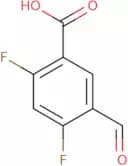
CAS:Versatile small molecule scaffoldFórmula:C11H13NO4Pureza:Min. 95%Peso molecular:223.22 g/mol2,4-Difluoro-5-formylbenzoic acid
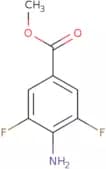
CAS:<p>Versatile small molecule scaffold</p>Fórmula:C8H4F2O3Pureza:Min. 95%Peso molecular:186.11 g/molmethyl 4-amino-3,5-difluorobenzoate
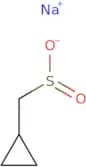
CAS:Versatile small molecule scaffoldFórmula:C8H7F2NO2Pureza:Min. 95%Peso molecular:187.1 g/molSodium cyclopropylmethanesulfinate
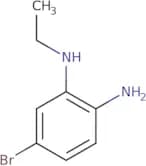
CAS:Sodium cyclopropylmethanesulfinate is a sulfone that is used as a mediator in the synthesis of heterocycloalkyl compounds. It is also used in the treatment of methoxyethyl and tosylates. Sodium cyclopropylmethanesulfinate is a modulator, which aids in the palladium-catalyzed coupling reaction by removing water from the reaction. It can be used as an inhibitor for organic reactions, such as sulfonyl or tosylate reactions. Sodium cyclopropylmethanesulfinate yields are relatively low because it has a high boiling point and decomposes rapidly at higher temperatures.Fórmula:C4H7NaO2SPureza:Min. 95%Peso molecular:142.15 g/mol5-Bromo-1-N-ethylbenzene-1,2-diamine
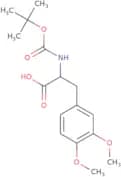
CAS:Versatile small molecule scaffoldFórmula:C8H11BrN2Pureza:Min. 95%Peso molecular:215.09 g/molN-Boc-3,4-dimethoxy-DL-phenylalanine
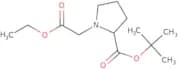
CAS:Versatile small molecule scaffoldFórmula:C16H23NO6Pureza:Min. 95%Peso molecular:325.36 g/mol(S)-tert-Butyl 1-(2-ethoxy-2-oxoethyl)pyrrolidine-2-carboxylate
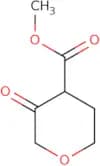
CAS:Versatile small molecule scaffoldFórmula:C13H23NO4Pureza:Min. 95%Peso molecular:257.33 g/molMethyl 3-oxooxane-4-carboxylate
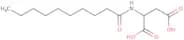
CAS:Versatile small molecule scaffoldFórmula:C7H10O4Pureza:Min. 95%Peso molecular:158.15 g/mol(2R)-2-Decanamidobutanedioic acid
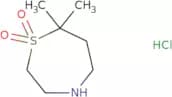
CAS:<p>Versatile small molecule scaffold</p>Fórmula:C14H25NO5Pureza:Min. 95%Peso molecular:287.4 g/mol7,7-Dimethyl-1,4-thiazepane 1,1-dioxide hydrochloride
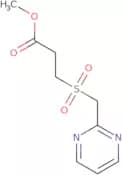
CAS:<p>Versatile small molecule scaffold</p>Fórmula:C7H16ClNO2SPureza:Min. 95%Peso molecular:213.73 g/molMethyl 3-(pyrimidin-2-ylmethanesulfonyl)propanoate
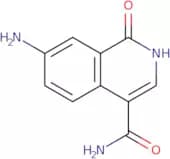
CAS:Versatile small molecule scaffoldFórmula:C9H12N2O4SPureza:Min. 95%Peso molecular:244.27 g/mol7-Amino-1-oxo-1,2-dihydroisoquinoline-4-carboxamide
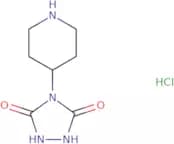
CAS:Versatile small molecule scaffoldFórmula:C10H9N3O2Pureza:Min. 95%Peso molecular:203.2 g/mol4-(Piperidin-4-yl)-1,2,4-triazolidine-3,5-dione hydrochloride
CAS:<p>Versatile small molecule scaffold</p>Fórmula:C7H13ClN4O2Pureza:Min. 95%Peso molecular:220.66 g/mol1-{4,5-Dimethyl-4H,7H-[1,2,4]triazolo[1,5-a]pyrimidin-6-yl}ethan-1-one
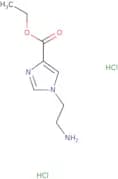
CAS:<p>Versatile small molecule scaffold</p>Fórmula:C9H12N4OPureza:Min. 95%Peso molecular:192.22 g/molEthyl 1-(2-aminoethyl)-1H-imidazole-4-carboxylate dihydrochloride
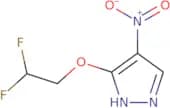
CAS:Versatile small molecule scaffoldFórmula:C8H15Cl2N3O2Pureza:Min. 95%Peso molecular:256.13 g/mol3-(2,2-Difluoroethoxy)-4-nitro-1H-pyrazole
CAS:Versatile small molecule scaffoldFórmula:C5H5F2N3O3Pureza:Min. 95%Peso molecular:193.11 g/molMethyl({2-[4-(trifluoromethyl)phenoxy]propyl})amine hydrochloride
CAS:Versatile small molecule scaffoldFórmula:C11H15ClF3NOPureza:Min. 95%Peso molecular:269.69 g/mol4-[5-(2-Methoxyphenyl)-1,2,4-oxadiazol-3-yl]piperidine hydrochloride
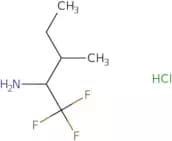
CAS:Versatile small molecule scaffoldFórmula:C14H18ClN3O2Pureza:Min. 95%Peso molecular:295.76 g/mol1,1,1-Trifluoro-3-methylpentan-2-amine hydrochloride
CAS:Versatile small molecule scaffoldFórmula:C6H13ClF3NPureza:Min. 95%Peso molecular:191.62 g/mol1-[5-(Butan-2-yl)-1H-1,2,4-triazol-3-yl]ethan-1-amine hydrochloride
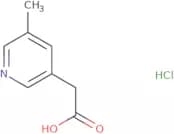
CAS:Versatile small molecule scaffoldFórmula:C8H17ClN4Pureza:Min. 95%Peso molecular:204.7 g/mol2-(5-Methylpyridin-3-yl)acetic acid hydrochloride
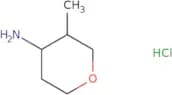
CAS:Versatile small molecule scaffoldFórmula:C8H10ClNO2Pureza:Min. 95%Peso molecular:187.62 g/mol3-Methyloxan-4-amine hydrochloride
CAS:Versatile small molecule scaffoldFórmula:C6H14ClNOPureza:Min. 95%Peso molecular:151.63 g/mol5-Ethyl-1-[3-(trifluoromethyl)phenyl]-1H-pyrazol-4-amine hydrochloride
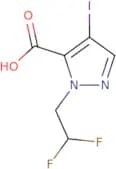
CAS:Versatile small molecule scaffoldFórmula:C12H13ClF3N3Pureza:Min. 95%Peso molecular:291.7 g/mol1-(2,2-Difluoroethyl)-4-iodo-1H-pyrazole-5-carboxylic acid
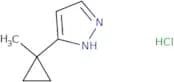
CAS:Versatile small molecule scaffoldFórmula:C6H5F2IN2O2Pureza:Min. 95%Peso molecular:302.02 g/mol3-(1-Methylcyclopropyl)-1H-pyrazole hydrochloride
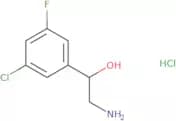
CAS:Versatile small molecule scaffoldFórmula:C7H11ClN2Pureza:Min. 95%Peso molecular:158.63 g/mol2-Amino-1-(3-chloro-5-fluorophenyl)ethan-1-ol hydrochloride
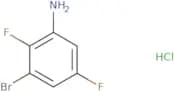
CAS:<p>Versatile small molecule scaffold</p>Fórmula:C8H10Cl2FNOPureza:Min. 95%Peso molecular:226.07 g/mol3-Bromo-2,5-difluoroaniline hydrochloride
CAS:Versatile small molecule scaffoldFórmula:C6H5BrClF2NPureza:Min. 95%Peso molecular:244.46 g/molN4-{3-[Ethyl(phenyl)amino]propyl}pyrido[2,3-d]pyrimidine-4,7-diamine
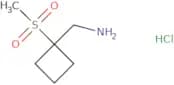
CAS:Versatile small molecule scaffoldFórmula:C18H22N6Pureza:Min. 95%Peso molecular:322.4 g/mol(1-Methanesulfonylcyclobutyl)methanamine Hydrochloride
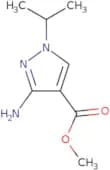
CAS:Versatile small molecule scaffoldFórmula:C6H13NO2S·HClPureza:Min. 95%Peso molecular:199.69 g/molMethyl 3-amino-1-(propan-2-yl)-1H-pyrazole-4-carboxylate
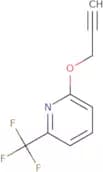
CAS:<p>Versatile small molecule scaffold</p>Fórmula:C8H13N3O2Pureza:Min. 95%Peso molecular:183.21 g/mol2-(Prop-2-yn-1-yloxy)-6-(trifluoromethyl)pyridine
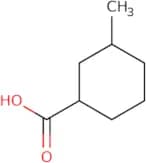
CAS:Versatile small molecule scaffoldFórmula:C9H6F3NOPureza:Min. 95%Peso molecular:201.14 g/mol3-Methylcyclohexane-1-carboxylic acid
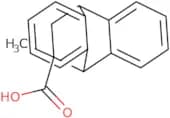
CAS:3-Methylcyclohexane-1-carboxylic acid is an inorganic compound that belongs to the group of carboxylic acids. It has a molecular weight of 134.11 and a melting point of -64°C. The 3-methylcyclohexane-1-carboxylic acid isomers are separated by a spectrometer, which is a device that measures the intensity and wavelength of electromagnetic radiation. The molecular ions have been identified as [M+H]+. These ions are used to identify the composition of organic compounds, such as 5HT1A receptor ligands and serotonin, which is a neurotransmitter found in the brain. 3-Methylcyclohexane-1-carboxylic acid has been shown to be effective for treating depression, anxiety disorders, and other mood disorders when administered orally or intravenously.Fórmula:C8H14O2Pureza:Min. 95%Peso molecular:142.2 g/mol9,10-Dihydro-11-methyl- 9,10-ethanoanthracene-11-carboxylic acid
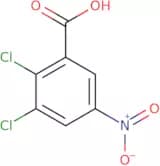
CAS:Versatile small molecule scaffoldFórmula:C18H16O2Pureza:Min. 95%Peso molecular:264.3 g/mol2,3-Dichloro-5-nitrobenzoic acid
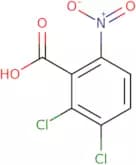
CAS:Versatile small molecule scaffoldFórmula:C7H3Cl2NO4Pureza:Min. 95%Peso molecular:236.01 g/mol2,3-Dichloro-6-nitrobenzoic acid
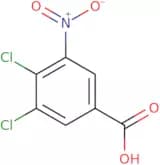
CAS:Versatile small molecule scaffoldFórmula:C7H3Cl2NO4Pureza:Min. 95%Peso molecular:236.01 g/mol3,4-dichloro-5-nitrobenzoic acid
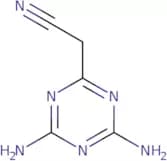
CAS:Versatile small molecule scaffoldFórmula:C7H3Cl2NO4Pureza:Min. 95%Peso molecular:236 g/mol2-(Diamino-1,3,5-triazin-2-yl)acetonitrile
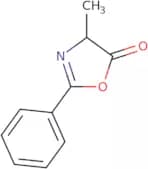
CAS:Versatile small molecule scaffoldFórmula:C5H6N6Pureza:Min. 95%Peso molecular:150.14 g/mol4-Methyl-2-phenyl-2-oxazoline-5-one
CAS:<p>4-Methyl-2-phenyl-2-oxazoline-5-one is a mesoionic compound that polymerizes by 1,3-dipolar cycloaddition. This reaction can be performed in the absence of solvents and is known to be fast and efficient. The product of this reaction is a poly(4-methylphenyl)oxazoline, which has been shown to be an effective precursor for carbon nanotubes.</p>Fórmula:C10H9NO2Pureza:Min. 95%Peso molecular:175.18 g/molN-[4-(Dimethylamino)phenyl]prop-2-enamide
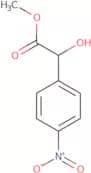
CAS:Versatile small molecule scaffoldFórmula:C11H14N2OPureza:Min. 95%Peso molecular:190.24 g/molmethyl 2-hydroxy-2-(4-nitrophenyl)acetate
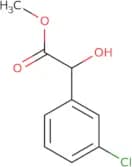
CAS:Versatile small molecule scaffoldFórmula:C9H9NO5Pureza:Min. 95%Peso molecular:211.17 g/molMethyl 2-(3-chlorophenyl)-2-hydroxyacetate
CAS:Versatile small molecule scaffoldFórmula:C9H9ClO3Pureza:Min. 95%Peso molecular:200.62 g/mol1-{Bicyclo[2.2.1]heptan-2-yl}ethan-1-ol
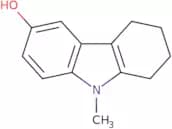
CAS:Versatile small molecule scaffoldFórmula:C9H16OPureza:Min. 95%Peso molecular:140.22 g/mol9-Methyl-2,3,4,9-tetrahydro-1H-carbazol-6-ol
CAS:<p>Versatile small molecule scaffold</p>Fórmula:C13H15NOPureza:Min. 95%Peso molecular:201.26 g/mol5-chloro-[1,3]thiazolo[5,4-d]pyrimidine
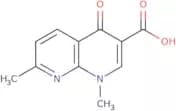
CAS:5-Chloro-[1,3]thiazolo[5,4-d]pyrimidine is a non-polar compound that is soluble in non-polar solvents. It reacts with 5-aminouracil to form the pentasulfide. This reaction can be followed by monitoring the change in fluorescence of the product as it cyclises to form a chloride. The reaction may also be monitored by measuring the release of phosphorous pentoxide gas from phosphoryl chloride. 5-Chloro-[1,3]thiazolo[5,4-d]pyrimidine has been used in fluorescence studies and cyclisation reactions.Fórmula:C5H2N3SClPureza:Min. 95%Peso molecular:171.6 g/mol1,7-Dimethyl-4-oxo-1,4-dihydro-1,8-naphthyridine-3-carboxylic acid
CAS:Versatile small molecule scaffoldFórmula:C11H10N2O3Pureza:Min. 95%Peso molecular:218.21 g/mol3-Methyl-3,9-diazaspiro[5,5]undecane
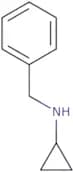
CAS:Versatile small molecule scaffoldFórmula:C10H20N2Pureza:Min. 95%Peso molecular:168.28 g/molN-Cyclopropyl-benzylamine
CAS:N-Cyclopropyl-benzylamine is a dopamine precursor that inhibits the activity of p-450 enzymes. It has been shown to be effective in clinical trials and is used as a model drug for other compounds with similar structures. N-Cyclopropyl-benzylamine irreversibly inhibits the activity of p-450 enzymes, but does not inhibit other cytochrome P450 enzymes such as CYP2D6 or CYP1A2. It has been shown to have antihypertensive effects in animal models and human pharmacokinetic studies, but no biological properties have been identified. N-Cyclopropyl-benzylamine can be found in rat liver microsomes and aminergic neurons.Fórmula:C10H13NPureza:Min. 95%Peso molecular:147.22 g/mol

![2-[4-(Difluoromethoxy)-3-fluorophenyl]-4,4,5,5-tetramethyl-1,3,2-dioxaborolane](/_next/image/?url=https%3A%2Fstatic.cymitquimica.com%2Fproducts%2F3D%2Fthumb-webp%2FMWB26235.webp&w=3840&q=75)
![1-{4,5-Dimethyl-4H,7H-[1,2,4]triazolo[1,5-a]pyrimidin-6-yl}ethan-1-one](/_next/image/?url=https%3A%2Fstatic.cymitquimica.com%2Fproducts%2F3D%2Fthumb-webp%2FMWC86817.webp&w=3840&q=75)
![Methyl({2-[4-(trifluoromethyl)phenoxy]propyl})amine hydrochloride](/_next/image/?url=https%3A%2Fstatic.cymitquimica.com%2Fproducts%2F3D%2Fthumb-webp%2FMWC89604.webp&w=3840&q=75)
![4-[5-(2-Methoxyphenyl)-1,2,4-oxadiazol-3-yl]piperidine hydrochloride](/_next/image/?url=https%3A%2Fstatic.cymitquimica.com%2Fproducts%2F3D%2Fthumb-webp%2FMWC89662.webp&w=3840&q=75)
![1-[5-(Butan-2-yl)-1H-1,2,4-triazol-3-yl]ethan-1-amine hydrochloride](/_next/image/?url=https%3A%2Fstatic.cymitquimica.com%2Fproducts%2F3D%2Fthumb-webp%2FMWC90443.webp&w=3840&q=75)
![5-Ethyl-1-[3-(trifluoromethyl)phenyl]-1H-pyrazol-4-amine hydrochloride](/_next/image/?url=https%3A%2Fstatic.cymitquimica.com%2Fproducts%2F3D%2Fthumb-webp%2FMWC90927.webp&w=3840&q=75)
![N4-{3-[Ethyl(phenyl)amino]propyl}pyrido[2,3-d]pyrimidine-4,7-diamine](/_next/image/?url=https%3A%2Fstatic.cymitquimica.com%2Fproducts%2F3D%2Fthumb-webp%2FMWC93136.webp&w=3840&q=75)
![N-[4-(Dimethylamino)phenyl]prop-2-enamide](/_next/image/?url=https%3A%2Fstatic.cymitquimica.com%2Fproducts%2F3D%2Fthumb-webp%2FNAA30463.webp&w=3840&q=75)
![1-{Bicyclo[2.2.1]heptan-2-yl}ethan-1-ol](/_next/image/?url=https%3A%2Fstatic.cymitquimica.com%2Fproducts%2F3D%2Fthumb-webp%2FNAA30529.webp&w=3840&q=75)
![5-chloro-[1,3]thiazolo[5,4-d]pyrimidine](/_next/image/?url=https%3A%2Fstatic.cymitquimica.com%2Fproducts%2F3D%2Fthumb-webp%2FNAA31608.webp&w=3840&q=75)
![3-Methyl-3,9-diazaspiro[5,5]undecane](/_next/image/?url=https%3A%2Fstatic.cymitquimica.com%2Fproducts%2F3D%2Fthumb-webp%2FNAA32345.webp&w=3840&q=75)