Building Blocks
Subcategorías de "Building Blocks"
- Ácidos borónicos y derivados del ácido borónico(5.774 productos)
- Building Blocks quirales(1.237 productos)
- Building Blocks de hidrocarburos(6.098 productos)
- Building Blocks orgánicos(60.970 productos)
Se han encontrado 205134 productos de "Building Blocks"
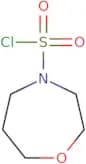
1,4-Oxazepane-4-sulfonyl chloride
CAS:Versatile small molecule scaffold
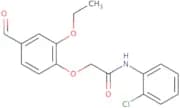
Fórmula:C5H10ClNO3SPureza:Min. 95%Peso molecular:199.66 g/molN-(2-Chlorophenyl)-2-(2-ethoxy-4-formylphenoxy)acetamide
CAS:Versatile small molecule scaffold
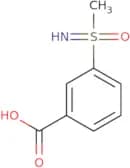
Fórmula:C17H16ClNO4Pureza:Min. 95%Peso molecular:333.8 g/mol3-(Methylsulfonimidoyl)benzoic acid
CAS:Versatile small molecule scaffold
Fórmula:C8H9NO3SPureza:Min. 95%Peso molecular:199.23 g/molcyclopentanecarboxamide
CAS:Cyclopentanecarboxamide is a class of organic compounds that are used as antihypertensives, immunosuppressants, and antineoplastic agents. The compound is a potent adenosine receptor antagonist and has been shown to inhibit the production of chemokines in cultured cells. Cyclopentanecarboxamide also inhibits the activation of hydrogen bond-dependent enzymes such as fatty acid synthase and lipoxygenase. This inhibition leads to an anti-inflammatory effect by reducing inflammation caused by these enzymes. Cyclopentanecarboxamide also has been shown to reduce the incidence of myocardial infarcts in rats when given before or after coronary artery ligation.
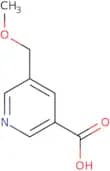
Fórmula:C6H8N2OPureza:Min. 95%Peso molecular:124.14 g/mol5-(Methoxymethyl)pyridine-3-carboxylic acid
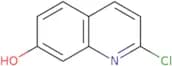
CAS:Versatile small molecule scaffoldFórmula:C8H9NO3Pureza:Min. 95%Peso molecular:167.16 g/mol2-Chloroquinolin-7-ol
CAS:Versatile small molecule scaffold
Fórmula:C9H6ClNOPureza:Min. 95%Peso molecular:179.6 g/mol{1-[3-(Trifluoromethyl)phenyl]-1H-pyrazol-4-yl}boronic acid
CAS:Versatile small molecule scaffold
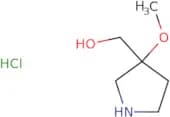
Fórmula:C10H8BF3N2O2Pureza:Min. 95%Peso molecular:255.99 g/mol(3-Methoxypyrrolidin-3-yl)methanol hydrochloride
CAS:Versatile small molecule scaffold
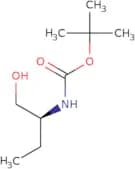
Fórmula:C6H14ClNO2Pureza:Min. 95%Peso molecular:167.6 g/molN-Boc-(S)-(ˆ’)-2-amino-1-butanol
CAS:Versatile small molecule scaffold
Fórmula:C9H19NO3Pureza:Min. 95%Peso molecular:189.25 g/mol2-(3-Methoxypropoxy)ethan-1-ol
CAS:Versatile small molecule scaffold
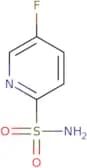
Fórmula:C6H14O3Pureza:Min. 95%Peso molecular:134.17 g/mol5-Fluoropyridine-2-sulfonamide
CAS:Versatile small molecule scaffold
Fórmula:C5H5FN2O2SPureza:Min. 95%Peso molecular:176.17 g/molRef: 3D-AAC67408
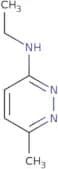
Producto descatalogadoN-Ethyl-6-methylpyridazin-3-amine
CAS:Versatile small molecule scaffold
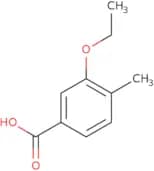
Fórmula:C7H11N3Pureza:Min. 95%Peso molecular:137.18 g/mol3-Ethoxy-4-methylbenzoic acid
CAS:Versatile small molecule scaffold
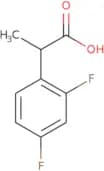
Fórmula:C10H12O3Pureza:Min. 95%Peso molecular:180.2 g/mol2-(2,4-Difluorophenyl)propanoic acid
CAS:Versatile small molecule scaffold
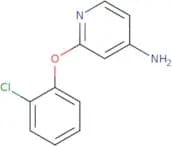
Fórmula:C9H8F2O2Pureza:Min. 95%Peso molecular:186.15 g/mol2-(2-Chlorophenoxy)pyridin-4-amine
CAS:Versatile small molecule scaffold
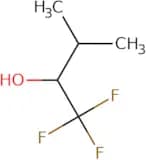
Fórmula:C11H9ClN2OPureza:Min. 95%Peso molecular:220.65 g/mol1,1,1-Trifluoro-3-methylbutan-2-ol
CAS:Versatile small molecule scaffold
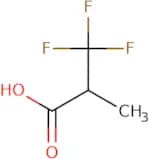
Fórmula:C5H9F3OPureza:Min. 95%Peso molecular:142.12 g/mol3,3,3-Trifluoro-2-methylpropanoic acid
CAS:3,3,3-Trifluoro-2-methylpropanoic acid is a racemic mixture of 3,3,3-trifluoro-2-methylpropanoic acid and its enantiomer. It is an organic compound that is used as a reagent in organic synthesis. It has the property of being hydrolyzed by lipase mediated by hydrolytic enzymes to form 3,3,3-trifluoroethanol and propanoic acid. The enantiomers are racemic mixtures of 3,3,3-trifluoropropionic acid and (R)-(+)-3,3,3-trifluoropropionic acid. Both enantiomers have the same chemical properties but their kinetic behavior differs because one is a substrate for lipase while the other is not.
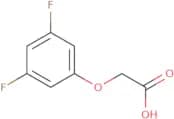
Fórmula:C4H5F3O2Pureza:Min. 95%Peso molecular:142.08 g/mol2-(3,5-Difluorophenoxy)acetic acid
CAS:Versatile small molecule scaffold
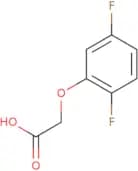
Fórmula:C8H6F2O3Pureza:Min. 95%Peso molecular:188.13 g/mol2-(2,5-Difluorophenoxy)acetic acid
CAS:Versatile small molecule scaffold
Fórmula:C8H6F2O3Pureza:Min. 95%Peso molecular:188.13 g/mol5,5,5-Trifluoro-1-pentanol
CAS:Versatile small molecule scaffold
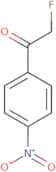
Fórmula:C5H9F3OPureza:Min. 95%Peso molecular:142.12 g/mol2-Fluoro-1-(4-nitrophenyl)ethan-1-one
CAS:Versatile small molecule scaffold
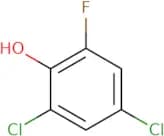
Fórmula:C8H6FNO3Pureza:Min. 95%Peso molecular:183.14 g/mol2,4-Dichloro-6-fluorophenol
CAS:Versatile small molecule scaffold
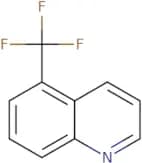
Fórmula:C6H3Cl2FOPureza:Min. 95%Peso molecular:180.99 g/mol5-(Trifluoromethyl)quinoline
CAS:Versatile small molecule scaffold
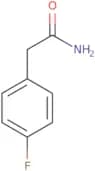
Fórmula:C10H6F3NPureza:Min. 95%Peso molecular:197.16 g/mol2-(4-Fluorophenyl)acetamide
CAS:2-(4-Fluorophenyl)acetamide (FFAA) is a broad-spectrum antiviral drug that has been evaluated against picornavirus, enterovirus, and rhinovirus. FFAA has been shown to be effective in the treatment of acute enterovirus infections in mice. This compound was also found to have a cytopathic effect on cells infected with enteroviruses in culture. It binds to the virus's RNA-dependent RNA polymerase and prevents viral replication. FFAA is not active against influenza A or B viruses, but it is active against influenza C virus. This compound has also been found to have medicinal properties, as it can inhibit the growth of human lung cancer cells in culture and may be useful for treating cancers such as leukemia.
Fórmula:C8H8FNOPureza:Min. 95%Peso molecular:153.15 g/mol8-Thia-2-azaspiro[4.5]decane
CAS:Versatile small molecule scaffold
Fórmula:C8H15NSPureza:Min. 95%Peso molecular:157.28 g/molRef: 3D-AAA31094
Producto descatalogado3-Oxa-7-azabicyclo[3.3.1]nonane
CAS:3-Oxa-7-azabicyclo[3.3.1]nonane is a linker that contains a hydroxyl group, heterocycle, intramolecular hydrogen, and fluorine. It has been shown to be an effective inhibitor of the HIV protease enzyme in vitro, although it is not active against other enzymes such as the human serum albumin or cytochrome P450. 3-Oxa-7-azabicyclo[3.3.1]nonane binds to the active site of the HIV protease by forming hydrogen bonds with amino acids near the active site and by stabilizing the conformation of its piperidine ring. This drug also has an axial orientation with respect to its fluoroquinolone plane and benzyl group that makes it stereoisomeric with 2 possible configurations: cis or trans.
Fórmula:C7H13NOPureza:Min. 95%Peso molecular:127.18 g/molBenzo[d][1,2,3]thiadiazole
CAS:Benzo[d][1,2,3]thiadiazole is a benzothiadiazole with a redox potential of -0.25 V that is stable in the absence of oxygen and light. It can be used to synthesize chemical pesticides by reacting with hydrochloric acid. The reaction mechanism of benzo[d][1,2,3]thiadiazole has been determined using nuclear magnetic resonance spectroscopy and quantum chemical calculations. This compound reacts with hydrogen bond acceptors on the enzyme active site to form covalent bonds. It also interacts with the enzyme's steric environment by forming hydrogen bonds and van der Waals forces. Benzo[d][1,2,3]thiadiazole also emits light when it reacts with nitric oxide in solution.
Fórmula:C6H4N2SPureza:Min. 95%Peso molecular:136.17 g/mol1-Oxaspiro[3.5]nonan-7-one
CAS:Versatile small molecule scaffold
Fórmula:C8H12O2Pureza:Min. 95%Peso molecular:140.18 g/mol2-Chloro-6-cyclobutoxypyridine
CAS:Versatile small molecule scaffold
Fórmula:C9H10ClNOPureza:Min. 95%Peso molecular:183.63 g/molRef: 3D-ZGA13486
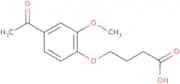
Producto descatalogado4-(4-Acetyl-2-methoxyphenoxy)butanoic acid
CAS:Producto controlado4-(4-Acetyl-2-methoxyphenoxy)butanoic acid (4-ABA) is a pharmacological tool that is used in research for the study of protein interactions, activator and ligand functions. 4-ABA can be used to detect and quantify the activities of ion channels. This chemical can be used in the development of antibodies against peptides as well as in studies on receptor binding. 4-(4-Acetyl-2-methoxyphenoxy)butanoic acid has been shown to inhibit the activity of protein kinase C and phospholipase C, which are enzymes that are involved in cell signaling.
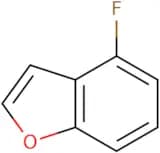
Fórmula:C13H16O5Pureza:Min. 95%Peso molecular:252.26 g/mol4-Fluorobenzofuran
CAS:Versatile small molecule scaffold
Fórmula:C8H5FOPureza:Min. 95%Peso molecular:136.12 g/mol1H-Benz[g]indazole, 4,5-dihydro-
CAS:1H-Benz[g]indazole, 4,5-dihydro- is a research chemical that has various applications in the field of biochemistry and pharmaceutical research. It is commonly used as a precursor for the synthesis of fatty acids and cytidine derivatives. This compound has shown potential therapeutic effects in the treatment of thrombocytopenia, a condition characterized by low platelet count. Additionally, 1H-Benz[g]indazole, 4,5-dihydro- is often utilized as a reactant in the production of other chemicals such as anhydrous citric acid, choline derivatives, larotaxel, nintedanib, and saccharin sodium. Its reactivity with hydrogen ions and chloride ions makes it suitable for various chemical reactions and processes. Researchers and scientists rely on this compound for its versatility and reliability in their experiments and studies.
Fórmula:C11H10N2Pureza:Min. 95%Peso molecular:170.21 g/mol4-(Butan-2-yloxy)-6-chloro-2-methylpyrimidine
CAS:Versatile small molecule scaffold
Fórmula:C9H13ClN2OPureza:Min. 95%Peso molecular:200.66 g/mol1-(3-Bromopropyl)-4-fluorobenzene
CAS:Versatile small molecule scaffold
Fórmula:C9H10BrFPureza:Min. 95%Peso molecular:217.08 g/mol2-Bromo-1-methoxybutane
CAS:Versatile small molecule scaffold
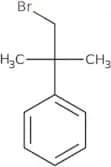
Fórmula:C5H11BrOPureza:Min. 95%Peso molecular:167.04 g/mol(1-Bromo-2-methylpropan-2-yl)benzene
CAS:1-Bromo-2-methylpropan-2-yl)benzene is an organic solvent that has a hydrogen bond. It is used in the synthesis of malonic acid and kinetic studies. This solvent has been shown to react with chloride to form 1,2-dibromochloromethane. The reaction rate for this reaction is affected by the presence of other halides, such as iodine and bromine. 1-Bromo-2-methylpropan-2-yl)benzene can also be used as a polymerization inhibitor.
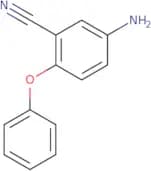
Fórmula:C10H13BrPureza:Min. 95%Peso molecular:213.11 g/mol5-Amino-2-phenoxybenzonitrile
CAS:Versatile small molecule scaffold
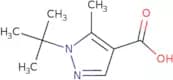
Fórmula:C13H10N2OPureza:Min. 95%Peso molecular:210.23 g/mol1-(tert-Butyl)-5-methyl-1H-pyrazole-4-carboxylic acid
CAS:Versatile small molecule scaffoldFórmula:C9H14N2O2Pureza:Min. 95%Peso molecular:182.22 g/molEthyl N-(2,6-Dimethylphenyl)oxamate
CAS:Versatile small molecule scaffold
Fórmula:C12H15NO3Pureza:Min. 95%Peso molecular:221.25 g/mol2,2-Diphenylhexanoic acid
CAS:Versatile small molecule scaffold
Fórmula:C18H20O2Pureza:Min. 95%Peso molecular:268.3 g/molPyrrolo[1,2-b]pyridazin-4(1H)-one
CAS:Versatile small molecule scaffold
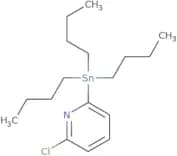
Fórmula:C7H6N2OPureza:Min. 95%Peso molecular:134.14 g/mol6-Chloro-2-(tributylstannyl)pyridine
CAS:Producto controladoVersatile small molecule scaffold
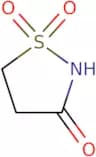
Fórmula:C17H30ClNSnPureza:Min. 95%Peso molecular:402.59 g/mol1,1-dioxo-1,2-thiazolidin-3-one
CAS:1,1-Dioxo-1,2-thiazolidin-3-one is a protease inhibitor that inhibits the activity of serine proteases. It is used to treat inflammatory diseases and cancer. 1,1-Dioxo-1,2-thiazolidin-3-one prevents the spread of cancer cells by inhibiting their ability to break down proteins that are important for cell growth and division. This drug also possesses anti-inflammatory properties. These effects may be due to its inhibition of serine proteases such as matrix metalloproteinases (MMPs) and cathepsins.
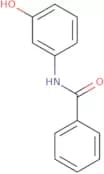
Fórmula:C3H5NO3SPureza:Min. 95%Peso molecular:135.14 g/mol3-Hydroxy-N-phenylbenzamide
CAS:3-Hydroxy-N-phenylbenzamide (3HB) is a chemical compound that has been isolated from the plant Caryophyllaceae. This compound is an electrophile, which can react with nucleophiles in biological systems. 3HB produces anthranilic acid when it reacts with amino acids, and this compound may be responsible for the antimicrobial activity of 3HB. 3HB was shown to have fungitoxic effects against some fungi including Fusarium oxysporum, Rhizoctonia solani, and Stemphylium sp., but not against other fungi such as Alternaria alternata and Penicillium cyclopium. The phytoalexin caryophyllin, which is produced by infected plants, also inhibits fungal growth.
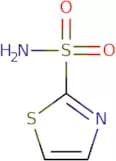
Fórmula:C13H11NO2Pureza:Min. 95%Peso molecular:213.23 g/mol1,3-Thiazole-2-sulfonamide
CAS:1,3-Thiazole-2-sulfonamide is a supplement that can increase energy efficiency and reduce the need for oxygen. It can also promote cell function and suppress cancer cells. 1,3-Thiazole-2-sulfonamide has been shown to decapsulate DNA in vivo animal studies, indicating that it may have potential as a cancer therapy. This drug is synthesized from trifluoroacetic acid and has been shown to inhibit the polymerase chain reaction in vitro. The mechanism of action of 1,3-thiazole-2-sulfonamide is dependent on its ability to suppress suppressor genes and secretory protein expression. It also has an antiangiogenic effect by inhibiting the transfer mechanism of erythropoietin receptors.
Fórmula:C3H4N2O2S2Pureza:Min. 95%Peso molecular:164.21 g/mol2-[Ethyl(propan-2-yl)amino]ethan-1-ol
CAS:Producto controladoVersatile small molecule scaffold
Fórmula:C7H17NOPureza:Min. 95%Peso molecular:131.22 g/mol2-(bromomethyl)-6-chloropyridine
CAS:2-(bromomethyl)-6-chloropyridine is a ligand that binds to metal atoms. It forms a complex with the metal atom by coordinating with two or more bromine atoms and one or two hydrogens. 2-(Bromomethyl)-6-chloropyridine has been shown to interact with pyridine, x-ray diffraction studies, crystal x-ray diffraction, and ligands in crystal x-ray diffraction studies. The conformation of this compound can be deformed by substituting the methyl group on the chloro group for other moieties. These interactions have been shown using X-Ray diffraction studies and crystal x-ray diffraction studies.
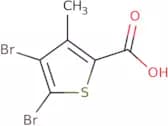
Fórmula:C6H5BrClNPureza:Min. 95%Peso molecular:206.47 g/mol4,5-dibromo-3-methylthiophene-2-carboxylic acid
CAS:Versatile small molecule scaffold
Fórmula:C6H4Br2O2SPureza:Min. 95%Peso molecular:300 g/mol5'-Chloro-2'-hydroxypropiophenone
CAS:Versatile small molecule scaffold
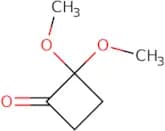
Fórmula:C9H9ClO2Pureza:Min. 95%Peso molecular:184.62 g/mol2,2-Dimethoxycyclobutan-1-one
CAS:Versatile small molecule scaffold
Fórmula:C6H10O3Pureza:Min. 95%Peso molecular:130.14 g/molRef: 3D-NCA70348
Producto descatalogado

![{1-[3-(Trifluoromethyl)phenyl]-1H-pyrazol-4-yl}boronic acid](/_next/image/?url=https%3A%2Fstatic.cymitquimica.com%2Fproducts%2F3D%2Fthumb-webp%2FAPD17871.webp&w=3840&q=75)


![8-Thia-2-azaspiro[4.5]decane](/_next/image/?url=https%3A%2Fstatic.cymitquimica.com%2Fproducts%2F3D%2Fthumb-webp%2FAAA31094.webp&w=3840&q=75)
![3-Oxa-7-azabicyclo[3.3.1]nonane](/_next/image/?url=https%3A%2Fstatic.cymitquimica.com%2Fproducts%2F3D%2Fthumb-webp%2FAAA28075.webp&w=3840&q=75)
![Benzo[d][1,2,3]thiadiazole](/_next/image/?url=https%3A%2Fstatic.cymitquimica.com%2Fproducts%2F3D%2Fthumb-webp%2FAAA27377.webp&w=3840&q=75)
![1-Oxaspiro[3.5]nonan-7-one](/_next/image/?url=https%3A%2Fstatic.cymitquimica.com%2Fproducts%2F3D%2Fthumb-webp%2FYXC36607.webp&w=3840&q=75)
![1H-Benz[g]indazole, 4,5-dihydro-](/_next/image/?url=https%3A%2Fstatic.cymitquimica.com%2Fproducts%2F3D%2Fthumb-webp%2FZAA44506.webp&w=3840&q=75)



![Pyrrolo[1,2-b]pyridazin-4(1H)-one](/_next/image/?url=https%3A%2Fstatic.cymitquimica.com%2Fproducts%2F3D%2Fthumb-webp%2FNKB72026.webp&w=3840&q=75)
![2-[Ethyl(propan-2-yl)amino]ethan-1-ol](/_next/image/?url=https%3A%2Fstatic.cymitquimica.com%2Fproducts%2F3D%2Fthumb-webp%2FCAA89361.webp&w=3840&q=75)