Building Blocks
Subcategorías de "Building Blocks"
- Ácidos borónicos y derivados del ácido borónico(5.780 productos)
- Building Blocks quirales(1.239 productos)
- Building Blocks de hidrocarburos(6.100 productos)
- Building Blocks orgánicos(61.005 productos)
Se han encontrado 205234 productos de "Building Blocks"
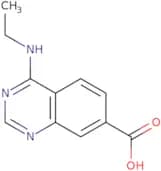
4-(Ethylamino)quinazoline-7-carboxylic acid
CAS:Versatile small molecule scaffold
Fórmula:C11H11N3O2Pureza:Min. 95%Peso molecular:217.22 g/mol1-[1-(2-Methanesulfonylethyl)-3,5-dimethyl-1H-pyrazol-4-yl]ethan-1-ol
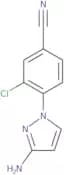
CAS:Versatile small molecule scaffoldFórmula:C10H18N2O3SPureza:Min. 95%Peso molecular:246.33 g/mol4-(3-Amino-1H-pyrazol-1-yl)-3-chlorobenzonitrile
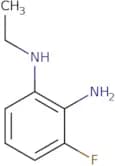
CAS:Versatile small molecule scaffoldFórmula:C10H7ClN4Pureza:Min. 95%Peso molecular:218.64 g/mol1-N-Ethyl-3-fluorobenzene-1,2-diamine
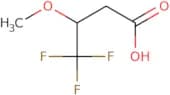
CAS:Versatile small molecule scaffoldFórmula:C8H11FN2Pureza:Min. 95%Peso molecular:154.18 g/mol4,4,4-Trifluoro-3-methoxybutanoic acid
CAS:Versatile small molecule scaffold
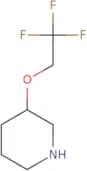
Fórmula:C5H7F3O3Pureza:Min. 95%Peso molecular:172.1 g/mol3-(2,2,2-Trifluoroethoxy)piperidine
CAS:Versatile small molecule scaffold
Fórmula:C7H12F3NOPureza:Min. 95%Peso molecular:183.17 g/mol9-{[(tert-Butoxy)carbonyl]amino}bicyclo[3.3.1]nonane-3-carboxylic acid
CAS:Versatile small molecule scaffoldFórmula:C15H25NO4Pureza:Min. 95%Peso molecular:283.36 g/mol2,6-Dioxaspiro[4.5]decan-10-one
CAS:Versatile small molecule scaffold
Fórmula:C8H12O3Pureza:Min. 95%Peso molecular:156.2 g/molRef: 3D-YPD37233
Producto descatalogado(2R)-1-(Methylamino)propan-2-ol hydrochloride
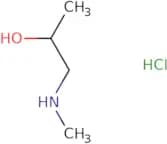
CAS:Versatile small molecule scaffoldFórmula:C4H12ClNOPureza:Min. 95%Peso molecular:125.6 g/mol5-Fluoro-2,3-dihydro-1H-inden-2-ol
CAS:Versatile small molecule scaffold
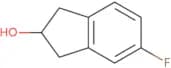
Fórmula:C9H9FOPureza:Min. 95%Peso molecular:152.16 g/mol3,3-Dimethylbutane-1-sulfonyl chloride
CAS:Versatile small molecule scaffold
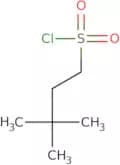
Fórmula:C6H13ClO2SPureza:Min. 95%Peso molecular:184.69 g/mol2-[(Benzylcarbamoyl)amino]-2-methylpropanoic acid
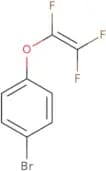
CAS:Versatile small molecule scaffoldFórmula:C12H16N2O3Pureza:Min. 95%Peso molecular:236.3 g/mol1-Bromo-4-(trifluorovinyloxy)benzene
CAS:1-Bromo-4-(trifluorovinyloxy)benzene is a polyether that can be used to synthesize fluorescent polymers. The vinylene group in 1-bromo-4-(trifluorovinyloxy)benzene has shown to act as a nucleophile and yield polymerized products. This compound is insoluble in organic solvents, which makes it difficult to isolate yields. It has been experimentally shown that the anomeric carbon in this compound can be converted into the alpha form by treatment with potassium bis(trimethylsilyl)amide and then subjected to Wittig reaction.
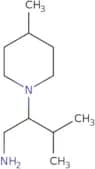
Fórmula:C8H4BrF3OPureza:Min. 95%Peso molecular:253.02 g/mol3-Methyl-2-(4-methylpiperidin-1-yl)butan-1-amine
CAS:Versatile small molecule scaffold
Fórmula:C11H24N2Pureza:Min. 95%Peso molecular:184.32 g/moltert-butyl decahydro-1,5-naphthyridine-1-carboxylate
CAS:Versatile small molecule scaffold
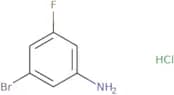
Fórmula:C13H24N2O2Pureza:Min. 95%Peso molecular:240.3 g/mol3-Bromo-5-fluoroaniline HCl
CAS:Versatile small molecule scaffold
Fórmula:C6H5BrFN·HClPureza:Min. 95%Peso molecular:226.48 g/mol2-[4-(Acetamidomethyl)benzenesulfonamido]-3-methylbutanoic acid
CAS:Versatile small molecule scaffold
Fórmula:C14H20N2O5SPureza:Min. 95%Peso molecular:328.39 g/mol2-Bromo-5-[(Z)-2-bromo-2-nitroethenyl]furan
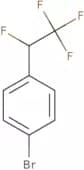
CAS:2-Bromo-5-[(Z)-2-bromo-2-nitroethenyl]furan is a new antibiotic that has been shown to be effective against Staphylococcus aureus and other organisms. The mechanism of action is not yet known, but it seems to work by binding to DNA, preventing transcription and replication. It has been shown to induce necrosis in S. aureus and other bacteria, which may be due to its ability to induce the production of proinflammatory cytokines such as TNFα and IL-1β in vitro. This drug also has cytotoxic effects on human cells and may have the potential for use as an anticancer agent. !-- END OF DESCRIPTION -->Fórmula:C6H3Br2NO3Pureza:Min. 95%Peso molecular:296.9 g/mol1-Bromo-4-(1,2,2,2-tetrafluoroethyl)benzene
CAS:Versatile small molecule scaffold
Fórmula:C8H5BrF4Pureza:Min. 95%Peso molecular:257.02 g/mol2-[6-(Chlorosulfonyl)-3-oxo-3,4-dihydro-2H-1,4-benzoxazin-4-yl]acetic acid
CAS:Versatile small molecule scaffold
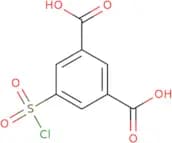
Fórmula:C10H8ClNO6SPureza:Min. 95%Peso molecular:305.69 g/mol5-(Chlorosulfonyl)benzene-1,3-dicarboxylic acid
CAS:Versatile small molecule scaffold
Fórmula:C8H5ClO6SPureza:Min. 95%Peso molecular:264.64 g/mol3-{[3-(Trifluoromethyl)phenyl]methoxy}phenol
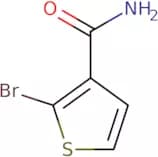
CAS:Versatile small molecule scaffoldFórmula:C14H11F3O2Pureza:Min. 95%Peso molecular:268.23 g/mol2-Bromothiophene-3-carboxamide
CAS:Versatile small molecule scaffold
Fórmula:C5H4BrNOSPureza:Min. 95%Peso molecular:206.06 g/mol5-Methyl-2-(tributylstannyl)pyridine
CAS:Producto controlado5-Methyl-2-(tributylstannyl)pyridine (MTBP) is a ligand that has been used to polymerize ethylene. It is synthesized by the hydrosilylation of 2-bromopyridine with tributyltin hydride, followed by reaction with trimethylaluminium in a cavity. MTBP has been shown to be an effective catalyst for the hydrosilylation of olefins, where it can be used as a replacement for bulky and expensive transition metals such as platinum. 5-Methyl-2-(tributylstannyl)pyridine can also be used to catalyze the synthesis of supramolecular structures and photophysical processes.
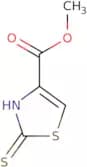
Fórmula:C18H33NSnPureza:Min. 95%Peso molecular:382.17 g/molMethyl 2-sulfanyl-1,3-thiazole-4-carboxylate
CAS:Versatile small molecule scaffold
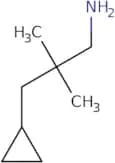
Fórmula:C5H5NO2S2Pureza:Min. 95%Peso molecular:175.2 g/mol3-Cyclopropyl-2,2-dimethylpropan-1-amine
CAS:Versatile small molecule scaffold
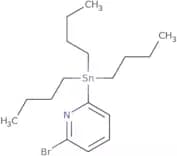
Fórmula:C8H17NPureza:Min. 95%Peso molecular:127.23 g/mol2-Bromo-6-(tributylstannyl)pyridine
CAS:Producto controladoVersatile small molecule scaffold
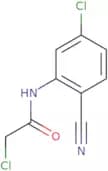
Fórmula:C17H30BrNSnPureza:Min. 95%Peso molecular:447.04 g/mol2-Chloro-N-(5-chloro-2-cyanophenyl)acetamide
CAS:Versatile small molecule scaffold
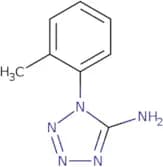
Fórmula:C9H6Cl2N2OPureza:Min. 95%Peso molecular:229.06 g/mol1-(2-Methylphenyl)-1H-1,2,3,4-tetrazol-5-amine
CAS:Versatile small molecule scaffold
Fórmula:C8H9N5Pureza:Min. 95%Peso molecular:175.2 g/mol1-Methyl-4,8-dioxa-1,10-diazaspiro[5.5]undecane
CAS:Versatile small molecule scaffold
Fórmula:C8H16N2O2Pureza:Min. 95%Peso molecular:172.2 g/molRef: 3D-FPD80323
Producto descatalogado8-Bromopyrido[3,4-b]pyrazine
CAS:8-Bromopyrido[3,4-b]pyrazine is a quinoxaline that binds to the active site of protein kinases and inhibits their activity. It has been shown to have potential as a drug against some forms of cancer. 8-Bromopyrido[3,4-b]pyrazine is also an arylboronic acid that can be used in copper catalysis. This compound has been optimized for use in kinase inhibition studies by modifying its structure to create analogues with different substituents. The family of compounds includes carbolines and anilines, which are related to 8-Bromopyrido[3,4-b]pyrazine by virtue of their structural similarity.
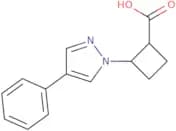
Fórmula:C7H4BrN3Pureza:Min. 95%Peso molecular:210.03 g/mol2-(4-Phenyl-1H-pyrazol-1-yl)cyclobutane-1-carboxylic acid
CAS:Versatile small molecule scaffoldFórmula:C14H14N2O2Pureza:Min. 95%Peso molecular:242.27 g/mol5-Isobutyl-1H-pyrazol-3-amine
CAS:Versatile small molecule scaffold
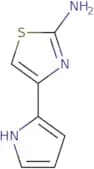
Fórmula:C7H13N3Pureza:Min. 95%Peso molecular:139.2 g/mol4-(1H-Pyrrol-2-yl)-1,3-thiazol-2-amine
CAS:Versatile small molecule scaffold
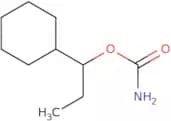
Fórmula:C7H7N3SPureza:Min. 95%Peso molecular:165.22 g/mol1-Cyclohexylpropyl carbamate
CAS:1-Cyclohexylpropyl carbamate is a diagnostic agent that can be used to measure inflammatory bowel disease. It is an analog of 1-cyclohexyl-2,2,2-trifluoroethyl carbamate. The compound is insoluble in water and must be reconstituted with a diluent prior to use. The particle size of the reconstituted compound can be adjusted by varying the concentration of the diluent. 1-Cyclohexylpropyl carbamate binds to herpes simplex virus type 2 (HSV-2) with high affinity and has been shown to inhibit HSV-2 replication in cell culture. Iontophoresis is a technique for delivering ionic molecules into tissue by means of an electric field. This technique has been shown to increase the concentration of 1-cyclohexylpropyl carbamate within cells infected with HSV-2.
Fórmula:C10H19NO2Pureza:Min. 95%Peso molecular:185.26 g/molRef: 3D-NAA93164
Producto descatalogado1-[2-(Aminomethyl)phenoxy]propan-2-ol hydrochloride
CAS:Versatile small molecule scaffold
Fórmula:C10H16ClNO2Pureza:Min. 95%Peso molecular:217.69 g/molRef: 3D-JDC14865
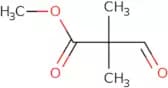
Producto descatalogadomethyl 2,2-dimethyl-3-oxopropanoate
CAS:Methyl 2,2-dimethyl-3-oxopropanoate is an enantioselective propionate with an asymmetric synthesis. The enantiomers of methyl 2,2-dimethyl-3-oxopropanoate are separated by the use of a chiral auxiliary. The enantioselective synthesis of propionates is achieved by crotylboration, a reaction that uses boron and crotyl alcohol as substrates. Methyl 2,2-dimethyl-3-oxopropanoate is an example of a polyketide synthesized via the polyketide pathway. This compound is used in the synthesis of halipeptin, which is an antibiotic that inhibits bacterial growth by inhibiting protein synthesis and cell division.
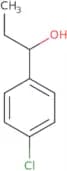
Fórmula:C6H10O3Pureza:Min. 95%Peso molecular:130.1 g/mol1-(4-Chlorophenyl)propan-1-ol
CAS:1-(4-Chlorophenyl)propan-1-ol is a ligand that binds to the active site of enzymes, such as chiral alcohol dehydrogenase and amino alcohol dehydrogenase. It was used to catalyze the synthesis of optically pure products in enantioselective reactions. 1-(4-Chlorophenyl)propan-1-ol has been shown to be an excellent precatalyst for asymmetric catalysis. It also reacts with amino alcohols to form optically pure products in an experiment involving the use of chiral azetidine.
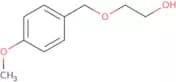
Fórmula:C9H11ClOPureza:Min. 95%Peso molecular:170.64 g/mol2-(4-Methoxybenzyloxy)ethanol
CAS:2-(4-Methoxybenzyloxy)ethanol is a reversible and efficient catalyst for the dehydration of adenine. It is used in chemical synthesis to make 2,4-dibromoacetic acid. This compound has also been shown to be an effective dehydratase for clostridium.
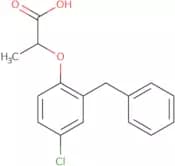
Fórmula:C10H14O3Pureza:Min. 95%Peso molecular:182.22 g/mol2-(2-Benzyl-4-chlorophenoxy)propanoic acid
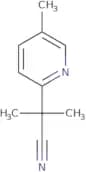
CAS:Versatile small molecule scaffoldFórmula:C16H15ClO3Pureza:Min. 95%Peso molecular:290.74 g/mol2-Methyl-2-(5-methylpyridin-2-yl)propanenitrile
CAS:Versatile small molecule scaffold
Fórmula:C10H12N2Pureza:Min. 95%Peso molecular:160.22 g/mol8-Chloro-3-methyl[1,2,4]triazolo[4,3-a]pyridine
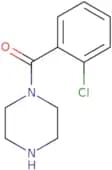
CAS:Versatile small molecule scaffoldFórmula:C7H6ClN3Pureza:Min. 95%Peso molecular:167.6 g/mol(2-Chlorophenyl)(piperazin-1-yl)methanone
CAS:Versatile small molecule scaffold
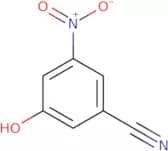
Fórmula:C11H13ClN2OPureza:Min. 95%Peso molecular:224.69 g/mol3-Hydroxy-5-nitrobenzonitrile
CAS:Versatile small molecule scaffold
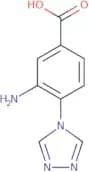
Fórmula:C7H4N2O3Pureza:Min. 95%Peso molecular:164.12 g/mol3-Amino-4-(4H-1,2,4-triazol-4-yl)benzoic acid
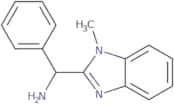
CAS:Versatile small molecule scaffoldFórmula:C9H8N4O2Pureza:Min. 95%Peso molecular:204.19 g/mol(1-Methyl-1H-1,3-benzodiazol-2-yl)(phenyl)methanamine
CAS:Versatile small molecule scaffold
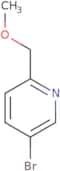
Fórmula:C15H15N3Pureza:Min. 95%Peso molecular:237.31 g/mol5-Bromo-2-(methoxymethyl)pyridine
CAS:Versatile small molecule scaffold
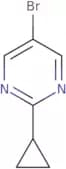
Fórmula:C7H8BrNOPureza:Min. 95%Peso molecular:202.05 g/mol5-Bromo-2-cyclopropylpyrimidine
CAS:5-Bromo-2-cyclopropylpyrimidine is a chiral molecule that has two enantiomers. It can exist as a racemic mixture (a 50/50 mixture of the two enantiomers), or as an enantioenriched sample (containing one of the two enantiomers in large excess). The former is a mixture, whereas the latter is a single pure enantiomer. 5-Bromo-2-cyclopropylpyrimidine can be separated into its two components by using chiral columns and then analyzed by NMR spectroscopy. The individual peaks in the spectrum correspond to either one or the other of the two possible configurations.
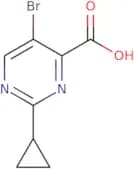
Fórmula:C7H7BrN2Pureza:Min. 95%Peso molecular:199.05 g/mol5-bromo-2-cyclopropylpyrimidine-4-carboxylic acid
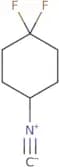
CAS:Versatile small molecule scaffoldFórmula:C8H7BrN2O2Pureza:Min. 95%Peso molecular:243.1 g/mol1,1-Difluoro-4-isocyanocyclohexane
CAS:Versatile small molecule scaffold
Fórmula:C7H9NF2Pureza:Min. 95%Peso molecular:145.14 g/mol

![1-[1-(2-Methanesulfonylethyl)-3,5-dimethyl-1H-pyrazol-4-yl]ethan-1-ol](/_next/image/?url=https%3A%2Fstatic.cymitquimica.com%2Fproducts%2F3D%2Fthumb-webp%2FTDC21616.webp&w=3840&q=75)
![9-{[(tert-Butoxy)carbonyl]amino}bicyclo[3.3.1]nonane-3-carboxylic acid](/_next/image/?url=https%3A%2Fstatic.cymitquimica.com%2Fproducts%2F3D%2Fthumb-webp%2FJDC14847.webp&w=3840&q=75)
![2,6-Dioxaspiro[4.5]decan-10-one](/_next/image/?url=https%3A%2Fstatic.cymitquimica.com%2Fproducts%2F3D%2Fthumb-webp%2FYPD37233.webp&w=3840&q=75)
![2-[(Benzylcarbamoyl)amino]-2-methylpropanoic acid](/_next/image/?url=https%3A%2Fstatic.cymitquimica.com%2Fproducts%2F3D%2Fthumb-webp%2FEMB47353.webp&w=3840&q=75)

![2-[4-(Acetamidomethyl)benzenesulfonamido]-3-methylbutanoic acid](/_next/image/?url=https%3A%2Fstatic.cymitquimica.com%2Fproducts%2F3D%2Fthumb-webp%2FIQB18754.webp&w=3840&q=75)
![2-Bromo-5-[(Z)-2-bromo-2-nitroethenyl]furan](/_next/image/?url=https%3A%2Fstatic.cymitquimica.com%2Fproducts%2F3D%2Fthumb-webp%2FPHA93572.webp&w=3840&q=75)
![2-[6-(Chlorosulfonyl)-3-oxo-3,4-dihydro-2H-1,4-benzoxazin-4-yl]acetic acid](/_next/image/?url=https%3A%2Fstatic.cymitquimica.com%2Fproducts%2F3D%2Fthumb-webp%2FAQB93108.webp&w=3840&q=75)
![3-{[3-(Trifluoromethyl)phenyl]methoxy}phenol](/_next/image/?url=https%3A%2Fstatic.cymitquimica.com%2Fproducts%2F3D%2Fthumb-webp%2FEMB28941.webp&w=3840&q=75)
![1-Methyl-4,8-dioxa-1,10-diazaspiro[5.5]undecane](/_next/image/?url=https%3A%2Fstatic.cymitquimica.com%2Fproducts%2F3D%2Fthumb-webp%2FFPD80323.webp&w=3840&q=75)
![8-Bromopyrido[3,4-b]pyrazine](/_next/image/?url=https%3A%2Fstatic.cymitquimica.com%2Fproducts%2F3D%2Fthumb-webp%2FEMB07445.webp&w=3840&q=75)

![1-[2-(Aminomethyl)phenoxy]propan-2-ol hydrochloride](/_next/image/?url=https%3A%2Fstatic.cymitquimica.com%2Fproducts%2F3D%2Fthumb-webp%2FJDC14865.webp&w=3840&q=75)
![8-Chloro-3-methyl[1,2,4]triazolo[4,3-a]pyridine](/_next/image/?url=https%3A%2Fstatic.cymitquimica.com%2Fproducts%2F3D%2Fthumb-webp%2FEMB00042.webp&w=3840&q=75)