Building Blocks
Subcategorías de "Building Blocks"
- Ácidos borónicos y derivados del ácido borónico(5.778 productos)
- Building Blocks quirales(1.243 productos)
- Building Blocks de hidrocarburos(6.098 productos)
- Building Blocks orgánicos(61.038 productos)
Se han encontrado 205191 productos de "Building Blocks"
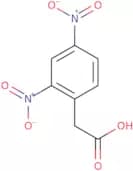
2,4-Dinitrophenylacetic acid
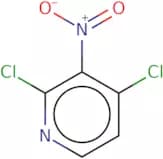
CAS:2,4-Dinitrophenylacetic acid is a chemical substance with the potential to inhibit acetylation. It can be used as an antigen and has been detected in environmental chemistry. 2,4-Dinitrophenylacetic acid is produced by the reaction of chemicals that are found in the environment and it can be detected at low concentrations. This compound is able to react with proteins in cells, leading to high cytotoxicity. 2,4-Dinitrophenylacetic acid can also stabilize optical systems.Fórmula:C8H6N2O6Pureza:Min. 95%Forma y color:PowderPeso molecular:226.14 g/mol2,4-Dichloro-3-nitropyridine
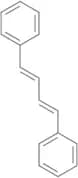
CAS:2,4-Dichloro-3-nitropyridine is a halogenated pyridinium salt that has been shown to inhibit the influenza virus in vitro. This compound is also reactive with nucleophilic groups such as amines, alcohols, and thiols. 2,4-Dichloro-3-nitropyridine has been used for the synthesis of quinoline derivatives that have potential applications in autoimmune diseases or cancer. 2,4-Dichloro-3-nitropyridine has also been found to be an inhibitor of tumor necrosis factor alpha (TNFα) production by LPS stimulated human monocytes.Fórmula:C5H2Cl2N2O2Pureza:Min. 95%Forma y color:White PowderPeso molecular:192.99 g/moltrans,trans-1,4-Diphenyl-1,3-butadiene
CAS:Used in the preparation of metal-diene reagents (e.g. for carbocyclization)
Fórmula:C16H14Pureza:Min. 95%Peso molecular:206.28 g/mol5-Bromo-1,3-oxazole hydrochloride
CAS:Versatile small molecule scaffoldFórmula:C3H3BrClNOPureza:Min. 95%Peso molecular:184.42 g/mol4-Formylbenzoic acid
CAS:4-Formylbenzoic acid is an organic compound with the molecular formula CH2=C(O)CH=CHCO2H. It is a white solid that is soluble in water and has a strong, unpleasant odor. 4-Formylbenzoic acid has been shown to have affinity for binding to odorous molecules such as sulfur compounds, amines, and mercaptans. The binding of these molecules to the 4-formylbenzoic acid leads to a decrease in their odor concentration. This process can be done using electrochemical impedance spectroscopy or optical sensors. The oxidation of 4-formylbenzoic acid by trifluoroacetic acid produces 2-formylphenol and formaldehyde, which are themselves volatile compounds with an unpleasant odor. These reactions may be used as wastewater treatment methods. Langmuir adsorption isotherm may be used as an analytical method for measuring the concentration of 4-formylbenzoic acid
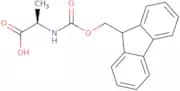
Fórmula:C8H6O3Pureza:Min. 98 Area-%Forma y color:White Yellow PowderPeso molecular:150.13 g/molFmoc-D-Ala-OH
CAS:Fmoc-D-Ala-OH is a synthetic cyclic peptide that has been shown to have anticancer properties. This compound was synthesized by solid-phase chemistry and exhibits an inhibitory effect on cancer cells. Fmoc-D-Ala-OH blocks the synthesis of proteins in cancer cells, leading to cell death. It also inhibits the activity of serine proteases such as degarelix acetate, which are important for cancer cell growth and metastasis.Fórmula:C18H17NO4Pureza:Min. 95%Forma y color:PowderPeso molecular:311.33 g/mol4-Fluoro-2-methoxy-5-nitroaniline
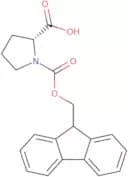
CAS:Intermediate in the synthesis of osimertinib (AZD9291)Fórmula:C7H7FN2O3Pureza:Min. 95%Peso molecular:186.14 g/molFmoc-D-proline
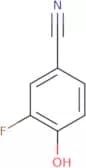
CAS:Please enquire for more information about Fmoc-D-proline including the price, delivery time and more detailed product information at the technical inquiry form on this pageFórmula:C20H19NO4Pureza:Min. 95%Peso molecular:337.37 g/mol3-Fluoro-4-hydroxybenzonitrile
CAS:3-Fluoro-4-hydroxybenzonitrile is a compound with an acidic ph and a strain that is dispersive, desorptive, and polyacrylamide gel. It is a colorless liquid at room temperature. 3-Fluoro-4-hydroxybenzonitrile has been shown to react with dodecyl inorganic base and hydrochloric acid to produce 3-fluoroaniline. The localization of the reaction yield is on hydrotalcite activated by fluorine. This chemical has been shown to react at temperatures between 0°C and 140°C.Fórmula:C7H4FNOPureza:Min. 95%Forma y color:White PowderPeso molecular:137.11 g/mol5-Fluoro-2-hydrazinopyridine
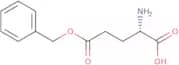
CAS:Please enquire for more information about 5-Fluoro-2-hydrazinopyridine including the price, delivery time and more detailed product information at the technical inquiry form on this pageFórmula:C5H6FN3Pureza:Min. 95%Peso molecular:127.12 g/molL-Glutamic acid 5-benzyl ester
CAS:L-Glutamic acid 5-benzyl ester is an amino acid that has been synthesized to have a lysine residue. It is an ester hydrochloride and has been shown to have broad-spectrum antimicrobial properties. L-glutamic acid 5-benzyl ester's antimicrobial activity is thought to be due to its chemical structure which allows it to act as an antimicrobial peptide, binding to receptors on the surface of bacterial cells and inhibiting their growth. L-glutamic acid 5-benzyl ester also inhibits osteogenic genes in cervical cancer cells, but not in normal cells.Fórmula:C12H15NO4Pureza:Min. 95%Forma y color:White Off-White PowderPeso molecular:237.25 g/mol5-Hydroxypyrazine-2-carboxylic acid
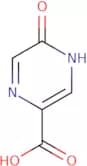
CAS:5-Hydroxypyrazine-2-carboxylic acid is a drug that inhibits the activation of proteins involved in cell signaling pathways. It has been shown to have an inhibitory effect on the activation of protein kinase C, which plays a key role in the proliferation and differentiation of cells. 5-Hydroxypyrazine-2-carboxylic acid also inhibits sorafenib, a drug used for the treatment of cancer. Sorafenib is metabolized in rats by cytochrome P450 (CYP) enzymes, which are found in human liver tissue as well. The metabolism rate of sorafenib can be reduced by coadministration with caffeine or other substances that induce CYP activity. 5-Hydroxypyrazine-2-carboxylic acid is not active against pyrazinoic acid and pyrazine-2 carboxylate, which are metabolites produced by CYP enzymes.Fórmula:C5H4N2O3Pureza:Min. 98 Area-%Forma y color:Brown PowderPeso molecular:140.1 g/molIsononyl alcohol
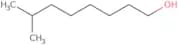
CAS:Isononyl alcohol is a polycarboxylic acid that has been used in the treatment of skin conditions, such as atopic dermatitis and psoriasis. It has been shown to penetrate the skin and stimulate the production of sebum. Isononyl alcohol is also used as a plasticizer for polyvinyl chloride (PVC) and other plastics, which increases their flexibility. This chemical also has a hydrophobic effect, which may be due to its hydroxyl group. The unsaturated alkyl chain on this chemical also makes it susceptible to oxidation by ozone in air and water vapor in air. Isononyl alcohol is metabolized by humans through conjugation with glucuronic acid or sulfate esters.
Fórmula:C9H20OPureza:Min. 95%Forma y color:Clear LiquidPeso molecular:144.25 g/mol2-{[(3αR,4S,6R,6αS)-6-Amino-2,2-dimethyltetrahydro-3αH-cyclopenta[d][1,3]-dioxol-4-yl] oxy}-1-ethol
CAS:Versatile small molecule scaffoldFórmula:C10H19NO4Pureza:Min. 95%Forma y color:PowderPeso molecular:217.26 g/mol2-[[(3aS,4R,6S,6aa)-4-[7-[[(1R,2S)-2-(3 ,4-Difluorophenyl)cyclopropyl]amino]-5-(propylthio)-3H-[1,2,3]triazolo[4 ,5-d]pyrimidin-3-yl]-2,2-dimethyl-tetrahydro-3aH-cyclopenta[d][1 ,3]dioxol-6-yl]oxy]ethanol
CAS:2-[[(3aS,4R,6S,6aa)-4-[7-[[(1R,2S)-2-(3,4-Difluorophenyl)cyclopropyl]amino]-5-(propylthio)-3H-[1,2,3]triazolo[4,5-d]pyrimidin-3-yl]- 2,2-dimethyl-tetrahydro-3aH-cyclopenta[d][1,3]dioxol-6-yl]oxy]ethanol-d7 is a compound with brominated sparfloxacin. It has various applications in the field of biochemistry and research chemicals. This compound has been found to have interactions with adipocytes and adipose tissues. Additionally, it has shown potential effects on glycan metabolism and potassium ion channels. Furthermore, this compound has been studied for its potential as an herbicide and its interaction with other substances such asFórmula:C26H32F2N6O4SPureza:Min. 95%Peso molecular:562.63 g/mol2-Amino-5-bromo-3-fluorobenzoic acid
CAS:Versatile small molecule scaffoldFórmula:C7H5BrFNO2Pureza:Min. 95%Peso molecular:234.03 g/molMethyl 3-chloro-4-iodobenzoate
CAS:Versatile small molecule scaffoldFórmula:C8H6ClIO2Pureza:Min. 95%Peso molecular:296.49 g/mol7-Chloro-5-nitro-1H-indazole
CAS:Versatile small molecule scaffold
Fórmula:C7H4ClN3O2Pureza:Min. 95%Peso molecular:197.58 g/molDoxazosin
CAS:Doxazosin is a research chemical that has shown potential in various fields. It is a water-soluble compound that has been studied for its effects on microcystins, cytidine, and vitamins. Doxazosin has also been found to have aldehyde and particulate properties, making it a versatile compound for different applications. In the field of medicine, Doxazosin has been researched for its potential in treating certain conditions. Studies have shown that Doxazosin can interact with 1-hydroxy-2-naphthoic acid and glutamate, which are important molecules involved in various biological processes. Additionally, Doxazosin has shown promising results in inhibiting the growth of e. cloacae bacteria, making it a potential candidate for antibacterial treatments. Furthermore, Doxazosin has been studied in the field of chemistry due to its unique properties. It can undergo derivatization reactions with fatty acids and zFórmula:C23H25N5O5Pureza:Min. 95%Peso molecular:451.48 g/mol6-Bromo-1-methylpyridin-2(1H)-one
CAS:Versatile small molecule scaffold
Fórmula:C6H6BrNOPureza:Min. 95%Peso molecular:188.02 g/molOctadecanedioic Acid
CAS:Octadecanedioic acid (ODA) is a fatty acid with the chemical formula CH3(CH2)14COOH. It is a colorless oily liquid that is soluble in water and alcohols. ODA is used in wastewater treatment, as it can remove metal hydroxides and organic substances such as alcohol residue. It has been shown to have low toxicity to humans, with no significant changes in blood chemistry or urinalysis parameters following exposure. It also has been shown to be chemically stable and biodegradable. ODA may be used in pharmaceutical preparations and process optimization, such as biological treatment of wastewater.Fórmula:C18H34O4Pureza:Min. 95%Forma y color:White PowderPeso molecular:314.46 g/mol1-N-Boc-2-Methyl-Isothiourea
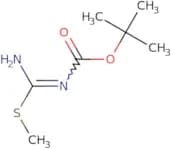
CAS:Versatile small molecule scaffoldFórmula:C7H14N2O2SPureza:Min. 95%Peso molecular:190.26 g/mol3-bromo-1-methyl-1H-pyrazole-5-carboxylic acid
CAS:Versatile small molecule scaffoldFórmula:C5H5BrN2O2Pureza:Min. 95%Peso molecular:205 g/molMethyl 2-{[(tert-butoxy)carbonyl]amino}pent-4-ynoate
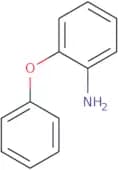
CAS:Versatile small molecule scaffoldFórmula:C11H17NO4Pureza:Min. 95%Peso molecular:227.26 g/mol2-Phenoxyaniline
CAS:2-Phenoxyaniline is a nitro compound that can be converted to the corresponding palladium complexes. It is an inhibitor of the acylation reaction, which is a type of chemical reaction in which an organic molecule reacts with an acid. The inhibition of this reaction has been shown to have an effect on heart disease, specifically by lowering cholesterol levels and reducing atherosclerosis. 2-Phenoxyaniline has also been shown to inhibit the activation energy for electron transfer reactions, making it useful as a catalyst in analytical methods. 2-Phenoxyaniline also undergoes vibrational spectroscopy when exposed to liquid chromatography and other analytical methods.
Fórmula:C12H11NOPureza:Min. 95%Forma y color:Brown PowderPeso molecular:185.22 g/molMethyl 1-methylnaphthalene-2-carboxylate
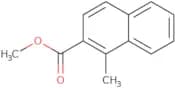
CAS:Versatile small molecule scaffold
Fórmula:C13H12O2Pureza:Min. 95%Peso molecular:200.23 g/molPiperazine-2-carboxylic acid dihydrochloride
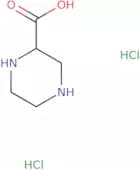
CAS:Piperazine-2-carboxylic acid dihydrochloride (PZC) is an aminopyrimidine antibiotic that binds to the amine groups of plasma proteins and hydroxyapatite. It has been shown to have a specific interaction with Gram-negative bacteria, such as Escherichia coli and Salmonella typhimurium, as well as cancer cells. PZC can be used as a modifier in the treatment of staphylococcal infections and has been shown to inhibit protein synthesis in mammalian cells. PZC interacts with histidine residues on the surface of bacterial cells and inhibits their growth by binding to sites on DNA called triplexes. This drug also specifically binds to primary amines and reacts with other molecules containing amines such as polyamines, amides, or thiols.Fórmula:C5H12Cl2N2O2Pureza:Min. 95%Forma y color:PowderPeso molecular:203.07 g/molPyrazin-2-ylboronic acid
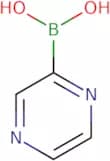
CAS:Pyrazin-2-ylboronic acid is a white crystalline solid that is soluble in water. It is an efficient and economical selenium source for use in the synthesis of selenides and other selenium compounds. Pyrazin-2-ylboronic acid can be produced by the reaction of aniline with borohydride, or by the reaction of pyrazine with borane. This synthetic process also provides a convenient way to produce diaryl compounds.Fórmula:C4H5BN2O2Pureza:Min. 95%Peso molecular:123.91 g/molPolycarbosilane
CAS:Polycarbosilane is a cross-linking agent that can be used to modify the surface properties of polymers. It reacts with the hydroxyl groups on the polymer to form carbosilane bonds, which lead to a change in the viscosity and other physical properties of the material. Polycarbosilane is insoluble in water and has an absorption peak at 350 nm. When reacted with argon gas, polycarbosilane reacts with oxygen or nitrogen to produce carbonyls or amines, respectively. Polycarbosilane can react with x-rays or magnetic resonance spectroscopy to produce elemental analysis data for a variety of elements. This chemical also has optical properties that make it useful as an organic solution for optical devices such as lenses and mirrors. Polycarbosilane is stable under most conditions and can be used as an efficient method for environmental pollution control by removing heavy metals from wastewater streams.
Fórmula:(C2H6Si)nPureza:Min. 95%Forma y color:Powder(R)-1-Propylpiperidin-3-amine
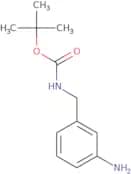
CAS:Please enquire for more information about (R)-1-Propylpiperidin-3-amine including the price, delivery time and more detailed product information at the technical inquiry form on this pageFórmula:C8H18N2Pureza:Min. 95%Peso molecular:142.24 g/mol(3-Aminobenzyl)carbamic acid tert-butyl ester
CAS:Versatile small molecule scaffold
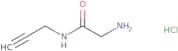
Fórmula:C12H18N2O2Pureza:Min. 95%Peso molecular:222.28 g/mol2-Amino-N-(prop-2-yn-1-yl)acetamide hydrochloride
CAS:Versatile small molecule scaffold
Fórmula:C5H9ClN2OPureza:Min. 95%Peso molecular:148.59 g/molMethyl trans-4-bromo-2-butenoate
CAS:Methyl trans-4-bromo-2-butenoate is a synthetic compound that contains a hydroxyl group and two bromine atoms. It is synthesized by the reaction of diethyl succinate, hydrogen, and piperazine in an aqueous solution. Methyl trans-4-bromo-2-butenoate has been shown to have antineoplastic activity in combination with epidermal growth factor (EGF) and carbohydrate conjugates. It also binds to cell surface receptors on the epidermal cells, inhibiting their growth. The structural formula of methyl trans-4-bromo-2-butenoate can be seen below: [[File:Methyltrans4bromobutanoate.png|thumb|300px|left|The structural formula of methyl trans-[4] -[bromo]-[2] -butenoate.]]
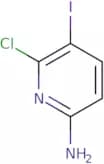
Fórmula:C5H7BrO2Pureza:Min. 95%Forma y color:Clear LiquidPeso molecular:179.01 g/mol6-Chloro-5-iodopyridin-2-amine
CAS:Versatile small molecule scaffold
Fórmula:C5H4ClIN2Pureza:Min. 95%Peso molecular:254.46 g/mol4(4,4,5,5-Tetramethyl-1,3,2-dioxaborolan-2-yl)-2,3-dihydro-1H-inden-1-one
CAS:Versatile small molecule scaffold
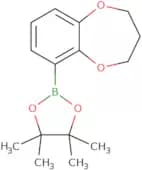
Fórmula:C15H19BO3Pureza:Min. 95%Peso molecular:258.12 g/mol2-(3,4-Dihydro-2H-1,5-benzodioxepin-6-yl)-4,4,5,5-tetramethyl-1,3,2-dioxaborolane
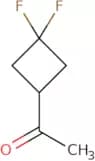
CAS:Versatile small molecule scaffoldFórmula:C15H21BO4Pureza:Min. 95%Peso molecular:276.14 g/mol1-(3,3-Difluorocyclobutyl)ethan-1-one
CAS:Versatile small molecule scaffold
Fórmula:C6H8F2OPureza:Min. 95%Peso molecular:134.13 g/molMethyl 3-chloropropionate
CAS:Methyl 3-chloropropionate is an alkyl ether that has been used in clinical studies as a liquid phase ion-pair extraction solvent. It was developed to replace the use of hexane, which is not environmentally friendly and can also cause irritation. Methyl 3-chloropropionate has been shown to have a higher viscosity than hexane at room temperature and is less likely to evaporate than hexane. Methyl 3-chloropropionate has also been used as a synthetic process solvent, with the reaction time being shorter than that of hexane. This compound can be used for chromatography without any effect on the solute or the stationary phase. Methyl 3-chloropropionate has also been shown to be effective in lipase and agarose gel assays, as well as chloride ion extraction from water samples.
Fórmula:C4H7ClO2Pureza:Min. 95%Forma y color:Clear LiquidPeso molecular:122.55 g/mol2-Methyl-1-(piperazin-1-yl)propan-1-one
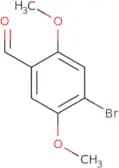
CAS:Versatile small molecule scaffoldFórmula:C8H16N2OPureza:Min. 95%Peso molecular:156.23 g/mol4-Bromo-2,5-dimethoxybenzaldehyde
CAS:4-Bromo-2,5-dimethoxybenzaldehyde is a nucleophilic compound that can act as an iminium. It is used in the synthesis of chalcones, which are aromatic compounds that have been found to have anticancer properties. 4-Bromo-2,5-dimethoxybenzaldehyde has two isomers: 2,4-dimethoxybenzaldehyde and 2,5-dimethoxybenzaldehyde. The separation of these compounds can be achieved using chromatography with a silica gel column. This process can be done on both the mixture of the two isomers or on one specific isomer. The synthetic pathway for this product begins with benzylpiperazine and piperazine. These two molecules react to form 3,4-dichlorobenzylpiperazine, which reacts with dimethoxybenzyl chloride to form 4-bromo-2,5-dim
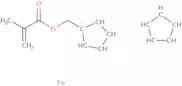
Fórmula:C9H9BrO3Pureza:Min. 95%Peso molecular:245.07 g/molFerrocenylmethyl methacrylate
CAS:Ferrocenylmethyl methacrylate is a reactive, irreversible oxidation agent. It is used in the synthesis of hydroxylated polymers and redox-active biological sensors. Ferrocenylmethyl methacrylate has been used as a component in polymerization reactions to produce polymers with recording potential. It has also been used for the detection of cancer cells and for the diagnosis of prostate cancer.Fórmula:C15H16FeO2Pureza:Min. 95%Peso molecular:284.13 g/molMethyl 3-formyl-4-methoxybenzoate
CAS:Versatile small molecule scaffold
Fórmula:C10H10O4Pureza:Min. 95%Peso molecular:194.19 g/mol2-(7-Amino-4-methyl-2-oxo-2H-chromen-3-yl)acetic acid
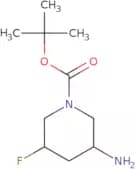
CAS:2-(7-Amino-4-methyl-2-oxo-2H-chromen-3-yl)acetic acid is a monoclonal antibody that recognizes basic proteins. It is used to study the receptor binding of these proteins and their role in inflammatory diseases. 2-(7-Amino-4-methyl-2-oxo-2H-chromen-3,6-)acetic acid is an amino function that enhances the localization of cholinergic receptors at the apical membrane of epithelial cells. It also inhibits the efflux pump activity of bacteria, which may be useful for treating bacterial infections.Fórmula:C12H11NO4Pureza:Min. 95%Peso molecular:233.22 g/moltert-Butyl (3S,5S)-3-amino-5-fluoropiperidine-1-carboxylate
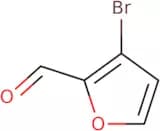
CAS:Versatile small molecule scaffoldFórmula:C10H19FN2O2Pureza:Min. 95%Peso molecular:218.27 g/mol3-Bromofuran-2-carbaldehyde
CAS:3-Bromofuran-2-carbaldehyde is a chemical compound that belongs to the group of carbonyl compounds. It is an acetylated form of 3-bromofuran and its molecular formula is C6H5BrO. This chemical contains a carbonyl group, which reacts with the hydroxyl group in epidermal growth factor (EGF) to produce epidermal growth. 3-Bromofuran-2-carbaldehyde has been shown to be an adrenergic receptor agonist and can be used as a structural formula blocker or hydrochloric acid. The chemical can also be synthesized in acidic conditions using methods such as fluorination, chlorination, and acetylation.Fórmula:C5H3BrO2Pureza:Min. 95%Peso molecular:174.98 g/moltert-Butyl (2,2-difluoro-3-hydroxypropyl)carbamate
CAS:Versatile small molecule scaffoldFórmula:C10H13NO4Pureza:Min. 95%Peso molecular:211.21 g/molN-(11-Bromoundecyl)carbamic acid t-butyl ester
CAS:Versatile small molecule scaffoldFórmula:C16H32BrNO2Pureza:Min. 95%Peso molecular:350.33 g/mol1-(1-Benzyl-1H-pyrazol-4-yl)-ethanone
CAS:Versatile small molecule scaffoldFórmula:C12H12N2OPureza:Min. 95%Peso molecular:200.23 g/moltert-Butyl N-(4-methylphenyl)carbamate
CAS:Tert-butyl N-(4-methylphenyl)carbamate is a reusable, efficient method for the synthesis of tert-butyl carbamates from amines and carbon dioxide. This reaction is an example of a C–H bond activation that proceeds through an anion intermediate. The reaction time can be reduced by irradiation to increase the efficiency. Electrons are unpaired during this process, which is modeled with quantum mechanics software. Chloride is used as a catalyst to activate the electron and generate a reactive intermediate. Amine functionalities are added to the molecule in order to give it desired properties. The chloride group can be replaced with other anions such as bromide or iodide, which will also introduce different reactivity patterns.Fórmula:C12H17NO2Pureza:Min. 95%Peso molecular:207.27 g/mol2-Methoxy-benzenesulfonic acid
CAS:2-Methoxy-benzenesulfonic acid is a synthetic chemical compound that is used in the production of polymers and other ester compounds. It can be produced by reacting benzenesulfonyl chloride with methanol in the presence of a strong acid catalyst. 2-Methoxy-benzenesulfonic acid reacts with radiation to produce reactive oxygen species that are capable of damaging cellular structures. The molecule contains an intramolecular hydrogen bond, which stabilizes the structure and helps to form hydrogen bonds with other molecules. 2-Methoxy-benzenesulfonic acid also has a hydroxyl group, which allows it to function as an acidic compound that can react with water and cause inflammation. This functional group also makes it soluble in water, allowing it to penetrate tissue structures.
Fórmula:C7H8O4SPureza:Min. 95%Peso molecular:188.2 g/mol





![2-{[(3αR,4S,6R,6αS)-6-Amino-2,2-dimethyltetrahydro-3αH-cyclopenta[d][1,3]-dioxol-4-yl] oxy}-1-ethol](/_next/image/?url=https%3A%2Fstatic.cymitquimica.com%2Fproducts%2F3D%2Fthumb-webp%2FZKA69355.webp&w=3840&q=75)
![2-[[(3aS,4R,6S,6aa)-4-[7-[[(1R,2S)-2-(3 ,4-Difluorophenyl)cyclopropyl]amino]-5-(propylthio)-3H-[1,…](/_next/image/?url=https%3A%2Fstatic.cymitquimica.com%2Fproducts%2F3D%2Fthumb-webp%2FZKA69326.webp&w=3840&q=75)





![Methyl 2-{[(tert-butoxy)carbonyl]amino}pent-4-ynoate](/_next/image/?url=https%3A%2Fstatic.cymitquimica.com%2Fproducts%2F3D%2Fthumb-webp%2FYGA30682.webp&w=3840&q=75)