Building Blocks
Subcategorías de "Building Blocks"
- Ácidos borónicos y derivados del ácido borónico(5.774 productos)
- Building Blocks quirales(1.237 productos)
- Building Blocks de hidrocarburos(6.098 productos)
- Building Blocks orgánicos(60.970 productos)
Se han encontrado 205134 productos de "Building Blocks"
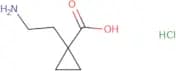
1-(2-aminoethyl)cyclopropane-1-carboxylic acid hydrochloride
CAS:Versatile small molecule scaffold
Fórmula:C6H12ClNO2Pureza:Min. 95%Peso molecular:165.62 g/mol2-(1-Chloroethyl)pyrimidin-4-amine
CAS:Versatile small molecule scaffold
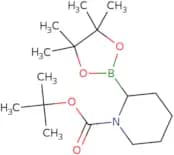
Fórmula:C6H8ClN3Pureza:Min. 95%Peso molecular:157.6 g/mol1-Boc-piperidine-2-boronic Acid Pinacol Ester
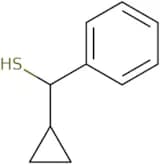
CAS:Versatile small molecule scaffoldFórmula:C16H30BNO4Pureza:Min. 95%Peso molecular:311.23 g/molCyclopropyl(phenyl)methanethiol
CAS:Versatile small molecule scaffold
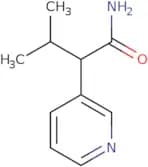
Fórmula:C10H12SPureza:Min. 95%Peso molecular:164.27 g/mol3-Methyl-2-(pyridin-3-yl)butanamide
CAS:Versatile small molecule scaffold
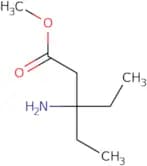
Fórmula:C10H14N2OPureza:Min. 95%Peso molecular:178.23 g/molMethyl 3-amino-3-ethylpentanoate
CAS:Versatile small molecule scaffold
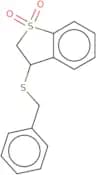
Fórmula:C8H17NO2Pureza:Min. 95%Peso molecular:159.23 g/mol3-(Benzylsulfanyl)-2,3-dihydro-1λ⁶-benzothiophene-1,1-dione
CAS:Versatile small molecule scaffold
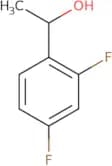
Fórmula:C15H14O2S2Pureza:Min. 95%Peso molecular:290.4 g/mol(1R)-1-(2,4-Difluorophenyl)ethan-1-ol
CAS:Versatile small molecule scaffold
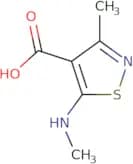
Fórmula:C8H8F2OPureza:Min. 95%Peso molecular:158.14 g/mol3-Methyl-5-(methylamino)-1,2-thiazole-4-carboxylic acid
CAS:Versatile small molecule scaffold
Fórmula:C6H8N2O2SPureza:Min. 95%Peso molecular:172.21 g/mol2-[Benzyl(methyl)ao]propanoic acid
CAS:2-[Benzyl(methyl)ao]propanoic acid is a glycine analogue that has been synthesized and characterized. It is an α-amino acid with the chemical formula C5H11NO2. The molecule has a chiral carbon atom at the center of the propanoic acid group and contains two asymmetric carbon atoms on the benzene ring, which enable it to exist in two stereoisomers. The compound has been shown to exhibit interligand interactions with copper as well as stereoselectivity in its interactions with l-amino acids. 2-[Benzyl(methyl)ao]propanoic acid also exhibits dichroism spectra, which are unique to these types of molecules.
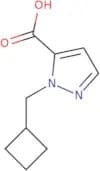
Fórmula:C11H15NO2Pureza:Min. 95%Peso molecular:193.24 g/mol1-(Cyclobutylmethyl)-1H-pyrazole-5-carboxylic acid
CAS:Versatile small molecule scaffoldFórmula:C9H12N2O2Pureza:Min. 95%Peso molecular:180.2 g/molRef: 3D-WJC58413
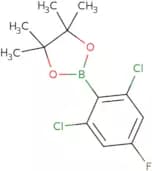
Producto descatalogado2-(2,6-Dichloro-4-fluorophenyl)-4,4,5,5-tetramethyl-1,3,2-dioxaborolane
CAS:Versatile small molecule scaffold
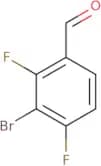
Fórmula:C12H14BCl2FO2Pureza:Min. 95%Peso molecular:291 g/mol3-Bromo-2,4-difluorobenzaldehyde
CAS:Versatile small molecule scaffold
Fórmula:C7H3BrF2OPureza:Min. 95%Peso molecular:219.93 g/mol1-Oxaspiro[4.5]dec-2-en-4-one
CAS:Versatile small molecule scaffold
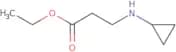
Fórmula:C9H12O2Pureza:Min. 95%Peso molecular:152.19 g/molEthyl 3-(cyclopropylamino)propanoate
CAS:Versatile small molecule scaffold
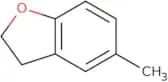
Fórmula:C8H15NO2Pureza:Min. 95%Peso molecular:157.21 g/mol5-Methyl-2,3-dihydro-1-benzofuran
CAS:Versatile small molecule scaffold
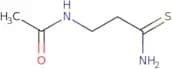
Fórmula:C9H10OPureza:Min. 95%Peso molecular:134.17 g/molN-(2-Carbamothioylethyl)acetamide
CAS:Versatile small molecule scaffold
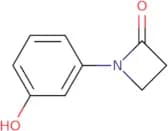
Fórmula:C5H10N2OSPureza:Min. 95%Peso molecular:146.21 g/mol1-(3-Hydroxyphenyl)azetidin-2-one
CAS:Versatile small molecule scaffold
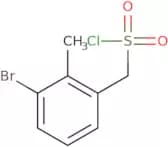
Fórmula:C9H9NO2Pureza:Min. 95%Peso molecular:163.17 g/mol(3-Bromo-2-methylphenyl)methanesulfonyl chloride
CAS:Versatile small molecule scaffoldFórmula:C8H8BrClO2SPureza:Min. 95%Peso molecular:283.57 g/mol3-Bromo-2-(methylthio)pyridine
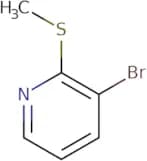
CAS:Versatile small molecule scaffold
Fórmula:C6H6BrNSPureza:Min. 95%Peso molecular:204.09 g/mol2-Methylbenzene-1,3-dicarbaldehyde
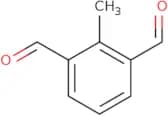
CAS:2-Methylbenzene-1,3-dicarbaldehyde is a divalent hydrocarbon that has an oxidation catalyst. This compound is used as an intermediate in the production of drugs and pharmaceuticals. It has been shown to have cardiovascular disorders, such as vasodilatation and hypotension. The mechanism of action is not fully understood but may be related to its ability to act as a nitrovasodilator by increasing nitric oxide (NO) release. 2-Methylbenzene-1,3-dicarbaldehyde also produces psychotic disorders when long term exposure occurs. This compound has been shown to have neurotoxic effects in animal models with long term exposure.
Fórmula:C9H8O2Pureza:Min. 95%Peso molecular:148.16 g/mol2-Methyl-1,3-benzoxazol-4-ol
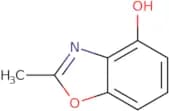
CAS:2-Methyl-1,3-benzoxazol-4-ol is a planar torsion with a chloride. The crystal structure of 2-Methyl-1,3-benzoxazol-4-ol has been solved by XRD and the molecular weight was found to be 253.2 g/mol. The chemical formula for 2-Methyl-1,3-benzoxazol-4-ol is C11H12ClNO2.
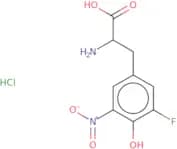
The benzoxazole ring in 2 methyl 1,3 benzoxazole 4 ol is planar and contains two methyl groups on the 4 position. This molecule can exist as either cis or trans form depending on the geometry of the molecule. The cis form has two hydrogen atoms on the opposite side of the molecule to each other whereas in trans it has only one hydrogen atom on opposite sides of the molecule. These two forms are not interchangeable and have different physical properties such asFórmula:C8H7NO2Pureza:Min. 95%Peso molecular:149.15 g/mol2-Amino-3-(3-fluoro-4-hydroxy-5-nitrophenyl)propanoic acid hydrochloride
CAS:Versatile small molecule scaffold
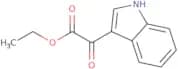
Fórmula:C9H10ClFN2O5Pureza:Min. 95%Peso molecular:280.6 g/molEthyl 2-(indol-3-yl)-2-oxoacetate
CAS:Ethyl 2-(indol-3-yl)-2-oxoacetate is a hydroxy derivative of the amino acid tyrosine. It inhibits the enzyme tyrosine hydroxylase, which catalyzes the conversion of tyrosine to L-DOPA. This in turn affects dopamine synthesis and has an inhibitory effect on rat brain. Ethyl 2-(indol-3-yl)-2-oxoacetate also inhibits methylmagnesium borohydride in vitro, which is a reagent that breaks down esters, amides, and nitriles. Tyrosine hydroxylase is inhibited by the presence of two hydroxy groups on the ethyl side chain and one hydroxy group on the indole ring. It can be used as a structural analogue for other drugs that are used to treat Parkinson's disease or depression.
Fórmula:C12H11NO3Pureza:Min. 95%Peso molecular:217.22 g/mol2'-[(tert-Butoxy)carbonyl]-2',3'-dihydro-1'H-spiro[cyclopropane-1,4'-isoquinoline]-1'-carboxylic acid
CAS:Versatile small molecule scaffoldFórmula:C17H21NO4Pureza:Min. 95%Peso molecular:303.4 g/molRef: 3D-WLD79997
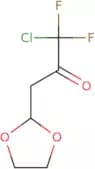
Producto descatalogado1-Chloro-3-(1,3-dioxolan-2-yl)-1,1-difluoropropan-2-one
CAS:Versatile small molecule scaffold
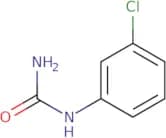
Fórmula:C6H7ClF2O3Pureza:Min. 95%Peso molecular:200.57 g/mol3-Chlorophenylurea
CAS:3-Chlorophenylurea is a quinazolinone that inhibits the growth of candida glabrata. This compound has been shown to inhibit efflux pumps, which are proteins that pump out drugs from the cell. 3-Chlorophenylurea has been shown to inhibit the efflux of fluconazole, a drug used to treat fungal infections, and thiourea, a compound that is known for its cytotoxicity. The inhibition of these two compounds suggests that 3-chlorophenylurea could be an efflux pump inhibitor.
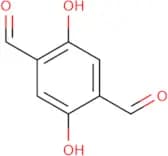
Fórmula:C7H7ClN2OPureza:Min. 95%Peso molecular:170.6 g/mol2,5-Dihydroxyterephthalaldehyde
CAS:2,5-Dihydroxyterephthalaldehyde (2,5-DTPA) is a sugar alcohol that is used in the production of polyester. It can be synthesized by electrochemical methods and is produced as an intermediate in the synthesis of 2,5-dihydroxypentane-1,5-diyldimethanol. The optical properties and chemical stability of 2,5-DTPA are determined by its protonation state. The protonation state depends on the pH of the solution or solvent. 2,5-DTPA has two isomers: one with an intramolecular hydrogen bond and one without. 2,5-DTPA also exists as an enol form at high pH values and as a keto form at low pH values. This compound has been shown to have liver protective effects against cell death induced by oxidative stress in animal models.
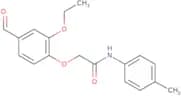
Fórmula:C8H6O4Pureza:Min. 95%Peso molecular:166.13 g/mol2-(2-Ethoxy-4-formylphenoxy)-N-(p-tolyl)acetamide
CAS:Versatile small molecule scaffold
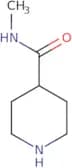
Fórmula:C18H19NO4Pureza:Min. 95%Peso molecular:313.35 g/molN-Methylpiperidine-4-carboxamide
CAS:Versatile small molecule scaffold
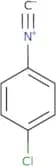
Fórmula:C7H14N2OPureza:Min. 95%Peso molecular:142.2 g/mol1-Chloro-4-isocyanobenzene
CAS:1-Chloro-4-isocyanobenzene (1CI) is an organic compound that has been used as a chemical probe for the detection of amines and other molecules on metal surfaces. The frequency shift in Raman spectra, which is observed after the addition of 1CI to the metal surface, is used to detect amines. 1CI has also been shown to be a potent inhibitor of mitochondrial function. This molecule binds to nucleophilic sites on metal surfaces and forms covalent bonds with them, leading to a high degree of inhibition.
1CI can be synthesized in three steps from commercially available starting materials and is relatively easy to purify.Fórmula:C7H4ClNPureza:Min. 95%Peso molecular:137.56 g/mol2-[3-(Propan-2-yl)phenoxy]acetic acid
CAS:2-[3-(Propan-2-yl)phenoxy]acetic acid is a chemical compound that is used as an additive in benzene, and is a phytotoxic chemical. It prevents the formation of chlorophyll by blocking electron transport and inhibiting photosynthesis. 2-[3-(Propan-2-yl)phenoxy]acetic acid is used to induce callus tissue from lettuce, radish, and other plants. This compound also inhibits the growth of various bacteria including Escherichia coli and Pseudomonas aeruginosa.
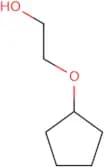
Fórmula:C11H14O3Pureza:Min. 95%Peso molecular:194.23 g/mol2-(cyclopentyloxy)ethanol
CAS:Versatile small molecule scaffold
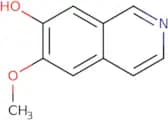
Fórmula:C7H14O2Pureza:Min. 95%Peso molecular:130.19 g/mol6-Methoxyisoquinolin-7-ol
CAS:Versatile small molecule scaffold
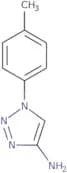
Fórmula:C10H9NO2Pureza:Min. 95%Peso molecular:175.18 g/mol1-(4-Methylphenyl)-1H-1,2,3-triazol-4-amine
CAS:Versatile small molecule scaffoldFórmula:C9H10N4Pureza:Min. 95%Peso molecular:174.2 g/mol2-(2-Methyl-1,3-thiazol-4-yl)-2-oxoacetic acid
CAS:Versatile small molecule scaffoldFórmula:C6H5NO3SPureza:Min. 95%Peso molecular:171.2 g/molRef: 3D-XJC11960
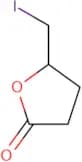
Producto descatalogado5-(Iodomethyl)oxolan-2-one
CAS:Versatile small molecule scaffold
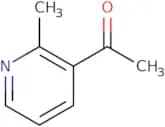
Fórmula:C5H7IO2Pureza:Min. 95%Peso molecular:226.01 g/mol1-(2-Methylpyridin-3-yl)ethanone
CAS:1-(2-Methylpyridin-3-yl)ethanone is a ketone that can be synthesized using the reaction of methyl sulfone, benzyl sulfone, and sulphone. It has been shown to have anti-inflammatory properties by inhibiting prostaglandin synthesis and has been used as a nonsteroidal anti-inflammatory drug (NSAID). 1-(2-Methylpyridin-3-yl)ethanone has also been shown to have analgesic effects in mice. This synthetic compound may be useful in treating inflammation, pain, and fever.
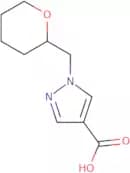
Fórmula:C8H9NOPureza:Min. 95%Peso molecular:135.16 g/mol1-((Tetrahydro-2H-pyran-2-yl)methyl)-1H-pyrazole-4-carboxylic acid
CAS:Versatile small molecule scaffold
Fórmula:C10H14N2O3Pureza:Min. 95%Peso molecular:210.23 g/mol4-Acetylmorpholine
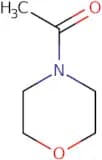
CAS:4-Acetylmorpholine is a recycled amide that is synthesized from an alkanolamine and an acylation reaction. It has been used in the dehydrating of organic compounds, such as reaction solution, and for the preparation of acrylamide. 4-Acetylmorpholine is also used as a viscosity control agent in the extraction of aromatic hydrocarbons. Its chemical structure consists of a carbonyl group and an aromatic hydrocarbon. 4-Acetylmorpholine can be synthesized by reacting acetaldehyde with ammonia or thiourea with methyl chloride or ethylene oxide.
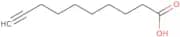
Fórmula:C6H3D8NO2Pureza:Min. 95%Peso molecular:137.21 g/molDec-9-ynoic acid
CAS:Dec-9-ynoic acid is a synthetic fatty acid that is a precursor to several biologically important substances. It is labile and easily oxidized by air, light, or heat. Dec-9-ynoic acid has been shown to be a central metabolic intermediate for the biosynthesis of polyunsaturated fatty acids. It can also be converted into linolenic acid, which is an essential fatty acid that cannot be synthesized by humans. Dec-9-ynoic acid exists in two geometric isomers: cis and trans. The cis form exhibits kinetic properties that are different from the trans form. Dec-9-ynoic acid has been studied as a potential treatment for human diseases such as diabetes mellitus type 2, Parkinson's disease, Alzheimer's disease, schizophrenia, and depression.
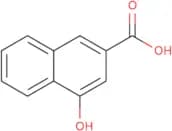
Fórmula:C10H16O2Pureza:Min. 95%Peso molecular:168.23 g/mol4-Hydroxy-2-naphthoic acid
CAS:4-Hydroxy-2-naphthoic acid is a hydrocarbon with a carboxylic acid group. It can act as an antagonist to the hydrocarbon receptor (HCR). 4-Hydroxy-2-naphthoic acid has been shown to be effective in treating colon cancer cells in vitro, and has been shown to inhibit the growth of cancer cells in vivo. This compound is also effective at inhibiting the proliferation of human colon cancer cells (Caco2) that have been exposed to benzo(a)pyrene, an aromatic hydrocarbon found in cigarette smoke. The mechanism by which this drug inhibits cell proliferation is not fully understood but may involve inhibition of cytochrome P450 1A1 (CYP1A1), which metabolizes benzo(a)pyrene into carcinogenic intermediates. 4-Hydroxy-2-naphthoic acid has also been shown to be anisotropic and microreactor, meaning
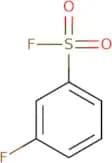
Fórmula:C11H8O3Pureza:Min. 95%Peso molecular:188.17 g/mol3-Fluorobenzene-1-sulfonyl fluoride
CAS:3-Fluorobenzene-1-sulfonyl fluoride is a chemical compound that can be used as a catalyst to synthesize organic compounds. It is a colorless liquid, which is soluble in water and organic solvents. This catalyst has been shown to be more efficient than the traditional catalysts, such as tetraphenylphosphonium chloride, potassium fluoride or sodium borohydride. 3-Fluorobenzene-1-sulfonyl fluoride also reacts with nitro groups to produce dinitro compounds, which are valuable synthetic intermediates for the production of dyes and pharmaceuticals. The synthesis of this compound can be carried out in high yields with stoichiometric amounts of reactants.
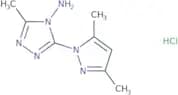
Fórmula:C6H4F2O2SPureza:Min. 95%Peso molecular:178.16 g/mol3-(3,5-Dimethyl-1H-pyrazol-1-yl)-5-methyl-4H-1,2,4-triazol-4-amine hydrochloride
CAS:Versatile small molecule scaffold
Fórmula:C8H13ClN6Pureza:Min. 95%Peso molecular:228.68 g/mol2-(2-[(Propan-2-yloxy)methyl]phenyl)acetic acid
CAS:Versatile small molecule scaffold
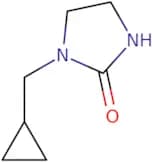
Fórmula:C12H16O3Pureza:Min. 95%Peso molecular:208.3 g/mol1-(Cyclopropylmethyl)imidazolidin-2-one
CAS:Versatile small molecule scaffold
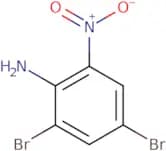
Fórmula:C7H12N2OPureza:Min. 95%Peso molecular:140.18 g/mol2,4-Dibromo-6-nitroaniline
CAS:2,4-Dibromo-6-nitroaniline is a nitro compound that has been used in the production of dyes. It is also used as a component in the synthesis of other organic compounds. 2,4-Dibromo-6-nitroaniline can be produced by electrolysis of an acid solution containing radical cations and benzene. The radical cations are formed by proton transfer from the acid to the benzene, followed by electron transfer from benzene to the electrode. This process results in the formation of nitro groups on the benzene ring, which undergoes oxidation to form 2,4-dibromo-6-nitroaniline. The cyclic voltammetry shows that this process occurs via two pathways: one with a fast rate and one with a slow rate. The mechanism for this reaction is not yet known.
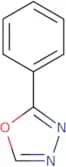
Fórmula:C6H4Br2N2O2Pureza:Min. 95%Peso molecular:295.92 g/mol2-Phenyl-1,3,4-oxadiazole
CAS:2-Phenyl-1,3,4-oxadiazole is a 2-phenyloxazole with an oxygen atom at the 1 position. It is a white crystalline solid that is soluble in water and has antibacterial properties. This chemical can be used as a catalyst for the synthesis of organic compounds. 2-Phenyl-1,3,4-oxadiazole reacts with nitro groups to form oxime derivatives and has been shown to inhibit the growth of fungi such as Candida albicans and Aspergillus niger. 2-Phenyl-1,3,4-oxadiazole can also be used as an antifungal agent against Trichophyton rubrum.
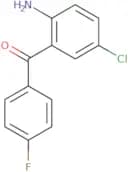
2-Phenyl-1,3,4-oxadiazole may be synthesized by reacting phenol with acetone in the presence of nitric acid or sulfuric acid. The structural formula for this compound isFórmula:C8H6N2OPureza:Min. 95%Peso molecular:146.15 g/mol4-Chloro-2-(4-fluorobenzoyl)aniline
CAS:Versatile small molecule scaffold
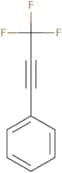
Fórmula:C13H9ClFNOPureza:Min. 95%Peso molecular:249.67 g/mol(3,3,3-Trifluoroprop-1-yn-1-yl)benzene
CAS:(3,3,3-Trifluoroprop-1-yn-1-yl)benzene is a reaction product that can be used to inhibit the activity of metalloprotease and as an anti-cancer agent. This compound inhibits the enzyme that causes chronic kidney disease and degenerative diseases. It is a potent inhibitor of metalloprotease, which is involved in cancer progression, fatty acid synthesis and bone formation. The effective dose for this drug is between 1 and 10mg/kg body weight. It has been shown to have an asymmetric synthesis with the use of amido groups. (3,3,3-Trifluoroprop-1-yn-1-yl)benzene also has antirheumatic properties due to its ability to inhibit proteases such as matrix metalloproteinases and cathepsins.
Fórmula:C9H5F3Pureza:Min. 95%Peso molecular:170.13 g/molRef: 3D-AAA77262
Producto descatalogado


![2-[Benzyl(methyl)ao]propanoic acid](/_next/image/?url=https%3A%2Fstatic.cymitquimica.com%2Fproducts%2F3D%2Fthumb-webp%2FBEA69294.webp&w=3840&q=75)
![1-Oxaspiro[4.5]dec-2-en-4-one](/_next/image/?url=https%3A%2Fstatic.cymitquimica.com%2Fproducts%2F3D%2Fthumb-webp%2FBDA95195.webp&w=3840&q=75)
![2'-[(tert-Butoxy)carbonyl]-2',3'-dihydro-1'H-spiro[cyclopropane-1,4'-isoquinoline]-1'-carboxylic a…](/_next/image/?url=https%3A%2Fstatic.cymitquimica.com%2Fproducts%2F3D%2Fthumb-webp%2FWLD79997.webp&w=3840&q=75)
![2-[3-(Propan-2-yl)phenoxy]acetic acid](/_next/image/?url=https%3A%2Fstatic.cymitquimica.com%2Fproducts%2F3D%2Fthumb-webp%2FBAA87852.webp&w=3840&q=75)
![2-(2-[(Propan-2-yloxy)methyl]phenyl)acetic acid](/_next/image/?url=https%3A%2Fstatic.cymitquimica.com%2Fproducts%2F3D%2Fthumb-webp%2FXLC02690.webp&w=3840&q=75)