


Building Blocks
Subcategorías de "Building Blocks"
- Ácidos borónicos y derivados del ácido borónico(5.778 productos)
- Building Blocks quirales(1.243 productos)
- Building Blocks de hidrocarburos(6.099 productos)
- Building Blocks orgánicos(61.038 productos)
Se han encontrado 205376 productos de "Building Blocks"
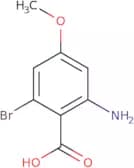
2-Amino-6-bromo-4-methoxybenzoic acid
CAS:Versatile small molecule scaffold
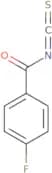
Fórmula:C8H8BrNO3Pureza:Min. 95%Peso molecular:246.06 g/mol4-Fluorobenzoyl isothiocyanate
CAS:4-Fluorobenzoyl isothiocyanate (FBITC) is a fluorescent molecule that binds to the glutamate receptor. The binding of FBITC to the GluN2B subunit of the NMDA receptor leads to conformational changes in the receptor and decreases its ability to bind glutamate. This process has been shown using x-ray diffraction data, which also showed that FBITC was able to chelate with magnesium ions, indicating a possible allosteric modulator for these receptors.
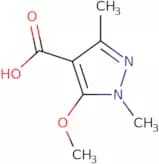
Fórmula:C8H4FNOSPureza:Min. 95%Peso molecular:181.19 g/mol5-Methoxy-1,3-dimethyl-1H-pyrazole-4-carboxylic acid
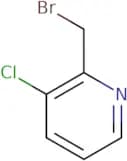
CAS:Versatile small molecule scaffoldFórmula:C7H10N2O3Pureza:Min. 95%Peso molecular:170.17 g/mol2-(bromomethyl)-3-chloropyridine
CAS:Versatile small molecule scaffold
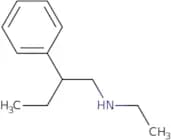
Fórmula:C6H5BrClNPureza:Min. 95%Peso molecular:206.47 g/molEthyl(2-phenylbutyl)amine
CAS:Producto controladoVersatile small molecule scaffold
Fórmula:C12H19NPureza:Min. 95%Peso molecular:177.29 g/mol3-Chloro-N-[2-(4-methyl-1,3-thiazol-5-yl)-2-oxoethyl]propanamide
CAS:Versatile small molecule scaffoldFórmula:C9H11ClN2O2SPureza:Min. 95%Peso molecular:246.71 g/molRef: 3D-CHC38015
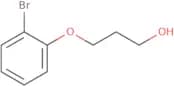
Producto descatalogado3-(2-Bromophenoxy)propan-1-ol
CAS:Versatile small molecule scaffold
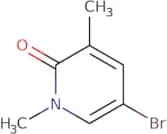
Fórmula:C9H11BrO2Pureza:Min. 95%Peso molecular:231.09 g/mol5-Bromo-1,3-dimethylpyridin-2(1H)-one
CAS:Benzyne is a reactive intermediate that is formed by the tautomerization of 5-bromo-1,3-dimethylpyridin-2(1H)-one. It is an adduct between a bromine atom and a benzene ring. This compound has been shown to react with electron-rich olefins to form bicyclic compounds called diels-alder adducts. These reactions are often catalyzed by metals, such as palladium or nickel. Benzyne also reacts with triple bonds or other electron rich centers to form benzyne adducts, which are highly reactive and can be used as chemical probes for electron density in molecules.
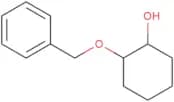
Fórmula:C7H8BrNOPureza:Min. 95%Peso molecular:202.05 g/molrac-(1R,2R)-2-(Benzyloxy)cyclohexan-1-ol
CAS:Versatile small molecule scaffold
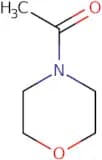
Fórmula:C13H18O2Pureza:Min. 95%Peso molecular:206.28 g/mol4-Acetylmorpholine
CAS:4-Acetylmorpholine is a recycled amide that is synthesized from an alkanolamine and an acylation reaction. It has been used in the dehydrating of organic compounds, such as reaction solution, and for the preparation of acrylamide. 4-Acetylmorpholine is also used as a viscosity control agent in the extraction of aromatic hydrocarbons. Its chemical structure consists of a carbonyl group and an aromatic hydrocarbon. 4-Acetylmorpholine can be synthesized by reacting acetaldehyde with ammonia or thiourea with methyl chloride or ethylene oxide.
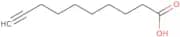
Fórmula:C6H3D8NO2Pureza:Min. 95%Peso molecular:137.21 g/molDec-9-ynoic acid
CAS:Dec-9-ynoic acid is a synthetic fatty acid that is a precursor to several biologically important substances. It is labile and easily oxidized by air, light, or heat. Dec-9-ynoic acid has been shown to be a central metabolic intermediate for the biosynthesis of polyunsaturated fatty acids. It can also be converted into linolenic acid, which is an essential fatty acid that cannot be synthesized by humans. Dec-9-ynoic acid exists in two geometric isomers: cis and trans. The cis form exhibits kinetic properties that are different from the trans form. Dec-9-ynoic acid has been studied as a potential treatment for human diseases such as diabetes mellitus type 2, Parkinson's disease, Alzheimer's disease, schizophrenia, and depression.
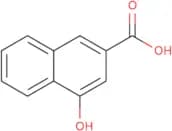
Fórmula:C10H16O2Pureza:Min. 95%Peso molecular:168.23 g/mol4-Hydroxy-2-naphthoic acid
CAS:4-Hydroxy-2-naphthoic acid is a hydrocarbon with a carboxylic acid group. It can act as an antagonist to the hydrocarbon receptor (HCR). 4-Hydroxy-2-naphthoic acid has been shown to be effective in treating colon cancer cells in vitro, and has been shown to inhibit the growth of cancer cells in vivo. This compound is also effective at inhibiting the proliferation of human colon cancer cells (Caco2) that have been exposed to benzo(a)pyrene, an aromatic hydrocarbon found in cigarette smoke. The mechanism by which this drug inhibits cell proliferation is not fully understood but may involve inhibition of cytochrome P450 1A1 (CYP1A1), which metabolizes benzo(a)pyrene into carcinogenic intermediates. 4-Hydroxy-2-naphthoic acid has also been shown to be anisotropic and microreactor, meaning
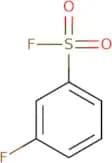
Fórmula:C11H8O3Pureza:Min. 95%Peso molecular:188.17 g/mol3-Fluorobenzene-1-sulfonyl fluoride
CAS:3-Fluorobenzene-1-sulfonyl fluoride is a chemical compound that can be used as a catalyst to synthesize organic compounds. It is a colorless liquid, which is soluble in water and organic solvents. This catalyst has been shown to be more efficient than the traditional catalysts, such as tetraphenylphosphonium chloride, potassium fluoride or sodium borohydride. 3-Fluorobenzene-1-sulfonyl fluoride also reacts with nitro groups to produce dinitro compounds, which are valuable synthetic intermediates for the production of dyes and pharmaceuticals. The synthesis of this compound can be carried out in high yields with stoichiometric amounts of reactants.
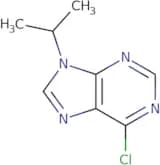
Fórmula:C6H4F2O2SPureza:Min. 95%Peso molecular:178.16 g/mol6-Chloro-9-(propan-2-yl)-9H-purine
CAS:6-Chloro-9-(propan-2-yl)-9H-purine is an intermediate in the synthesis of nucleoside analogues. It is obtained by the catalyzed reaction of acetonitrile and purines, which undergoes regioisomerization to form a mixture of 6-chloro-9-(propyl)- and 6-chloro-9-(butyl)purine. This intermediate can be used for the alkynylation of amino acids or peptides with alkynes. The selective formation of one regioisomer can be achieved by using a chiral catalyst or by reacting with an optically active reagent such as (+)-camphor sulfonic acid.
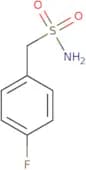
Fórmula:C8H9ClN4Pureza:Min. 95%Peso molecular:196.64 g/mol(4-Fluorophenyl)methanesulfonamide
CAS:Versatile small molecule scaffold
Fórmula:C7H8FNO2SPureza:Min. 95%Peso molecular:189.21 g/mol[2-(2-Ethoxyethoxy)ethyl](methyl)amine
CAS:Versatile small molecule scaffold
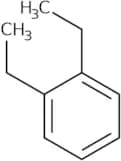
Fórmula:C7H17NO2Pureza:Min. 95%Peso molecular:147.22 g/mol1,2-Diethylbenzene
CAS:1,2-Diethylbenzene is a trifluoroacetic acid derivative that is used as an acylation agent and a solid catalyst. 1,2-Diethylbenzene has been shown to increase the energy metabolism in cultured human cells. It also influences fatty acid synthesis and nmr spectra of plant families. 1,2-Diethylbenzene was found to be safe for use in sciatic nerve regeneration in Sprague-Dawley rats with axonopathy. This chemical can also be used as an analytical reagent for the separation of urine samples by liquid chromatography methods.
Fórmula:C10H14Pureza:Min. 95%Peso molecular:134.22 g/mol4-Chloro-2-hydroxy-6-methylphenylboronic acid
CAS:Versatile small molecule scaffoldFórmula:C7H8BClO3Pureza:Min. 95%Peso molecular:186.4 g/moltert-Butyl (2,2-difluoro-3-hydroxypropyl)carbamate
CAS:Versatile small molecule scaffoldFórmula:C10H13NO4Pureza:Min. 95%Peso molecular:211.21 g/mol2-Bromo-3,3,3-trifluoro-1-propene
CAS:Producto controlado2-Bromo-3,3,3-trifluoro-1-propene is a chemical compound that has been synthesized in an asymmetric reaction. The reactant is bromopropane and the product is 2,2,2-trifluoropropene. The methylene group on the propene molecule is activated by the nucleophilic attack of a fluoride ion from hydrogen fluoride to form a cavity with a highly strained bond. The kinetic study of this reaction revealed that the activation energy for the reaction is 42 kJ/mol. Palladium-catalyzed coupling reactions are catalyzed by palladium and require nonpolar solvents such as toluene or dichloromethane. This type of reaction has been shown to be exothermic with an isolated yield of 1%.
Fórmula:C3H2BrF3Pureza:Min. 95%Forma y color:Colorless PowderPeso molecular:174.95 g/mol8-Bromo-2-methylimidazo[1,2-a]pyridine
CAS:Versatile small molecule scaffold
Fórmula:C8H7N2BrPureza:Min. 95%Peso molecular:211.05 g/mol3-Hydroxy-5-methylpyridine
CAS:3-Hydroxy-5-methylpyridine (3HMP) is a chemical substance that has been classified as an amine. It is a product of the metabolism of purines, which are nitrogenous bases found in DNA and RNA. 3HMP is produced by aerogenic bacteria (such as Enterobacter), and can be used to estimate the number of these bacteria present in water samples. 3HMP has been shown to have antiviral properties against influenza virus, and can be used as a biomarker for the presence of other viruses in animals. 3HMP also has mineralization properties, which have been studied extensively, particularly with regards to pancreatic disease.
Fórmula:C6H7NOPureza:Min. 95%Forma y color:PowderPeso molecular:109.13 g/molRef: 3D-FH16174
Producto descatalogado4,5-Dihydro-1H-imidazol-2-amine hydrochloride
CAS:Please enquire for more information about 4,5-Dihydro-1H-imidazol-2-amine hydrochloride including the price, delivery time and more detailed product information at the technical inquiry form on this page
Fórmula:C3H7N3•HClPureza:Min. 95%Peso molecular:121.57 g/molRef: 3D-FD183639
Producto descatalogado1-Hydroxycyclopentane-1-carbonitrile
CAS:1-Hydroxycyclopentane-1-carbonitrile is a monomer that is hydrolyzed to form benzoin and cyanohydrins. It can be used in the production of scifinder as a monomer or dimerizer.
Fórmula:C6H9NOPureza:Min. 95%Peso molecular:111.14 g/mol4,5-Dihydroxy-2,3-Pentanedione
CAS:4,5-Dihydroxy-2,3-pentanedione is a carbonyl compound that is the product of the oxidation of ascorbic acid. It is used in wastewater treatment and has antimicrobial properties against infectious diseases. This compound has been shown to inhibit protein synthesis by binding to the ribosome and preventing the formation of peptide bonds between amino acids. 4,5-Dihydroxy-2,3-pentanedione has also been shown to bind to plasma proteins, which may be due to its acyl chain structure. 4,5-Dihydroxy-2,3-pentanedione can be synthesized in a catalytic mechanism that involves dehydroascorbic acid and molecular oxygen.
Fórmula:C5H8O4Pureza:Min. 95%Forma y color:PowderPeso molecular:132.11 g/molRef: 3D-FD180770
Producto descatalogadoPiperyline
CAS:Piperyline is an alkanoic acid that has shown to be effective against skin cancer. It also has antimicrobial properties, which may be due to its ability to bind metal ions and form polymeric compounds. Piperyline inhibits microbial growth by inhibiting the synthesis of proteins and nucleic acids. The antimicrobial activity is related to its cationic polymerization with hydroxyl groups, which forms a structure that can inhibit microbial enzymes and disrupt microbial cell membranes. This compound also interacts with the skin's natural lipids, making it difficult for microorganisms to attach and grow on the skin. Piperyline is synthesized in organic chemistry laboratories as an amide precursor of other pharmaceuticals such as penicillin.
Fórmula:C16H17NO3Pureza:Min. 95%Peso molecular:271.31 g/mol

![3-Chloro-N-[2-(4-methyl-1,3-thiazol-5-yl)-2-oxoethyl]propanamide](/_next/image/?url=https%3A%2Fstatic.cymitquimica.com%2Fproducts%2F3D%2Fthumb-webp%2FCHC38015.webp&w=3840&q=75)
amine](/_next/image/?url=https%3A%2Fstatic.cymitquimica.com%2Fproducts%2F3D%2Fthumb-webp%2FAAC06291.webp&w=3840&q=75)



![8-Bromo-2-methylimidazo[1,2-a]pyridine](/_next/image/?url=https%3A%2Fstatic.cymitquimica.com%2Fproducts%2F3D%2Fthumb-webp%2FUXB37475.webp&w=3840&q=75)




