Building Blocks
Esta sección contiene productos fundamentales para la síntesis de compuestos orgánicos y biológicos. Building blocks son los materiales de partida esenciales utilizados para construir moléculas complejas a través de diversas reacciones químicas. Desempeñan un papel crítico en el descubrimiento de fármacos, la ciencia de materiales y la investigación química. En CymitQuimica, ofrecemos una gama diversa de building blocks de alta calidad para apoyar sus investigaciones innovadoras y proyectos industriales, asegurando que tenga los componentes esenciales para una síntesis exitosa.
Subcategorías de "Building Blocks"
- Ácidos borónicos y derivados del ácido borónico(5.756 productos)
- Building Blocks quirales(1.242 productos)
- Building Blocks de hidrocarburos(6.095 productos)
- Building Blocks orgánicos(61.038 productos)
Se han encontrado 196817 productos de "Building Blocks"
Ordenar por
Pureza (%)
0
100
|
0
|
50
|
90
|
95
|
100
3-(Trifluoromethyl)-1,4,5,7-tetrahydropyrano[3,4-c]pyrazole
CAS:<p>Versatile small molecule scaffold</p>Fórmula:C7H7F3N2OPureza:Min. 95%Peso molecular:192.14 g/mol3-Bromo-5-tert-butylphenol
CAS:<p>Versatile small molecule scaffold</p>Fórmula:C10H13BrOPureza:Min. 95%Peso molecular:229.11 g/mol1-[(tert-Butoxy)carbonyl]-1,4,5,6-tetrahydropyridine-3-carboxylic acid
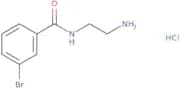
CAS:<p>Versatile small molecule scaffold</p>Fórmula:C11H17NO4Pureza:Min. 95%Peso molecular:227.26 g/molN-(2-Aminoethyl)-3-bromobenzamide hydrochloride
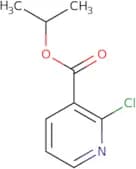
CAS:<p>Versatile small molecule scaffold</p>Fórmula:C9H12BrClN2OPureza:Min. 95%Peso molecular:279.56 g/molPropan-2-yl 2-chloropyridine-3-carboxylate
CAS:<p>Versatile small molecule scaffold</p>Fórmula:C9H10ClNO2Pureza:Min. 95%Peso molecular:199.63 g/mol1,4-Dibromo-2,5-difluoro-3-nitrobenzene
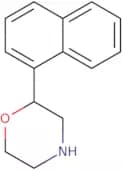
CAS:<p>Versatile small molecule scaffold</p>Fórmula:C6HBr2F2NO2Pureza:Min. 95%Peso molecular:316.88 g/mol2-(Naphthalen-1-yl)morpholine
CAS:<p>Versatile small molecule scaffold</p>Fórmula:C14H15NOPureza:Min. 95%Peso molecular:213.27 g/mol5-{[1-(Propan-2-yl)-1H-1,2,3-triazol-4-yl]methyl}imidazolidine-2,4-dione
CAS:<p>Versatile small molecule scaffold</p>Fórmula:C9H13N5O2Pureza:Min. 95%Peso molecular:223.23 g/molRef: 3D-BTC57887
Producto descatalogado4H,5H,6H,7H-[1,2,4]Triazolo[1,5-a]pyrimidine-6-carboxylic acid
CAS:<p>Versatile small molecule scaffold</p>Fórmula:C6H8N4O2Pureza:Min. 95%Peso molecular:168.2 g/molRef: 3D-BMC49356
Producto descatalogado4-Methyl-3-(1H-1,2,3,4-tetrazol-1-yl)aniline
CAS:<p>Versatile small molecule scaffold</p>Fórmula:C8H9N5Pureza:Min. 95%Peso molecular:175.19 g/mol7-Hexyl-3-methyl-1-propyl-5-sulfanyl-1H,2H,3H,4H-pyrimido[4,5-d][1,3]diazine-2,4-dione
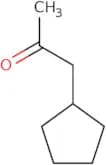
CAS:<p>Versatile small molecule scaffold</p>Fórmula:C16H24N4O2SPureza:Min. 95%Peso molecular:336.5 g/mol1-Cyclopentylpropan-2-one
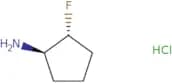
CAS:<p>Cyclopentylpropan-2-one (1CPA) is an aliphatic hydrocarbon that has been shown to act as a light-sensitive molecule. It is used as a polymerization initiator and is also found in the human body as a metabolic intermediate. 1CPA is found in the form of a diacylglycerol and can be converted into an allyl carbonate, which reacts with methoxy groups to form an allyl ether. 1CPA has also been shown to have structural similarities with pyrimidine compounds and formyl groups. The 1CPA molecule contains a carbonyl group, which is the reactive functional group that allows for this chemical to react with other compounds.</p>Fórmula:C8H14OPureza:Min. 95%Peso molecular:126.2 g/moltrans-2-Fluorocyclopentan-1-amine HCl ee
CAS:<p>Versatile small molecule scaffold</p>Fórmula:C5H11ClFNPureza:Min. 95%Peso molecular:139.6 g/mol2-Bromo-3,3,3-trifluoro-1-propene
CAS:Producto controlado<p>2-Bromo-3,3,3-trifluoro-1-propene is a chemical compound that has been synthesized in an asymmetric reaction. The reactant is bromopropane and the product is 2,2,2-trifluoropropene. The methylene group on the propene molecule is activated by the nucleophilic attack of a fluoride ion from hydrogen fluoride to form a cavity with a highly strained bond. The kinetic study of this reaction revealed that the activation energy for the reaction is 42 kJ/mol. Palladium-catalyzed coupling reactions are catalyzed by palladium and require nonpolar solvents such as toluene or dichloromethane. This type of reaction has been shown to be exothermic with an isolated yield of 1%.</p>Fórmula:C3H2BrF3Pureza:Min. 95%Forma y color:Colorless PowderPeso molecular:174.95 g/mol2-Cyano-5-fluorophenol
CAS:<p>2-Cyano-5-fluorophenol is an organic compound that is used as a precursor to medicines and other chemicals. It reacts with calcium hydroxide in water to form 2-cyano-5-hydroxyfluorobenzene, which can be hydrolyzed to form 2-cyano-5-chlorofluorobenzene. This compound can also react with sodium hydroxide to produce sodium cyanate, which can be hydrolyzed to form sodium chloride and hydrogen cyanide gas. The alkali metal ions are needed for this reaction, which is why the product should not be exposed to water or moisture. 2-Cyano-5-fluorophenol has been shown to have liquid crystal properties and is used in the production of certain types of polymers. 2Cyano-5Fluorophenol crystals are also used in some medicines such as acetaminophen (paracetamol).</p>Fórmula:C7H4FNOPureza:Min. 95%Peso molecular:137.11 g/mol2-Oxa-spiro[3.3]heptan-6-ol
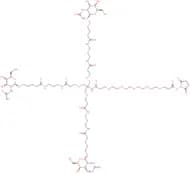
CAS:<p>Versatile small molecule scaffold</p>Fórmula:C6H10O2Pureza:Min. 95%Peso molecular:114.14 g/molTri-b-GalNAc-PEG5-NHS ester
CAS:<p>Tri-GalNAc-NHS ester is a multivalent molecule composed of three GalNAc cluster arms. It is a protein degrader and a ligand of the asialoglycoprotein receptor (ASGPR) used for the development of targeted therapies for liver diseases. The GalNAc arms enable high-affinity binding to the ASGPR on hepatocyte surfaces. The crucial functional group, N-hydroxysuccinimide (NHS) ester, is known for its ease of conjugation with various biomolecules possessing amine (NH2) groups. This biocompatible reaction strategy allows the design and development of targeted conjugates such as drug-GalNAc conjugates, siRNA delivery vehicles, or probes for ASGPR imaging in the liver.</p>Fórmula:C79H137N11O37Pureza:Min. 95%Forma y color:PowderPeso molecular:1,832.99 g/molRef: 3D-FT183733
Producto descatalogado
![3-(Trifluoromethyl)-1,4,5,7-tetrahydropyrano[3,4-c]pyrazole](/_next/image/?url=https%3A%2Fstatic.cymitquimica.com%2Fproducts%2F3D%2Fthumb-webp%2FXQB93148.webp&w=3840&q=75)


![1-[(tert-Butoxy)carbonyl]-1,4,5,6-tetrahydropyridine-3-carboxylic acid](/_next/image/?url=https%3A%2Fstatic.cymitquimica.com%2Fproducts%2F3D%2Fthumb-webp%2FCKC07438.webp&w=3840&q=75)

![5-{[1-(Propan-2-yl)-1H-1,2,3-triazol-4-yl]methyl}imidazolidine-2,4-dione](/_next/image/?url=https%3A%2Fstatic.cymitquimica.com%2Fproducts%2F3D%2Fthumb-webp%2FBTC57887.webp&w=3840&q=75)
![4H,5H,6H,7H-[1,2,4]Triazolo[1,5-a]pyrimidine-6-carboxylic acid](/_next/image/?url=https%3A%2Fstatic.cymitquimica.com%2Fproducts%2F3D%2Fthumb-webp%2FBMC49356.webp&w=3840&q=75)

![7-Hexyl-3-methyl-1-propyl-5-sulfanyl-1H,2H,3H,4H-pyrimido[4,5-d][1,3]diazine-2,4-dione](/_next/image/?url=https%3A%2Fstatic.cymitquimica.com%2Fproducts%2F3D%2Fthumb-webp%2FBJB16918.webp&w=3840&q=75)


![2-Oxa-spiro[3.3]heptan-6-ol](/_next/image/?url=https%3A%2Fstatic.cymitquimica.com%2Fproducts%2F3D%2Fthumb-webp%2FNEC38108.webp&w=3840&q=75)