


Building Blocks
Esta sección contiene productos fundamentales para la síntesis de compuestos orgánicos y biológicos. Building blocks son los materiales de partida esenciales utilizados para construir moléculas complejas a través de diversas reacciones químicas. Desempeñan un papel crítico en el descubrimiento de fármacos, la ciencia de materiales y la investigación química. En CymitQuimica, ofrecemos una gama diversa de building blocks de alta calidad para apoyar sus investigaciones innovadoras y proyectos industriales, asegurando que tenga los componentes esenciales para una síntesis exitosa.
Subcategorías de "Building Blocks"
- Ácidos borónicos y derivados del ácido borónico(5.756 productos)
- Building Blocks quirales(1.242 productos)
- Building Blocks de hidrocarburos(6.095 productos)
- Building Blocks orgánicos(61.055 productos)
Se han encontrado 199650 productos de "Building Blocks"
Ordenar por
Pureza (%)
0
100
|
0
|
50
|
90
|
95
|
100
2-Aza-bicyclo[4.1.0]heptane hydrochloride
CAS:<p>Versatile small molecule scaffold</p>Fórmula:C6H11N·HClPureza:Min. 95%Peso molecular:133.62 g/molThieno[2,3-b]pyridine-5-carbonitrile
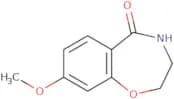
CAS:<p>Thienopyridine analogs are a class of chemical compounds that function as agonists of the receptor α. These compounds have been shown to inhibit fatty acid oxidation and ATP production in rat liver cells, which may be due to their ability to activate AMP-activated protein kinase (AMPK). Thienopyridine analogs are being investigated for use as anti-inflammatory agents and cancer treatments.</p>Fórmula:C8H4N2SPureza:Min. 95%Peso molecular:160.2 g/mol8-Methoxy-2,3,4,5-tetrahydro-1,4-benzoxazepin-5-one
CAS:<p>Versatile small molecule scaffold</p>Fórmula:C10H11NO3Pureza:Min. 95%Peso molecular:193.2 g/mol[6-(Pyridin-2-yl)pyridin-3-yl]methanol
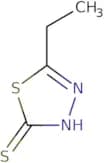
CAS:<p>Versatile small molecule scaffold</p>Fórmula:C11H10N2OPureza:Min. 95%Peso molecular:186.21 g/mol5-Ethyl-1,3,4-thiadiazole-2-thiol
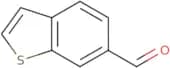
CAS:<p>Versatile small molecule scaffold</p>Fórmula:C4H6N2S2Pureza:Min. 95%Peso molecular:146.2 g/mol1-Benzothiophene-6-carboxaldehyde
CAS:<p>1-Benzothiophene-6-carboxaldehyde (BTA) is a heterocyclic compound that contains sulfur. It is a colorless liquid with a sweet odor. BTA is used in the manufacture of pesticides, pharmaceuticals, and other organic chemicals. It is also used as a building block in the synthesis of other compounds and has been shown to have anti-inflammatory properties.</p>Fórmula:C9H6OSPureza:Min. 95%Peso molecular:162.21 g/molMethyl 2-[4-(2-aminoethyl)phenoxy]acetate hydrochloride
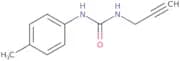
CAS:<p>Versatile small molecule scaffold</p>Fórmula:C11H16ClNO3Pureza:Min. 95%Peso molecular:245.7 g/mol1-(4-Methylphenyl)-3-(prop-2-yn-1-yl)urea
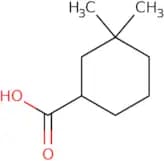
CAS:<p>1-(4-Methylphenyl)-3-(prop-2-yn-1-yl)urea is a fluorescent derivative that can be detected with certain techniques. It has been used to detect phosphatases in cervical cancer cells and tumor cells. This compound is a ligand for the surface antigen of placental alkaline phosphatase (PLAP). It can also bind to other organic ligands, such as recombinant human erythropoietin (EPO), which may be useful for redirecting the action of this protein. 1-(4-Methylphenyl)-3-(prop-2-yn-1-yl)urea is an organic bispecific molecule that binds to two receptors, one on tumor cells and one on normal cells. This binding leads to cell death by apoptosis through the release of cytochrome c from mitochondria.</p>Fórmula:C11H12N2OPureza:Min. 95%Peso molecular:188.23 g/mol3,3-Dimethylcyclohexane-1-carboxylic acid
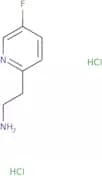
CAS:<p>Versatile small molecule scaffold</p>Fórmula:C9H16O2Pureza:Min. 95%Peso molecular:156.22 g/mol2-(5-Fluoropyridin-2-yl)ethan-1-amine dihydrochloride
CAS:<p>Versatile small molecule scaffold</p>Fórmula:C7H11Cl2FN2Pureza:Min. 95%Peso molecular:213.08 g/molRef: 3D-DXC58935
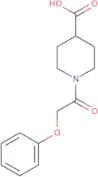
Producto descatalogado1-(Phenoxyacetyl)piperidine-4-carboxylic acid
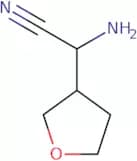
CAS:<p>Versatile small molecule scaffold</p>Fórmula:C14H17NO4Pureza:Min. 95%Peso molecular:263.29 g/mol2-Amino-2-(oxolan-3-yl)acetonitrile
CAS:<p>Versatile small molecule scaffold</p>Fórmula:C6H10N2OPureza:Min. 95%Peso molecular:126.16 g/mol3,8-Dioxa-11-azaspiro[5.6]dodecane
CAS:<p>Versatile small molecule scaffold</p>Fórmula:C9H17NO2Pureza:Min. 95%Peso molecular:171.24 g/mol2-[1-(Difluoromethyl)-1H-imidazol-2-yl]-1-phenylethan-1-amine
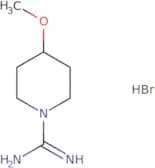
CAS:<p>Versatile small molecule scaffold</p>Fórmula:C12H13F2N3Pureza:Min. 95%Peso molecular:237.25 g/mol4-Methoxypiperidine-1-carboximidamide hydrobromide
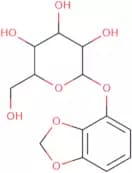
CAS:<p>Versatile small molecule scaffold</p>Fórmula:C7H16BrN3OPureza:Min. 95%Peso molecular:238.13 g/mol(2S,3R,4S,5S,6R)-2-(1,3-Dioxaindan-4-yloxy)-6-(hydroxymethyl)oxane-3,4,5-triol
CAS:<p>Versatile small molecule scaffold</p>Fórmula:C13H16O8Pureza:Min. 95%Peso molecular:300.26 g/molrac-(1R,4R)-4-{[(2-Fluorophenyl)methyl]amino}cyclohexan-1-ol hydrochloride
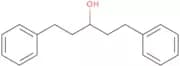
CAS:<p>Versatile small molecule scaffold</p>Fórmula:C13H19ClFNOPureza:Min. 95%Peso molecular:259.7 g/mol1,5-Diphenylpentan-3-ol
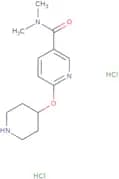
CAS:<p>Flindersia laevicarpa is a small tree native to Australia. The leaves of the tree are used for medicinal purposes and contain 1,5-diphenylpentan-3-ol. Flindersia laevicarpa has been shown to have anti-inflammatory and antioxidant properties, as well as an ability to inhibit platelet aggregation.</p>Fórmula:C17H20OPureza:Min. 95%Peso molecular:240.34 g/molN,N-Dimethyl-6-(piperidin-4-yloxy)pyridine-3-carboxamide dihydrochloride
CAS:<p>Versatile small molecule scaffold</p>Fórmula:C13H21Cl2N3O2Pureza:Min. 95%Peso molecular:322.2 g/mol3-[(4-Methylphenyl)methyl]azetidine hydrochloride
CAS:<p>Versatile small molecule scaffold</p>Fórmula:C11H16ClNPureza:Min. 95%Peso molecular:197.7 g/mol3-Morpholin-4-ylmethyl-2,3-dihydro-1H-indole
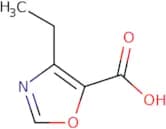
CAS:<p>Versatile small molecule scaffold</p>Fórmula:C13H18N2OPureza:Min. 95%Peso molecular:218.29 g/mol4-Ethyl-1,3-oxazole-5-carboxylic acid
CAS:<p>Versatile small molecule scaffold</p>Fórmula:C6H7NO3Pureza:Min. 95%Peso molecular:141.12 g/molRef: 3D-XMB14527
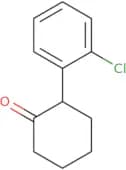
Producto descatalogado2-(2-Chlorophenyl)cyclohexan-1-one
CAS:<p>Versatile small molecule scaffold</p>Fórmula:C12H13ClOPureza:Min. 95%Peso molecular:208.68 g/molN-[1-(Furan-2-yl)ethyl]pyridin-2-amine
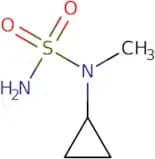
CAS:<p>Versatile small molecule scaffold</p>Fórmula:C11H12N2OPureza:Min. 95%Peso molecular:188.23 g/molN-Cyclopropyl-N-methylaminosulfonamide
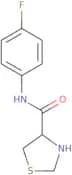
CAS:<p>Versatile small molecule scaffold</p>Fórmula:C4H10N2O2SPureza:Min. 95%Peso molecular:150.2 g/molN-(4-Fluorophenyl)-1,3-thiazolidine-4-carboxamide
CAS:<p>Versatile small molecule scaffold</p>Fórmula:C10H11FN2OSPureza:Min. 95%Peso molecular:226.27 g/mol3-[(4-Chlorophenyl)amino]propanenitrile
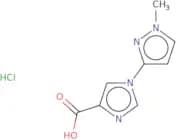
CAS:<p>Versatile small molecule scaffold</p>Fórmula:C9H9ClN2Pureza:Min. 95%Peso molecular:180.63 g/mol1-(1-Methyl-1H-pyrazol-3-yl)-1H-imidazole-4-carboxylic acid hydrochloride
CAS:<p>Versatile small molecule scaffold</p>Fórmula:C8H9ClN4O2Pureza:Min. 95%Peso molecular:228.6 g/molRef: 3D-DPD67436
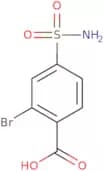
Producto descatalogado2-Bromo-4-sulfamoylbenzoic acid
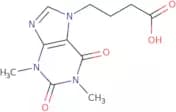
CAS:<p>Versatile small molecule scaffold</p>Fórmula:C7H6BrNO4SPureza:Min. 95%Peso molecular:280.1 g/mol4-(1,3-Dimethyl-2,6-dioxo-2,3,6,7-tetrahydro-1H-purin-7-yl)butanoic acid
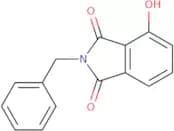
CAS:Producto controlado<p>Versatile small molecule scaffold</p>Fórmula:C11H14N4O4Pureza:Min. 95%Peso molecular:266.25 g/mol2-Benzyl-4-hydroxy-2,3-dihydro-1H-isoindole-1,3-dione
CAS:<p>Versatile small molecule scaffold</p>Fórmula:C15H11NO3Pureza:Min. 95%Peso molecular:253.25 g/mol5-Oxa-12-azadispiro[3.1.4{6}.3{4}]tridecane hydrochloride
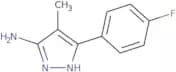
CAS:<p>Versatile small molecule scaffold</p>Fórmula:C11H20ClNOPureza:Min. 95%Peso molecular:217.7 g/mol5-(4-Fluoro-phenyl)-4-methyl-2H-pyrazol-3-ylamine
CAS:<p>Versatile small molecule scaffold</p>Fórmula:C10H10FN3Pureza:Min. 95%Peso molecular:191.2 g/mol1-(2,4-Dimethylphenyl)-1H,4H,5H,6H-cyclopenta[C]pyrazole-3-carboxylic acid
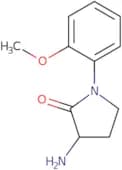
CAS:<p>Versatile small molecule scaffold</p>Fórmula:C15H16N2O2Pureza:Min. 95%Peso molecular:256.3 g/mol3-Amino-1-(2-methoxyphenyl)pyrrolidin-2-one
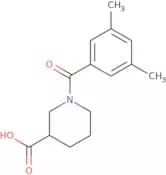
CAS:<p>Versatile small molecule scaffold</p>Fórmula:C11H14N2O2Pureza:Min. 95%Peso molecular:206.24 g/mol1-(3,5-Dimethylbenzoyl)piperidine-3-carboxylic acid
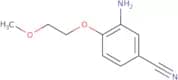
CAS:<p>Versatile small molecule scaffold</p>Fórmula:C15H19NO3Pureza:Min. 95%Peso molecular:261.32 g/mol3-Amino-4-(2-methoxyethoxy)benzonitrile
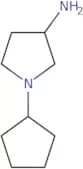
CAS:<p>Versatile small molecule scaffold</p>Fórmula:C10H12N2O2Pureza:Min. 95%Peso molecular:192.21 g/mol1-cyclopentylpyrrolidin-3-amine
CAS:<p>Versatile small molecule scaffold</p>Fórmula:C9H18N2Pureza:Min. 95%Peso molecular:154.25 g/mol5-(Propan-2-yl)-1-(pyridin-4-yl)-1H-pyrazole-3-carboxylic acid
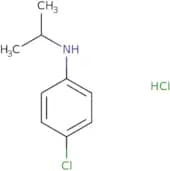
CAS:<p>Versatile small molecule scaffold</p>Fórmula:C12H13N3O2Pureza:Min. 95%Peso molecular:231.25 g/mol4-Chloro-N-(propan-2-yl)aniline hydrochloride
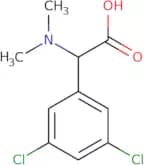
CAS:<p>Versatile small molecule scaffold</p>Fórmula:C9H13Cl2NPureza:Min. 95%Peso molecular:206.11 g/mol2-(3,5-Dichlorophenyl)-2-(dimethylamino)acetic acid
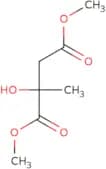
CAS:<p>Versatile small molecule scaffold</p>Fórmula:C10H11Cl2NO2Pureza:Min. 95%Peso molecular:248.1 g/mol1,4-Dimethyl 2-hydroxy-2-methylbutanedioate
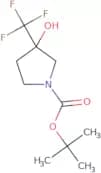
CAS:<p>1,4-Dimethyl 2-hydroxy-2-methylbutanedioate is an allylating agent that modifies the amino acid lysine residues in proteins. It has been shown to be effective in the treatment of skin lesions caused by Staphylococcus aureus and other bacteria because it inhibits bacterial growth through an antimicrobial effect. 1,4-Dimethyl 2-hydroxy-2-methylbutanedioate also has been used as a precursor for the synthesis of vitamin D3. This compound is metabolized in mammalian cells to form cysteamine, which is further converted to S-(1,4-dimethylpentadienoyl)cysteamine (DMPE). The resulting product can be used as a functional group on collagen or malic acid. 1,4-Dimethyl 2-hydroxy-2-methylbutanedioate also is used for modifications of mucocutaneous tissues such as skin and oral muc</p>Fórmula:C7H12O5Pureza:Min. 95%Peso molecular:176.17 g/moltert-Butyl 3-hydroxy-3-(trifluoromethyl)pyrrolidine-1-carboxylate
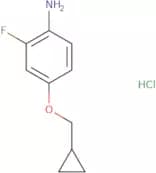
CAS:<p>Versatile small molecule scaffold</p>Fórmula:C10H16F3NO3Pureza:Min. 95%Peso molecular:255.23 g/mol4-(Cyclopropylmethoxy)-2-fluoroaniline hydrochloride
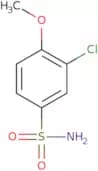
CAS:<p>Versatile small molecule scaffold</p>Fórmula:C10H13ClFNOPureza:Min. 95%Peso molecular:217.67 g/mol3-Chloro-4-methoxybenzene-1-sulfonamide
CAS:<p>Versatile small molecule scaffold</p>Fórmula:C7H8ClNO3SPureza:Min. 95%Peso molecular:221.66 g/molN-[(5-Methyl-2-thienyl)methyl]cyclopropanamine hydrochloride
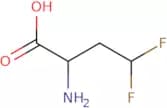
CAS:<p>Versatile small molecule scaffold</p>Fórmula:C9H14ClNSPureza:Min. 95%Peso molecular:203.73 g/mol(2R)-2-Amino-4,4-difluorobutanoic acid
CAS:<p>Versatile small molecule scaffold</p>Fórmula:C4H7F2NO2Pureza:Min. 95%Peso molecular:139.1 g/mol2-[2-(Furan-2-yl)-2-oxoethylidene]-3-methyl-1,3-thiazolidin-4-one
CAS:<p>Versatile small molecule scaffold</p>Fórmula:C10H9NO3SPureza:Min. 95%Peso molecular:223.25 g/mol3-Boc-3-azabicyclo[3.2.1]octan-8-amine
CAS:<p>Versatile small molecule scaffold</p>Fórmula:C12H22N2O2Pureza:Min. 95%Peso molecular:226.32 g/mol2-Bromo-3,3,3-trifluoro-1-propene
CAS:Producto controlado<p>2-Bromo-3,3,3-trifluoro-1-propene is a chemical compound that has been synthesized in an asymmetric reaction. The reactant is bromopropane and the product is 2,2,2-trifluoropropene. The methylene group on the propene molecule is activated by the nucleophilic attack of a fluoride ion from hydrogen fluoride to form a cavity with a highly strained bond. The kinetic study of this reaction revealed that the activation energy for the reaction is 42 kJ/mol. Palladium-catalyzed coupling reactions are catalyzed by palladium and require nonpolar solvents such as toluene or dichloromethane. This type of reaction has been shown to be exothermic with an isolated yield of 1%.</p>Fórmula:C3H2BrF3Pureza:Min. 95%Forma y color:Colorless PowderPeso molecular:174.95 g/mol
![2-Aza-bicyclo[4.1.0]heptane hydrochloride](/_next/image/?url=https%3A%2Fstatic.cymitquimica.com%2Fproducts%2F3D%2Fthumb-webp%2FCHC19518.webp&w=3840&q=75)

![Thieno[2,3-b]pyridine-5-carbonitrile](/_next/image/?url=https%3A%2Fstatic.cymitquimica.com%2Fproducts%2F3D%2Fthumb-webp%2FWAA34431.webp&w=3840&q=75)
![[6-(Pyridin-2-yl)pyridin-3-yl]methanol](/_next/image/?url=https%3A%2Fstatic.cymitquimica.com%2Fproducts%2F3D%2Fthumb-webp%2FWFA58187.webp&w=3840&q=75)
![Methyl 2-[4-(2-aminoethyl)phenoxy]acetate hydrochloride](/_next/image/?url=https%3A%2Fstatic.cymitquimica.com%2Fproducts%2F3D%2Fthumb-webp%2FHFA22482.webp&w=3840&q=75)
![3,8-Dioxa-11-azaspiro[5.6]dodecane](/_next/image/?url=https%3A%2Fstatic.cymitquimica.com%2Fproducts%2F3D%2Fthumb-webp%2FWQC17744.webp&w=3840&q=75)
![2-[1-(Difluoromethyl)-1H-imidazol-2-yl]-1-phenylethan-1-amine](/_next/image/?url=https%3A%2Fstatic.cymitquimica.com%2Fproducts%2F3D%2Fthumb-webp%2FBAC92276.webp&w=3840&q=75)
![rac-(1R,4R)-4-{[(2-Fluorophenyl)methyl]amino}cyclohexan-1-ol hydrochloride](/_next/image/?url=https%3A%2Fstatic.cymitquimica.com%2Fproducts%2F3D%2Fthumb-webp%2FTMD05176.webp&w=3840&q=75)
![3-[(4-Methylphenyl)methyl]azetidine hydrochloride](/_next/image/?url=https%3A%2Fstatic.cymitquimica.com%2Fproducts%2F3D%2Fthumb-webp%2FFDD54017.webp&w=3840&q=75)

![N-[1-(Furan-2-yl)ethyl]pyridin-2-amine](/_next/image/?url=https%3A%2Fstatic.cymitquimica.com%2Fproducts%2F3D%2Fthumb-webp%2FFPA83374.webp&w=3840&q=75)
![3-[(4-Chlorophenyl)amino]propanenitrile](/_next/image/?url=https%3A%2Fstatic.cymitquimica.com%2Fproducts%2F3D%2Fthumb-webp%2FRBA83357.webp&w=3840&q=75)
![5-Oxa-12-azadispiro[3.1.4{6}.3{4}]tridecane hydrochloride](/_next/image/?url=https%3A%2Fstatic.cymitquimica.com%2Fproducts%2F3D%2Fthumb-webp%2FTPD51274.webp&w=3840&q=75)
![1-(2,4-Dimethylphenyl)-1H,4H,5H,6H-cyclopenta[C]pyrazole-3-carboxylic acid](/_next/image/?url=https%3A%2Fstatic.cymitquimica.com%2Fproducts%2F3D%2Fthumb-webp%2FCWB53585.webp&w=3840&q=75)

![N-[(5-Methyl-2-thienyl)methyl]cyclopropanamine hydrochloride](/_next/image/?url=https%3A%2Fstatic.cymitquimica.com%2Fproducts%2F3D%2Fthumb-webp%2FASB21404.webp&w=3840&q=75)
![2-[2-(Furan-2-yl)-2-oxoethylidene]-3-methyl-1,3-thiazolidin-4-one](/_next/image/?url=https%3A%2Fstatic.cymitquimica.com%2Fproducts%2F3D%2Fthumb-webp%2FAQB93221.webp&w=3840&q=75)
![3-Boc-3-azabicyclo[3.2.1]octan-8-amine](/_next/image/?url=https%3A%2Fstatic.cymitquimica.com%2Fproducts%2F3D%2Fthumb-webp%2FFDC76351.webp&w=3840&q=75)
