Building Blocks
Subcategorías de "Building Blocks"
- Ácidos borónicos y derivados del ácido borónico(5.780 productos)
- Building Blocks quirales(1.241 productos)
- Building Blocks de hidrocarburos(6.100 productos)
- Building Blocks orgánicos(61.024 productos)
Se han encontrado 205297 productos de "Building Blocks"
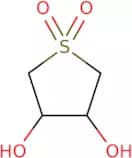
(3R,4S)-rel-Tetrahydro-3,4-thiophenediol 1,1-dioxide
CAS:Versatile small molecule scaffold
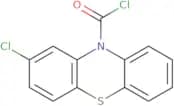
Fórmula:C4H8O4SPureza:Min. 95%Peso molecular:152.17 g/mol2-Chloro-10H-phenothiazine-10-carbonyl chloride
CAS:Versatile small molecule scaffold
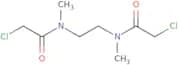
Fórmula:C13H7Cl2NOSPureza:Min. 95%Peso molecular:296.2 g/molN,N'-(Ethane-1,2-diyl)bis(2-chloro-N-methylacetamide)
CAS:Versatile small molecule scaffold
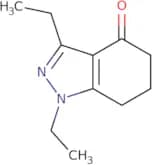
Fórmula:C8H14Cl2N2O2Pureza:Min. 95%Peso molecular:241.11 g/mol1,3-Diethyl-1,5,6,7-tetrahydroindazol-4-one
CAS:Versatile small molecule scaffold
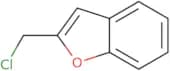
Fórmula:C9H12N2OPureza:Min. 95%Peso molecular:164.2 g/mol2-(Chloromethyl)-1-benzofuran
CAS:2-(Chloromethyl)-1-benzofuran is a type of inhibitor that binds to the enzyme methanol dehydrogenase (MDH) and prevents it from forming formaldehyde. This agent has been shown to have a high oral bioavailability in rats, which is likely due to its low molecular weight and hydrophilicity. 2-(Chloromethyl)-1-benzofuran also inhibits the production of matrix metalloproteinases (MMPs), which are enzymes involved in cartilage degradation. It has been shown to be an orally bioavailable inhibitor with a kinetic profile similar to benzene, but without the carcinogenic properties.
2-(Chloromethyl)-1-benzofuran has also been shown to be effective for treating osteoarthritis in bovine models at concentrations of 10 μM or greater.Fórmula:C9H7ClOPureza:Min. 95%Peso molecular:166.6 g/mol2,3-Dimethyl-1H-indol-5-ol
CAS:Versatile small molecule scaffold
Fórmula:C10H11NOPureza:Min. 95%Peso molecular:161.2 g/mol4-(4-Fluorophenyl)cyclohex-3-en-1-amine hydrochloride
CAS:Versatile small molecule scaffold
Fórmula:C12H15ClFNPureza:Min. 95%Peso molecular:227.7 g/molRef: 3D-LBA71685
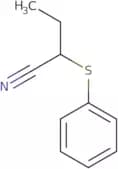
Producto descatalogado2-(Phenylsulfanyl)butanenitrile
CAS:Versatile small molecule scaffold
Fórmula:C10H11NSPureza:Min. 95%Peso molecular:177.27 g/molRef: 3D-LBA63849
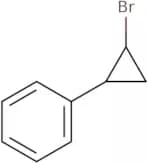
Producto descatalogado(2-Bromocyclopropyl)benzene
CAS:2-Bromocyclopropyl)benzene is a nucleophilic compound that is activated by magnesium, yielding an organic halide. It has two structural isomers, one of which is the amide and the other the chloride. The reaction system for this compound is cyclopropylidene. 2-Bromocyclopropyl)benzene has been shown to be highly stereoselective and allylation reactions with it have been shown to be stereospecific.
Fórmula:C9H9BrPureza:Min. 95%Peso molecular:197.07 g/molRef: 3D-LBA61702
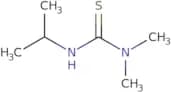
Producto descatalogado3,3-Dimethyl-1-(propan-2-yl)thiourea
CAS:Versatile small molecule scaffold
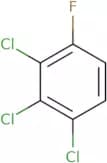
Fórmula:C6H14N2SPureza:Min. 95%Peso molecular:146.26 g/mol1,2,3-Trichloro-4-fluorobenzene
CAS:Versatile small molecule scaffold
Fórmula:C6H2Cl3FPureza:Min. 95%Peso molecular:199.4 g/molRef: 3D-LBA55636
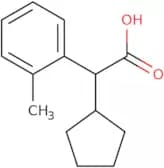
Producto descatalogado2-Cyclopentyl-2-(o-tolyl)acetic acid
CAS:Versatile small molecule scaffold
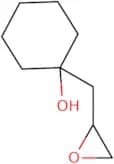
Fórmula:C14H18O2Pureza:Min. 95%Peso molecular:218.29 g/mol1-(Oxiran-2-ylmethyl)cyclohexan-1-ol
CAS:Versatile small molecule scaffold
Fórmula:C9H16O2Pureza:Min. 95%Peso molecular:156.22 g/molRef: 3D-LBA39924
Producto descatalogado2-Azaspiro[4.5]decane hydrochloride
CAS:Versatile small molecule scaffold
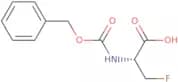
Fórmula:C9H18ClNPureza:Min. 95%Peso molecular:175.7 g/mol(R)-2-(((Benzyloxy)carbonyl)amino)-3-fluoropropanoic acid
CAS:Versatile small molecule scaffoldFórmula:C11H12FNO4Pureza:Min. 95%Peso molecular:241.22 g/mol3-[(2-Nitrophenyl)amino]propanamide
CAS:Versatile small molecule scaffold
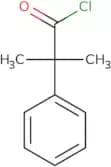
Fórmula:C9H11N3O3Pureza:Min. 95%Peso molecular:209.2 g/mol2-Methyl-2-phenylpropanoyl chloride
CAS:2-Methyl-2-phenylpropanoyl chloride is a halogenated organic compound that can be used as a precursor to other organic compounds. It can be used in the synthesis of phenylacetic acid, which is an important chemical intermediate for the production of pharmaceuticals and dyes. The reactivity of this compound has been studied by diffraction, yielding information on its interaction with halides, transition metals and elemental analysis. 2-Methyl-2-phenylpropanoyl chloride undergoes decarbonylation to form phenylacetaldehyde and carbon monoxide. This reaction is non-selective and produces multinuclear products when catalyzed by trityl compounds.
Fórmula:C10H11ClOPureza:Min. 95%Peso molecular:182.65 g/mol2-Chloro-N-[(1R)-1-phenylethyl]acetamide
CAS:Versatile small molecule scaffold
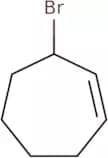
Fórmula:C10H12ClNOPureza:Min. 95%Peso molecular:197.66 g/mol3-Bromocyclohept-1-ene
CAS:3-Bromocyclohept-1-ene is an electrophile that reacts with nucleophiles, such as halides and hexacarbonyl. When heated, 3-bromocyclohept-1-ene undergoes a thermally induced ring opening to produce cyclopentenones and cyclic ketones. It also reacts with molybdenum to form a sodium salt. The product of the reaction with sodium is stereoselective, producing only the (E)-stereoisomer. 3-Bromocyclohept-1-ene also reacts with anions to form ligands.
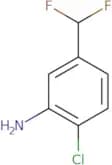
Fórmula:C7H11BrPureza:Min. 95%Peso molecular:175.07 g/mol2-Chloro-5-(difluoromethyl)aniline
CAS:Versatile small molecule scaffold
Fórmula:C7H6ClF2NPureza:Min. 95%Peso molecular:177.58 g/molRef: 3D-LAC56727
Producto descatalogado



![2-Azaspiro[4.5]decane hydrochloride](/_next/image/?url=https%3A%2Fstatic.cymitquimica.com%2Fproducts%2F3D%2Fthumb-webp%2FLBA39274.webp&w=3840&q=75)
![3-[(2-Nitrophenyl)amino]propanamide](/_next/image/?url=https%3A%2Fstatic.cymitquimica.com%2Fproducts%2F3D%2Fthumb-webp%2FLBA33243.webp&w=3840&q=75)
![2-Chloro-N-[(1R)-1-phenylethyl]acetamide](/_next/image/?url=https%3A%2Fstatic.cymitquimica.com%2Fproducts%2F3D%2Fthumb-webp%2FLBA29300.webp&w=3840&q=75)