Building Blocks
Esta sección contiene productos fundamentales para la síntesis de compuestos orgánicos y biológicos. Building blocks son los materiales de partida esenciales utilizados para construir moléculas complejas a través de diversas reacciones químicas. Desempeñan un papel crítico en el descubrimiento de fármacos, la ciencia de materiales y la investigación química. En CymitQuimica, ofrecemos una gama diversa de building blocks de alta calidad para apoyar sus investigaciones innovadoras y proyectos industriales, asegurando que tenga los componentes esenciales para una síntesis exitosa.
Subcategorías de "Building Blocks"
- Ácidos borónicos y derivados del ácido borónico(5.774 productos)
- Building Blocks quirales(1.237 productos)
- Building Blocks de hidrocarburos(6.098 productos)
- Building Blocks orgánicos(60.970 productos)
Se han encontrado 205134 productos de "Building Blocks"
Ordenar por
Pureza (%)
0
100
|
0
|
50
|
90
|
95
|
100
6-Chloro-3-(3-fluorophenyl)-[1,2,4]triazolo[4,3-b]pyridazine
CAS:Versatile small molecule scaffold
Fórmula:C11H6ClFN4Pureza:Min. 95%Peso molecular:248.64 g/mol7-Chloro-3-(propan-2-yl)-[1,2,4]triazolo[4,3-c]pyrimidine
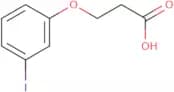
CAS:Versatile small molecule scaffoldFórmula:C8H9ClN4Pureza:Min. 95%Peso molecular:196.64 g/mol3-(3-Iodophenoxy)propanoic acid
CAS:Versatile small molecule scaffoldFórmula:C9H9IO3Pureza:Min. 95%Peso molecular:292.07 g/molMethyl 2-[(furan-2-ylmethyl)amino]benzoate
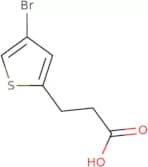
CAS:Versatile small molecule scaffoldFórmula:C13H13NO3Pureza:Min. 95%Peso molecular:231.25 g/mol3-(4-Bromothiophen-2-yl)propanoic acid
CAS:Versatile small molecule scaffold
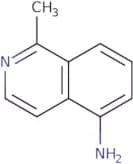
Fórmula:C7H7BrO2SPureza:Min. 95%Peso molecular:235.1 g/mol1-Methylisoquinolin-5-amine
CAS:1-Methylisoquinolin-5-amine is a drug that is used to treat cancer. It inhibits the growth of cancer cells by binding to DNA and altering the gene expression in the cell. 1-Methylisoquinolin-5-amine binds to and acetylates two residues on the deoxyribose of DNA, thereby inhibiting DNA synthesis. The inhibitory potency of 1-methylisoquinolin-5-amine has been shown in clinical trials using L1210 murine leukemia cells. This drug also decomposes into carboxaldehyde, which is excreted through the urinary system. 1-Methylisoquinolin-5-amine has been shown to have an inhibitory effect on homogenates of human l1210 cells incubated with radioactivity.Fórmula:C10H10N2Pureza:Min. 95%Peso molecular:158.2 g/mol6-Methyl-4H-pyrido[3,2-b][1,4]oxazin-3-one
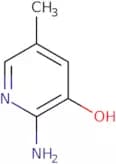
CAS:Versatile small molecule scaffoldFórmula:C8H8N2O2Pureza:Min. 95%Peso molecular:164.16 g/mol2-Amino-5-methylpyridin-3-ol
CAS:Versatile small molecule scaffold
Fórmula:C6H8N2OPureza:Min. 95%Peso molecular:124.14 g/mol2-Methyl-2H-pyrido[3,2-b][1,4]oxazin-3(4H)-one
CAS:Versatile small molecule scaffoldFórmula:C8H8N2O2Pureza:Min. 95%Peso molecular:164.16 g/mol2,2-Dimethyl-2H,3H,4H-pyrido[3,2-b][1,4]oxazine
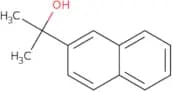
CAS:Versatile small molecule scaffoldFórmula:C9H12N2OPureza:Min. 95%Peso molecular:164.2 g/mol2-(2-Naphthyl)-2-propanol
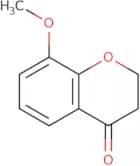
CAS:2-(2-Naphthyl)-2-propanol is a reactive chemical that is orally administered, and interacts with tissues to produce extents. The molecule has been shown to be magnetic resonance spectroscopic (MRS) detectable. 2-(2-Naphthyl)-2-propanol reacts with chloride ions and produces 2-chloro-1-naphthol and 2-(2-naphthyl)ethanol, which can be used as biomarkers for its presence in the body. This chemical also reacts with isopropyl groups to form epoxides or peroxides, depending on the extent of reaction. Irradiation of this compound by UV light yields hydroxypyridinium salts. 2-(2-Naphthyl)-2-propanol may interact with metal ions such as iron, copper, or zinc.Fórmula:C13H14OPureza:Min. 95%Peso molecular:186.25 g/mol8-Methoxychroman-4-one
CAS:8-Methoxychroman-4-one is a natural product that inhibits the activity of dopamine beta-hydroxylase, an enzyme that converts dopamine to norepinephrine. It also has inhibitory effects on dopaminergic neurons in vivo and has been shown to be effective in reversing streptozotocin-induced diabetes in rats. 8-Methoxychroman-4-one may also have potential as a prophylactic agent for diabetic nephropathy. The extract of the rhizomes has been shown to contain both 8-methoxychroman-4-one and oxime, aminoguanidine, which is an inhibitor of nitric oxide synthase.Fórmula:C10H10O3Pureza:Min. 95%Peso molecular:178.2 g/mol4-Methoxy-8-oxatricyclo[7.4.0.0,2,7]trideca-1(9),2(7),3,5,10,12-hexaene
CAS:Versatile small molecule scaffoldFórmula:C13H10O2Pureza:Min. 95%Peso molecular:198.22 g/mol7-Chlorobenzo[d]thiazol-2-amine
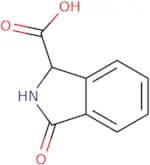
CAS:7-Chlorobenzo[d]thiazol-2-amine is a synthetic intermediate used in the production of dyes, pigments, and pharmaceuticals. It is prepared by the reaction of 2-aminobenzothiazole with nitrous acid and 7-chloroacetophenone. 7-Chlorobenzo[d]thiazol-2-amine can be cleaved at the 2 position to produce 2,4,5-trichlorobenzothiazole. The infrared absorption spectrum of 7-chlorobenzo[d]thiazol-2-amine has been recorded in the solid phase at room temperature and shows three bands between 1710 cm−1 and 1700 cm−1.Fórmula:C7H5ClN2SPureza:Min. 95%Peso molecular:184.65 g/mol3-Hydroxy-1H-isoindole-1-carboxylic acid
CAS:Versatile small molecule scaffoldFórmula:C9H7NO3Pureza:Min. 95%Peso molecular:177.16 g/mol2,2-Dimethyl-1,2,3,4-tetrahydroquinoline
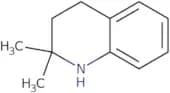
CAS:2,2-Dimethyl-1,2,3,4-tetrahydroquinoline is a molecule with the chemical formula C8H10N. It is a white crystalline solid that has a pyridine ring and a tetrahydroquinoline ring. 2,2-Dimethyl-1,2,3,4-tetrahydroquinoline has been shown to interact with nitrogen atoms in its environment. This process can lead to the formation of an N-oxide or carbonyl groups at the nitrogen atom. The molecule has also been shown to react with methyl groups and form stoichiometric amounts of n-oxides or carbonyl groups. 2,2-Dimethyl-1,2,3,4-tetrahydroquinoline can be used as a desorption agent for gas chromatography (GC).Fórmula:C11H15NPureza:Min. 95%Peso molecular:161.24 g/mol1-Bromo-5-methylnaphthalene
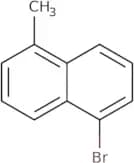
CAS:1-Bromo-5-methylnaphthalene is a chemical compound that belongs to the group of organic compounds. It can be synthesized by deoxygenation of 1,2-dibromonaphthalene with lithium diisopropylamide and diisopropylamide in an alkaline medium. The reaction yields high yields of 1-bromo-5-methylnaphthalene. The synthesis can also be achieved by the regioisomeric lithium–diels–alder reaction.
Fórmula:C11H9BrPureza:Min. 95%Peso molecular:221.09 g/molN-(4-Propoxyphenyl)acetamide
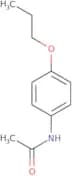
CAS:N-(4-Propoxyphenyl)acetamide is a crystalline solid that has the chemical formula C8H11NO2. This compound belongs to the group of hydrogen bond coplanar molecules. It has a molecular weight of 153.19 and a melting point of 209 degrees Celsius. Its crystal structure is monoclinic with chains that are parallel to each other and have an angle of 90 degrees, with four propoxyphenyl groups at one end and one acetamide group at the other end.Fórmula:C11H15NO2Pureza:Min. 95%Peso molecular:193.24 g/molFenbendazole Related Compound B
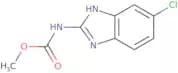
CAS:Versatile small molecule scaffold
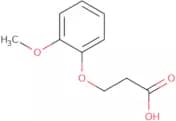
Fórmula:C9H8ClN3O2Pureza:Min. 95%Peso molecular:225.63 g/mol3-(2-Methoxyphenoxy)propanoic acid
CAS:3-(2-Methoxyphenoxy)propanoic acid is a nonracemic compound that is an enantiomer of phenoxyacetic acid. 3-(2-Methoxyphenoxy)propanoic acid has been shown to inhibit the growth of bacteria by inhibiting protein synthesis. It also inhibits the production of proteins essential for cell division and causes bacterial cells to undergo apoptosis, which leads to cell death. 3-(2-Methoxyphenoxy)propanoic acid is active against both Gram-positive and Gram-negative bacteria, but is not active against Mycobacterium tuberculosis or Mycobacterium avium complex.Fórmula:C10H12O4Pureza:Min. 95%Peso molecular:196.2 g/mol
![6-Chloro-3-(3-fluorophenyl)-[1,2,4]triazolo[4,3-b]pyridazine](/_next/image/?url=https%3A%2Fstatic.cymitquimica.com%2Fproducts%2F3D%2Fthumb-webp%2FUTB42519.webp&w=3840&q=75)

![7-Chloro-3-(propan-2-yl)-[1,2,4]triazolo[4,3-c]pyrimidine](/_next/image/?url=https%3A%2Fstatic.cymitquimica.com%2Fproducts%2F3D%2Fthumb-webp%2FUTB42528.webp&w=3840&q=75)
![Methyl 2-[(furan-2-ylmethyl)amino]benzoate](/_next/image/?url=https%3A%2Fstatic.cymitquimica.com%2Fproducts%2F3D%2Fthumb-webp%2FUTB42783.webp&w=3840&q=75)
![6-Methyl-4H-pyrido[3,2-b][1,4]oxazin-3-one](/_next/image/?url=https%3A%2Fstatic.cymitquimica.com%2Fproducts%2F3D%2Fthumb-webp%2FVAA34810.webp&w=3840&q=75)
![2-Methyl-2H-pyrido[3,2-b][1,4]oxazin-3(4H)-one](/_next/image/?url=https%3A%2Fstatic.cymitquimica.com%2Fproducts%2F3D%2Fthumb-webp%2FVAA34819.webp&w=3840&q=75)
![2,2-Dimethyl-2H,3H,4H-pyrido[3,2-b][1,4]oxazine](/_next/image/?url=https%3A%2Fstatic.cymitquimica.com%2Fproducts%2F3D%2Fthumb-webp%2FVAA34826.webp&w=3840&q=75)
![4-Methoxy-8-oxatricyclo[7.4.0.0,2,7]trideca-1(9),2(7),3,5,10,12-hexaene](/_next/image/?url=https%3A%2Fstatic.cymitquimica.com%2Fproducts%2F3D%2Fthumb-webp%2FVAA35770.webp&w=3840&q=75)
![7-Chlorobenzo[d]thiazol-2-amine](/_next/image/?url=https%3A%2Fstatic.cymitquimica.com%2Fproducts%2F3D%2Fthumb-webp%2FVAA35801.webp&w=3840&q=75)