Building Blocks
Subcategorías de "Building Blocks"
- Ácidos borónicos y derivados del ácido borónico(5.778 productos)
- Building Blocks quirales(1.243 productos)
- Building Blocks de hidrocarburos(6.098 productos)
- Building Blocks orgánicos(61.042 productos)
Se han encontrado 204339 productos de "Building Blocks"
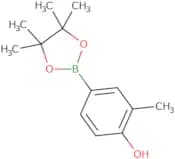
2-Methyl-4-(4,4,5,5-tetramethyl-1,3,2-dioxaborolan-2-yl)phenol
CAS:Versatile small molecule scaffold
Fórmula:C13H19BO3Pureza:Min. 95%Peso molecular:234.1 g/mol4-Methoxy-3-(methoxymethyl)butan-1-ol
CAS:Versatile small molecule scaffoldFórmula:C7H16O3Pureza:Min. 95%Peso molecular:148.2 g/mol6-Bromo-1-methyl-2,3-dihydro-1H-indazol-3-one
CAS:Versatile small molecule scaffold
Fórmula:C8H7BrN2OPureza:Min. 95%Peso molecular:227.06 g/mol(1R,4R)-2-Oxa-5-azabicyclo[2.2.1]heptane hydrochloride
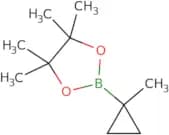
CAS:Versatile small molecule scaffoldFórmula:C5H9NO·HClPureza:Min. 95%Peso molecular:135.59 g/mol4,4,5,5-Tetramethyl-2-(1-methylcyclopropyl)-1,3,2-dioxaborolane
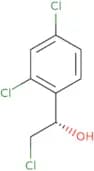
CAS:Versatile small molecule scaffoldFórmula:C10H19BO2Pureza:Min. 95%Peso molecular:182.07 g/mol(S)-2,4-Dichloro-±-(chloromethyl)benzyl Alcohol
CAS:Versatile small molecule scaffold
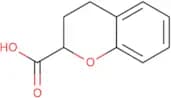
Fórmula:C8H7Cl3OPureza:Min. 95%Peso molecular:225.49 g/molChromane-2-carboxylic Acid
CAS:Chromane-2-carboxylic acid is an amide with a hydroxy group that has inhibitory effects on alkoxyphenols. It has been shown to have the ability to inhibit the growth of cancer cells in mammalian tissue and has been used in synthesizing nitro compounds. Chromane-2-carboxylic acid also inhibits matrix metalloproteinases, which are enzymes that break down proteins in the extracellular matrix and are associated with tumor invasion and metastasis. This compound also has radical scavenging activities, which may be due to its ability to form hydrogen bonds or intramolecular hydrogen bonds with aromatic hydrocarbons or fatty acids.
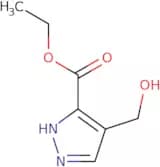
Fórmula:C10H10O3Pureza:Min. 95%Peso molecular:178.18 g/molEthyl 4-(hydroxymethyl)-1H-pyrazole-3-carboxylate
CAS:Versatile small molecule scaffoldFórmula:C7H10N2O3Pureza:Min. 95%Peso molecular:170.17 g/mol2-(Bromomethyl)-6-fluorobenzonitrile
CAS:Versatile small molecule scaffoldFórmula:C8H5BrFNPureza:Min. 95%Peso molecular:214.04 g/mol3-chloro-4-cyanobenzoic acid
CAS:Versatile small molecule scaffoldFórmula:C8H4ClNO2Pureza:Min. 95%Peso molecular:181.58 g/mol2,4,6-Trichloronicotinaldehyde
CAS:Versatile small molecule scaffold
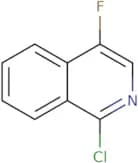
Fórmula:C6H2Cl3NOPureza:Min. 95%Peso molecular:210.45 g/mol1-chloro-4-fluoroisoquinoline
CAS:1-chloro-4-fluoroisoquinoline is a chlorinating agent that has been used as a synthetic method for the synthesis of oxychloride. It is typically used in the presence of palladium catalyst, in the presence of phosphorus and under reductive conditions. The chlorination reaction is initiated by addition of hydrochloric acid or phosphorous oxychloride. The 1-hydroxyisoquinoline reacts with phosphorus to form a chloroformate, which reacts with fluorine gas to produce an intermediate chlorofluorinate. This intermediate then reacts with chlorine gas in the presence of palladium catalyst to generate the desired product, 1-chloro-4-fluoroisoquinoline.Fórmula:C9H5ClFNPureza:Min. 95%Peso molecular:181.59 g/moln-Butyl methanesulfonate
CAS:N-butyl methanesulfonate is a genotoxic agent that inhibits the growth of bacteria by binding to the DNA. N-butyl methanesulfonate is effective against typhimurium and has shown carcinogenic effects in hamster cells. N-butyl methanesulfonate is also capable of inhibiting quinoline derivatives, which are carcinogens that are found in tobacco smoke. This chemical can be used as a natural compound for the treatment of diabetic neuropathy and cryptococcus neoformans. It may also be used as an antiviral agent for the treatment of influenza virus.Fórmula:C5H12O3SPureza:Min. 95%Peso molecular:152.21 g/mol4-Chloro-1H-pyrazolo[3,4-b]pyridine-3-carboxylic acid
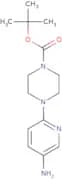
CAS:Versatile small molecule scaffoldFórmula:C7H4ClN3O2Pureza:Min. 95%Peso molecular:197.58 g/mol1-Boc-4-(5-Aminopyridin-2-yl)piperazine
CAS:Versatile small molecule scaffoldFórmula:C14H22N4O2Pureza:Min. 95%Peso molecular:278.35 g/mol1-Bromo-3,3-difluorocyclobutane
CAS:Versatile small molecule scaffold
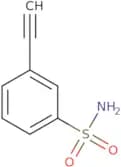
Fórmula:C4H5BrF2Pureza:Min. 95%Peso molecular:170.98 g/mol3-Ethynylbenzenesulfonamide
CAS:3-Ethynylbenzenesulfonamide is a synthetic, hydrophobic, antimicrobial compound that disrupts the cell membrane. It has been shown to be effective against both mammalian and microbial cells. The antimicrobial use of this compound is still under study, but it may provide an alternative to the current antibiotics. 3-Ethynylbenzenesulfonamide is amphipathic in nature and has an extremely large expansion ratio. This molecule is also hydrophobic, which may help with its ability to penetrate the cell membrane. Antimicrobial compounds are designed to inhibit or kill microorganisms such as bacteria or fungi by disrupting their cellular membranes. They work by interacting with specific targets on the surface of the target organism and producing a lethal effect on its function. 3-Ethynylbenzenesulfonamide interacts with proteins found on bacterial membranes called porins, resulting in a loss of osmotic stability and then permeability through the bilayer. This leadsFórmula:C8H7NO2SPureza:Min. 95%Peso molecular:181.21 g/mol4-bromo-1H-imidazole-2-carbaldehyde
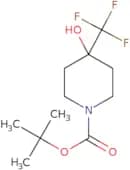
CAS:Versatile small molecule scaffoldFórmula:C4H3BrN2OPureza:Min. 95%Peso molecular:175 g/moltert-Butyl 4-hydroxy-4-(trifluoromethyl)piperidine-1-carboxylate
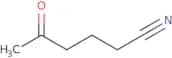
CAS:Versatile small molecule scaffoldFórmula:C11H18F3NO3Pureza:Min. 95%Peso molecular:269.26 g/mol5-Ketohexanenitrile
CAS:5-Ketohexanenitrile is a liquid that is used in the production of medicine. The compound has been shown to be an effective inhibitor of the enzyme, dehydrogenase, which catalyzes the conversion of 5-ketohexanoic acid to hexadecanoic acid. This reaction is important for the oxidation of fatty acids and can be found in all living organisms. 5-Ketohexanenitrile has also been shown to inhibit the enzyme, hydrogen peroxide oxidase, which catalyzes the conversion of hydrogen peroxide to water and oxygen gas. 5-Ketohexanenitrile is also an intermediate in acrylonitrile production. It can be produced by vaporizing hexadecanoic acid with a catalyst such as trimethylpyridine or acetic acid. 5-Ketohexanenitrile can exist as two isomers: cis and trans. It is a primary amine that reacts with alkali metals such asFórmula:C6H9NOPureza:Min. 95%Peso molecular:111.14 g/mol


![(1R,4R)-2-Oxa-5-azabicyclo[2.2.1]heptane hydrochloride](/_next/image/?url=https%3A%2Fstatic.cymitquimica.com%2Fproducts%2F3D%2Fthumb-webp%2FBZA51579.webp&w=3840&q=75)



![4-Chloro-1H-pyrazolo[3,4-b]pyridine-3-carboxylic acid](/_next/image/?url=https%3A%2Fstatic.cymitquimica.com%2Fproducts%2F3D%2Fthumb-webp%2FULD13261.webp&w=3840&q=75)