Building Blocks
Subcategorías de "Building Blocks"
- Ácidos borónicos y derivados del ácido borónico(5.780 productos)
- Building Blocks quirales(1.241 productos)
- Building Blocks de hidrocarburos(6.100 productos)
- Building Blocks orgánicos(61.029 productos)
Se han encontrado 205306 productos de "Building Blocks"
2-(4-Bromo-phenyl)-acetamidine hydrochloride
CAS:Versatile small molecule scaffold
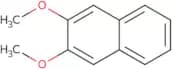
Fórmula:C8H10BrClN2Pureza:Min. 95%Peso molecular:249.53 g/mol2,3-Dimethoxynaphthalene
CAS:2,3-Dimethoxynaphthalene is a crystalline solid with a molecular weight of 170.24 g/mol. It has a melting point of 150 °C and a boiling point of 313 °C, and it is soluble in organic solvents such as chloroform and ether. 2,3-Dimethoxynaphthalene is an electron donor that can coordinate to metals through sulfur atoms in sulfonated form. The crystal structure consists of alternating double bonds and single bonds, forming a hexagonal closed packed structure. 2,3-Dimethoxynaphthalene has been shown to be luminescent in the visible region of the electromagnetic spectrum due to its ability to emit light when excited by an external source.
Fórmula:C12H12O2Pureza:Min. 95%Peso molecular:188.22 g/mol4-{[2-(4-Methyl-4H-1,2,4-triazol-3-yl)ethyl]amino}benzoic acid
CAS:Versatile small molecule scaffold
Fórmula:C12H14N4O2Pureza:Min. 95%Peso molecular:246.27 g/molRef: 3D-JGC58952
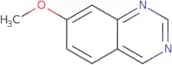
Producto descatalogado7-Methoxyquinazoline
CAS:7-Methoxyquinazoline is a heterocycle that is used as a medicine. It has been shown to inhibit the growth of epidermal cells, which may be due to its ability to inhibit the epidermal growth factor and epidermal growth receptor. 7-Methoxyquinazoline also inhibits tyrosine kinase, hexamethylenetetramine, and factor receptors. This drug selectively inhibits the enzyme activity of anilines, which are compounds that are involved in the synthesis of epidermal growth factor. The selectivity for this enzyme activity may be due to its hydration properties.
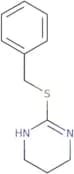
Fórmula:C9H8N2OPureza:Min. 95%Peso molecular:160.17 g/mol2-(Benzylsulfanyl)-1,4,5,6-tetrahydropyrimidine
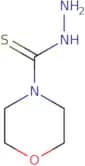
CAS:Versatile small molecule scaffoldFórmula:C11H14N2SPureza:Min. 95%Peso molecular:206.31 g/molN-Aminomorpholine-4-carbothioamide
CAS:N-Aminomorpholine-4-carbothioamide is a ligand that binds to the carboxylates of chloroform. It is produced by the enzyme subtilisin from the amino acid L-alanine and the compound 2-acetylpyridine. This ligand has been found in microorganisms such as Escherichia coli, Staphylococcus aureus, and Saccharomyces cerevisiae. N-Aminomorpholine-4-carbothioamide has been shown to be an effective inhibitor of yeast growth but not bacterial growth. The molecular weight of this ligand is 226.2 g mol−1 and it is a dimer at room temperature with two molecules linked together by hydrogen bonds.
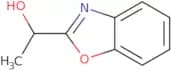
Fórmula:C5H11N3OSPureza:Min. 95%Peso molecular:161.23 g/mol1-(1,3-Benzoxazol-2-yl)ethan-1-ol
CAS:Versatile small molecule scaffold
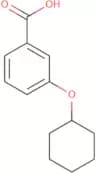
Fórmula:C9H9NO2Pureza:Min. 95%Peso molecular:163.17 g/mol3-(Cyclohexyloxy)benzoic acid
CAS:Versatile small molecule scaffold
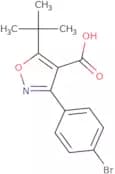
Fórmula:C13H16O3Pureza:Min. 95%Peso molecular:220.26 g/mol3-(4-Bromophenyl)-5-tert-butyl-1,2-oxazole-4-carboxylic acid
CAS:Versatile small molecule scaffold
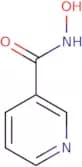
Fórmula:C14H14BrNO3Pureza:Min. 95%Peso molecular:324.17 g/molN-Hydroxypyridine-3-carboxamide
CAS:N-Hydroxypyridine-3-carboxamide is a hydroxylated metabolite of nicotinic acid that has been shown to have skin conditioning properties. The optimum pH for this product is 3.5 and its biological properties include an inhibitory effect on viral replication and a galacturonic acid complex. N-Hydroxypyridine-3-carboxamide also exhibits a high degree of hemolytic activity, which may be due to the methyl nicotinate moiety or the carbonyl oxygens present in this compound.
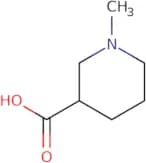
Fórmula:C6H6N2O2Pureza:Min. 95%Peso molecular:138.12 g/mol1-Methylpiperidine-3-carboxylic acid
CAS:1-Methylpiperidine-3-carboxylic acid (1MP) is a neurotoxic compound that can be synthesized in vivo by the oxidation of choline. It has been shown to have a natriuretic and diuretic effect on the kidney, as well as stimulating the release of atrial natriuretic peptide. 1MP also has an agonistic effect on the dopamine receptors, and is a competitive antagonist for the binding of betaines to skin cells. Betaines are substances that are found in many foods, including wheat germ and spinach, which have been linked to nerve cell death in rats.
END>>Fórmula:C7H13NO2Pureza:Min. 95%Peso molecular:143.19 g/mol[(3,7-Dimethyl-1-benzofuran-2-yl)methyl](methyl)amine hydrochloride
CAS:Versatile small molecule scaffoldFórmula:C12H16ClNOPureza:Min. 95%Peso molecular:225.71 g/mol2-(Chloromethyl)-[1,3]thiazolo[5,4-b]pyridine
CAS:Versatile small molecule scaffold
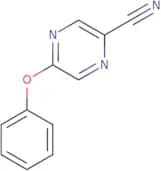
Fórmula:C7H5ClN2SPureza:Min. 95%Peso molecular:184.65 g/mol5-Phenoxypyrazine-2-carbonitrile
CAS:Versatile small molecule scaffold
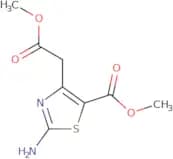
Fórmula:C11H7N3OPureza:Min. 95%Peso molecular:197.19 g/molMethyl 2-amino-4-(2-methoxy-2-oxoethyl)-1,3-thiazole-5-carboxylate
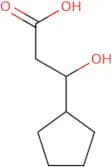
CAS:Versatile small molecule scaffoldFórmula:C8H10N2O4SPureza:Min. 95%Peso molecular:230.24 g/mol3-Cyclopentyl-3-hydroxypropanoic acid
CAS:Versatile small molecule scaffold
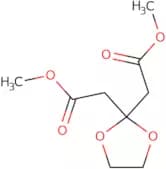
Fórmula:C8H14O3Pureza:Min. 95%Peso molecular:158.19 g/molDimethyl 1,3-dioxolane-2,2-diacetate
CAS:Versatile small molecule scaffold
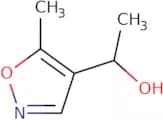
Fórmula:C9H14O6Pureza:Min. 95%Peso molecular:218.2 g/mol1-(5-Methyl-1,2-oxazol-4-yl)ethan-1-ol
CAS:Versatile small molecule scaffold
Fórmula:C6H9NO2Pureza:Min. 95%Peso molecular:127.14 g/molL-152,804
CAS:L-152,804 is a potent inhibitor of the dopamine receptor. It has been shown to have an inhibitory effect on wild-type mice and functional assays in vitro. L-152,804 inhibits locomotor activity in wild type mice and increases energy metabolism in adipose tissue. L-152,804 binds to the dopamine receptor by competitive inhibition and inhibits the binding of glutamate and dopamine to the receptor. This drug has also been shown to have anti-inflammatory effects in a rat model of arthritis.
Fórmula:C23H26O4Pureza:Min. 95%Peso molecular:366.46 g/molRef: 3D-GAA50843
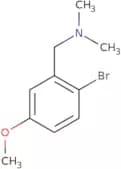
Producto descatalogado2-Bromo-5-methoxy-N,N-dimethylbenzylamine
CAS:Versatile small molecule scaffoldFórmula:C10H14BrNOPureza:Min. 95%Peso molecular:244.13 g/mol


![4-{[2-(4-Methyl-4H-1,2,4-triazol-3-yl)ethyl]amino}benzoic acid](/_next/image/?url=https%3A%2Fstatic.cymitquimica.com%2Fproducts%2F3D%2Fthumb-webp%2FJGC58952.webp&w=3840&q=75)
amine hydrochloride](/_next/image/?url=https%3A%2Fstatic.cymitquimica.com%2Fproducts%2F3D%2Fthumb-webp%2FJBD31195.webp&w=3840&q=75)
![2-(Chloromethyl)-[1,3]thiazolo[5,4-b]pyridine](/_next/image/?url=https%3A%2Fstatic.cymitquimica.com%2Fproducts%2F3D%2Fthumb-webp%2FKEA70435.webp&w=3840&q=75)