Building Blocks
Subcategorías de "Building Blocks"
- Ácidos borónicos y derivados del ácido borónico(5.780 productos)
- Building Blocks quirales(1.241 productos)
- Building Blocks de hidrocarburos(6.100 productos)
- Building Blocks orgánicos(61.017 productos)
Se han encontrado 205265 productos de "Building Blocks"
Dibenzo[b,d]furan-4-ol
CAS:Dibenzo[b,d]furan-4-ol is a biodegradable compound that can be synthesized in a stepwise manner. The compound can be assayed by using different methods including mass spectrometric and hplc analyses to determine the number of carbon atoms and functional groups present in the molecule. Dibenzo[b,d]furan-4-ol is used as a carbon source for many microorganisms. The compound has been shown to hydroxylate under aerobic conditions and also reacts with nitro groups to form nitroso derivatives. Magnetic resonance spectroscopy has been used to study the molecular structure of dibenzo[b,d]furan-4-ol, which has revealed that it is monosubstituted with two methyl groups. This compound is naturally found in filamentous fungi found in tropical regions.
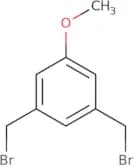
Fórmula:C12H8O2Pureza:Min. 95%Peso molecular:184.19 g/mol1,3-Bis(bromomethyl)-5-methoxybenzene
CAS:Versatile small molecule scaffold
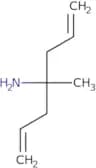
Fórmula:C9H10Br2OPureza:Min. 95%Peso molecular:293.98 g/mol1-Allyl-1-methyl-but-3-enylamine
CAS:Versatile small molecule scaffold
Fórmula:C8H15NPureza:Min. 95%Peso molecular:125.21 g/mol1-Ethyl-3-isothiocyanatobenzene
CAS:Versatile small molecule scaffold
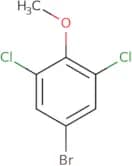
Fórmula:C9H9NSPureza:Min. 95%Peso molecular:163.24 g/mol4-Bromo-2,6-dichloroanisole
CAS:4-Bromo-2,6-dichloroanisole (4BDCA) is a polychlorinated biphenyl congeners. It is used as a chemical intermediate in the synthesis of boronic acids and their derivatives. 4BDCA has high selectivity for human plasma over other tissues and can be used to study the metabolism of this compound in humans. The high selectivity of this compound may be due to its ability to form hydroxylated metabolites that are less toxic than the parent compound, which may be due to its ability to form hydroxy anisoles.
Fórmula:C7H5BrCl2OPureza:Min. 95%Peso molecular:255.92 g/molN-Boc-3-aminothiophene
CAS:Versatile small molecule scaffold
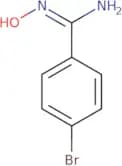
Fórmula:C9H13NO2SPureza:Min. 95%Peso molecular:199.27 g/mol(E)-4-Bromo-N'-hydroxybenzimidamide
CAS:(E)-4-Bromo-N'-hydroxybenzimidamide is a synthetic antifungal agent that is resistant to many microorganisms. It is a potent inhibitor of the uptake of β-amyloid peptide in rat cortical neurons and also inhibits the modification of β-amyloid. This drug has been shown to have pharmacological effects on bacterial cells, including inhibition of protein synthesis and DNA synthesis. The molecular basis for these interactions is not known, but it has been suggested that (E)-4-Bromo-N'-hydroxybenzimidamide interacts with the pharmacophore site on bacteria and binds to nitrogen atoms that are important for binding. These interactions are bioisosteric with oxadiazole derivatives such as clotrimazole, which have been shown to inhibit protein synthesis in fungi. The drug has also been used as a radiotracer to study the uptake of β-amyloid peptides by neurons
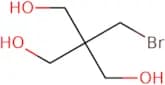
Fórmula:C7H7BrN2OPureza:Min. 95%Peso molecular:215.05 g/mol2-(Bromomethyl)-2-(hydroxymethyl)-1,3-propanediol
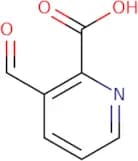
CAS:2-(Bromomethyl)-2-(hydroxymethyl)-1,3-propanediol is a synthetic compound that is used as a stabilizer in polymers. It has magnetic properties and crystallizes in an orthorhombic system. This substance also has an aryl group and a chlorine substituent. 2-(Bromomethyl)-2-(hydroxymethyl)-1,3-propanediol reacts with the phosphite trialkyl to form polyvalent phosphorus compounds, which are residues of the trialkyl. The insecticidal properties of this compound may be due to its ability to inhibit the growth of insects by affecting the metabolism of arthropods. The hydrocarbon residue may be due to its synthesis from bromoethane and methanol.Fórmula:C5H11BrO3Pureza:Min. 95%Peso molecular:199.04 g/mol3-formylpyridine-2-carboxylic acid
CAS:3-formylpyridine-2-carboxylic acid is a phenylhydrazine derivative, which is a white crystalline solid. It is soluble in solvents such as chloroform and methanol, but insoluble in water. 3-Formylpyridine-2-carboxylic acid can be prepared by the chlorination of pyridine or by alkaline hydrolysis of its esters with sodium hydroxide. It can also be synthesized from the reaction of phenylhydrazine with formaldehyde in organic solvents. 3-Formylpyridine-2-carboxylic acid has been shown to react with carbonyl compounds to form a conjugated system through an addition reaction and to form esters that are soluble in organic solvents. The yield of this reaction depends on the solvent used and the temperature at which it is carried out.
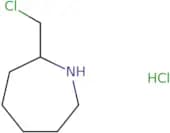
Fórmula:C7H5NO3Pureza:Min. 95%Peso molecular:151.1 g/mol2-(Chloromethyl)azepane hydrochloride
CAS:Versatile small molecule scaffold
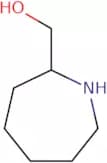
Fórmula:C7H15Cl2NPureza:Min. 95%Peso molecular:184.1 g/mol(Azepan-2-yl)methanol
CAS:Versatile small molecule scaffold
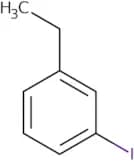
Fórmula:C7H15NOPureza:Min. 95%Peso molecular:129.2 g/mol1-Ethyl-3-iodobenzene
CAS:Versatile small molecule scaffold
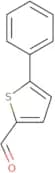
Fórmula:C8H9IPureza:Min. 95%Peso molecular:232.06 g/mol5-Phenylthiophene-2-carboxaldehyde
CAS:5-Phenylthiophene-2-carboxaldehyde is a molecule that inhibits the activity of tyrosinase, an enzyme involved in melanin biosynthesis. It reacts with the formyl group of tyrosinase to produce a reactive intermediate that undergoes a series of reactions with methyl ketones to inhibit the reaction mechanism. The inhibition of tyrosinase by 5-phenylthiophene-2-carboxaldehyde has been shown to be reversible and competitive. This molecule has also shown antibacterial activities against Gram positive and Gram negative bacteria. 5-Phenylthiophene-2-carboxaldehyde may also have potential for use as a ferroelectric material due to its ability to crystallize in the orthorhombic system. This molecule also exhibits optical properties such as fluorescence, phosphorescence and photoluminescence.
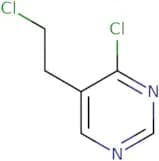
Fórmula:C11H8OSPureza:Min. 95%Peso molecular:188.24 g/mol4-Chloro-5-(2-chloroethyl)pyrimidine
CAS:Versatile small molecule scaffold
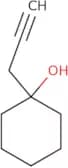
Fórmula:C6H6Cl2N2Pureza:Min. 95%Peso molecular:177.03 g/mol1-(Prop-2-yn-1-yl)cyclohexan-1-ol
CAS:1-(Prop-2-yn-1-yl)cyclohexan-1-ol is a colorless liquid with a sweet odor. It is soluble in most organic solvents, including ethanol and ether. It has been used as an intermediate for the synthesis of other organic compounds.
Fórmula:C9H14OPureza:Min. 95%Peso molecular:138.21 g/mol2-Bromo-3-chloronitrobenzene
CAS:2-Bromo-3-chloronitrobenzene is an estrogenic compound that binds to the estrogen receptor. It has been shown to have anticancer activity in animal studies, which may be due to its ability to inhibit transcriptional activity and induce apoptosis. 2-Bromo-3-chloronitrobenzene has been used as a starting material for synthesis of other compounds and exhibits moderate affinity for the estrogen receptor. This compound can be synthesized by a palladium-catalyzed cross-coupling reaction of 2-bromobenzyl bromide and chloroacetone, followed by treatment with salicylaldoxime in the presence of base.
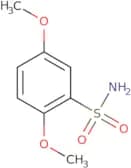
Fórmula:C6H3BrClNO2Pureza:Min. 95%Peso molecular:236.45 g/mol2,5-Dimethoxybenzenesulfonamide
CAS:2,5-Dimethoxybenzenesulfonamide is a piperidine derivative that has been shown to be an efficient electrophile. 2,5-Dimethoxybenzenesulfonamide reacts with protonated metal surfaces, forming a monolayer of high surface area and low coverage. The affinity of this compound for the metal surface is due to its nucleophilic nature. This compound displays a strong adsorption to the metal surface and provides protection from corrosion by acting as an oxygen scavenger. Experimental results have shown that 2,5-dimethoxybenzenesulfonamide exhibits higher efficiencies in the presence of other reactive compounds.
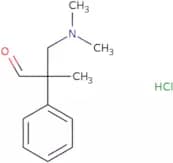
2,5-Dimethoxybenzenesulfonamide was used in computational simulations to study the effects of different parameters on the adsorption process. The use of these simulations can provide insight into how changes in experimental conditions affect the efficiency of this molecule.Fórmula:C8H11NO4SPureza:Min. 95%Peso molecular:217.24 g/mol3-(Dimethylamino)-2-methyl-2-phenylpropanal hydrochloride
CAS:Versatile small molecule scaffold
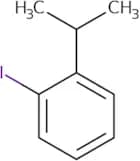
Fórmula:C12H18ClNOPureza:Min. 95%Peso molecular:227.73 g/mol2-Iodocumene
CAS:2-Iodocumene is a chemical that belongs to the group of unsymmetrical carbonyl compounds. It is an intermediate in the synthesis of saccharin and other organic chemicals, as well as in the production of pharmaceuticals. 2-Iodocumene can be used as a ligand in metal-catalyzed cross-coupling reactions between organometallic reagents and various types of electrophiles. This compound has been shown to react with iron at room temperature to form an active catalyst for the regioselective cleavage of C-C bonds. The mechanistic studies have revealed that 2-iodocumene acts as an electron acceptor and a nucleophile, which allows it to act as a bifunctional catalyst during these reactions. The reaction rate depends on steric hindrance, which may be due to the presence of carbonyl groups or cyclic structures. The mechanism is supported by computational studies using density functional
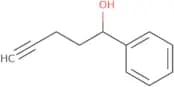
Fórmula:C9H11IPureza:Min. 95%Peso molecular:246.09 g/mol1-Phenylpent-4-yn-1-ol
CAS:1-Phenylpent-4-yn-1-ol is a ketone that can be synthesized by the desulfonylation of 1,3-dibromopropane. It is a radical that has been shown to have potential in the synthesis of polymers and pharmaceuticals. This compound undergoes sequential desulfonylative coupling with alcohols such as phenylethyl alcohol to produce phenylethylphenol. The use of 1-phenylpent-4-yn-1-ol in this process makes it an environmentally friendly alternative to other more toxic reagents.
Fórmula:C11H12OPureza:Min. 95%Peso molecular:160.21 g/mol
![Dibenzo[b,d]furan-4-ol](/_next/image/?url=https%3A%2Fstatic.cymitquimica.com%2Fproducts%2F3D%2Fthumb-webp%2FUAA26106.webp&w=3840&q=75)