Building Blocks
Subcategorías de "Building Blocks"
- Ácidos borónicos y derivados del ácido borónico(5.774 productos)
- Building Blocks quirales(1.237 productos)
- Building Blocks de hidrocarburos(6.098 productos)
- Building Blocks orgánicos(60.970 productos)
Se han encontrado 205135 productos de "Building Blocks"
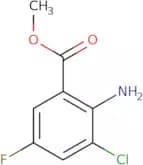
Methyl 2-amino-3-chloro-5-fluorobenzoate
CAS:Versatile small molecule scaffoldFórmula:C8H7ClFNO2Pureza:Min. 95%Peso molecular:203.6 g/mol3-Amino-2-[(4-fluorophenyl)methyl]propan-1-ol hydrochloride
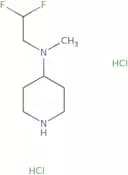
CAS:Versatile small molecule scaffoldFórmula:C10H15ClFNOPureza:Min. 95%Peso molecular:219.68 g/molN-(2,2-Difluoroethyl)-N-methylpiperidin-4-amine dihydrochloride
CAS:Versatile small molecule scaffold
Fórmula:C8H18Cl2F2N2Pureza:Min. 95%Peso molecular:251.14 g/molRef: 3D-EEC96265
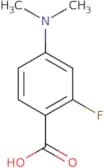
Producto descatalogado4-(Dimethylamino)-2-fluorobenzoic acid
CAS:Versatile small molecule scaffold
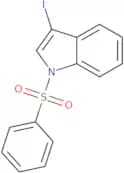
Fórmula:C9H10FNO2Pureza:Min. 95%Peso molecular:183.18 g/mol3-Iodo-1-(phenylsulfonyl)indole
CAS:3-Iodo-1-(phenylsulfonyl)indole (3-ISI) is a ligand that is used to crystallize metal ions. 3-ISI binds to metal ions through interactions with the halide ion. The 3-ISI molecule has two phenylsulfonyl groups and one iodine atom, which are the sites of coordination to metal ions. Friedel-Crafts acylation reactions use 3-ISI as a ligand because it does not react with the catalyst or acid, but can be easily replaced by other ligands during the reaction. Parameters for determining its structure include X-ray crystallography, NMR spectroscopy, IR spectroscopy, and elemental analysis. The chloride anion in 3-ISI is able to form hydrogen bonds with other chloride anions in order to stabilize its structure.
3-ISI can be synthesized by reacting iodides with benzyl bromide and phosphorous pentFórmula:C14H10INO2SPureza:Min. 95%Peso molecular:383.21 g/molRef: 3D-FDA36014
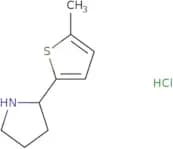
Producto descatalogado2-(5-Methylthiophen-2-yl)pyrrolidine hydrochloride
CAS:Versatile small molecule scaffoldFórmula:C9H14ClNSPureza:Min. 95%Peso molecular:203.73 g/moltert-Butyl 3-amino-4H,5H,6H,7H-[1,2]oxazolo[4,3-c]pyridine-5-carboxylate
CAS:Versatile small molecule scaffold
Fórmula:C11H17N3O3Pureza:Min. 95%Peso molecular:239.27 g/mol4,8-Dioxatricyclo[4.2.1.0,3,7]nonan-5-one
CAS:Versatile small molecule scaffold
Fórmula:C7H8O3Pureza:Min. 95%Peso molecular:140.14 g/molDiiodopyrimidine-2,5-diamine
CAS:Versatile small molecule scaffold
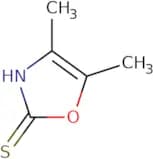
Fórmula:C4H4I2N4Pureza:Min. 95%Peso molecular:361.9 g/molDimethyl-1,3-oxazole-2-thiol
CAS:Versatile small molecule scaffold
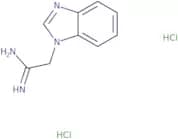
Fórmula:C5H7NOSPureza:Min. 95%Peso molecular:129.18 g/mol2-(1H-1,3-Benzodiazol-1-yl)ethanimidamide dihydrochloride
CAS:Versatile small molecule scaffoldFórmula:C9H12Cl2N4Pureza:Min. 95%Peso molecular:247.12 g/mol4-Iodo-1,5-dimethyl-1H-pyrazole-3-carboxylic acid
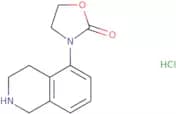
CAS:Versatile small molecule scaffoldFórmula:C6H7IN2O2Pureza:Min. 95%Peso molecular:266.04 g/mol3-(1,2,3,4-Tetrahydroisoquinolin-5-yl)-1,3-oxazolidin-2-one hydrochloride
CAS:Versatile small molecule scaffold
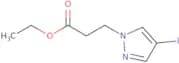
Fórmula:C12H15ClN2O2Pureza:Min. 95%Peso molecular:254.71 g/molEthyl 3-(4-iodopyrazol-1-yl)propanoate
CAS:Versatile small molecule scaffold
Fórmula:C8H11IN2O2Pureza:Min. 95%Peso molecular:294.09 g/mol(6-Bromobenzo[d][1,3]dioxol-5-yl)methanol
CAS:Versatile small molecule scaffold
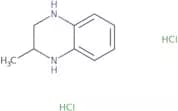
Fórmula:C8H7BrO3Pureza:Min. 95%Peso molecular:231.04 g/mol2-Methyl-1,2,3,4-tetrahydroquinoxaline
CAS:2-Methyl-1,2,3,4-tetrahydroquinoxaline is an enantioselective antioxidant that has been shown to have a chiral conformation. It has also been found to be a catalyst in the reductive elimination of hydrochloric acid. This compound can be hydrogenated by catalytic hydrogenation and this reaction produces tetralin as a by-product. 2-Methyl-1,2,3,4-tetrahydroquinoxaline is used in research because it contains a methyl group and amines that are important for biological functions.
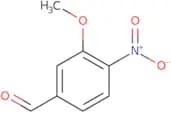
Fórmula:C9H12N2Pureza:Min. 95%Peso molecular:148.2 g/mol3-methoxy-4-nitrobenzaldehyde
CAS:3-Methoxy-4-nitrobenzaldehyde (3MNB) is a biomolecular that is used to study nucleophilic substitutions. It has been shown to inhibit the growth of cells in culture, specifically those with fatty acid amides. 3MNB inhibits the synthesis of β-amyloid, a protein associated with Alzheimer's disease. 3MNB also has potent inhibitory activity on chloride channels and phenylhydrazone binding sites, which are targets for antipsychotic drugs. 3MNB inhibits the production of sh-sy5y cells and piperazine binding sites in the brain. The inhibition of these sites leads to an improvement in memory and learning ability.
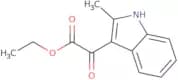
Fórmula:C8H7NO4Pureza:Min. 95%Peso molecular:181.1 g/molEthyl 2-(2-methyl-1H-indol-3-yl)-2-oxoacetate
CAS:Versatile small molecule scaffold
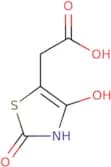
Fórmula:C13H13NO3Pureza:Min. 95%Peso molecular:231.25 g/mol2-(Dihydroxy-1,3-thiazol-5-yl)acetic acid
CAS:Versatile small molecule scaffold
Fórmula:C5H5NO4SPureza:Min. 95%Peso molecular:175.16 g/mol1-Benzothiophene-5-carbonitrile
CAS:1-Benzothiophene-5-carbonitrile is a heterocyclic compound that is formed by condensation of ethyl azidoacetate with indole under catalysis. It can be used in the synthesis of heterocycles. The yield of 1-benzothiophene-5-carbonitrile is about 56%.
Fórmula:C9H5NSPureza:Min. 95%Peso molecular:159.21 g/mol

![3-Amino-2-[(4-fluorophenyl)methyl]propan-1-ol hydrochloride](/_next/image/?url=https%3A%2Fstatic.cymitquimica.com%2Fproducts%2F3D%2Fthumb-webp%2FEEC96261.webp&w=3840&q=75)
![tert-Butyl 3-amino-4H,5H,6H,7H-[1,2]oxazolo[4,3-c]pyridine-5-carboxylate](/_next/image/?url=https%3A%2Fstatic.cymitquimica.com%2Fproducts%2F3D%2Fthumb-webp%2FDKC68608.webp&w=3840&q=75)
![4,8-Dioxatricyclo[4.2.1.0,3,7]nonan-5-one](/_next/image/?url=https%3A%2Fstatic.cymitquimica.com%2Fproducts%2F3D%2Fthumb-webp%2FGAA71283.webp&w=3840&q=75)

![(6-Bromobenzo[d][1,3]dioxol-5-yl)methanol](/_next/image/?url=https%3A%2Fstatic.cymitquimica.com%2Fproducts%2F3D%2Fthumb-webp%2FGAA64234.webp&w=3840&q=75)