Building Blocks
Subcategorías de "Building Blocks"
- Ácidos borónicos y derivados del ácido borónico(5.780 productos)
- Building Blocks quirales(1.241 productos)
- Building Blocks de hidrocarburos(6.100 productos)
- Building Blocks orgánicos(61.010 productos)
Se han encontrado 205258 productos de "Building Blocks"
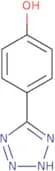
5-(4-Hydroxyphenyl) tetrazole
CAS:5-(4-Hydroxyphenyl) tetrazole is a hydrophobic ligand that has been shown to bind to cisplatin and therefore may have potential use in cancer therapy. It has also been used as an anti-inflammatory agent with the potential to inhibit prostaglandin synthesis. 5-(4-Hydroxyphenyl) tetrazole binds to hydrogen peroxide, which is a strong oxidizing agent and produces reactive oxygen species (ROS). ROS can cause DNA damage and lead to cell death by apoptosis or necrosis. 5-(4-Hydroxyphenyl) tetrazole reacts with cisplatin, which is a chemotherapeutic agent that is used in the treatment of various types of cancer. Cisplatin binds to DNA and prevents replication, leading to cell death. Hydrophobic ligands such as 5-(4-Hydroxyphenyl) tetrazole are able to bind more tightly than other ligands because
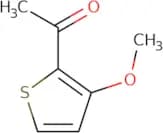
Fórmula:C7H6N4OPureza:Min. 95%Peso molecular:162.15 g/mol1-(3-Methoxythiophen-2-yl)ethan-1-one
CAS:Versatile small molecule scaffold
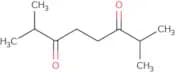
Fórmula:C7H8O2SPureza:Min. 95%Peso molecular:156.2 g/mol2,7-Dimethyloctane-3,6-dione
CAS:Versatile small molecule scaffold
Fórmula:C10H18O2Pureza:Min. 95%Peso molecular:170.25 g/mol3-Ethoxy-7-oxaspiro[3.5]nonan-1-ol
CAS:Versatile small molecule scaffold
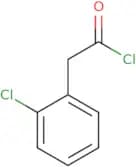
Fórmula:C10H18O3Pureza:Min. 95%Peso molecular:186.25 g/mol2-Chlorophenylacetyl Chloride
CAS:2-Chlorophenylacetyl Chloride is a chlorinating agent that reacts with alkaline conditions to form a chloride. As an active ingredient in pesticides, it has been shown to have high selectivity and to be selective against fungi. The 2-chlorophenylacetyl chloride can be used as the starting material for epoxiconazole synthesis by Wittig reaction.
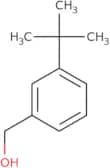
2-Chlorophenylacetyl Chloride is also a useful intermediate for the preparation of many other compounds. It can be used to synthesize dimethylchloride, which is used in the production of plastics and polymers; or it can be used to prepare formamide, which is used in the production of pharmaceuticals and agrochemicals. This compound has been shown to have catalysis properties and can be used in Wittig reactions that are selective towards different carbonyl groups.Fórmula:C8H6Cl2OPureza:Min. 95%Peso molecular:189.04 g/mol3-tert-Butylbenzyl alcohol
CAS:Versatile small molecule scaffold
Fórmula:C11H16OPureza:Min. 95%Peso molecular:164.25 g/molOctahydro-1H-cyclopenta[b]pyridine
CAS:Octahydro-1H-cyclopenta[b]pyridine is a pyridine with a hydrogen atom in the 1-position. It has been shown to be an analgesic and may have antihistaminic effects. Octahydro-1H-cyclopenta[b]pyridine is not active against γ-aminobutyric acid (GABA), but can act as a competitive inhibitor of α-mannosidase. The compound is an enantiomer of octahydro-2H,6H-[1,3]dioxolo[4,5-g][1,2]benzopyran and can be synthesized by catalytic reduction using hydrogen chloride gas and dioxane as the solvent.
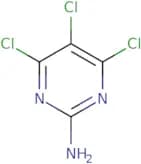
Fórmula:C8H15NPureza:Min. 95%Peso molecular:125.21 g/mol4,5,6-Trichloropyrimidin-2-amine
CAS:4,5,6-Trichloropyrimidin-2-amine is a pyrimidine compound that can be synthesized from guanidine nitrate and chloroform. The reaction takes place in the presence of an organic base such as methanol or acetone. This compound has been shown to react with primary amines to form a guanidine derivative, which is then hydrolyzed to form the desired product. 4,5,6-Trichloropyrimidin-2-amine is an efficient synthesis for pyrimidine compounds because it does not require any purification steps before use.
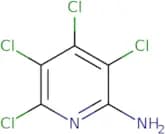
Fórmula:C4H2Cl3N3Pureza:Min. 95%Peso molecular:198.43 g/molTetrachloropyridin-2-amine
CAS:Tetrachloropyridin-2-amine is a chemical compound. It is the product of the reaction between triphenylphosphine oxide and phosphorus pentachloride in the presence of alcohols. Tetrachloropyridine-2-amine has been shown to be effective against fungi, bacteria, and algae. It has also been used as an herbicide for agricultural purposes.
Fórmula:C5H2Cl4N2Pureza:Min. 95%Peso molecular:231.9 g/molRef: 3D-BCA50152
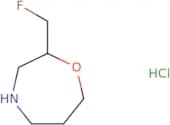
Producto descatalogado2-(Fluoromethyl)-1,4-oxazepane hydrochloride
CAS:Versatile small molecule scaffold
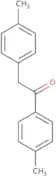
Fórmula:C6H13ClFNOPureza:Min. 95%Peso molecular:169.62 g/mol1,2-Bis(4-methylphenyl)ethan-1-one
CAS:Versatile small molecule scaffold
Fórmula:C16H16OPureza:Min. 95%Peso molecular:224.3 g/mol8-Benzyl-3-oxa-8-azabicyclo[3.2.1]octane-2,4-dione
CAS:Versatile small molecule scaffold
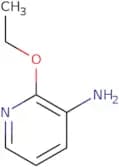
Fórmula:C13H13NO3Pureza:Min. 95%Peso molecular:231.25 g/mol2-ethoxypyridin-3-amine
CAS:Versatile small molecule scaffold
Fórmula:C7H10N2OPureza:Min. 95%Peso molecular:138.17 g/mol[(1R,4R)-4-Phenylcyclohexyl]methanol
CAS:Versatile small molecule scaffold
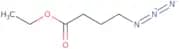
Fórmula:C13H18OPureza:Min. 95%Peso molecular:190.28 g/molethyl 4-azidobutanoate
CAS:Ethyl 4-azidobutanoate is a radiotracer that binds to the DNA of tumor cells. It has been shown to have high binding activity in xenograft models, which is mediated by the interaction between ethyl 4-azidobutanoate and nucleophilic sites on the DNA. This radiotracer also has a high specificity for tumors, with no detectable uptake in other tissues. Ethyl 4-azidobutanoate can be used as a diagnostic agent for detecting and quantifying radiation-induced damage in cells and tissues.
Fórmula:C6H11N3O2Pureza:Min. 95%Peso molecular:157.17 g/mol3-bromo-5H,6H,7H,8H-imidazo[1,5-a]pyridine
CAS:Versatile small molecule scaffold
Fórmula:C7H9BrN2Pureza:Min. 95%Peso molecular:201.07 g/mol(3aR,3bS,6aR,6bS)-Octahydro-1H-thieno[3',4':3,4]cyclobuta[1,2-c]pyrrole 2,2-dioxide hydrochloride
CAS:Versatile small molecule scaffold
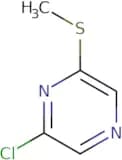
Fórmula:C8H14ClNO2SPureza:Min. 95%Peso molecular:223.72 g/mol2-Chloro-6-(methylsulfanyl)pyrazine
CAS:Versatile small molecule scaffold
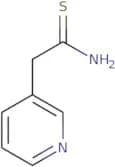
Fórmula:C5H5ClN2SPureza:Min. 95%Peso molecular:160.63 g/mol2-(Pyridin-3-yl)ethanethioamide
CAS:Versatile small molecule scaffold
Fórmula:C7H8N2SPureza:Min. 95%Peso molecular:152.22 g/mol5-(o-Tolyl)tetrazole
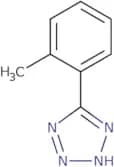
CAS:5-(o-Tolyl)tetrazole is a compound that can be synthesized by the reaction of tetrazole with an aldehyde. It has been shown to have high efficiency in the preparation of halides, including chlorides and bromides. 5-(o-Tolyl)tetrazole is also efficient for the synthesis of functional groups, such as methyl tetrazole, ethyl tetrazole, phenyl tetrazole, and substituted phenyl tetrazoles. The cyclic form of 5-(o-tolyl)tetrazole is obtained through irradiation or catalysis.
5-(o-Tolyl)tetrazole can also be used as a ligand in coordination chemistry to generate metal complexes with various metals.Fórmula:C8H8N4Pureza:Min. 95%Peso molecular:160.18 g/mol

![3-Ethoxy-7-oxaspiro[3.5]nonan-1-ol](/_next/image/?url=https%3A%2Fstatic.cymitquimica.com%2Fproducts%2F3D%2Fthumb-webp%2FDXC58280.webp&w=3840&q=75)
![Octahydro-1H-cyclopenta[b]pyridine](/_next/image/?url=https%3A%2Fstatic.cymitquimica.com%2Fproducts%2F3D%2Fthumb-webp%2FBCA50154.webp&w=3840&q=75)
![8-Benzyl-3-oxa-8-azabicyclo[3.2.1]octane-2,4-dione](/_next/image/?url=https%3A%2Fstatic.cymitquimica.com%2Fproducts%2F3D%2Fthumb-webp%2FBCA48384.webp&w=3840&q=75)
![[(1R,4R)-4-Phenylcyclohexyl]methanol](/_next/image/?url=https%3A%2Fstatic.cymitquimica.com%2Fproducts%2F3D%2Fthumb-webp%2FMDA07390.webp&w=3840&q=75)
![3-bromo-5H,6H,7H,8H-imidazo[1,5-a]pyridine](/_next/image/?url=https%3A%2Fstatic.cymitquimica.com%2Fproducts%2F3D%2Fthumb-webp%2FGAC15776.webp&w=3840&q=75)
![(3aR,3bS,6aR,6bS)-Octahydro-1H-thieno[3',4':3,4]cyclobuta[1,2-c]pyrrole 2,2-dioxide h…](/_next/image/?url=https%3A%2Fstatic.cymitquimica.com%2Fproducts%2F3D%2Fthumb-webp%2FJHD91551.webp&w=3840&q=75)