Building Blocks
Subcategorías de "Building Blocks"
- Ácidos borónicos y derivados del ácido borónico(5.778 productos)
- Building Blocks quirales(1.243 productos)
- Building Blocks de hidrocarburos(6.099 productos)
- Building Blocks orgánicos(61.038 productos)
Se han encontrado 205376 productos de "Building Blocks"
2-[(2S)-Oxiran-2-yl]-1-benzofuran
CAS:Versatile small molecule scaffold
Fórmula:C10H8O2Pureza:Min. 95%Peso molecular:160.17 g/mol1-(Pyridin-3-yl)-1H-pyrazole-4-carboxylic acid hydrochloride
CAS:Versatile small molecule scaffold
Fórmula:C9H8ClN3O2Pureza:Min. 95%Peso molecular:225.63 g/mol4-(5-{[(3-Phenyl-1,2,4-oxadiazol-5-yl)methyl]sulfanyl}-1,3,4-oxadiazol-2-yl)pyridine
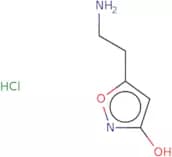
CAS:Versatile small molecule scaffoldFórmula:C16H11N5O2SPureza:Min. 95%Peso molecular:337.4 g/mol5-(2-Aminoethyl)-1,2-oxazol-3-ol hydrochloride
CAS:Versatile small molecule scaffold
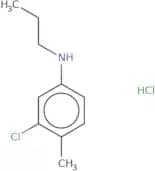
Fórmula:C5H9ClN2O2Pureza:Min. 95%Peso molecular:164.6 g/mol3-Chloro-4-methyl-N-propylaniline hydrochloride
CAS:Versatile small molecule scaffoldFórmula:C10H15Cl2NPureza:Min. 95%Peso molecular:220.1 g/mol2-Cyclopropylbenzaldehyde
CAS:Versatile small molecule scaffold
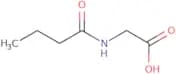
Fórmula:C10H10OPureza:Min. 95%Peso molecular:146.19 g/moln-Butyrylglycine
CAS:n-Butyrylglycine is a compound that was first identified in human urine as a metabolite of the amino acid glycine. It is an intermediate in the conversion of glycine to succinic acid, which is required for the production of energy in mitochondria. Deficiency of this enzyme causes mitochondrial dysfunction and leads to various metabolic disorders including fatty acid oxidation disorders and homocysteine metabolism defects. n-Butyrylglycine can be detected by gas chromatography or liquid chromatography with mass spectrometry detection.
Fórmula:C6H11NO3Pureza:Min. 95%Peso molecular:145.16 g/mol3-Amino-1-[2-(difluoromethoxy)phenyl]pyrrolidin-2-one
CAS:Versatile small molecule scaffold
Fórmula:C11H12F2N2O2Pureza:Min. 95%Peso molecular:242.22 g/mol2-[4-Cyclopropyl-2,5-dioxo-4-(thiophen-2-yl)imidazolidin-1-yl]acetic acid
CAS:Versatile small molecule scaffold
Fórmula:C12H12N2O4SPureza:Min. 95%Peso molecular:280.3 g/mol5-Bromo-N-phenylpyridine-2-carboxamide
CAS:Versatile small molecule scaffold
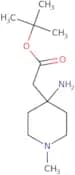
Fórmula:C12H9BrN2OPureza:Min. 95%Peso molecular:277.12 g/moltert-Butyl 2-(4-amino-1-methylpiperidin-4-yl)acetate
CAS:Versatile small molecule scaffold
Fórmula:C12H24N2O2Pureza:Min. 95%Peso molecular:228.33 g/molRef: 3D-VAD15400
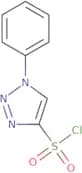
Producto descatalogado1-Phenyl-1H-1,2,3-triazole-4-sulfonyl chloride
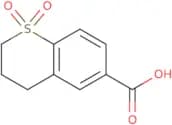
CAS:Versatile small molecule scaffoldFórmula:C8H6ClN3O2SPureza:Min. 95%Peso molecular:243.67 g/mol3,4-Dihydro-2H-1-benzothiopyran-6-carboxylic acid 1,1-dioxide
CAS:Versatile small molecule scaffold
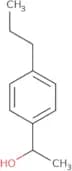
Fórmula:C10H10O4SPureza:Min. 95%Peso molecular:226.25 g/mol(1R)-1-(4-Propylphenyl)ethan-1-ol
CAS:Versatile small molecule scaffold
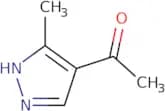
Fórmula:C11H16OPureza:Min. 95%Peso molecular:164.24 g/mol1-(5-Methyl-1H-Pyrazol-4-Yl)Ethanone
CAS:Phenylhydrazine is a white crystalline solid with a molecular weight of 150.25, and the molecular formula C6H5NHN. It is soluble in water, alcohol, ether and chloroform. Phenylhydrazine can react with an acid chloride to form a hydrazone; this reaction is used in the synthesis of some pharmaceuticals. The most common use of phenylhydrazine is as a precursor to various pharmaceuticals, such as antipyretics and anti-inflammatory agents. Phenylhydrazine reacts with zinc chloride to form 1-(5-methyl-1H-pyrazol-4-yl)ethanone.
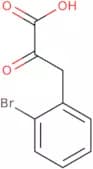
Fórmula:C6H8N2OPureza:Min. 95%Peso molecular:124.14 g/mol3-(2-Bromophenyl)-2-oxopropanoic acid
CAS:Versatile small molecule scaffold
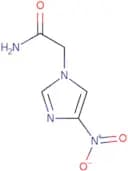
Fórmula:C9H7BrO3Pureza:Min. 95%Peso molecular:243.05 g/mol2-(4-Nitro-1H-imidazol-1-yl)acetamide
CAS:Versatile small molecule scaffold
Fórmula:C5H6N4O3Pureza:Min. 95%Peso molecular:170.13 g/mol4,5-Dibromo-3-methoxythiophene-2-carboxylic acid
CAS:Versatile small molecule scaffoldFórmula:C6H4Br2O3SPureza:Min. 95%Peso molecular:315.97 g/mol4-Bromo-1H-pyrazolo[3,4-c]pyridin-3-amine
CAS:Versatile small molecule scaffold
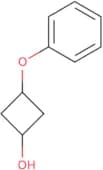
Fórmula:C6H5BrN4Pureza:Min. 95%Peso molecular:213.04 g/mol(1R,3R)-3-Phenoxycyclobutan-1-ol
CAS:Versatile small molecule scaffold
Fórmula:C10H12O2Pureza:Min. 95%Peso molecular:164.2 g/mol
![2-[(2S)-Oxiran-2-yl]-1-benzofuran](/_next/image/?url=https%3A%2Fstatic.cymitquimica.com%2Fproducts%2F3D%2Fthumb-webp%2FTNA61408.webp&w=3840&q=75)


![4-(5-{[(3-Phenyl-1,2,4-oxadiazol-5-yl)methyl]sulfanyl}-1,3,4-oxadiazol-2-yl)pyridine](/_next/image/?url=https%3A%2Fstatic.cymitquimica.com%2Fproducts%2F3D%2Fthumb-webp%2FULB93670.webp&w=3840&q=75)

![3-Amino-1-[2-(difluoromethoxy)phenyl]pyrrolidin-2-one](/_next/image/?url=https%3A%2Fstatic.cymitquimica.com%2Fproducts%2F3D%2Fthumb-webp%2FVAC67600.webp&w=3840&q=75)
![2-[4-Cyclopropyl-2,5-dioxo-4-(thiophen-2-yl)imidazolidin-1-yl]acetic acid](/_next/image/?url=https%3A%2Fstatic.cymitquimica.com%2Fproducts%2F3D%2Fthumb-webp%2FVAC85079.webp&w=3840&q=75)


![4-Bromo-1H-pyrazolo[3,4-c]pyridin-3-amine](/_next/image/?url=https%3A%2Fstatic.cymitquimica.com%2Fproducts%2F3D%2Fthumb-webp%2FVJB24435.webp&w=3840&q=75)