


Building Blocks
Subcategorías de "Building Blocks"
- Ácidos borónicos y derivados del ácido borónico(5.778 productos)
- Building Blocks quirales(1.243 productos)
- Building Blocks de hidrocarburos(6.099 productos)
- Building Blocks orgánicos(61.038 productos)
Se han encontrado 205373 productos de "Building Blocks"
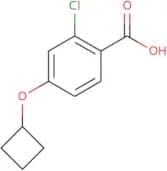
2-Chloro-4-cyclobutoxybenzoic acid
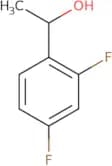
CAS:Versatile small molecule scaffoldFórmula:C11H11ClO3Pureza:Min. 95%Peso molecular:226.65 g/mol(1R)-1-(2,4-Difluorophenyl)ethan-1-ol
CAS:Versatile small molecule scaffold
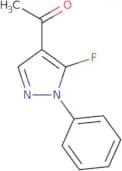
Fórmula:C8H8F2OPureza:Min. 95%Peso molecular:158.14 g/mol1-(5-Fluoro-1-phenyl-1H-pyrazol-4-yl)ethan-1-one
CAS:Versatile small molecule scaffold
Fórmula:C11H9FN2OPureza:Min. 95%Peso molecular:204.2 g/molRef: 3D-RSC00051
Producto descatalogado4-[(Methylsulfanyl)methyl]benzoic acid
CAS:4-[(Methylsulfanyl)methyl]benzoic acid is a chiral compound with a sulfur atom. It can be prepared by the reaction between methylsulfonyl chloride and benzoyl chloride in chloroform or by the reaction of methoxysulfur trifluoride with benzoic acid. 4-[(Methylsulfanyl)methyl]benzoic acid can also be synthesized by the reaction of sulfone and carboxylic acid derivatives, such as benzyl or cyano. 4-[(Methylsulfanyl)methyl]benzoic acid is used as a fungicide, insecticide, and herbicide. The substituents on this molecule are able to form bonds with other molecules to create an array of different structures. The most common substitution is for methoxy, which has a hydroxy group attached to it. This substitution is found in many different types of molecules including some drugs, hormones, vitamins,
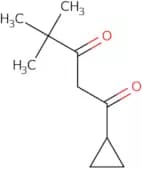
Fórmula:C9H10O2SPureza:Min. 95%Peso molecular:182.24 g/mol1-Cyclopropyl-4,4-dimethylpentane-1,3-dione
CAS:Versatile small molecule scaffold
Fórmula:C10H16O2Pureza:Min. 95%Peso molecular:168.23 g/mol2-Amino-4-chloro-3-methoxybenzoic acid
CAS:Versatile small molecule scaffold
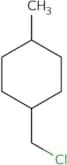
Fórmula:C8H8ClNO3Pureza:Min. 95%Peso molecular:201.61 g/mol1-(Chloromethyl)-4-methylcyclohexane
CAS:Versatile small molecule scaffold
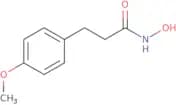
Fórmula:C8H15ClPureza:Min. 95%Peso molecular:146.66 g/molN-Hydroxy-3-(4-methoxyphenyl)propanamide
CAS:Versatile small molecule scaffold
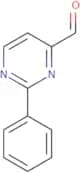
Fórmula:C10H13NO3Pureza:Min. 95%Peso molecular:195.21 g/mol2-Phenylpyrimidine-4-carbaldehyde
CAS:Versatile small molecule scaffold
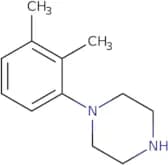
Fórmula:C11H8N2OPureza:Min. 95%Peso molecular:184.19 g/mol1-(2,3-Dimethylphenyl)piperazine
CAS:Producto controlado1-(2,3-Dimethylphenyl)piperazine is a piperidine derivative that has been shown to have antidepressant activity in both in vitro and in vivo studies. It acts as an antagonist at the 5-HT1A receptor and as an agonist at the 5-HT2A receptor. 1-(2,3-Dimethylphenyl)piperazine has been shown to inhibit the production of dopamine, serotonin, and citric acid by inhibiting the enzyme citrate synthase. This drug also increases the concentration of chloride ions in cells. 1-(2,3-Dimethylphenyl)piperazine is used to treat depression, anxiety disorders, and other conditions that may be related to chemical imbalances of serotonin.
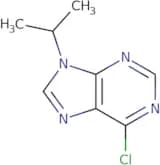
Fórmula:C12H18N2Pureza:Min. 95%Peso molecular:190.29 g/mol6-Chloro-9-(propan-2-yl)-9H-purine
CAS:6-Chloro-9-(propan-2-yl)-9H-purine is an intermediate in the synthesis of nucleoside analogues. It is obtained by the catalyzed reaction of acetonitrile and purines, which undergoes regioisomerization to form a mixture of 6-chloro-9-(propyl)- and 6-chloro-9-(butyl)purine. This intermediate can be used for the alkynylation of amino acids or peptides with alkynes. The selective formation of one regioisomer can be achieved by using a chiral catalyst or by reacting with an optically active reagent such as (+)-camphor sulfonic acid.
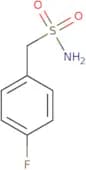
Fórmula:C8H9ClN4Pureza:Min. 95%Peso molecular:196.64 g/mol(4-Fluorophenyl)methanesulfonamide
CAS:Versatile small molecule scaffold
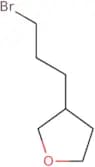
Fórmula:C7H8FNO2SPureza:Min. 95%Peso molecular:189.21 g/mol3-(3-Bromopropyl)oxolane
CAS:Versatile small molecule scaffold
Fórmula:C7H13BrOPureza:Min. 95%Peso molecular:193.08 g/molRef: 3D-ASB49655
Producto descatalogado5,6,7,8-Tetrahydroindolizine-1-carbonitrile
CAS:Versatile small molecule scaffold
Fórmula:C9H10N2Pureza:Min. 95%Peso molecular:146.19 g/mol4-(Dimethyl-1,2-oxazol-4-yl)phenol
CAS:Versatile small molecule scaffold
Fórmula:C11H11NO2Pureza:Min. 95%Peso molecular:189.21 g/mol6-Chloro-3-methyl-[1,2,4]triazolo[3,4-a]-phthalazine
CAS:Versatile small molecule scaffold
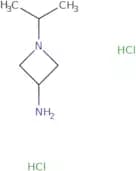
Fórmula:C10H7ClN4Pureza:Min. 95%Peso molecular:218.65 g/mol1-(1-Methylethyl)-3-azetidinamine, hydrochloride (1:2)
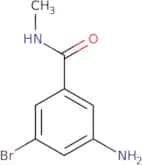
CAS:1-(1-Methylethyl)-3-azetidinamine, hydrochloride (1:2) is a synthetic compound that has been shown to be a potent and selective γ-secretase modulator. It is a triol with an alcohol group at C-3 and two hydroxyl groups at C-4 and C-5. This compound has been shown to inhibit the production of cycloartenol from soybean oil in vitro, which may be due to its inhibition of γ-secretase activity. 1-(1-Methylethyl)-3-azetidinamine, hydrochloride (1:2) also has the potential for use as a target compound for research purposes.Fórmula:C6H16Cl2N2Pureza:Min. 95%Peso molecular:187.11 g/mol3-Amino-5-bromo-N-methylbenzamide
CAS:Versatile small molecule scaffold
Fórmula:C8H9BrN2OPureza:Min. 95%Peso molecular:229.07 g/mol2-Chloro-6,7-dihydro-5H-cyclopenta[b]pyridine
CAS:Versatile small molecule scaffold
Fórmula:C8H8ClNPureza:Min. 95%Peso molecular:153.61 g/moltert-Butyl N-{4-ethynylbicyclo[2.2.2]octan-1-yl}carbamate
CAS:Versatile small molecule scaffoldFórmula:C15H23NO2Pureza:Min. 95%Peso molecular:249.35 g/mol

![4-[(Methylsulfanyl)methyl]benzoic acid](/_next/image/?url=https%3A%2Fstatic.cymitquimica.com%2Fproducts%2F3D%2Fthumb-webp%2FSCA00348.webp&w=3840&q=75)



![6-Chloro-3-methyl-[1,2,4]triazolo[3,4-a]-phthalazine](/_next/image/?url=https%3A%2Fstatic.cymitquimica.com%2Fproducts%2F3D%2Fthumb-webp%2FSCA45838.webp&w=3840&q=75)
![2-Chloro-6,7-dihydro-5H-cyclopenta[b]pyridine](/_next/image/?url=https%3A%2Fstatic.cymitquimica.com%2Fproducts%2F3D%2Fthumb-webp%2FSEA89055.webp&w=3840&q=75)
![tert-Butyl N-{4-ethynylbicyclo[2.2.2]octan-1-yl}carbamate](/_next/image/?url=https%3A%2Fstatic.cymitquimica.com%2Fproducts%2F3D%2Fthumb-webp%2FSGC55140.webp&w=3840&q=75)