Building Blocks
Subcategorías de "Building Blocks"
- Ácidos borónicos y derivados del ácido borónico(5.780 productos)
- Building Blocks quirales(1.241 productos)
- Building Blocks de hidrocarburos(6.100 productos)
- Building Blocks orgánicos(61.029 productos)
Se han encontrado 205306 productos de "Building Blocks"
2-Methyl-2-(propan-2-yl)cyclopropane-1-carboxylic acid
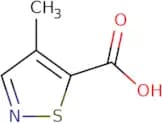
CAS:Versatile small molecule scaffoldFórmula:C8H14O2Pureza:Min. 95%Peso molecular:142.2 g/mol4-Methyl-isothiazole-5-carboxylic acid
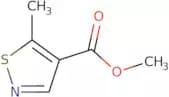
CAS:Versatile small molecule scaffoldFórmula:C5H5NO2SPureza:Min. 95%Peso molecular:143.16 g/molMethyl 5-methyl-1,2-thiazole-4-carboxylate
CAS:Versatile small molecule scaffoldFórmula:C6H7NO2SPureza:Min. 95%Peso molecular:157.19 g/mol3-Methylisothiazole-4-carboxylic acid
CAS:3-Methylisothiazole-4-carboxylic acid is an amino acid that has shown anti-tumor activity. It has been shown to inhibit the growth of leukemia cells in mice and to prevent the proliferation of human cancer cells in vitro. 3-Methylisothiazole-4-carboxylic acid is a competitive inhibitor of benzoylamino, which is a key enzyme involved in the synthesis of DNA. The compound inhibits DNA replication by binding to nucleic acids at the site where they are synthesized, blocking the formation of base pairs. This drug also has immunosuppressive properties and can be used as an adjuvant therapy for hypersensitivity reactions such as asthma and allergies.Fórmula:C5H5NO2SPureza:Min. 95%Peso molecular:143.16 g/mol3-(2,4-Dimethylphenoxy)propanoic acid
CAS:Versatile small molecule scaffold
Fórmula:C11H14O3Pureza:Min. 95%Peso molecular:194.23 g/molN-Phenylcyclobutanecarboxamide
CAS:N-Phenylcyclobutanecarboxamide is a sulfone that is used as a chemotherapy agent. It has been shown to be effective in the treatment of peritoneal carcinomatosis and pancreatic cancer. This drug inhibits the growth of cancer cells by interfering with DNA synthesis and protein synthesis, which prevents cell division. N-Phenylcyclobutanecarboxamide also causes tumor cells to die by causing them to undergo apoptosis.Fórmula:C11H13NOPureza:Min. 95%Peso molecular:175.23 g/mol3-Amino-1H,4H,5H-pyrazolo[3,4-d]pyrimidin-4-one
CAS:Versatile small molecule scaffoldFórmula:C5H5N5OPureza:Min. 95%Peso molecular:151.1 g/mol3,4-Dimethyl-6H,7H-[1,2]oxazolo[3,4-d]pyridazin-7-one
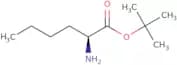
CAS:Versatile small molecule scaffoldFórmula:C7H7N3O2Pureza:Min. 95%Peso molecular:165.15 g/moltert-butyl (2S)-2-aminohexanoate
CAS:Tert-butyl (2S)-2-aminohexanoate is an intermediate that is used in the synthesis of glycine by the reaction of benzyl bromide and tert-butyl amine. The stereospecifically incorporated tert-butyl group has a high degree of enantioselectivity, which makes this intermediate useful in the synthesis of glycine. Tert-butyl (2S)-2-aminohexanoate can be synthesized using lithium diisopropylamide and a tertiary amine as an alkylating agent.
Fórmula:C10H21NO2Pureza:Min. 95%Peso molecular:187.3 g/mol2-Phenyl-1,3-oxazole-4,5-dicarboxylic acid
CAS:Versatile small molecule scaffold
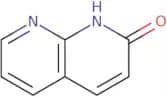
Fórmula:C11H7NO5Pureza:Min. 95%Peso molecular:233.18 g/mol1,8-Naphthyridine-2(1H)-one
CAS:1,8-Naphthyridine-2(1H)-one is a naphthyridone that inhibits the growth of gram-positive bacteria. This compound binds to the CB2 receptor site on the cell membrane and blocks the transfer of electrons from cytochrome c to molecular oxygen, which inhibits the production of reactive oxygen species. This inhibition causes an accumulation of hydrogen peroxide in the bacterial cell and leads to necrosis. 1,8-Naphthyridine-2(1H)-one has also been shown to inhibit HIV infection by inhibiting reverse transcriptase activity through metal chelate formation.Fórmula:C8H6N2OPureza:Min. 95%Peso molecular:146.15 g/mol5-Bromo-7-methyl-1H-indole-2-carboxylic acid
CAS:Versatile small molecule scaffoldFórmula:C10H8BrNO2Pureza:Min. 95%Peso molecular:254.08 g/mol2-[(2-bromophenyl)sulfanyl]acetic acid
CAS:Versatile small molecule scaffold
Fórmula:C8H7BrO2SPureza:Min. 95%Peso molecular:247.1 g/mol4-Cyanobicyclo[2.2.2]octane-1-carboxylic acid
CAS:Versatile small molecule scaffoldFórmula:C10H13NO2Pureza:Min. 95%Peso molecular:179.22 g/molRel-2-amino-N-[(1R,4R)-4-hydroxycyclohexyl]benzamide
CAS:Versatile small molecule scaffoldFórmula:C13H18N2O2Pureza:Min. 95%Peso molecular:234.29 g/mol7-chloro-1,8-naphthyridin-2-amine
CAS:Versatile small molecule scaffold
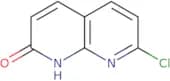
Fórmula:C8H6ClN3Pureza:Min. 95%Peso molecular:179.6 g/mol7-Chloro-1,8-naphthyridin-2-ol
CAS:7-Chloro-1,8-naphthyridin-2-ol is a nucleic acid that stabilizes duplexes and triplexes. It has an affinity for adenine bases in DNA, RNA, or triplexes. 7-Chloro-1,8-naphthyridin-2-ol also binds to mismatched nucleobases in the sequence of nucleic acids. This compound is a potent inhibitor of HIV replication and has been shown to inhibit the growth of cancer cells by targeting the enzyme topoisomerase II alpha.Fórmula:C8H5ClN2OPureza:Min. 95%Peso molecular:180.59 g/mol2-Chloro-5-(methylsulfanyl)aniline
CAS:2-Chloro-5-(methylsulfanyl)aniline is a sulfoxide that can inhibit the n-methyl-d-aspartate (NMDA) receptor, which is an ion channel that plays a key role in neuronal excitability. 2-Chloro-5-(methylsulfanyl)aniline has been shown to be neuroprotective against glutamate toxicity in rats and mice. This drug also blocks the NMDA receptor by binding to it, preventing glutamate from activating it. 2-Chloro-5-(methylsulfanyl)aniline has been shown to have neuroprotective effects in animal models of stroke, cerebral ischemia, and traumatic brain injury.
Fórmula:C7H8ClNSPureza:Min. 95%Peso molecular:173.66 g/mol2,3,4-Trichlorophenol
CAS:2,3,4-Trichlorophenol (2,3,4-TCP) is a water-soluble compound that is used as an analytical reagent. 2,3,4-TCP is also an antimicrobial agent found in household cleaners and disinfectants. It is used to remove bacteria from equipment and surfaces in hospitals and other healthcare facilities. The acidic aqueous solution of 2,3,4-TCP has been shown to adsorb triclosan and p-hydroxybenzoic acid from wastewater treatment systems. The reaction mechanism for the adsorption process is not well understood but may involve the formation of hydrogen bonds between the polar hydroxyl groups on 2,3,4-TCP and the carboxyl groups on triclosan or p-hydroxybenzoic acid. Anhydrous sodium can be used as an alternative to water for this process.
Fórmula:Cl3C6H2OHPureza:Min. 95%Peso molecular:197.45 g/mol3-Chloro-N,N-diethylbenzamide
CAS:Versatile small molecule scaffoldFórmula:C11H14ClNOPureza:Min. 95%Peso molecular:211.69 g/mol




![3-Amino-1H,4H,5H-pyrazolo[3,4-d]pyrimidin-4-one](/_next/image/?url=https%3A%2Fstatic.cymitquimica.com%2Fproducts%2F3D%2Fthumb-webp%2FQAA90868.webp&w=3840&q=75)
![3,4-Dimethyl-6H,7H-[1,2]oxazolo[3,4-d]pyridazin-7-one](/_next/image/?url=https%3A%2Fstatic.cymitquimica.com%2Fproducts%2F3D%2Fthumb-webp%2FQAA91116.webp&w=3840&q=75)


![2-[(2-bromophenyl)sulfanyl]acetic acid](/_next/image/?url=https%3A%2Fstatic.cymitquimica.com%2Fproducts%2F3D%2Fthumb-webp%2FQAA93985.webp&w=3840&q=75)
![4-Cyanobicyclo[2.2.2]octane-1-carboxylic acid](/_next/image/?url=https%3A%2Fstatic.cymitquimica.com%2Fproducts%2F3D%2Fthumb-webp%2FQAA94109.webp&w=3840&q=75)
![Rel-2-amino-N-[(1R,4R)-4-hydroxycyclohexyl]benzamide](/_next/image/?url=https%3A%2Fstatic.cymitquimica.com%2Fproducts%2F3D%2Fthumb-webp%2FQAA94211.webp&w=3840&q=75)