Building Blocks
Esta sección contiene productos fundamentales para la síntesis de compuestos orgánicos y biológicos. Building blocks son los materiales de partida esenciales utilizados para construir moléculas complejas a través de diversas reacciones químicas. Desempeñan un papel crítico en el descubrimiento de fármacos, la ciencia de materiales y la investigación química. En CymitQuimica, ofrecemos una gama diversa de building blocks de alta calidad para apoyar sus investigaciones innovadoras y proyectos industriales, asegurando que tenga los componentes esenciales para una síntesis exitosa.
Subcategorías de "Building Blocks"
- Ácidos borónicos y derivados del ácido borónico(5.780 productos)
- Building Blocks quirales(1.241 productos)
- Building Blocks de hidrocarburos(6.100 productos)
- Building Blocks orgánicos(61.023 productos)
Se han encontrado 205289 productos de "Building Blocks"
Ordenar por
Pureza (%)
0
100
|
0
|
50
|
90
|
95
|
100
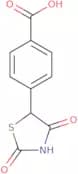
4-(2,4-Dioxo-1,3-thiazolidin-5-yl)benzoic acid
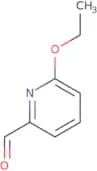
CAS:Versatile small molecule scaffoldFórmula:C10H7NO4SPureza:Min. 95%Peso molecular:237.23 g/mol6-Ethoxypyridine-2-carbaldehyde
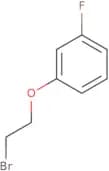
CAS:Versatile small molecule scaffoldFórmula:C8H9NO2Pureza:Min. 95%Peso molecular:151.16 g/mol1-(2-bromoethoxy)-3-fluorobenzene
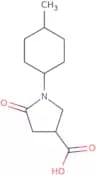
CAS:Versatile small molecule scaffoldFórmula:C8H8BrFOPureza:Min. 95%Peso molecular:219.05 g/mol1-(4-Methylcyclohexyl)-5-oxopyrrolidine-3-carboxylic acid
CAS:Producto controlado1-(4-Methylcyclohexyl)-5-oxopyrrolidine-3-carboxylic acid is a synthetic ligand that binds to the receptor site on the GABA receptor, which is responsible for inhibiting neuronal activity. The binding of 1-(4-methylcyclohexyl)-5-oxopyrrolidine-3-carboxylic acid to the GABA receptor alters the conformation of the protein and causes it to open ion channels in the cell membrane. This leads to an influx of chloride ions and hyperpolarization of the neuron, resulting in inhibition of neuronal activity. 1-(4-Methylcyclohexyl)-5-oxopyrrolidine-3-carboxylic acid has been shown to inhibit ligand binding to some other receptors, such as NMDA and AMPA glutamate receptors.Fórmula:C12H19NO3Pureza:Min. 95%Peso molecular:225.28 g/mol5-Acetyl-2-methoxybenzene-1-sulfonamide
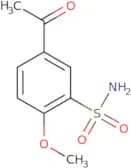
CAS:Versatile small molecule scaffoldFórmula:C9H11NO4SPureza:Min. 95%Peso molecular:229.3 g/mol1-(3-Methylpyridin-2-yl)ethanone
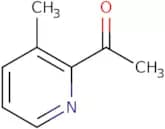
CAS:Versatile small molecule scaffoldFórmula:C8H9NOPureza:Min. 95%Peso molecular:135.17 g/mol1-(1-Chloroethyl)-4-(trifluoromethyl)benzene
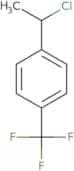
CAS:Versatile small molecule scaffoldFórmula:C9H8ClF3Pureza:Min. 95%Peso molecular:208.61 g/molEthyl 1-methylpyrazole-4-carboxylate
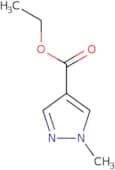
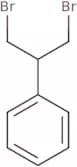
CAS:Ethyl 1-methylpyrazole-4-carboxylate (EMPC) is an organic compound, a pyrazole carboxylic acid derivative. It is the simplest alkyl ester of pyrazole-4-carboxylic acid. EMPC is used as a fungicide, yielding a maximum of 13% yield in water with hexamethylenetetramine. The reaction proceeds via activated chloroformate and carbonyl intermediates. Structural analogues with aminopyrazoles have been developed as selective herbicides and reagents for the synthesis of heterocycles. EMPC has been shown to inhibit the growth of fungi by inhibiting chitin synthesis and cell wall formation at the fungal membrane level.Fórmula:C7H10N2O2Pureza:Min. 95%Peso molecular:154.17 g/mol(1,3-Dibromopropan-2-yl)benzene
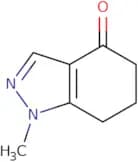
CAS:(1,3-Dibromopropan-2-yl)benzene is a x-ray crystallography and electrocatalysis protonation. It is a cyclic voltammetry that catalyzes the oxidation of trifluoroacetic acid in the presence of an electron donor to form trifluoroacetic acid. The cyclic voltammetry technique has been applied to study the electrocatalytic activity of (1,3-dibromopropan-2-yl)benzene in water. The crystal structures of (1,3-dibromopropan-2-yl)benzene have been determined using x-ray crystallography techniques. =ENDFórmula:C9H10Br2Pureza:Min. 95%Peso molecular:277.98 g/mol1-Methyl-1,5,6,7-tetrahydroindazol-4-one
CAS:Versatile small molecule scaffold
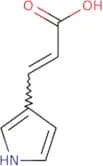
Fórmula:C8H10N2OPureza:Min. 95%Peso molecular:150.18 g/mol(2E)-3-(1H-Pyrrol-3-yl)prop-2-enoic acid
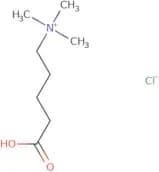
CAS:Versatile small molecule scaffoldFórmula:C7H7NO2Pureza:Min. 95%Peso molecular:137.14 g/mol4-Carboxy-N,N,N-trimethyl-1-butanaminium chloride
CAS:Versatile small molecule scaffold
Fórmula:C8H18ClNO2Pureza:Min. 95%Peso molecular:195.69 g/molN-Hydroxytetrachlorophthalimide
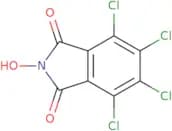
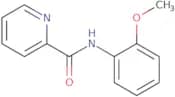
CAS:N-Hydroxytetrachlorophthalimide is an organic compound with the chemical formula CHClNO. It is a primary alcohol that is used in the synthesis of surfactants and fluorinated products. N-Hydroxytetrachlorophthalimide is synthesized by the reaction of chlorine with phthalic anhydride. The product is a white solid that can be purified by recrystallization from water or acetic acid, or by washing with aqueous sodium bicarbonate solution followed by filtration.Fórmula:C8HCl4NO3Pureza:Min. 95%Peso molecular:300.91 g/molN-(2-Methoxyphenyl)pyridine-2-carboxamide
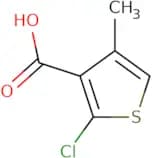
CAS:Versatile small molecule scaffoldFórmula:C13H12N2O2Pureza:Min. 95%Peso molecular:228.25 g/mol2-Chloro-4-methylthiophene-3-carboxylic acid
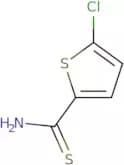
CAS:Versatile small molecule scaffoldFórmula:C6H5ClO2SPureza:Min. 95%Peso molecular:176.62 g/mol5-Chlorothiophene-2-carbothioamide
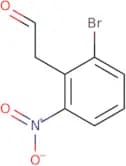
CAS:Versatile small molecule scaffoldFórmula:C5H4ClNS2Pureza:Min. 95%Peso molecular:177.7 g/mol2-(2-bromo-6-nitrophenyl)acetaldehyde
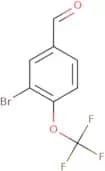
CAS:Versatile small molecule scaffoldFórmula:C8H6BrNO3Pureza:Min. 95%Peso molecular:244.04 g/mol3-Bromo-4-(trifluoromethoxy)benzaldehyde
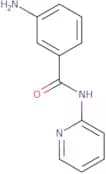
CAS:Versatile small molecule scaffoldFórmula:C8H4BrF3O2Pureza:Min. 95%Peso molecular:269.02 g/mol3-Amino-N-(pyridin-2-yl)benzamide
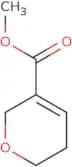
CAS:Versatile small molecule scaffoldFórmula:C12H11N3OPureza:Min. 95%Peso molecular:213.23 g/molMethyl 5,6-dihydro-2H-pyran-3-carboxylate
CAS:Versatile small molecule scaffoldFórmula:C7H10O3Pureza:Min. 95%Peso molecular:142.2 g/mol