Building Blocks
Esta sección contiene productos fundamentales para la síntesis de compuestos orgánicos y biológicos. Building blocks son los materiales de partida esenciales utilizados para construir moléculas complejas a través de diversas reacciones químicas. Desempeñan un papel crítico en el descubrimiento de fármacos, la ciencia de materiales y la investigación química. En CymitQuimica, ofrecemos una gama diversa de building blocks de alta calidad para apoyar sus investigaciones innovadoras y proyectos industriales, asegurando que tenga los componentes esenciales para una síntesis exitosa.
Subcategorías de "Building Blocks"
- Ácidos borónicos y derivados del ácido borónico(5.780 productos)
- Building Blocks quirales(1.241 productos)
- Building Blocks de hidrocarburos(6.100 productos)
- Building Blocks orgánicos(61.010 productos)
Se han encontrado 205258 productos de "Building Blocks"
Ordenar por
Pureza (%)
0
100
|
0
|
50
|
90
|
95
|
100
2-Methoxy-5-propylphenol
CAS:2-Methoxy-5-propylphenol is a chemical compound that belongs to the class of phenols. It is a methoxylated derivative of coniferyl alcohol, which is an intermediate in the biosynthesis of lignin. The monomers formed by 2-methoxy-5-propylphenol are ether linkages with methoxy groups, which are responsible for its photochemical properties and uv absorption. 2-Methoxy-5-propylphenol also has synergistic effects with other chemicals used in papermaking processes such as delignification and stabilization. The functional groups found in this compound include hydroxy and methoxyl groups, which can react with each other under heat or light to form epoxide bonds. This reaction occurs at temperatures below 120°C, making it a good candidate for thermal pulping of unbleached papers.Fórmula:C10H14O2Pureza:Min. 95%Peso molecular:166.22 g/molImidazo[1,2-a]pyrimidin-5-ol
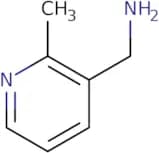
CAS:Imidazo[1,2-a]pyrimidin-5-ol is a pyrrole heterocyclic compound that is used as an anticoagulant. Imidazo[1,2-a]pyrimidin-5-ol binds to the active site of coagulation factor Xa and inhibits its function. It also has been shown to have antidiabetic properties by inhibiting cyclooxygenase and lipoxygenase. Imidazo[1,2-a]pyrimidin-5-ol is metabolized in the liver to form a sulfoxide and organic acids including benzyl alcohol. This drug also can be converted into a naphthalene derivative with c1–6 alkyl groups.Fórmula:C6H5N3OPureza:Min. 95%Peso molecular:135.12 g/mol(2-Methylpyridin-3-yl)methanamine
CAS:Versatile small molecule scaffoldFórmula:C7H10N2Pureza:Min. 95%Peso molecular:122.17 g/mol3-(Chloromethyl)-2-methylpyridine hydrochloride
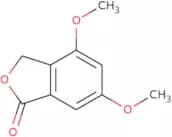
CAS:3-(Chloromethyl)-2-methylpyridine hydrochloride is a lead compound that has potent activity against matrix metalloproteinase-13 (MMP-13) expression. It is structurally modified by the addition of a hydroxyl group and an additional chloromethyl group at the 3 position. The chemical modification of this compound is done in order to increase its potency as a ligand. 3-(Chloromethyl)-2-methylpyridine hydrochloride binds to the ligand binding domain of MMP-13, which suppresses its expression. This inhibition prevents degradation of extracellular matrix proteins, which results in reduced tumor invasion and metastasis.Fórmula:C7H9Cl2NPureza:Min. 95%Peso molecular:178.06 g/mol4,6-Dimethoxy-1,3-dihydro-2-benzofuran-1-one
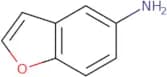
CAS:4,6-Dimethoxy-1,3-dihydro-2-benzofuran-1-one is a phenolic compound that has been isolated from the mycelia of an unidentified fungus. The molecular formula for this compound is C13H14O4. This compound has been found to have an absorption spectrum consistent with a symmetric molecule with two aromatic rings and one oxygenated functional group. It also displays magnetic resonance properties. The chemical structure of this compound consists of three rings: two benzene rings and one furan ring. 4,6-Dimethoxy-1,3-dihydro-2-benzofuran-1-one has been found to be an inhibitor of fatty acid synthesis in Escherichia coli cells.Fórmula:C10H10O4Pureza:Min. 95%Peso molecular:194.18 g/mol1-Benzofuran-5-amine
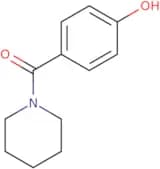
CAS:1-Benzofuran-5-amine is an organic solvent that is used as a synthetic intermediate in the synthesis of quinoline derivatives and methoxy groups. It has been shown to have potent antibacterial activity against Gram-positive bacteria. 1-Benzofuran-5-amine can be used as an antimicrobial agent in oral baths (e.g., foot bath) at concentrations of 15 mg/l or higher, with a contact time of 20 minutes or longer. The drug has also been shown to have long acting properties, which may be due to its ability to inhibit nitric oxide production.Fórmula:C8H7NOPureza:Min. 95%Peso molecular:133.15 g/mol4-(Piperidine-1-carbonyl)phenol
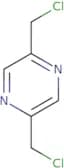
CAS:Versatile small molecule scaffoldFórmula:C12H15NO2Pureza:Min. 95%Peso molecular:205.25 g/mol2,5-Bis(chloromethyl)-pyrazine
CAS:2,5-Bis(chloromethyl)pyrazine is a coordination complex that contains two pyrazine ligands. The compound is an isomer of 2,5-bis(chloromethyl)pyridine and has the same geometry as the pyridine molecule. This complex exists in two different isomeric forms: one with two chlorines on opposite sides of the pyrazine ring and the other with two chlorines on adjacent positions. The alkoxides are symmetric, polymeric structures that can be made by reacting acetals with acetals or pyridines with ligands.Fórmula:C6H6Cl2N2Pureza:Min. 95%Peso molecular:177.03 g/mol2-Methyl-3-(2-methyl-benzoimidazol-1-yl)-propionic acid
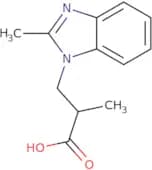
CAS:Producto controladoVersatile small molecule scaffoldFórmula:C12H14N2O2Pureza:Min. 95%Peso molecular:218.25 g/mol3-(2-Methyl-benzoimidazol-1-yl)-propionic acid hydrochloride
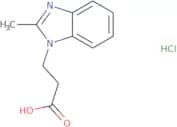
CAS:Versatile small molecule scaffoldFórmula:C11H13ClN2O2Pureza:Min. 95%Peso molecular:240.68 g/mol2-(2-Nitrophenoxy)acetamide
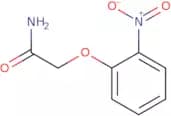
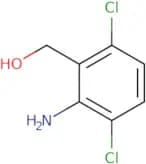
CAS:2-(2-Nitrophenoxy)acetamide (NPA) is a nitro-substituted nitroaromatic compound that has been shown to inhibit the activity of the P-glycoprotein efflux pump. This inhibitory effect may be due to its ability to bind to the ATP binding site on the P-glycoprotein, which prevents ATP hydrolysis and energy transfer. 2-(2-Nitrophenoxy)acetamide also inhibits cancer cells, as it utilizes adenosine triphosphate (ATP) as an energy source. NPA also displays an inhibitory effect on other cellular functions, including transport of substances across membranes and inhibition of DNA synthesis in human cells.Fórmula:C8H8N2O4Pureza:Min. 95%Peso molecular:196.16 g/mol(2-Amino-3,6-dichlorophenyl)methanol
CAS:Versatile small molecule scaffold
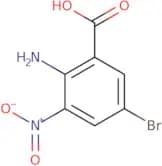
Fórmula:C7H7Cl2NOPureza:Min. 95%Peso molecular:192.04 g/mol2-Amino-5-bromo-3-nitrobenzoic acid
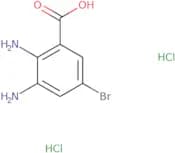
CAS:Versatile small molecule scaffoldFórmula:C7H5BrN2O4Pureza:Min. 95%Peso molecular:261.03 g/mol2,3-Diamino-5-bromobenzoic acid dihydrochloride
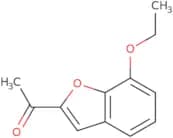
CAS:Versatile small molecule scaffoldFórmula:C7H9BrCl2N2O2Pureza:Min. 95%Peso molecular:303.97 g/mol1-(7-Ethoxy-1-benzofuran-2-yl)ethan-1-one
CAS:Versatile small molecule scaffold
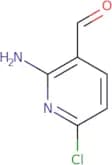
Fórmula:C12H12O3Pureza:Min. 95%Peso molecular:204.22 g/mol2-Amino-6-chloronicotinaldehyde
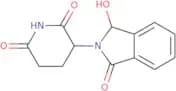
CAS:Versatile small molecule scaffoldFórmula:C6H5ClN2OPureza:Min. 95%Peso molecular:156.57 g/mol3-(1-Hydroxy-3-oxo-2,3-dihydro-1H-isoindol-2-yl)piperidine-2,6-dione
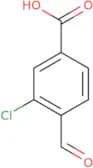
CAS:Versatile small molecule scaffoldFórmula:C13H12N2O4Pureza:Min. 95%Peso molecular:260.2 g/mol3-chloro-4-formylbenzoic acid
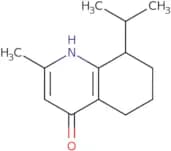
CAS:3-chloro-4-formylbenzoic acid is an aldehyde that can be used as a synthetic intermediate in the production of other molecules. It can be synthesized from 3-chlorobenzoic acid and formaldehyde in one step by heating the two together. This reaction produces the desired product in high yield, with a stereochemical purity of about 98%. The substituent on the chloro group has no effect on this reaction. The diastereoselectivity of this synthesis is also high, with nearly all products being racemic mixtures.Fórmula:C8H5ClO3Pureza:Min. 95%Peso molecular:184.6 g/mol2-Methyl-8-(propan-2-yl)-1,4,5,6,7,8-hexahydroquinolin-4-one
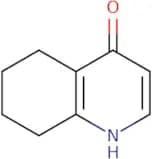
CAS:Versatile small molecule scaffoldFórmula:C13H19NOPureza:Min. 95%Peso molecular:205.3 g/mol1,4,5,6,7,8-Hexahydroquinolin-4-one
CAS:Versatile small molecule scaffoldFórmula:C9H11NOPureza:Min. 95%Peso molecular:149.19 g/mol


![Imidazo[1,2-a]pyrimidin-5-ol](/_next/image/?url=https%3A%2Fstatic.cymitquimica.com%2Fproducts%2F3D%2Fthumb-webp%2FICA53963.webp&w=3840&q=75)