Building Blocks
Esta sección contiene productos fundamentales para la síntesis de compuestos orgánicos y biológicos. Building blocks son los materiales de partida esenciales utilizados para construir moléculas complejas a través de diversas reacciones químicas. Desempeñan un papel crítico en el descubrimiento de fármacos, la ciencia de materiales y la investigación química. En CymitQuimica, ofrecemos una gama diversa de building blocks de alta calidad para apoyar sus investigaciones innovadoras y proyectos industriales, asegurando que tenga los componentes esenciales para una síntesis exitosa.
Subcategorías de "Building Blocks"
- Ácidos borónicos y derivados del ácido borónico(5.780 productos)
- Building Blocks quirales(1.239 productos)
- Building Blocks de hidrocarburos(6.100 productos)
- Building Blocks orgánicos(61.005 productos)
Se han encontrado 205234 productos de "Building Blocks"
Ordenar por
Pureza (%)
0
100
|
0
|
50
|
90
|
95
|
100
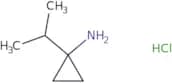
1-(Propan-2-yl)cyclopropan-1-amine hydrochloride
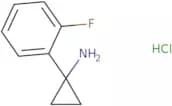
CAS:Versatile small molecule scaffoldFórmula:C6H14ClNPureza:Min. 95%Peso molecular:135.63 g/mol1-(2-Fluorophenyl)cyclopropan-1-amine hydrochloride
CAS:Versatile small molecule scaffoldFórmula:C9H11ClFNPureza:Min. 95%Peso molecular:187.64 g/mol1-Methyl-3-nitro-1H-pyrazole-5-carbaldehyde
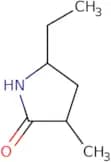
CAS:Versatile small molecule scaffoldFórmula:C5H5N3O3Pureza:Min. 95%Peso molecular:155.11 g/mol5-Ethyl-3-methylpyrrolidin-2-one
CAS:Versatile small molecule scaffoldFórmula:C7H13NOPureza:Min. 95%Peso molecular:127.18 g/mol4-(6-Amino-1,2-dihydroquinoxalin-2-ylidene)cyclohexa-2,5-dien-1-one
CAS:Versatile small molecule scaffoldFórmula:C14H11N3OPureza:Min. 95%Peso molecular:237.26 g/mol3,6-Dibromopyridine-2-carbaldehyde
CAS:Versatile small molecule scaffold
Fórmula:C6H3Br2NOPureza:Min. 95%Peso molecular:264.9 g/mol7-Bromo-1H-indene
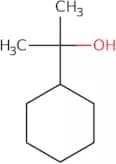
CAS:7-Bromo-1H-indene is a chemical compound that is synthesized by dehydration of propionic acid. 7-Bromo-1H-indene is a processable compound that can be used as an intermediate in the industrial production of various products. Dehydration, chlorination, and alkene formation are factors that lead to the synthesis of 7-bromo-1H-indene. The industrial synthetic method for the production of this product yields a high yield with a low cost.Fórmula:C9H7BrPureza:Min. 95%Peso molecular:195.06 g/mol2-cyclohexylpropan-2-ol
CAS:2-Cyclohexylpropan-2-ol is a solvent that belongs to the group of primary alcohols. It is used for the dilution of biomolecules and as a solvent for organic reactions. 2-Cyclohexylpropan-2-ol has been shown to have a major effect on the solvation properties of hydroxyl groups in acidic environments. The hydroxyl group can be removed by photoexcitation or by reacting with an electrophilic reagent such as ozone, nitrous acid, or peroxy acids. The kinetic study of 2-cyclohexylpropan-2-ol was carried out in water at 37°C and showed that it has a low molecular weight and is rapidly hydrolyzed by alkaline solutions.
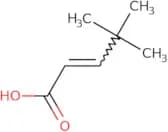
Fórmula:C9H18OPureza:Min. 95%Peso molecular:142.24 g/mol(E)-4,4-Dimethyl-2-pentenoic acid
CAS:Versatile small molecule scaffoldFórmula:C7H12O2Pureza:Min. 95%Peso molecular:128.17 g/mol4-(2-Ethylphenyl)-3-thiosemicarbazide
CAS:Versatile small molecule scaffold
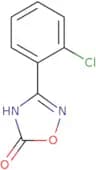
Fórmula:C9H13N3SPureza:Min. 95%Peso molecular:195.28 g/mol3-(2-Chlorophenyl)-1,2,4-oxadiazol-5-ol
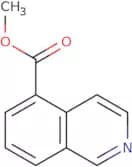
CAS:Versatile small molecule scaffoldFórmula:C8H5ClN2O2Pureza:Min. 95%Peso molecular:196.59 g/molMethyl isoquinoline-5-carboxylate
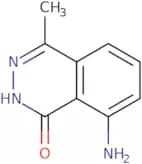
CAS:Versatile small molecule scaffoldFórmula:C11H9NO2Pureza:Min. 95%Peso molecular:187.2 g/mol8-Amino-4-methyl-1,2-dihydrophthalazin-1-one
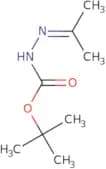
CAS:Versatile small molecule scaffoldFórmula:C9H9N3OPureza:Min. 95%Peso molecular:175.19 g/moltert-Butyl 2-(propan-2-ylidene)hydrazinecarboxylate
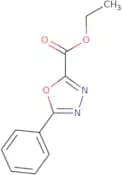
CAS:Versatile small molecule scaffoldFórmula:C8H16N2O2Pureza:Min. 95%Peso molecular:172.22 g/molEthyl 5-phenyl-1,3,4-oxadiazole-2-carboxylate
CAS:Versatile small molecule scaffoldFórmula:C11H10N2O3Pureza:Min. 95%Peso molecular:218.21 g/mol1-Chloro-3-nitropropane
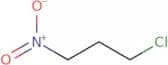
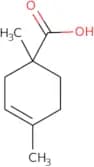
CAS:1-Chloro-3-nitropropane is a compound that has been synthesized from ethylene diamine and yields amide, ethylene, and alkali metal. 1-Chloro-3-nitropropane is used as an intermediate in the production of hydrochloride salts of phosphorus pentoxide. This substance reacts with chlorine to produce phosphonitriles, which are intermediates for the synthesis of nitronates. The synthesis of 1-chloro-3-nitropropane was mechanistically studied by refluxing chlorination agents with phosphorus pentoxide.Fórmula:C3H6ClNO2Pureza:Min. 95%Peso molecular:123.54 g/mol1,4-Dimethylcyclohex-3-ene-1-carboxylic acid
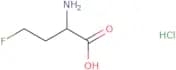
CAS:Versatile small molecule scaffoldFórmula:C9H14O2Pureza:Min. 95%Peso molecular:154.21 g/mol2-Amino-4-fluorobutanoic acid hydrochloride
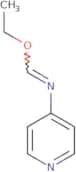
CAS:Versatile small molecule scaffoldFórmula:C4H9ClFNO2Pureza:Min. 95%Peso molecular:157.57 g/molEthyl N-(pyridin-4-yl)carboximidate
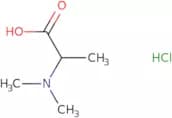
CAS:Versatile small molecule scaffoldFórmula:C8H10N2OPureza:Min. 95%Peso molecular:150.18 g/mol(2S)-2-(Dimethylamino)propanoic acid hydrochloride
CAS:Versatile small molecule scaffoldFórmula:C5H12ClNO2Pureza:Min. 95%Peso molecular:153.61 g/mol