


Building Blocks
Subcategorías de "Building Blocks"
- Ácidos borónicos y derivados del ácido borónico(5.774 productos)
- Building Blocks quirales(1.237 productos)
- Building Blocks de hidrocarburos(6.098 productos)
- Building Blocks orgánicos(60.970 productos)
Se han encontrado 205134 productos de "Building Blocks"
{6-Chloro-[1,2,4]triazolo[4,3-b]pyridazin-3-yl}methanol
CAS:Versatile small molecule scaffold
Fórmula:C6H5ClN4OPureza:Min. 95%Peso molecular:184.58 g/mol2',4'-Dihydro-1'H-spiro[piperidine-4,3'-quinoline]-2'-one hydrochloride
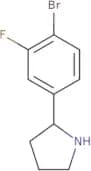
CAS:Versatile small molecule scaffoldFórmula:C13H17ClN2OPureza:Min. 95%Peso molecular:252.74 g/mol2-(4-Bromo-3-fluorophenyl)pyrrolidine
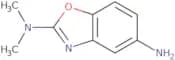
CAS:Versatile small molecule scaffoldFórmula:C10H11BrFNPureza:Min. 95%Peso molecular:244.1 g/mol2-N,2-N-Dimethyl-1,3-benzoxazole-2,5-diamine
CAS:Versatile small molecule scaffoldFórmula:C9H11N3OPureza:Min. 95%Peso molecular:177.2 g/mol2-Chloro-N-cyclopropyl-N-{[4-(propan-2-yl)phenyl]methyl}acetamide
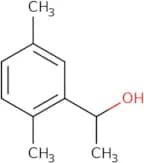
CAS:Versatile small molecule scaffoldFórmula:C15H20ClNOPureza:Min. 95%Peso molecular:265.78 g/mol(1R)-1-(2,5-Dimethylphenyl)ethan-1-ol
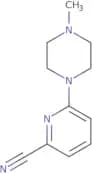
CAS:Versatile small molecule scaffoldFórmula:C10H14OPureza:Min. 95%Peso molecular:150.22 g/mol6-(4-Methylpiperazin-1-yl)pyridine-2-carbonitrile
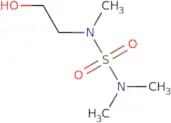
CAS:Versatile small molecule scaffoldFórmula:C11H14N4Pureza:Min. 95%Peso molecular:202.26 g/mol(Dimethylsulfamoyl)(2-hydroxyethyl)methylamine
CAS:Versatile small molecule scaffold
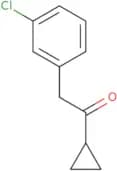
Fórmula:C5H14N2O3SPureza:Min. 95%Peso molecular:182.24 g/mol2-(3-Chlorophenyl)-1-cyclopropylethan-1-one
CAS:Versatile small molecule scaffoldFórmula:C11H11ClOPureza:Min. 95%Peso molecular:194.66 g/molN-(5-Aminopentyl)hydroxylamine dihydrochloride
CAS:Versatile small molecule scaffold
Fórmula:C5H15ClN2OPureza:Min. 95%Peso molecular:154.64 g/mol5-Amino-2,4-dihydro-3H-1,2,4-triazol-3-one
CAS:Versatile small molecule scaffoldFórmula:C2H4N4OPureza:Min. 95%Peso molecular:100.08 g/mol2,5-Dimethylpiperazine dihydrochloride
CAS:Versatile small molecule scaffold
Fórmula:C6H16Cl2N2Pureza:Min. 95%Peso molecular:187.11 g/mol4,7-Dihydro-2,2-dimethyl-1,3-dioxepin
CAS:4,7-Dihydro-2,2-dimethyl-1,3-dioxepin is a cyclopropane. It has been used as a model substrate for the study of carbene mechanisms. The cyclopropanation of 4,7-dihydro-2,2-dimethyl-1,3-dioxepin is catalyzed by a metal carbene complex. The reaction mechanism and energetics have been studied in detail using dimethyl diazomalonate as the substrate.Fórmula:C7H12O2Pureza:Min. 95%Peso molecular:128.17 g/mol5,5-Dimethyl-1,3,2λ4-dioxathian-2-one
CAS:Versatile small molecule scaffold
Fórmula:C5H10O3SPureza:Min. 95%Peso molecular:150.2 g/mol5-Bromopyrimidine-2,4-diamine
CAS:Versatile small molecule scaffold
Fórmula:C4H5BrN4Pureza:Min. 95%Peso molecular:189.02 g/mol3-Amino-6-methyl-4,5-dihydro-1,2,4-triazin-5-one
CAS:Versatile small molecule scaffoldFórmula:C4H6N4OPureza:Min. 95%Peso molecular:126.12 g/mol4-Aminomethyl-phenol hydrochloride
CAS:4-Aminomethyl-phenol hydrochloride is a chemical compound that belongs to the group of amines. It is a white solid with a melting point of 126 °C and can be found in 5-ht7 receptor binding studies. 4-Aminomethyl-phenol hydrochloride has been shown to have an inhibitory effect on the dopamine receptors, which are involved in the regulation of movement and emotions. The inhibition of these receptors leads to decreased heart rate and blood pressure, as well as other symptoms such as nausea and vomiting. 4-Aminomethyl-phenol hydrochloride has also been shown to be a natriuretic agent, which reduces the concentration of sodium ions in urine by inhibiting the reabsorption of sodium ions from the kidney tubules. This drug is used for the treatment of high blood pressure.END>Fórmula:C7H10ClNOPureza:Min. 95%Peso molecular:159.61 g/mol(4-Methylenecyclohexyl)methanol
CAS:(4-Methylenecyclohexyl)methanol is a high-boiling liquid that is used as a solvent for various organic reactions. It is prepared by the oxymercuration of 4-methylcyclohexanol in the presence of tert-butyl alcohol and borohydride. The reaction proceeds with the formation of tert-butyl (4-methylenecyclohexyl) ether, which is hydrolyzed to give (4-methylenecyclohexyl)methanol. This intermediate can be further reduced with borohydride to yield tert-butyl alcohol.Fórmula:C8H14OPureza:Min. 95%Peso molecular:126.2 g/mol2,6-Dimethyl-4H-pyran-4-thione
CAS:2,6-Dimethyl-4H-pyran-4-thione is a ligand that binds to metal ions and forms coordination complexes. It has been shown to be an effective catalyst for the oxidation of alcohols and amines with molecular oxygen. 2,6-Dimethyl-4H-pyran-4-thione can also be used in the synthesis of organic compounds by reacting with halides. The optical and vibrational spectra are linear at low temperatures and exponentially increase at higher temperatures. This compound can be crystallized by XRD or fluorescence methods, depending on the desired outcome. Solvents such as acetone, NMP, DMSO, THF, water, and chloroform have been shown to affect the crystal structure of this compound in varying degrees.
Fórmula:C7H8OSPureza:Min. 95%Peso molecular:140.2 g/mol2-Azaspiro[4.4]nonan-1-one
CAS:Versatile small molecule scaffold
Fórmula:C8H13NOPureza:Min. 95%Peso molecular:139.19 g/mol
![{6-Chloro-[1,2,4]triazolo[4,3-b]pyridazin-3-yl}methanol](/_next/image/?url=https%3A%2Fstatic.cymitquimica.com%2Fproducts%2F3D%2Fthumb-webp%2FAXB30194.webp&w=3840&q=75)

![2',4'-Dihydro-1'H-spiro[piperidine-4,3'-quinoline]-2'-one hydrochloride](/_next/image/?url=https%3A%2Fstatic.cymitquimica.com%2Fproducts%2F3D%2Fthumb-webp%2FAXB35824.webp&w=3840&q=75)
![2-Chloro-N-cyclopropyl-N-{[4-(propan-2-yl)phenyl]methyl}acetamide](/_next/image/?url=https%3A%2Fstatic.cymitquimica.com%2Fproducts%2F3D%2Fthumb-webp%2FAXB64847.webp&w=3840&q=75)


![2-Azaspiro[4.4]nonan-1-one](/_next/image/?url=https%3A%2Fstatic.cymitquimica.com%2Fproducts%2F3D%2Fthumb-webp%2FBAA00451.webp&w=3840&q=75)