Building Blocks
Subcategorías de "Building Blocks"
- Ácidos borónicos y derivados del ácido borónico(5.778 productos)
- Building Blocks quirales(1.243 productos)
- Building Blocks de hidrocarburos(6.099 productos)
- Building Blocks orgánicos(61.038 productos)
Se han encontrado 205376 productos de "Building Blocks"
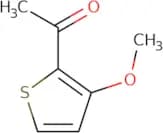
1-(3-Methoxythiophen-2-yl)ethan-1-one
CAS:Versatile small molecule scaffold
Fórmula:C7H8O2SPureza:Min. 95%Peso molecular:156.2 g/mol5-Amino-1-(4-chlorophenyl)-1H-pyrazole-4-carbonitrile
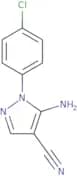
CAS:Versatile small molecule scaffoldFórmula:C10H7ClN4Pureza:Min. 95%Peso molecular:218.64 g/mol2-Methoxyethylsulfonyl chloride
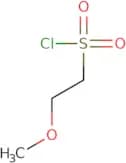
CAS:2-Methoxyethylsulfonyl chloride is a hydroxide and sulfene compound. It has two forms: reversible and irreversible. The reversible form is composed of a carbanion, chloride, and organic compounds. The irreversible form is composed of a hydrolysis product, an anion, and organic compounds. 2-Methoxyethylsulfonyl chloride can be used as an intermediate in the production of other chemicals or pharmaceuticals. It also has been shown to be an effective agent for the synthesis of carboxylic acids from alcohols.Fórmula:C3H7ClO3SPureza:Min. 95%Peso molecular:158.6 g/mol2-(Ethylsulfanyl)-1,1-dimethoxyethane
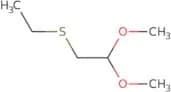
CAS:Versatile small molecule scaffoldFórmula:C6H14O2SPureza:Min. 95%Peso molecular:150.24 g/mol5-(4-Hydroxyphenyl) tetrazole
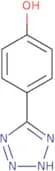
CAS:5-(4-Hydroxyphenyl) tetrazole is a hydrophobic ligand that has been shown to bind to cisplatin and therefore may have potential use in cancer therapy. It has also been used as an anti-inflammatory agent with the potential to inhibit prostaglandin synthesis. 5-(4-Hydroxyphenyl) tetrazole binds to hydrogen peroxide, which is a strong oxidizing agent and produces reactive oxygen species (ROS). ROS can cause DNA damage and lead to cell death by apoptosis or necrosis. 5-(4-Hydroxyphenyl) tetrazole reacts with cisplatin, which is a chemotherapeutic agent that is used in the treatment of various types of cancer. Cisplatin binds to DNA and prevents replication, leading to cell death. Hydrophobic ligands such as 5-(4-Hydroxyphenyl) tetrazole are able to bind more tightly than other ligands because
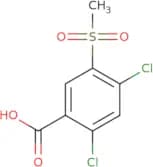
Fórmula:C7H6N4OPureza:Min. 95%Peso molecular:162.15 g/mol2,4-Dichloro-5-methanesulfonylbenzoic acid
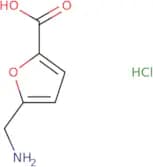
CAS:Versatile small molecule scaffoldFórmula:C8H6Cl2O4SPureza:Min. 95%Peso molecular:269.1 g/mol5-(Aminomethyl)furan-2-carboxylic acid hydrochloride
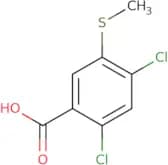
CAS:5-(Aminomethyl)furan-2-carboxylic acid hydrochloride is a monomer that belongs to the group of furans. It is soluble in solvents such as water, ethanol and acetone. 5-(Aminomethyl)furan-2-carboxylic acid hydrochloride can be used as a colorant for plastics and rubbers, or it can be used as an intermediate for other chemicals. This compound has been shown to be easily prepared by the catalyzed reaction of furfurylamine with sodium hydroxide and subsequent oxidation with sodium hypochlorite. The synthesis of this molecule requires a multistep procedure involving the preparation of 5-hydroxybenzoic acid by oxidation with nitric acid, followed by amination with ammonia in methanol, conversion to the corresponding amine salt, and finally hydrolysis of the amine salt in dilute hydrochloric acid.Fórmula:C6H8ClNO3Pureza:Min. 95%Peso molecular:177.58 g/mol2,4-Dichloro-5-(methylsulfanyl)benzoic acid
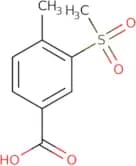
CAS:Versatile small molecule scaffoldFórmula:C8H6Cl2O2SPureza:Min. 95%Peso molecular:237.1 g/mol3-Methanesulfonyl-4-methylbenzoic acid
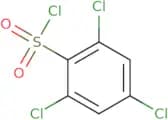
CAS:Versatile small molecule scaffoldFórmula:C9H10O4SPureza:Min. 95%Peso molecular:214.24 g/mol2,4,6-Trichlorobenzenesulfonyl chloride
CAS:2,4,6-Trichlorobenzenesulfonyl chloride is a sulfonylating agent that is used to treat metabolic disorders and iron metabolism. It is also used as an x-ray contrast agent for the detection of certain types of cancers. In addition, 2,4,6-trichlorobenzenesulfonyl chloride has been shown to have anti-inflammatory properties in chronic inflammatory diseases. This drug can be used to inhibit the synthesis of hepcidin by blocking the catalytic activity of ferrochelatase. 2,4,6-trichlorobenzenesulfonyl chloride may also be able to reduce inflammation by its ability to form reactive chlorides that react with alcohols and aldehydes. This can lead to deficiency symptoms such as chronic inflammatory disease or alcohol intolerance.
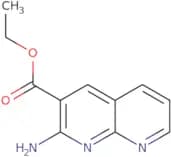
Fórmula:Cl3C6H2SO2ClPureza:Min. 95%Peso molecular:279.96 g/molEthyl 2-amino-1,8-naphthyridine-3-carboxylate
CAS:Versatile small molecule scaffoldFórmula:C11H11N3O2Pureza:Min. 95%Peso molecular:217.22 g/molThiophene-3-carboximidamide hydrochloride
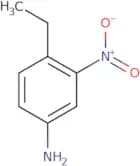
CAS:Versatile small molecule scaffoldFórmula:C5H7ClN2SPureza:Min. 95%Peso molecular:162.64 g/mol4-Ethyl-3-nitroaniline
CAS:Versatile small molecule scaffold
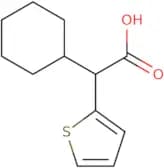
Fórmula:C8H10N2O2Pureza:Min. 95%Peso molecular:166.18 g/mol2-Cyclohexyl-2-(thiophen-2-yl)acetic acid
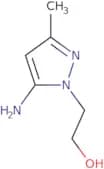
CAS:Versatile small molecule scaffoldFórmula:C12H16O2SPureza:Min. 95%Peso molecular:224.32 g/mol2-(5-Amino-3-methyl-1H-pyrazol-1-yl)ethanol
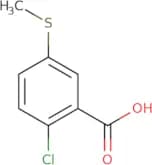
CAS:Versatile small molecule scaffoldFórmula:C6H11N3OPureza:Min. 95%Peso molecular:141.17 g/mol2-Chloro-5-(methylthio)benzoic acid
CAS:Versatile small molecule scaffoldFórmula:C8H7ClO2SPureza:Min. 95%Peso molecular:202.66 g/mol3-(Prop-2-en-1-yl)-2-sulfanyl-3H,4H-thieno[2,3-d]pyrimidin-4-one
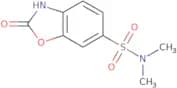
CAS:Versatile small molecule scaffoldFórmula:C9H8N2OS2Pureza:Min. 95%Peso molecular:224.3 g/molN,N-Dimethyl-2-oxo-2,3-dihydro-1,3-benzoxazole-6-sulfonamide
CAS:Versatile small molecule scaffold
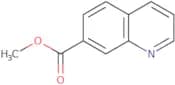
Fórmula:C9H10N2O4SPureza:Min. 95%Peso molecular:242.25 g/molMethyl quinoline-7-carboxylate
CAS:Methyl quinoline-7-carboxylate is a molecule that inhibits angiotensin-converting enzyme (ACE) and prevents the conversion of angiotensin I to angiotensin II. It also has antihypertensive activity in mice, as well as an antihypertensive effect in transgenic mice with hypertension. Methyl quinoline-7-carboxylate is a nonpeptide inhibitor that has been shown to be effective in treating hypertension in transgenic mouse models. This drug was discovered by scientists at Eli Lilly and Company, who used a mouse model to study the effects of the drug on blood pressure. Methyl quinoline-7-carboxylate is an enantiomeric mixture of two molecules, which are mirror images of each other. The two molecules have identical chemical structures but different spatial arrangements. One of the two molecules is more potent than the other, but both are active inhibitors of ACE and have anti
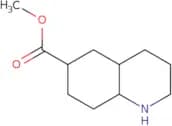
Fórmula:C11H9NO2Pureza:Min. 95%Peso molecular:187.19 g/molMethyl decahydroquinoline-6-carboxylate
CAS:Versatile small molecule scaffoldFórmula:C11H19NO2Pureza:Min. 95%Peso molecular:197.27 g/mol


![3-(Prop-2-en-1-yl)-2-sulfanyl-3H,4H-thieno[2,3-d]pyrimidin-4-one](/_next/image/?url=https%3A%2Fstatic.cymitquimica.com%2Fproducts%2F3D%2Fthumb-webp%2FBCA55004.webp&w=3840&q=75)