Building Blocks
Esta sección contiene productos fundamentales para la síntesis de compuestos orgánicos y biológicos. Building blocks son los materiales de partida esenciales utilizados para construir moléculas complejas a través de diversas reacciones químicas. Desempeñan un papel crítico en el descubrimiento de fármacos, la ciencia de materiales y la investigación química. En CymitQuimica, ofrecemos una gama diversa de building blocks de alta calidad para apoyar sus investigaciones innovadoras y proyectos industriales, asegurando que tenga los componentes esenciales para una síntesis exitosa.
Subcategorías de "Building Blocks"
- Ácidos borónicos y derivados del ácido borónico(5.778 productos)
- Building Blocks quirales(1.243 productos)
- Building Blocks de hidrocarburos(6.097 productos)
- Building Blocks orgánicos(61.052 productos)
Se han encontrado 201390 productos de "Building Blocks"
Ordenar por
Pureza (%)
0
100
|
0
|
50
|
90
|
95
|
100
1-[4-Bromo-2-(trifluoromethyl)phenyl]-1H-1,2,3-triazole-4-carboxylic acid
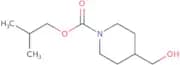
CAS:Versatile small molecule scaffoldFórmula:C10H5BrF3N3O2Pureza:Min. 95%Peso molecular:336.06 g/mol2-Methylpropyl 4-(hydroxymethyl)piperidine-1-carboxylate
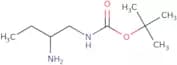
CAS:Versatile small molecule scaffoldFórmula:C11H21NO3Pureza:Min. 95%Peso molecular:215.29 g/moltert-Butyl N-(2-aminobutyl)carbamate
CAS:Versatile small molecule scaffoldFórmula:C9H20N2O2Pureza:Min. 95%Peso molecular:188.27 g/mol3-[5-(2-Bromo-5-methoxyphenyl)-1,3,4-oxadiazol-2-yl]propanoic acid
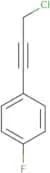
CAS:Versatile small molecule scaffoldFórmula:C12H11BrN2O4Pureza:Min. 95%Peso molecular:327.13 g/mol1-(3-Chloroprop-1-yn-1-yl)-4-fluorobenzene
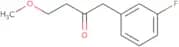
CAS:<p>Versatile small molecule scaffold</p>Fórmula:C9H6ClFPureza:Min. 95%Peso molecular:168.59 g/mol1-(3-Fluorophenyl)-4-methoxybutan-2-one
CAS:Versatile small molecule scaffoldFórmula:C11H13FO2Pureza:Min. 95%Peso molecular:196.22 g/mol[(5-Bromo-2-fluorophenyl)methyl](2,2-dimethoxyethyl)amine
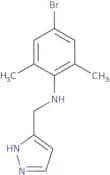
CAS:<p>Versatile small molecule scaffold</p>Fórmula:C11H15BrFNO2Pureza:Min. 95%Peso molecular:292.14 g/mol4-Bromo-2,6-dimethyl-N-(1H-pyrazol-3-ylmethyl)aniline
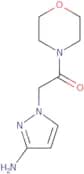
CAS:Versatile small molecule scaffoldFórmula:C12H14BrN3Pureza:Min. 95%Peso molecular:280.16 g/mol2-(3-Amino-1H-pyrazol-1-yl)-1-(morpholin-4-yl)ethan-1-one
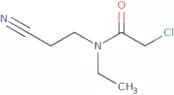
CAS:Versatile small molecule scaffoldFórmula:C9H14N4O2Pureza:Min. 95%Peso molecular:210.23 g/mol2-Chloro-N-(2-cyanoethyl)-N-ethylacetamide
CAS:<p>Versatile small molecule scaffold</p>Fórmula:C7H11ClN2OPureza:Min. 95%Peso molecular:174.63 g/mol1-[(tert-Butoxy)carbonyl]-1,2,3,4-tetrahydroquinoline-5-carboxylic acid
CAS:Versatile small molecule scaffoldFórmula:C15H19NO4Pureza:Min. 95%Peso molecular:277.31 g/mol2-Amino-2-methyl-N-[3-(pyrrolidin-1-yl)phenyl]pentanamide
CAS:Versatile small molecule scaffoldFórmula:C16H25N3OPureza:Min. 95%Peso molecular:275.39 g/mol1-[(4-Methoxy-3,5-dimethylpyridin-2-yl)methyl]-N-methylpiperidin-4-amine
CAS:<p>Versatile small molecule scaffold</p>Fórmula:C15H25N3OPureza:Min. 95%Peso molecular:263.38 g/mol(2-Aminoethyl)[(2,4-dimethoxyphenyl)methyl]amine
CAS:Versatile small molecule scaffoldFórmula:C11H18N2O2Pureza:Min. 95%Peso molecular:210.27 g/mol(Butan-2-yl)[3-(3-chlorophenoxy)-2-hydroxypropyl]amine
CAS:Versatile small molecule scaffoldFórmula:C13H20ClNO2Pureza:Min. 95%Peso molecular:257.75 g/mol(2,2-Dimethoxyethyl)[(4-ethylphenyl)methyl]amine
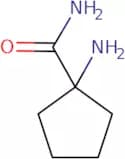
CAS:Versatile small molecule scaffoldFórmula:C13H21NO2Pureza:Min. 95%Peso molecular:223.31 g/mol1-Amino-1-cyclopentanecarboxamide
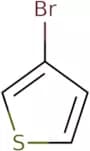
CAS:1-Amino-1-cyclopentanecarboxamide is a bicyclic heterocycle that has been shown to have therapeutic effects in the treatment of autoimmune diseases and cancer. It is structurally related to chemokines, which are cytokines that induce inflammatory responses by activating the immune system. 1-Amino-1-cyclopentanecarboxamide binds to specific receptors on white blood cells, resulting in an increase in the production of chemokines and other proinflammatory molecules. This leads to an increase in inflammation, as well as an increase in blood pressure. The chemical also has anti-inflammatory properties and can be used for the treatment of inflammatory diseases such as arthritis. 1-Amino-1-cyclopentanecarboxamide has been shown to inhibit cancer cell growth by inducing apoptosis (programmed cell death).Fórmula:C6H12N2OPureza:Min. 95%Forma y color:PowderPeso molecular:128.17 g/mol3-Bromothiophene
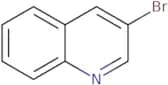
CAS:3-Bromothiophene is a homogeneous catalyst that can be used in organic synthesis. It has been shown to convert all-trans retinoic acid into 9-cis,11-trans retinoic acid. This conversion occurs through nucleophilic attack of the bromide ion on the carbon atom adjacent to the double bond in the carboxyl group of all-trans retinoic acid. 3-Bromothiophene has also been shown to have light emission properties in polymer films and metal halides.Fórmula:C4H3BrSPureza:Min. 98%Forma y color:Colorless Clear LiquidPeso molecular:163.04 g/mol3-Bromoquinoline
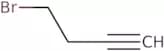
CAS:<p>3-Bromoquinoline is a brominated quinoline derivative that can be synthesized by cross-coupling reactions. The compound's chemical structure is similar to the 3-azidoquinoline, which was studied in quantum theory and molecular modeling. The 3-bromoquinoline molecule has been shown to exist in two different coordination geometries: octahedral and trigonal bipyramidal. In the octahedral geometry, the 3-bromoquinoline molecule is bound to three bromine atoms and one nitrogen atom, with an intramolecular hydrogen bond between the nitrogen atom and the quinoline ring system. The trigonal bipyramidal geometry also features an intramolecular hydrogen bond between the nitrogen atom and quinoline ring system, as well as a halogen bonding interaction with one of the three bromine atoms.</p>Fórmula:C9H6BrNPureza:Min. 95%Forma y color:Yellow PowderPeso molecular:208.05 g/mol4-Bromo-1-butyne
CAS:4-Bromo-1-butyne is an organic chemical compound that is used as a precursor in the synthesis of pharmaceuticals and agrochemicals. 4-Bromo-1-butyne has been shown to inhibit the growth of T-cell leukemia cells, murine leukemia cells, tuberculosis, and colorectal adenocarcinoma. In addition, 4-Bromo-1-butyne has been shown to be active against bacteria when conjugated with a variety of functional groups such as sulfonamides or amines. The synthetic route for this compound starts from styrene and bromination using NBS followed by 1,4-addition of butyne to the bromide. This process produces a mixture of cis and trans isomers which are separated by chromatography on silica gel.Fórmula:C4H5BrPureza:Min. 95%Forma y color:Clear LiquidPeso molecular:132.99 g/mol
![1-[4-Bromo-2-(trifluoromethyl)phenyl]-1H-1,2,3-triazole-4-carboxylic acid](/_next/image/?url=https%3A%2Fstatic.cymitquimica.com%2Fproducts%2F3D%2Fthumb-webp%2FEXB50709.webp&w=3840&q=75)

![3-[5-(2-Bromo-5-methoxyphenyl)-1,3,4-oxadiazol-2-yl]propanoic acid](/_next/image/?url=https%3A%2Fstatic.cymitquimica.com%2Fproducts%2F3D%2Fthumb-webp%2FEXB59156.webp&w=3840&q=75)
amine](/_next/image/?url=https%3A%2Fstatic.cymitquimica.com%2Fproducts%2F3D%2Fthumb-webp%2FEXB60864.webp&w=3840&q=75)
![1-[(tert-Butoxy)carbonyl]-1,2,3,4-tetrahydroquinoline-5-carboxylic acid](/_next/image/?url=https%3A%2Fstatic.cymitquimica.com%2Fproducts%2F3D%2Fthumb-webp%2FEXB62221.webp&w=3840&q=75)
![2-Amino-2-methyl-N-[3-(pyrrolidin-1-yl)phenyl]pentanamide](/_next/image/?url=https%3A%2Fstatic.cymitquimica.com%2Fproducts%2F3D%2Fthumb-webp%2FEXB62510.webp&w=3840&q=75)
![1-[(4-Methoxy-3,5-dimethylpyridin-2-yl)methyl]-N-methylpiperidin-4-amine](/_next/image/?url=https%3A%2Fstatic.cymitquimica.com%2Fproducts%2F3D%2Fthumb-webp%2FEXB62525.webp&w=3840&q=75)
![(2-Aminoethyl)[(2,4-dimethoxyphenyl)methyl]amine](/_next/image/?url=https%3A%2Fstatic.cymitquimica.com%2Fproducts%2F3D%2Fthumb-webp%2FEXB62686.webp&w=3840&q=75)
![(Butan-2-yl)[3-(3-chlorophenoxy)-2-hydroxypropyl]amine](/_next/image/?url=https%3A%2Fstatic.cymitquimica.com%2Fproducts%2F3D%2Fthumb-webp%2FEXB63355.webp&w=3840&q=75)
![(2,2-Dimethoxyethyl)[(4-ethylphenyl)methyl]amine](/_next/image/?url=https%3A%2Fstatic.cymitquimica.com%2Fproducts%2F3D%2Fthumb-webp%2FEXB63443.webp&w=3840&q=75)