Building Blocks
Esta sección contiene productos fundamentales para la síntesis de compuestos orgánicos y biológicos. Building blocks son los materiales de partida esenciales utilizados para construir moléculas complejas a través de diversas reacciones químicas. Desempeñan un papel crítico en el descubrimiento de fármacos, la ciencia de materiales y la investigación química. En CymitQuimica, ofrecemos una gama diversa de building blocks de alta calidad para apoyar sus investigaciones innovadoras y proyectos industriales, asegurando que tenga los componentes esenciales para una síntesis exitosa.
Subcategorías de "Building Blocks"
- Ácidos borónicos y derivados del ácido borónico(5.778 productos)
- Building Blocks quirales(1.242 productos)
- Building Blocks de hidrocarburos(6.098 productos)
- Building Blocks orgánicos(61.059 productos)
Se han encontrado 199579 productos de "Building Blocks"
Ordenar por
Pureza (%)
0
100
|
0
|
50
|
90
|
95
|
100
5-(Methoxycarbonyl)furan-2-carboxylic acid
CAS:<p>5-(Methoxycarbonyl)furan-2-carboxylic acid is a chemical that can be used as a feedstock for the production of chemicals such as polymers, plastics, and pharmaceuticals. It can be synthesized using an oxidation process involving 5-methoxybenzoic acid as a substrate.</p>Fórmula:C7H6O5Pureza:Min. 95%Peso molecular:170.12 g/mol2-Bromoresorcinol
CAS:<p>2-Bromoresorcinol is a carbonyl compound that has been shown to inhibit farnesyltransferase, an enzyme that mediates the transfer of farnesyl groups. The inhibition of this enzyme leads to a decrease in the production of lipids and other substances essential for cancer cell growth. 2-Bromoresorcinol also inhibits the production of furocoumarins by hydroxide solution, trifluoromethanesulfonic acid, and sodium hydroxide solution. This product can be used as a synthetic intermediate for the synthesis of drugs such as benzofuran derivatives.</p>Fórmula:C6H5BrO2Pureza:Min. 95%Peso molecular:189.01 g/mol2-Methylquinoline-4-carbaldehyde
CAS:<p>Versatile small molecule scaffold</p>Fórmula:C11H9NOPureza:Min. 95%Peso molecular:171.19 g/mol9-azabicyclo[3.3.1]nonane hcl
CAS:<p>9-azabicyclo[3.3.1]nonane hcl is an aliphatic, alcohol oxidant that has radical mechanism and is mediated by hydroxylamine. It can be used in the oxidation of benzyl alcohol to benzaldehyde. This compound also has a catalytic effect on the oxidation of 5-hydroxytryptamine (5-HT) to 5-hydroxyindoleacetic acid (5-HIAA). The product may be used in pharmaceuticals, such as the treatment of depression or anxiety, as well as in oxidations involving aliphatic alcohols. The activation energy for this reaction is 32 kcal/mol at 25°C and atmospheric pressure.</p>Fórmula:C8H16ClNPureza:Min. 95%Peso molecular:161.67 g/molD-Xylopyranose
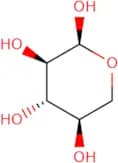
CAS:<p>D-Xylopyranose is a sugar with the chemical formula C5H10O5. It is a potent antagonist of sweet taste, which may be due to its ability to bind to the sweet receptor on the tongue. D-Xylopyranose can also be used as an analytical reagent in analytical chemistry and has been shown to have anti-inflammatory properties. D-Xylopyranose can be hydrolyzed by acid or base into two molecules of l-arabinose and one molecule of water, and is composed of five carbon atoms, 10 hydrogen atoms, one oxygen atom, and one hydroxyl group. The structure of D-xylopyranose contains a terminal residue (e.g., l-arabinose) that can form glycosidic bonds with other sugars such as glucose or sucrose to form disaccharides such as maltose or sucrose.</p>Fórmula:C5H10O5Pureza:Min. 95%Peso molecular:150.13 g/mol5-Phenyl-1H-imidazol-2-amine
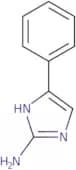
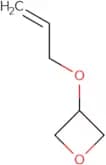
CAS:<p>5-Phenyl-1H-imidazol-2-amine is a marine alkaloid that has been shown to have antibacterial activity. It is active against both Gram-positive and Gram-negative bacteria, as well as fungi. 5-Phenyl-1H-imidazol-2-amine has also been shown to inhibit the growth of Escherichia coli and Staphylococcus aureus. This compound is not active against Sarcina lutea, Enterobacter cloacae, Pseudomonas aeruginosa, Proteus vulgaris, or Klebsiella pneumoniae.</p>Fórmula:C9H9N3Pureza:Min. 95%Peso molecular:159.19 g/mol3-(Allyloxy)oxetane
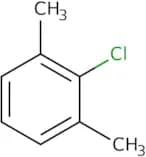
CAS:<p>3-(Allyloxy)oxetane is a monomer that has been found to be an effective adhesive. It is synthesized by the reaction of allyl alcohol with oxetane in the presence of base. 3-(Allyloxy)oxetane is used as an adhesive in textile manufacturing, paper coating, and sealing windows. It has also been found to be a promising material for use in sealants and adhesives.</p>Fórmula:C6H10O2Pureza:Min. 95%Peso molecular:114.14 g/mol2-Chloro-m-xylene
CAS:<p>2-Chloro-m-xylene is a nucleophilic reagent that is used for the Suzuki coupling reaction. It reacts with amines to produce chloroalkyl amines and can be used as a cross-coupling agent for the synthesis of halides or palladium complexes. 2-Chloro-m-xylene has been shown to react with chloride ion to form an optimal reaction, which proceeds at low temperature, in the presence of copper chloride. The chlorine atom in this compound is very reactive and has a nucleophilic nature, which allows it to react with other molecules. This property makes 2-chloro-m-xylene an excellent reagent for the synthesis of organic compounds.</p>Fórmula:C8H9ClPureza:Min. 95%Peso molecular:140.61 g/mol3-[(2-Furylmethyl)amino]propanenitrile
CAS:<p>Versatile small molecule scaffold</p>Fórmula:C8H10N2OPureza:Min. 95%Peso molecular:150.18 g/mol4,5,6,7-Tetrahydro-1H-1,2,3-benzotriazole
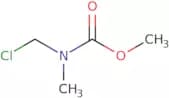
CAS:<p>Versatile small molecule scaffold</p>Fórmula:C6H9N3Pureza:Min. 95%Peso molecular:123.16 g/molMethyl N-(chloromethyl)-N-methylcarbamate
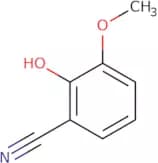
CAS:<p>Versatile small molecule scaffold</p>Fórmula:C4H8ClNO2Pureza:Min. 95%Peso molecular:137.56 g/mol2-Hydroxy-3-methoxybenzenecarbonitrile
CAS:<p>2-Hydroxy-3-methoxybenzenecarbonitrile (2HMB) is a reagent that is used in the synthesis of benzofurans. It is an analog of 2,2'-dichlorodiethyl carbonate. The reaction mechanism involves the conversion of 2HMB to 2-chloro-3-methoxybenzenecarbonitrile, followed by the elimination of chloride to yield 3-hydroxybenzofuran. This reagent also has the ability to catalyze reactions such as demethylation and alkylations.</p>Fórmula:C8H7NO2Pureza:Min. 95%Peso molecular:149.15 g/mol2,3-Dihydro-1,4-benzoxathiine
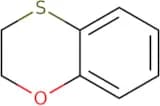
CAS:<p>2,3-Dihydro-1,4-benzoxathiine is a chemical compound that blocks the action of ethylene. It is an antimycotic and has been used to treat fungal infections. The structure of 2,3-dihydro-1,4-benzoxathiine is similar to that of the estrogen molecule and it binds to the estrogen receptor with high affinity. This drug also acts as a selective serotonin receptor ligand and binds selectively to serotonin receptors. In addition, this drug has been shown to act on the nucleus by inhibiting melatonin synthesis in rats.</p>Fórmula:C8H8OSPureza:Min. 95%Peso molecular:152.22 g/mol1,4-Dioxa-8-azaspiro[4.5]decan-7-one
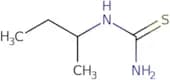
CAS:<p>Versatile small molecule scaffold</p>Fórmula:C7H11NO3Pureza:Min. 95%Peso molecular:157.17 g/mol(Butan-2-yl)thiourea
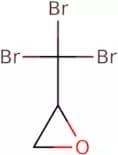
CAS:<p>Versatile small molecule scaffold</p>Fórmula:C5H12N2SPureza:Min. 95%Peso molecular:132.23 g/mol2-(Tribromomethyl)oxirane
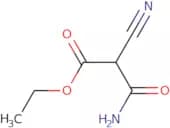
CAS:<p>Versatile small molecule scaffold</p>Fórmula:C3H3Br3OPureza:Min. 95%Peso molecular:294.77 g/molEthyl 2-carbamoyl-2-cyanoacetate
CAS:<p>Versatile small molecule scaffold</p>Fórmula:C6H8N2O3Pureza:Min. 95%Peso molecular:156.14 g/mol4-Amino-1H-pyrazolo[3,4-d]pyrimidine-3-carbonitrile
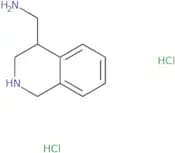
CAS:<p>Versatile small molecule scaffold</p>Fórmula:C6H4N6Pureza:Min. 95%Peso molecular:160.14 g/mol(1,2,3,4-Tetrahydroisoquinolin-4-yl)methanamine dihydrochloride
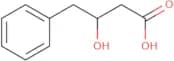
CAS:<p>Versatile small molecule scaffold</p>Fórmula:C10H16Cl2N2Pureza:Min. 95%Peso molecular:235.15 g/mol3-Hydroxy-4-phenylbutanoic acid
CAS:<p>3-Hydroxy-4-phenylbutanoic acid is a chemical compound that is used in the synthesis of medicines. It is a stereospecific, water soluble, and soluble form of butyric acid. 3-Hydroxy-4-phenylbutanoic acid can be synthesized by Streptomyces coelicolor through biosynthesis. This process involves two steps: the first step is the synthesis of butyryl coenzyme A from acetone and acetoacetate; and the second step is the conversion of butyryl coenzyme A to 3-(3-hydroxyphenyl)-4-(1,1,2,2,-tetrafluoroethyl)butyric acid. The use of this compound as a carbon source in high temperature cultures has been shown to increase production of other metabolites such as antibiotics.</p>Fórmula:C10H12O3Pureza:Min. 95%Peso molecular:180.2 g/mol


![9-azabicyclo[3.3.1]nonane hcl](/_next/image/?url=https%3A%2Fstatic.cymitquimica.com%2Fproducts%2F3D%2Fthumb-webp%2FGAA76043.webp&w=3840&q=75)
![3-[(2-Furylmethyl)amino]propanenitrile](/_next/image/?url=https%3A%2Fstatic.cymitquimica.com%2Fproducts%2F3D%2Fthumb-webp%2FGAA78868.webp&w=3840&q=75)

![1,4-Dioxa-8-azaspiro[4.5]decan-7-one](/_next/image/?url=https%3A%2Fstatic.cymitquimica.com%2Fproducts%2F3D%2Fthumb-webp%2FGAA81354.webp&w=3840&q=75)
![4-Amino-1H-pyrazolo[3,4-d]pyrimidine-3-carbonitrile](/_next/image/?url=https%3A%2Fstatic.cymitquimica.com%2Fproducts%2F3D%2Fthumb-webp%2FGAA82696.webp&w=3840&q=75)