Building Blocks
Esta sección contiene productos fundamentales para la síntesis de compuestos orgánicos y biológicos. Building blocks son los materiales de partida esenciales utilizados para construir moléculas complejas a través de diversas reacciones químicas. Desempeñan un papel crítico en el descubrimiento de fármacos, la ciencia de materiales y la investigación química. En CymitQuimica, ofrecemos una gama diversa de building blocks de alta calidad para apoyar sus investigaciones innovadoras y proyectos industriales, asegurando que tenga los componentes esenciales para una síntesis exitosa.
Subcategorías de "Building Blocks"
- Ácidos borónicos y derivados del ácido borónico(5.756 productos)
- Building Blocks quirales(1.242 productos)
- Building Blocks de hidrocarburos(6.093 productos)
- Building Blocks orgánicos(60.525 productos)
Se han encontrado 195533 productos de "Building Blocks"
Ordenar por
Pureza (%)
0
100
|
0
|
50
|
90
|
95
|
100
7',8'-Dihydro-6'H-spiro[azetidine-3,5'-imidazo[1,2-a]pyrimidine]-7'-one dihydrochloride
CAS:<p>Versatile small molecule scaffold</p>Fórmula:C8H12Cl2N4OPureza:Min. 95%Peso molecular:251.11 g/molRef: 3D-MKD83202
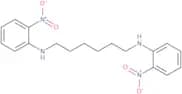
Producto descatalogadoN(1),N(6)-Bis(2-nitrophenyl)-1,6-hexanediamine
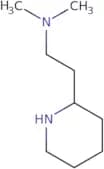
CAS:<p>Versatile small molecule scaffold</p>Fórmula:C18H22N4O4Pureza:Min. 95%Peso molecular:358.4 g/molN,N-Dimethyl-2-(2-piperidinyl)-1-ethanaminedihydrochloride
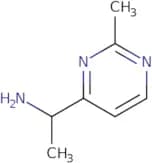
CAS:<p>Versatile small molecule scaffold</p>Fórmula:C9H22Cl2N2Pureza:Min. 95%Peso molecular:229.2 g/mol1-(2-Methylpyrimidin-4-yl)ethan-1-amine
CAS:<p>Versatile small molecule scaffold</p>Fórmula:C7H11N3Pureza:Min. 95%Peso molecular:137.18 g/molRef: 3D-JJC20141
Producto descatalogado4-Chloro-3,3-dimethylbutan-2-one
CAS:<p>Versatile small molecule scaffold</p>Fórmula:C6H11ClOPureza:Min. 95%Peso molecular:134.6 g/molRef: 3D-NAA10453
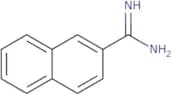
Producto descatalogadoNaphthalene-2-carboximidamide
CAS:<p>Naphthalene-2-carboximidamide is a benzamidine derivative that interacts with the active site of serine proteases. It was shown to have potent inhibitory potency against a number of proteinases, including urokinase-type plasminogen activator (uPA), matrix metalloproteinase-9 (MMP-9), and cathepsin G. The interaction of naphthalene-2-carboximidamide with uPA was specific and led to inhibition of its catalytic activity. Naphthalene-2-carboximidamide has been tested in clinical trials for the treatment of influenza.</p>Fórmula:C11H10N2Pureza:Min. 95%Peso molecular:170.21 g/mol2-Cyclohexyl-1,3-thiazole-5-carbaldehyde
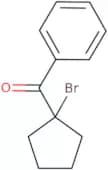
CAS:<p>Versatile small molecule scaffold</p>Fórmula:C10H13NOSPureza:Min. 95%Peso molecular:195.28 g/mol(1-Bromocyclopentyl)(phenyl)methanone
CAS:<p>Versatile small molecule scaffold</p>Fórmula:C12H13BrOPureza:Min. 95%Peso molecular:253.13 g/molMethyl-2-benzyl-5-methyl-octahydro-1H-pyrrolo[3,4-c]pyridine-7a-carboxylate
CAS:<p>Versatile small molecule scaffold</p>Fórmula:C17H24N2O2Pureza:Min. 95%Peso molecular:288.4 g/mol5-Amino-3-methyl-4-isoxazolecarboxamide
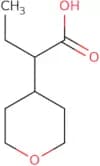
CAS:<p>Versatile small molecule scaffold</p>Fórmula:C5H7N3O2Pureza:Min. 95%Peso molecular:141.13 g/mol2-(Oxan-4-yl)butanoic acid
CAS:<p>Versatile small molecule scaffold</p>Fórmula:C9H16O3Pureza:Min. 95%Peso molecular:172.22 g/mol2-Bromo-3,3,3-trifluoro-1-propene
CAS:Producto controlado<p>2-Bromo-3,3,3-trifluoro-1-propene is a chemical compound that has been synthesized in an asymmetric reaction. The reactant is bromopropane and the product is 2,2,2-trifluoropropene. The methylene group on the propene molecule is activated by the nucleophilic attack of a fluoride ion from hydrogen fluoride to form a cavity with a highly strained bond. The kinetic study of this reaction revealed that the activation energy for the reaction is 42 kJ/mol. Palladium-catalyzed coupling reactions are catalyzed by palladium and require nonpolar solvents such as toluene or dichloromethane. This type of reaction has been shown to be exothermic with an isolated yield of 1%.</p>Fórmula:C3H2BrF3Pureza:Min. 95%Forma y color:Colorless PowderPeso molecular:174.95 g/mol2-Cyano-5-fluorophenol
CAS:<p>2-Cyano-5-fluorophenol is an organic compound that is used as a precursor to medicines and other chemicals. It reacts with calcium hydroxide in water to form 2-cyano-5-hydroxyfluorobenzene, which can be hydrolyzed to form 2-cyano-5-chlorofluorobenzene. This compound can also react with sodium hydroxide to produce sodium cyanate, which can be hydrolyzed to form sodium chloride and hydrogen cyanide gas. The alkali metal ions are needed for this reaction, which is why the product should not be exposed to water or moisture. 2-Cyano-5-fluorophenol has been shown to have liquid crystal properties and is used in the production of certain types of polymers. 2Cyano-5Fluorophenol crystals are also used in some medicines such as acetaminophen (paracetamol).</p>Fórmula:C7H4FNOPureza:Min. 95%Peso molecular:137.11 g/mol
![7',8'-Dihydro-6'H-spiro[azetidine-3,5'-imidazo[1,2-a]pyrimidine]-7'-one dihydrochloride](/_next/image/?url=https%3A%2Fstatic.cymitquimica.com%2Fproducts%2F3D%2Fthumb-webp%2FMKD83202.webp&w=3840&q=75)



![Methyl-2-benzyl-5-methyl-octahydro-1H-pyrrolo[3,4-c]pyridine-7a-carboxylate](/_next/image/?url=https%3A%2Fstatic.cymitquimica.com%2Fproducts%2F3D%2Fthumb-webp%2FVXC57025.webp&w=3840&q=75)