Building Blocks
Esta sección contiene productos fundamentales para la síntesis de compuestos orgánicos y biológicos. Building blocks son los materiales de partida esenciales utilizados para construir moléculas complejas a través de diversas reacciones químicas. Desempeñan un papel crítico en el descubrimiento de fármacos, la ciencia de materiales y la investigación química. En CymitQuimica, ofrecemos una gama diversa de building blocks de alta calidad para apoyar sus investigaciones innovadoras y proyectos industriales, asegurando que tenga los componentes esenciales para una síntesis exitosa.
Subcategorías de "Building Blocks"
- Ácidos borónicos y derivados del ácido borónico(5.778 productos)
- Building Blocks quirales(1.243 productos)
- Building Blocks de hidrocarburos(6.098 productos)
- Building Blocks orgánicos(61.057 productos)
Se han encontrado 200710 productos de "Building Blocks"
Ordenar por
Pureza (%)
0
100
|
0
|
50
|
90
|
95
|
100
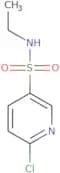
6-Chloro-N-ethylpyridine-3-sulfonamide
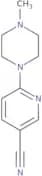
CAS:<p>Versatile small molecule scaffold</p>Fórmula:C7H9ClN2O2SPureza:Min. 95%Peso molecular:220.68 g/mol6-(4-Methylpiperazin-1-yl)nicotinonitrile
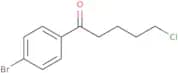
CAS:Versatile small molecule scaffoldFórmula:C11H14N4Pureza:Min. 95%Peso molecular:202.26 g/mol1-(4-Bromophenyl)-5-chloropentan-1-one
CAS:Versatile small molecule scaffoldFórmula:C11H12BrClOPureza:Min. 95%Peso molecular:275.57 g/molbenzyl(2,2-dimethoxyethyl)amine
CAS:<p>Benzyl(2,2-dimethoxyethyl)amine is an amine that is used as a synthetic reagent for the production of threonine. It has been shown to be catalytic in the formation of glycolaldehyde from formaldehyde and threonine. This compound can be synthesized from morpholine and amines with high yields under synthetically mild conditions. Benzyl(2,2-dimethoxyethyl)amine has also been shown to be useful as a chemical reagent for the synthesis of semisynthetic morpholines.</p>Fórmula:C11H17NO2Pureza:Min. 95%Peso molecular:195.26 g/mol1-Benzylazetidin-3-ol
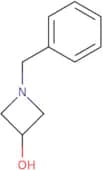
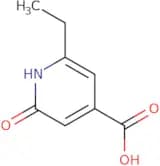
CAS:<p>1-Benzylazetidin-3-ol is a synthetic intermediate for the production of carbapenem, which is an antibiotic that inhibits bacterial cell wall synthesis. This drug has been shown to be effective against human infections in the past and can be administered orally. 1-Benzylazetidin-3-ol is also formed from the reaction of azetidine with an alkali metal chloride in a high yield. The benzyl group and organic solvent are used as a skeleton and residue respectively.</p>Fórmula:C10H13NOPureza:Min. 95%Peso molecular:163.22 g/mol6-Ethyl-2-oxo-1,2-dihydropyridine-4-carboxylic acid
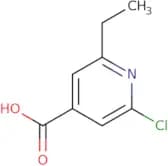
CAS:Versatile small molecule scaffoldFórmula:C8H9NO3Pureza:Min. 95%Peso molecular:167.16 g/mol2-Chloro-6-ethylpyridine-4-carboxylic acid
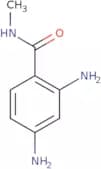
CAS:Versatile small molecule scaffoldFórmula:C8H8ClNO2Pureza:Min. 95%Peso molecular:185.61 g/mol2,4-Diamino-N-methylbenzamide
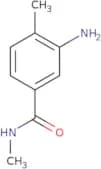
CAS:<p>Versatile small molecule scaffold</p>Fórmula:C8H11N3OPureza:Min. 95%Peso molecular:165.19 g/mol3-Amino-N,4-dimethylbenzamide
CAS:<p>Versatile small molecule scaffold</p>Fórmula:C9H12N2OPureza:Min. 95%Peso molecular:164.2 g/mol3,8-Dioxabicyclo[3.2.1]octane-2,4-dione
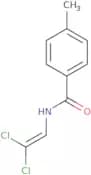
CAS:<p>Versatile small molecule scaffold</p>Fórmula:C6H6O4Pureza:Min. 95%Peso molecular:142.11 g/molN-(2,2-Dichloroethenyl)-4-methylbenzamide
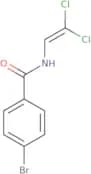
CAS:Versatile small molecule scaffoldFórmula:C10H9Cl2NOPureza:Min. 95%Peso molecular:230.09 g/mol4-Bromo-N-(2,2-dichloroethenyl)benzamide
CAS:<p>Versatile small molecule scaffold</p>Fórmula:C9H6BrCl2NOPureza:Min. 95%Peso molecular:294.96 g/mol2-{[(tert-Butoxy)carbonyl]amino}-2-(3-nitrophenyl)acetic acid
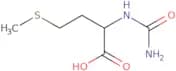
CAS:Versatile small molecule scaffoldFórmula:C13H16N2O6Pureza:Min. 95%Peso molecular:296.3 g/mol(2S)-2-(Carbamoylamino)-4-(methylsulfanyl)butanoic acid
CAS:<p>(2S)-2-(Carbamoylamino)-4-(methylsulfanyl)butanoic acid is a white powder that is soluble in water and organic solvents. It has a viscosity of approximately 1000 cP at 20°C. The pH of the solution is 7-8, with an alkaline character. This compound can be used as an additive to increase the viscosity of water-based liquids, such as soap, shampoo, or bath oil. It also serves as a binding agent for metal ions and organic molecules. (2S)-2-(Carbamoylamino)-4-(methylsulfanyl)butanoic acid can be used in titration calorimetry experiments to determine the amount of heat released during a reaction. This compound binds to proteins and helps catalyze reactions by serving as a racemase substrate binding site on the enzyme surface.</p>Fórmula:C6H12N2O3SPureza:Min. 95%Peso molecular:192.24 g/mol4-[Ethyl(nitroso)amino]butanoic acid
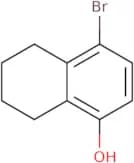
CAS:Versatile small molecule scaffoldFórmula:C6H12N2O3Pureza:Min. 95%Peso molecular:160.17 g/mol4-Bromo-5,6,7,8-tetrahydronaphthalen-1-ol
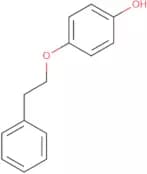
CAS:Versatile small molecule scaffoldFórmula:C10H11BrOPureza:Min. 95%Peso molecular:227.1 g/mol4-(2-Phenylethoxy)phenol
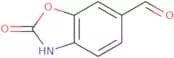
CAS:4-(2-Phenylethoxy)phenol is a semiquinone that has been shown to react with styrene by reoxidizing the latter to styrene oxide and phenol. The kinetics of this reaction have been investigated using kinetic studies. 4-(2-Phenylethoxy)phenol reacts with ethers to form hydroquinones, which are also semiquinones. The stability constants for these reactions have been determined. 4-(2-Phenylethoxy)phenol has also been shown to be an intramolecular radical, which can react with hydroquinones to form quinones. These reactions are all reversible, and the kinetic parameters for these reactions have been determined.Fórmula:C14H14O2Pureza:Min. 95%Peso molecular:214.26 g/mol2-Oxo-2,3-dihydro-1,3-benzoxazole-6-carbaldehyde
CAS:<p>Versatile small molecule scaffold</p>Fórmula:C8H5NO3Pureza:Min. 95%Peso molecular:163.13 g/mol2-Oxo-2,3-dihydro-1,3-benzoxazole-6-carboxylic acid
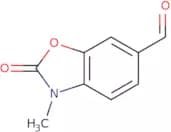
CAS:Versatile small molecule scaffoldFórmula:C8H5NO4Pureza:Min. 95%Peso molecular:179.13 g/mol3-Methyl-2-oxo-2,3-dihydro-1,3-benzoxazole-6-carbaldehyde
CAS:Versatile small molecule scaffoldFórmula:C9H7NO3Pureza:Min. 95%Peso molecular:177.16 g/mol

![3,8-Dioxabicyclo[3.2.1]octane-2,4-dione](/_next/image/?url=https%3A%2Fstatic.cymitquimica.com%2Fproducts%2F3D%2Fthumb-webp%2FECA88506.webp&w=3840&q=75)
![2-{[(tert-Butoxy)carbonyl]amino}-2-(3-nitrophenyl)acetic acid](/_next/image/?url=https%3A%2Fstatic.cymitquimica.com%2Fproducts%2F3D%2Fthumb-webp%2FECA89527.webp&w=3840&q=75)
![4-[Ethyl(nitroso)amino]butanoic acid](/_next/image/?url=https%3A%2Fstatic.cymitquimica.com%2Fproducts%2F3D%2Fthumb-webp%2FECA89763.webp&w=3840&q=75)