


Building Blocks
Esta sección contiene productos fundamentales para la síntesis de compuestos orgánicos y biológicos. Building blocks son los materiales de partida esenciales utilizados para construir moléculas complejas a través de diversas reacciones químicas. Desempeñan un papel crítico en el descubrimiento de fármacos, la ciencia de materiales y la investigación química. En CymitQuimica, ofrecemos una gama diversa de building blocks de alta calidad para apoyar sus investigaciones innovadoras y proyectos industriales, asegurando que tenga los componentes esenciales para una síntesis exitosa.
Subcategorías de "Building Blocks"
- Ácidos borónicos y derivados del ácido borónico(5.778 productos)
- Building Blocks quirales(1.243 productos)
- Building Blocks de hidrocarburos(6.098 productos)
- Building Blocks orgánicos(61.057 productos)
Se han encontrado 200710 productos de "Building Blocks"
Ordenar por
Pureza (%)
0
100
|
0
|
50
|
90
|
95
|
100
[2-(4-bromophenyl)ethyl](methyl)amine
CAS:Producto controlado<p>Versatile small molecule scaffold</p>Fórmula:C9H12BrNPureza:Min. 95%Peso molecular:214.1 g/mol2,2'-Azanediylbis(N-methylacetamide)
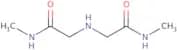
CAS:<p>Versatile small molecule scaffold</p>Fórmula:C6H13N3O2Pureza:Min. 95%Peso molecular:159.19 g/mol2-Piperazin-1-ylmethyl-3H-quinazolin-4-onedihydrochloride
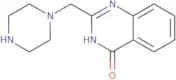
CAS:Versatile small molecule scaffoldFórmula:C13H18Cl2N4OPureza:Min. 95%Peso molecular:317.22 g/mol3-({[1-(2-Methoxyphenyl)ethylidene]amino}oxy)-5-nitroaniline
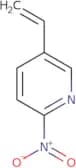
CAS:Versatile small molecule scaffoldFórmula:C15H15N3O4Pureza:Min. 95%Peso molecular:301.3 g/mol5-Ethenyl-2-nitropyridine
CAS:<p>Versatile small molecule scaffold</p>Fórmula:C7H6N2O2Pureza:Min. 95%Peso molecular:150.13 g/mol(2,5-Dichlorothiophen-3-yl)methanesulfonyl chloride
CAS:<p>Versatile small molecule scaffold</p>Fórmula:C5H3Cl3O2S2Pureza:Min. 95%Peso molecular:265.6 g/mol2-[3-(Trifluoromethyl)phenyl]ethanimidamide hydrochloride
CAS:Versatile small molecule scaffoldFórmula:C9H10ClF3N2Pureza:Min. 95%Peso molecular:238.64 g/mol2-Chloroquinoline-3-methanol
CAS:<p>2-Chloroquinoline-3-methanol is a synthetic chemical that is dehydrated to form 2,4-dichloroaniline. It is used as an antimycotic and antibacterial agent for the control of test organisms in the laboratory. 2-Chloroquinoline-3-methanol has been shown to react with amines and quinoline derivatives, resulting in an increase in the functional groups on these molecules. The catalytic activity of this compound can be increased by adding a strong base such as potassium hydroxide or sodium methoxide.</p>Fórmula:C10H8ClNOPureza:Min. 95%Peso molecular:193.63 g/mol1-Cyclohexyl-3-phenylpropan-2-one
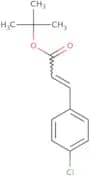
CAS:<p>Versatile small molecule scaffold</p>Fórmula:C15H20OPureza:Min. 95%Peso molecular:216.32 g/moltert-Butyl (2E)-3-(4-chlorophenyl)prop-2-enoate
CAS:Versatile small molecule scaffoldFórmula:C13H15ClO2Pureza:Min. 95%Peso molecular:238.71 g/mol5-(2-Aminoethyl)-2-methoxybenzene-1-sulfonamide hydrochloride
CAS:Producto controladoVersatile small molecule scaffoldFórmula:C9H15ClN2O3SPureza:Min. 95%Peso molecular:266.75 g/mol4,6-Dimethoxypyrimidine-2yl-carbaldehyde
CAS:4,6-Dimethoxypyrimidine-2yl-carbaldehyde is a pyrimidine derivative that can be used in the synthesis of pharmaceuticals.Fórmula:C7H8N2O3Pureza:Min. 95%Peso molecular:168.15 g/mol2-Chloro-N-(4-diethylamino-phenyl)-acetamide
CAS:Versatile small molecule scaffoldFórmula:C12H17ClN2OPureza:Min. 95%Peso molecular:240.73 g/mol2-(Chloromethyl)-1H-perimidine
CAS:<p>2-(Chloromethyl)-1H-perimidine is a cytotoxic and cytostatic agent. It is a nitrogenous organic compound that inhibits the synthesis of DNA and RNA, which are essential for cell division. 2-(Chloromethyl)-1H-perimidine has been shown to have maximal activity against cells in the G2 phase of the cell cycle and minimal activity against cells in the S phase. This agent is also cytotoxic to various types of cancer cells, such as colon adenocarcinoma cells, breast carcinoma cells, leukemia cells, and others.</p>Fórmula:C12H9ClN2Pureza:Min. 95%Peso molecular:216.66 g/molMethyl 2-bromo-3-(bromomethyl)benzoate
CAS:<p>Versatile small molecule scaffold</p>Fórmula:C9H8Br2O2Pureza:Min. 95%Peso molecular:307.97 g/molMethyl 3-amino-6-bromo-2-methylbenzoate
CAS:Versatile small molecule scaffoldFórmula:C9H10BrNO2Pureza:Min. 95%Peso molecular:244.08 g/molMethyl 6-bromo-2-chloro-3-methoxybenzoate
CAS:Versatile small molecule scaffoldFórmula:C9H8BrClO3Pureza:Min. 95%Peso molecular:279.51 g/mol13-Chloro-11-ethyl-1,8-diazatricyclo[7.4.0.0,2,7]trideca-2,4,6,8,10,12-hexaene-10-carbonitrile
CAS:Versatile small molecule scaffoldFórmula:C14H10ClN3Pureza:Min. 95%Peso molecular:255.7 g/mol1-(4-Fluorophenyl)-2-(methylsulfanyl)-1H-imidazole-5-carboxylic acid
CAS:Versatile small molecule scaffoldFórmula:C11H9FN2O2SPureza:Min. 95%Peso molecular:252.27 g/mol2-[2-(Phenoxymethyl)-1H-1,3-benzodiazol-1-yl]acetic acid
CAS:Producto controladoVersatile small molecule scaffoldFórmula:C16H14N2O3Pureza:Min. 95%Peso molecular:282.29 g/mol
amine](/_next/image/?url=https%3A%2Fstatic.cymitquimica.com%2Fproducts%2F3D%2Fthumb-webp%2FAEB68306.webp&w=3840&q=75)

![3-({[1-(2-Methoxyphenyl)ethylidene]amino}oxy)-5-nitroaniline](/_next/image/?url=https%3A%2Fstatic.cymitquimica.com%2Fproducts%2F3D%2Fthumb-webp%2FAEB69874.webp&w=3840&q=75)

![2-[3-(Trifluoromethyl)phenyl]ethanimidamide hydrochloride](/_next/image/?url=https%3A%2Fstatic.cymitquimica.com%2Fproducts%2F3D%2Fthumb-webp%2FAFA90376.webp&w=3840&q=75)




![13-Chloro-11-ethyl-1,8-diazatricyclo[7.4.0.0,2,7]trideca-2,4,6,8,10,12-hexaene-10-carbonitrile](/_next/image/?url=https%3A%2Fstatic.cymitquimica.com%2Fproducts%2F3D%2Fthumb-webp%2FAFB59894.webp&w=3840&q=75)

![2-[2-(Phenoxymethyl)-1H-1,3-benzodiazol-1-yl]acetic acid](/_next/image/?url=https%3A%2Fstatic.cymitquimica.com%2Fproducts%2F3D%2Fthumb-webp%2FAFB59900.webp&w=3840&q=75)