Alcoholes
Subcategorías de "Alcoholes"
Se han encontrado 5813 productos de "Alcoholes"
4-Aminobicyclo[2.2.2]octan-1-ol hydrochloride
CAS:Please enquire for more information about 4-Aminobicyclo[2.2.2]octan-1-ol hydrochloride including the price, delivery time and more detailed product information at the technical inquiry form on this page
Fórmula:C8H15NO•HClPureza:Min. 95%Peso molecular:177.67 g/molRef: 3D-FA63102
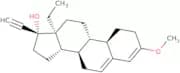
Producto descatalogado(17a)-13-Ethyl-3-methoxy-18,19-dinorpregna-3,5-dien-20-yn-17-ol
CAS:Producto controladoPlease enquire for more information about (17a)-13-Ethyl-3-methoxy-18,19-dinorpregna-3,5-dien-20-yn-17-ol including the price, delivery time and more detailed product information at the technical inquiry form on this pageFórmula:C22H30O2Pureza:Min. 95%Peso molecular:326.47 g/molRef: 3D-FE23118
Producto descatalogado2-Diethylamino)ethanol hydrochloride
CAS:Producto controlado2-Diethylamino)ethanol hydrochloride is a chemical compound that is used in analytical chemistry as a stationary phase for thin layer chromatography. Sephadex G-100 was developed by Pharmacia & Upjohn Company and marketed in the 1970s. It has been shown to be useful in plasma mass spectrometry experiments, which measure the molecular weight of proteins and other compounds. The solubility of 2-diethylamino)ethanol hydrochloride has been studied using experimental solubility data, electrochemical impedance spectroscopy, and amines. The reaction mechanism of 2-diethylamino)ethanol hydrochloride is not well understood but it appears to involve potassium dichromate, hydrochloric acid, fluoroacetic acid, benzalkonium chloride and other chemicals.
Fórmula:C6H16ClNOPureza:Min. 95%Peso molecular:153.65 g/molRef: 3D-FD21828
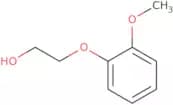
Producto descatalogado2-(2-Methoxyphenoxy)ethanol
CAS:2-(2-Methoxyphenoxy)ethanol (2-MPE) is a metabolite of propanediol, which is a precursor in the synthesis of polyurethanes. 2-MPE can be oxidized by monooxygenases to form syringyl and other reactive metabolites. Basic hydrolysis may also produce monomers such as phenols, alcohols, and carboxylic acids. Syringyl is one of the metabolic products of 2-MPE, which has been shown to be resistant to degradation by basidiomycete fungi.
Fórmula:C9H12O3Pureza:Min. 95%Peso molecular:168.19 g/molRef: 3D-FM58242
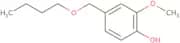
Producto descatalogado4-(Butoxymethyl)-2-methoxyphenol
CAS:4-(Butoxymethyl)-2-methoxyphenol is an antimicrobial agent that has been shown to be effective against Candida glabrata. It is a non-ionic surfactant with a C8 alkyl chain, which is derived from the reaction of butyl alcohol and phenol. 4-(Butoxymethyl)-2-methoxyphenol can be used in oral care products such as toothpaste or mouthwash. This product also has a control analysis for sodium citrate and root powder, which may be due to its fatty acid and magnesium salt content.
Fórmula:C12H18O3Pureza:Min. 95%Peso molecular:210.27 g/molRef: 3D-FB140503
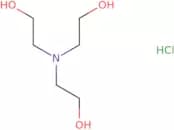
Producto descatalogadoTriethanolamine hydrochloride
CAS:Producto controladoTriethanolamine hydrochloride, widely known as TEA-HCl, is a buffer used in biochemistry to maintain a stable pH in the range of 7.3 to 8.3 during processes like protein extraction and purification. They are also used in enzyme assays.
Fórmula:C6H15NO3·HClPureza:Min. 95%Forma y color:PowderPeso molecular:185.65 g/mol4-[(2,4-Dimethylbenzyl)oxy]butan-1-ol
CAS:Producto controladoPlease enquire for more information about 4-[(2,4-Dimethylbenzyl)oxy]butan-1-ol including the price, delivery time and more detailed product information at the technical inquiry form on this page
Fórmula:C13H20O2Pureza:Min. 95%Peso molecular:208.3 g/molRef: 3D-FD131280
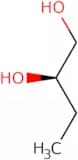
Producto descatalogado(R)-1,2-Butanediol
CAS:(R)-1,2-Butanediol is a chemical compound that is classified as a diol. It has two hydroxyl groups and is an active substance. The (R)-1,2-Butanediol molecule consists of two asymmetric carbon atoms. In the presence of oxygen, it can form a ternary complex with copper and the hydroxyl group. This ternary complex catalyzes the conversion of various substrates such as L-xylulose to its corresponding ketones or L-arabinose to its corresponding acetals. The reaction proceeds via substrate binding to the active site on the ternary complex and subsequent functional group participation in the reaction.
Fórmula:C4H10O2Pureza:Min. 95%Peso molecular:90.12 g/mol(2-Iodophenyl)(2,3,6,7-tetrahydro-1H,5H-benzo[ij]quinolizin-9-yl)methanone
2-Iodophenyl)(2,3,6,7-tetrahydro-1H,5H-benzo[ij]quinolizin-9-yl)methanone is a high quality reagent that can be used as a useful intermediate and building block in the synthesis of complex compounds.
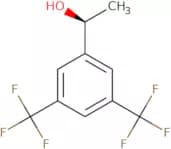
Fórmula:C19H18INOPureza:Min. 95 Area-%Peso molecular:403.26 g/mol(S)-3',5'-Bis(trifluoromethyl)-1-phenethanol
CAS:(S)-3',5'-Bis(trifluoromethyl)-1-phenethanol is a choline derivative that is used in the treatment of liver cancer. It has been shown to increase the permeability of cell membranes and to suppress the growth of tumor cells by inhibiting protein synthesis. (S)-3',5'-Bis(trifluoromethyl)-1-phenethanol can be used as a surfactant and a hydrophobic solvent for optimization of reaction parameters. This chemical also has been shown to be active against Gram-positive bacteria such as Staphylococcus aureus and Enterococcus faecalis, but not against Gram-negative bacteria such as Escherichia coli or Pseudomonas aeruginosa. The mechanism of this effect is mediated by chloride ions that act as bioreductive agents on cellular membranes, leading to increased permeability and cell death.
Fórmula:C10H8F6OPureza:Min. 95%Peso molecular:258.16 g/molRef: 3D-FB18756
Producto descatalogado2-Dimethylaminoethanol (+)-bitartrate salt
CAS:Producto controlado2-Dimethylaminoethanol (+)-bitartrate salt is a potent, reversible inhibitor of protein synthesis that binds reversibly to the 50S ribosomal subunit. It is used in regulatory toxicology and clinical pathology as a positive control for the study of chronic toxicity and long-term effects. 2-Dimethylaminoethanol (+)-bitartrate salt has shown no treatment effect on ovary weight or estrous cycle length in female Sprague-Dawley rats after chronic exposure and long-term exposure at doses up to 1,000 mg/kg/day. This drug has also shown no effect on rat fertility or reproductive performance, indicating it does not cause reproductive toxicity.
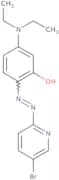
Fórmula:C4H11NO·C4H6O6Forma y color:White Off-White PowderPeso molecular:239.22 g/mol2-(5-Bromo-2-pyridylazo)-5-(diethylamino)phenol
CAS:2-(5-Bromo-2-pyridylazo)-5-(diethylamino)phenol is a chemical that is used for the detection of hydrochloric acid in water vapor. It reacts with zirconium oxide, which generates a red fluorescing complex. The reaction can be detected by using a fluorescence spectrometer with a test sample. 2-(5-Bromo-2-pyridylazo)-5-(diethylamino)phenol is also used to detect the presence of nitrogen atoms and sodium citrate in samples by reacting with them. This chemical reacts with an acid complex to form stable complexes. The analytical method is based on measuring the redox potential of this reaction. The flow system of this technique allows for dehydration of dehydroascorbic acid (DHA).
Fórmula:C15H17BrN4OPureza:Min. 95%Forma y color:PowderPeso molecular:349.23 g/mol6-Bromoisoquinoline
CAS:6-Bromoisoquinoline is a tetradentate ligand that can be used as a molecular model to study the binding of metal ions and organic molecules. 6-Bromoisoquinoline has been shown to bind covalently and noncovalently with phosphate groups on the surface of Caco-2 cells and to induce surface-enhanced Raman spectroscopy. This ligand has a high nucleophilicity and reacts readily with chloride, which is an acidic functional group. The reaction products are hydrochloric acid, trifluoroacetic acid, or both. 6-Bromoisoquinoline can also act as an allosteric modulator in some enzymes, such as phosphofructokinase in glycolysis.
Fórmula:C9H6BrNPureza:Min. 95%Peso molecular:208.05 g/molRef: 3D-FB11908
Producto descatalogado
![4-Aminobicyclo[2.2.2]octan-1-ol hydrochloride](/_next/image/?url=https%3A%2Fstatic.cymitquimica.com%2Fproducts%2F3D%2Fthumb-webp%2FFA63102.webp&w=3840&q=75)


![4-[(2,4-Dimethylbenzyl)oxy]butan-1-ol](/_next/image/?url=https%3A%2Fstatic.cymitquimica.com%2Fproducts%2F3D%2Fthumb-webp%2FFD131280.webp&w=3840&q=75)
![(2-Iodophenyl)(2,3,6,7-tetrahydro-1H,5H-benzo[ij]quinolizin-9-yl)methanone](/_next/image/?url=https%3A%2Fstatic.cymitquimica.com%2Fproducts%2F3D%2Fthumb-webp%2FI-7660.webp&w=3840&q=75)