Alcoholes
Subcategorías de "Alcoholes"
Se han encontrado 5817 productos de "Alcoholes"
1-Acetyl-5-bromoindol-3-ol
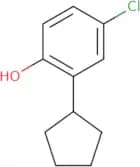
CAS:Please enquire for more information about 1-Acetyl-5-bromoindol-3-ol including the price, delivery time and more detailed product information at the technical inquiry form on this pageFórmula:C10H8BrNO2Pureza:Min. 95%Forma y color:PowderPeso molecular:254.08 g/mol2-Cyclopentyl-4-chlorophenol
CAS:2-Cyclopentyl-4-chlorophenol is a synthetic fatty acid that is used as an antiviral agent. It inhibits the synthesis of fatty acids by inhibiting the conversion of 2,4-dienoyl CoA to 3-hydroxyacyl CoA. 2-Cyclopentyl-4-chlorophenol has been shown to be effective against a number of test organisms, including bacteria such as staphylococcus and virus such as herpes simplex virus. 2-Cyclopentyl-4-chlorophenol inhibits viral protein synthesis by blocking the action of host enzymes required for this process. The target cell for this drug is the host cell infected with a virus. This drug also has antihelminthic properties and can be used to treat parasitic infections caused by schistosoma haematobium and clonorchis sinensis worms. 2CPCP's structural formula is shown below:Fórmula:C11H13ClOPureza:Min. 95%Peso molecular:196.67 g/mol3,4-Dihydroisoquinolin-2(1H)-ylacetic acid
CAS:3,4-Dihydroisoquinolin-2(1H)-ylacetic acid is a chemical compound with the molecular formula of C8H11NO2. It is a useful scaffold for the synthesis of complex compounds and research chemicals. 3,4-Dihydroisoquinolin-2(1H)-ylacetic acid is also a versatile building block for the preparation of fine chemicals. It is used as a reaction component in many organic reactions and can be used as a speciality chemical or reagent due to its high quality.
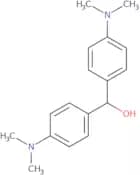
Fórmula:C11H13NO2Pureza:Min. 95%Forma y color:PowderPeso molecular:191.23 g/mol4,4'-Bis(dimethylamino)diphenyl carbinol
CAS:4,4'-Bis(dimethylamino)diphenyl carbinol is a bathochromic compound that belongs to the group of amines. It has been synthesized from 4,4'-diaminodiphenylmethane and hydrochloric acid. This molecule has been shown to react with protonated nitrogen atoms in an oxidation-reduction reaction. The protonation process occurs via kinetic, thermodynamic, and photophysical mechanisms. 4,4'-Bis(dimethylamino)diphenyl carbinol was used to study the proton transfer reactions between chlorine and nitrogen atoms in molecular modeling studies. On the other hand, this molecule has been shown to have fluorescence properties due to its carbonyl group.Fórmula:C17H22N2OPureza:Min. 95%Forma y color:White PowderPeso molecular:270.37 g/mol3-Buten-1-ol
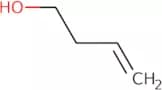
CAS:3-Buten-1-ol is a reactive, anhydrous alcohol that can be used as a model system for hydrogen bonding. It can also be used to demonstrate the uptake of hydrochloric acid and hydroxyl group substitution reactions. 3-Buten-1-ol is soluble in organic solvents such as benzene and chloroform, but insoluble in water. The structural analysis of 3-buten-1-ol has been performed using spectroscopic techniques such as laser ablation and x-ray diffraction to determine its molecular formula. The reaction solution of 3-buten-1-ol with zirconium oxide has been shown to produce intramolecular hydrogen bonds and solid catalysts.
Fórmula:C4H8OPureza:Min. 95%Forma y color:Clear LiquidPeso molecular:72.11 g/mol1,2-O-Dioctadecyl-sn-glycerol
CAS:1,2-O-Dioctadecyl-sn-glycerol is a hydrogenated glycerol that can be used as an advance in synthetic chemistry. It can be hydrogenolyzed to produce choline and cyclic phosphatidylglycerols. The catalytic properties of 1,2-O-dioctadecyl-sn-glycerol are due to its ability to react with chloride or cadmium chloride to form dialkyl glycerols. This product is also used in the synthesis of cadmium.Fórmula:C39H80O3Pureza:Min. 95%Peso molecular:597.05 g/mol[1-(2-Chlorobenzyl)-1H-benzimidazol-2-yl]methanol
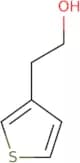
CAS:Producto controladoPlease enquire for more information about [1-(2-Chlorobenzyl)-1H-benzimidazol-2-yl]methanol including the price, delivery time and more detailed product information at the technical inquiry form on this pageFórmula:C15H13ClN2OPureza:Min. 95%Peso molecular:272.73 g/mol3-Thiopheneethanol
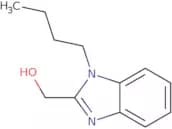
CAS:3-Thiopheneethanol is a synthetic polymer that can be used as an insoluble polymer. It has been shown to undergo chemical reactions with hydroxy groups, which form a polymer film. The untreated control group did not show any change in the film thickness, but the electrochemical methods group showed a significant increase in the film thickness. 3-Thiopheneethanol may have potential applications in medical devices and sensors. The detection time of 3-thiopheneethanol was found to be longer than that of other polymers, such as polystyrene sulfonic acid (PSSA).Fórmula:C6H8OSPureza:Min. 95%Peso molecular:128.19 g/mol(1-Butyl-1H-benzimidazol-2-yl)methanol
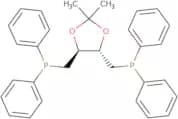
CAS:Producto controladoPlease enquire for more information about (1-Butyl-1H-benzimidazol-2-yl)methanol including the price, delivery time and more detailed product information at the technical inquiry form on this pageFórmula:C12H16N2OPureza:Min. 95%Peso molecular:204.27 g/mol(2S,3S)-(+)-1,4-Bis(diphenylphosphino)-2,3-O-isopropylidene-2,3-butanediol
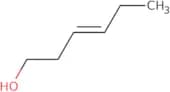
CAS:(2S,3S)-(+)-1,4-Bis(diphenylphosphino)-2,3-O-isopropylidene-2,3-butanediol is a chiral phosphine ligand. It has been used as an optical catalyst for styrene polymerization and as a homogeneous catalyst for the electrochemical oxidation of cyclic aldehydes. This compound has also been used in preparative voltammetric studies of phosphines and diphosphines. (2S,3S)-(+)-1,4-Bis(diphenylphosphino)-2,3-O-isopropylidene-2,3-butanediol can be obtained by reduction of bis-(diphenylphosphine)ethane with lithium aluminum hydride or sodium borohydride. This compound is soluble in solvents such as benzene and chloroFórmula:C31H32O2P2Pureza:Min. 95%Peso molecular:498.53 g/molβ-γ Hexenol
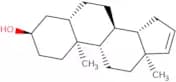
CAS:b-Gamma hexenol is a chemical compound that belongs to the group of odorants. It is a volatile compound that has been identified as an important component in the fragrance of many flowers, such as roses and lavender. b-Gamma hexenol has been found to have significant binding affinity for proteins and enzymes, which may be due to its ability to form soluble complexes at the interface between organic phases and aqueous solutions. b-Gamma hexenol is used in vitro assays as a pharmacological agent that blocks acetylcholine release from nerve endings, thereby reducing pain sensation. In addition, it is also used as an anion radical scavenger due to its high resistance against acid hydrolysis. !--Fórmula:C6H12OPureza:Min. 95%Forma y color:Clear LiquidPeso molecular:100.16 g/mol5alpha-Androst-16-en-3alpha-ol
CAS:Producto controlado5alpha-Androst-16-en-3alpha-ol is a pheromone that is produced by the human body. It has been shown to be a potent inducer of transcriptional activation in mammalian cells. 5alpha-Androst-16-en-3alpha-ol also has biological properties that are similar to those of androstenol, another pheromone produced by the human body. 5alpha-Androstenol binds to the androgen receptor, which then regulates gene transcription and protein synthesis in target cells. This process can lead to changes in cell metabolism, proliferation, or apoptosis. It has been shown that 5alpha-androstenol can increase testosterone levels in humans as well as other primates such as rhesus monkeys. The odorant binding site of 5alpha-androstenol is unknown; however, it may be able to bind with odorant receptors through hydrophobic interactions.
Fórmula:C19H30OPureza:Min. 98 Area-%Forma y color:White PowderPeso molecular:274.44 g/molDiphenylprolinol
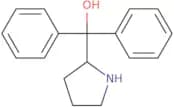
CAS:Producto controladoDiphenylprolinol is a synthetic cannabinoid that is used as an agonist of the CB1 and CB2 receptors in the brain. It has been shown to have high affinity for both the CB1 and CB2 receptors, with Ki values of 0.07 and 0.05 nM respectively. Diphenylprolinol is a full agonist of the CB1 receptor, but only a partial agonist of the CB2 receptor. Diphenylprolinol binds to these receptors in a manner that resembles endocannabinoids, which are endogenous cannabinoids produced by animals. This drug has shown antipsychotic effects through its binding to serotonin reuptake inhibitors and its ability to block dopamine release in the prefrontal cortex. Diphenylprolinol also acts as a potent growth factor by stimulating cell proliferation via activation of protein kinase C (PKC). PKC activation leads to increased levels of intracellular calcium ions (Ca2+) and stimulates growth factor production such asPureza:Min. 95%3,4-Dinitrophenol
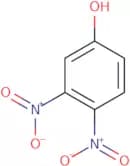
CAS:Producto controlado3,4-Dinitrophenol is a yellow solid that is chemically synthesized from 2,4-dinitrobenzene and morpholine. 3,4-Dinitrophenol is a high energy compound with an activation energy of about 28 kcal/mol. The endpoints for the reaction are oligosaccharides and the acceptor is an ionisation mass. This molecule has a pyrazole ring and can be classified as belonging to group P2 on the periodic table of elements. 3,4-Dinitrophenol has been found to have biological functions in organic solvents such as acetone or benzene.
Fórmula:C6H4N2O5Pureza:Min. 95%Forma y color:PowderPeso molecular:184.11 g/molKushenol R
CAS:Kushenol R is a bioactive flavonoid compound, which is extracted from the roots of the plant Sophora flavescens, commonly known as the shrubby sophora. Its chemical structure contributes to its role as a compound of interest in the realm of natural product chemistry and pharmacology. As a flavonoid, Kushenol R exhibits significant antioxidant activity, attributed to its ability to scavenge free radicals and mitigate oxidative stress at the cellular level. This mechanism of action is crucial as it offers potential therapeutic effects in combating diseases associated with oxidative damage, such as cancer and inflammatory disorders.Pureza:Min. 95%3b-Acetoxyergosta-7,22-dien-5a-ol
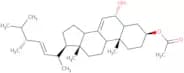
CAS:Producto controladoPlease enquire for more information about 3b-Acetoxyergosta-7,22-dien-5a-ol including the price, delivery time and more detailed product information at the technical inquiry form on this pageFórmula:C30H48O3Pureza:Min. 95%Peso molecular:456.7 g/mol4-Hydroxy-3-nitro-2(1H)-quinolinone
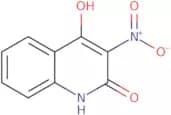
CAS:4-Hydroxy-3-nitro-2(1H)-quinolinone is a quinoline derivative that has been shown to have anticancer activity against cancer cells. It can be used for the treatment of various types of cancer, including lung cancer, breast cancer, and colon cancer. This drug inhibits the growth of cancer cells by blocking the cycle at the G1 phase and inducing apoptosis. It also disrupts mitochondrial membrane potential, leading to an increase in reactive oxygen species and DNA damage. 4-Hydroxy-3-nitro-2(1H)-quinolinone is an epidermal growth factor receptor (EGFR) antagonist and blocks epidermal growth factor signaling through its inhibition of EGFR tyrosine kinase activity. It also downregulates TNFα expression in tumor cells by inhibiting NFκB activation.
Fórmula:C9H6N2O4Pureza:Min. 95%Peso molecular:206.16 g/molTris(dimethylaminomethyl)phenol
CAS:Tris(dimethylaminomethyl)phenol (TDAP) is a compound that has been used as an additive in detergents, paints, and sealants. TDAP is a reactive chemical with the potential to cause adverse effects in humans such as allergic reactions and environmental pollution. TDAP is classified as an extremely hazardous substance by the United States Environmental Protection Agency. TDAP can be found in many household products and building materials, including paint and sealants. TDAP can also be found in cosmetics such as shampoos, lotions, and deodorant. TDAP may also be found in some types of food packaging materials. Long-term exposure to TDAP may lead to calcium carbonate deposits on the lungs or kidney stones due to increased levels of boron nitride-induced calcium oxalate crystals in urine.
Fórmula:C15H27N3OPureza:Min. 95%Forma y color:Clear LiquidPeso molecular:265.39 g/molKushenol W
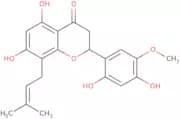
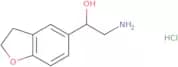
CAS:Kushenol W is a flavonoid compound, which is derived from the root of the Sophora flavescens plant. This plant, commonly known as "Kushen," is an important component in traditional Chinese medicine. The mode of action of Kushenol W involves multiple biological pathways, primarily exerting its effects through anti-inflammatory and anti-tumor activities. It interacts with various molecular targets, modulating pathways associated with oxidative stress and cell proliferation.Pureza:Min. 95%2-Amino-1-(2,3-dihydro-benzofuran-5-yl)-ethanolHydrochloride
CAS:Producto controladoPlease enquire for more information about 2-Amino-1-(2,3-dihydro-benzofuran-5-yl)-ethanolHydrochloride including the price, delivery time and more detailed product information at the technical inquiry form on this pageFórmula:C10H14ClNO2Pureza:Min. 95%Peso molecular:215.68 g/mol




![[1-(2-Chlorobenzyl)-1H-benzimidazol-2-yl]methanol](/_next/image/?url=https%3A%2Fstatic.cymitquimica.com%2Fproducts%2F3D%2Fthumb-webp%2FFC135810.webp&w=3840&q=75)