Alcoholes
Subcategorías de "Alcoholes"
Se han encontrado 5817 productos de "Alcoholes"
8-Bromo-2-methylquinoline
CAS:8-Bromo-2-methylquinoline is a naphthalene derivative that has an oxidant function. It can be used as a solvent for chlorobenzene and as a catalyst for the production of bipyridines and piperazine. 8-Bromo-2-methylquinoline is also used as a ligand in the preparation of metal complexes. This compound reacts with methyl groups, chlorine, and halides to form methyl quinolines and dichloromethanes. 8-Bromo-2-methylquinoline may react with fatty acids to form polyunsaturated acid esters or with polyunsaturated fatty acids to form polyethers.Fórmula:C10H8BrNPureza:Min. 95%Peso molecular:222.08 g/mol1,2,3,4-Tetrahydro-4,8-dihydroxy-2-methyl-isoquinoline
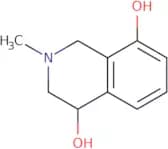
CAS:1,2,3,4-Tetrahydro-4,8-dihydroxy-2-methyl-isoquinoline is a chemical compound that has been used as an intermediate in the synthesis of pharmaceuticals. It is also a useful building block for the production of other chemicals. This compound is soluble in water. 1,2,3,4-Tetrahydro-4,8-dihydroxy-2-methyl-isoquinoline has shown to be a versatile and high quality reagent with many research applications.Fórmula:C10H13NO2Pureza:Min. 95%Forma y color:Yellow PowderPeso molecular:179.22 g/mol2(2-Ethoxyethoxy)ethanol
CAS:2(2-Ethoxyethoxy)ethanol is a glycol ether that is used as a substrate film in analytical methods, such as thin layer chromatography. It has been shown to be toxic to the liver and kidney, but not the heart. 2(2-Ethoxyethoxy)ethanol is also an experimental solubility data and can be used to measure the hydrophobic effect of organic compounds. This substance has high values for solubility, which may be due to its glycol ester type. 2(2-Ethoxyethoxy)ethanol does not show toxicity to the heart when administered orally or by inhalation, but does show toxicity to the liver and kidney at high doses.Fórmula:C6H14O3Pureza:Min. 98 Area-%Forma y color:PowderPeso molecular:134.17 g/mol4-Bromoisoquinoline
CAS:4-Bromoisoquinoline is an aryl halide that can be used in the cross-coupling reaction with other aryl halides. It has been shown to have anticancer activity and to inhibit the growth of tumour cell lines in vitro. This compound is also efficient for inhibiting leukemia cells. 4-Bromoisoquinoline has been shown to have an inhibitory effect on cancer cells through the inhibition of DNA synthesis and RNA transcription, as well as by inducing apoptosis. The mechanism of action may be due to its ability to bind to aromatic hydrocarbons and halides, which leads to thermodynamic changes and vibrational energy transfer.Fórmula:C9H6BrNPureza:Min. 95%Peso molecular:208.05 g/mol(3',5',7')-Cholane-3,7,24-triol
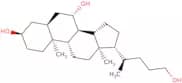
CAS:Producto controladoPlease enquire for more information about (3',5',7')-Cholane-3,7,24-triol including the price, delivery time and more detailed product information at the technical inquiry form on this pageFórmula:C24H42O3Pureza:Min. 95%Peso molecular:378.59 g/molD-alpha-Tocotrienol
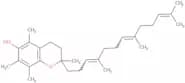
CAS:D-alpha-Tocotrienol is an antioxidant that belongs to the vitamin E family. It has been shown to have many beneficial effects in humans, including lowering of cholesterol and reducing the risk of heart disease. This compound also has antioxidant function and may be used for the prevention of certain cancers. D-alpha-Tocotrienol is a natural form of alpha-tocopherol, which is found in high concentrations in plants. It can be found in lipoproteins, phosphatidylcholine, and vulgare l., as well as hexane.Fórmula:C29H44O2Pureza:Min. 95%Peso molecular:424.66 g/mol17-Methyl-4-androstene-3a,17a-diol
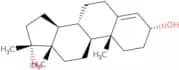
CAS:Producto controladoPlease enquire for more information about 17-Methyl-4-androstene-3a,17a-diol including the price, delivery time and more detailed product information at the technical inquiry form on this pageFórmula:C20H32O2Pureza:Min. 95%Peso molecular:304.47 g/molToluene-3,4-dithiol
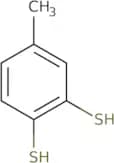
CAS:Toluene-3,4-dithiol is a reactive dithiol that has been shown to have synergistic effects with other organic compounds. It is used in the preparation of methyl ethyl and its derivatives. Toluene-3,4-dithiol has also been shown to inhibit both the activity of enzymes and the growth of bacteria. The biological properties of this compound are not well understood, but it can be used as a model system for studying disulfide bonds and their role in protein folding. Studies have shown that this compound inhibits enzymatic activity and reduces bacterial growth without affecting cell viability.
Fórmula:C7H8S2Pureza:Min. 95%Peso molecular:156.27 g/mol4-[(4-Chlorophenyl)phenylmethyl]-1-piperazineethanol dihydrochloride
CAS:4-[(4-Chlorophenyl)phenylmethyl]-1-piperazineethanol dihydrochloride is a cholinergic drug that is used to treat allergic rhinitis in children and adults. It has been shown to be well tolerated in pediatric patients and geriatric patients, as well as being an innovative, labile, and biopharmaceutical compound. 4-[(4-Chlorophenyl)phenylmethyl]-1-piperazineethanol dihydrochloride is not metabolized by the liver and does not have significant side effects. It has a low potential for abuse because of its low solubility in water. It is an antihistamine that blocks the action of histamine at H1 receptors on smooth muscle cells in the nose, which helps reduce nasal congestion and sneezing.Fórmula:C19H23ClN2O·2HClPureza:Min. 95%Peso molecular:403.77 g/molErythromycin A enol ether
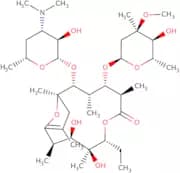
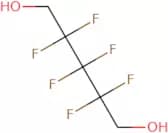
CAS:Erythromycin A enol ether is an antimicrobial agent that is used as an antiretroviral therapy for HIV. It has been shown to be active against microbial infections caused by resistant microorganisms, such as methicillin-resistant Staphylococcus aureus and erythromycin-resistant Enterobacteriaceae. Erythromycin A enol ether has been found to be a promising candidate for topical applications due to its low toxicity and ability to penetrate the skin. The metabolite of erythromycin A enol ether is formed through hydrolysis with hydrochloric acid in the presence of glycol ester. The resulting product, erythromycin A, is an antibiotic that inhibits bacterial growth by blocking peptide synthesis at the ribosome level.Fórmula:C37H65NO12Pureza:Min. 95%Peso molecular:715.91 g/mol2,2,3,3,4,4-Hexafluoro-1,5-pentanediol
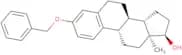
CAS:Producto controlado2,2,3,3,4,4-Hexafluoro-1,5-pentanediol is a colorless liquid with a boiling point of 155°C. It is soluble in water and has an odor similar to that of hexane. 2,2,3,3,4,4-Hexafluoro-1,5-pentanediol is used as a chemical intermediate for the production of sodium salts and quaternary ammonium compounds. This substance can be obtained by reacting butanediol with hydrofluoric acid or trifluoromethanesulfonic acid. The most common use of 2,2,3,3,4,4-hexafluoro-1,5-pentanediol is in the synthesis of amines. It also has been used as a solvent for electroplating metals and as a high boiling point solvent in organic reactions. This compound exhibits nucleophilic properties with amines and canFórmula:C5H6F6O2Pureza:Min. 95%Peso molecular:212.09 g/mol3-O-Benzyl 17a-estradiol
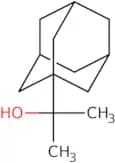
CAS:Producto controladoPlease enquire for more information about 3-O-Benzyl 17a-estradiol including the price, delivery time and more detailed product information at the technical inquiry form on this pageFórmula:C25H30O2Pureza:Min. 95%Peso molecular:362.5 g/mol2-(1-Adamantyl)propan-2-ol
CAS:2-(1-Adamantyl)propan-2-ol is an alcohol that can be synthesized in a multistep process. This molecule has been shown to inhibit the influenza virus, which is a type of negative strand RNA virus. It reacts with the sulfide group on the influenza virus, forming a covalent bond. The structure of 2-(1-Adamantyl)propan-2-ol is similar to that of amantadine and azetidine, which are also antiviral drugs used for the treatment of influenza.
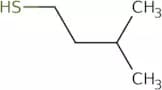
Fórmula:C13H22OPureza:Min. 95%Peso molecular:194.31 g/mol3-Methyl-1-butanethiol
CAS:3-Methyl-1-butanethiol is a chemical compound that belongs to the class of sulfonic acids. It has been shown to be an effective inhibitor of the formation of sulfonated compounds in urine samples. 3-Methyl-1-butanethiol also possesses a hydroxyl group and chlorine atom, which are responsible for its inhibitory effects on the polymerization initiator. The hydroxyl group is involved in the synthesis of 3-methyl-1-butanol and 3,3′,5′-trimethylhexane by reacting with methanol and ethylene oxide respectively. The chlorine atom acts as a nucleophile in the reaction with sodium chloride to form chloroacetic acid. This chemical compound also contains a divalent magnesium ion that can act as a cocatalyst for polymerization reactions.Fórmula:C5H12SPureza:Min. 95%Peso molecular:104.21 g/mol5-Hexyn-1-ol
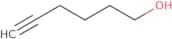
CAS:5-Hexyn-1-ol is a molecule that belongs to the group of organic compounds called fatty acids. It is a colorless liquid with an odor reminiscent of that of hexane. 5-Hexyn-1-ol has been shown to inhibit the proliferation of brain cells and tumor cells in culture. It also inhibits the growth of caco-2 cell lines, which are used as a model for human intestinal epithelial cells. The hydroxyl group in 5-hexyn-1-ol reacts with nitrogen nucleophiles such as picolinic acid and palladium chloride to form an intermediate compound, which can then be transformed into the desired product by addition of a second reactant.Fórmula:C6H10OPureza:Min. 95%Peso molecular:98.14 g/molIndole-7-methanol
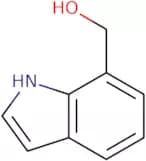
CAS:Indole-7-methanol is a flavin cofactor that catalyses the formylation of indole-7-carboxylic acid. Indole-7-methanol can be synthesized by the conversion of indole-7-carboxaldehyde with formaldehyde and ammonium acetate. The macrocyclic, isomeric, and formylated forms of indole-7-methanol have been shown to have utilisation activity in the synthesis of various compounds. These reactions are catalyzed by flavins such as FAD or FMN. Mutant, unsymmetrical derivatives of indole-7-methanol are also known to undergo these types of reactions. The most common derivative is indirubin, which has been shown to inhibit DNA polymerase III and IV in vitro.Fórmula:C9H9NOPureza:Min. 95%Peso molecular:147.17 g/mol(S)-a,a-Diphenylmethylprolinol
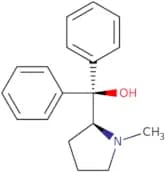
CAS:Producto controlado(S)-a,a-Diphenylmethylprolinol is a chiral ligand that is used in asymmetric synthesis. It has been shown to react with alkylating agents to form chiral methyl esters. The reaction product can be resolved into the desired enantiomer by the use of a chiral stationary phase or an experimental method called isotopic labeling. (S)-a,a-Diphenylmethylprolinol was prepared by a preparative method involving the reaction of cyanate, aldehyde and hexane.Fórmula:C18H21NOPureza:Min. 95%Peso molecular:267.37 g/mol5-[3-(Dimethylamino)propyl]-10,11-dihydro-5H-dibenzo[a,d]cyclohepten-5-ol
CAS:Please enquire for more information about 5-[3-(Dimethylamino)propyl]-10,11-dihydro-5H-dibenzo[a,d]cyclohepten-5-ol including the price, delivery time and more detailed product information at the technical inquiry form on this pageFórmula:C20H25NOPureza:Min. 95%Forma y color:Beige SolidPeso molecular:295.42 g/molKushenol X
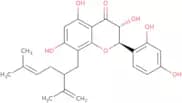
CAS:Kushenol X is a bioactive flavonoid compound, which is derived from the traditional Chinese medicinal plant Sophora flavescens. Known for its diverse pharmacological activities, Kushenol X primarily exerts its effects through the modulation of various cellular pathways. This compound has been found to interact with signaling molecules and pathways implicated in inflammation and cancer, exhibiting both anti-inflammatory and anticancer properties.Pureza:Min. 95%8-Hydroxyquinoline copper(II)
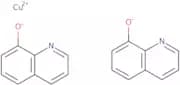
CAS:8-Hydroxyquinoline copper(II) salt is a metal chelate that can be used as an analytical reagent. It is prepared by the reaction of ethylene diamine with 8-hydroxyquinoline and copper(II) chloride. The product has been found to emit light when irradiated with UV light. This product is also used as a substrate for methyl transferase, which is an enzyme involved in the metabolism of drugs. 8-Hydroxyquinoline copper(II) salt has been shown to inhibit the activity of P-glycoprotein (Pgp), which is a drug transporter protein found in mammalian cells that functions to pump xenobiotics from the inside of cells out into the bloodstream. When Pgp is inhibited, it causes cellular accumulation of certain drugs, such as cyclosporin A and tacrolimus.Fórmula:C18H12CuN2O2Pureza:Min. 95%Forma y color:PowderPeso molecular:351.85 g/mol




![4-[(4-Chlorophenyl)phenylmethyl]-1-piperazineethanol dihydrochloride](/_next/image/?url=https%3A%2Fstatic.cymitquimica.com%2Fproducts%2F3D%2Fthumb-webp%2FFC53582.webp&w=3840&q=75)
![5-[3-(Dimethylamino)propyl]-10,11-dihydro-5H-dibenzo[a,d]cyclohepten-5-ol](/_next/image/?url=https%3A%2Fstatic.cymitquimica.com%2Fproducts%2F3D%2Fthumb-webp%2FFD22331.webp&w=3840&q=75)