Alcoholes
Subcategorías de "Alcoholes"
Se han encontrado 5814 productos de "Alcoholes"
(D-Ala2,N-Me-Phe4,methionin(O)-ol5)-Enkephalin trifluoroacetate salt
CAS:D-Ala2,N-Me-Phe4,methionin(O)-ol5)-Enkephalin trifluoroacetate salt H-Tyr-D-Ala-Gly-N-Me-Phe-methionin(O)-ol trifluoroacetate salt is an analog of the endocannabinoid neurotransmitter, anandamide. It has been shown to be effective in the treatment of autoimmune diseases such as multiple sclerosis and inflammatory bowel disease. D-(3R)-3-[(1S,2R,3R,5R) -3-[2-(2,6 dichlorophenyl)ethenyl] -1H -indole]-1 -butanamine trifluoroacetate salt has been shown to inhibit the replication of a number of viruses including human immunodeficiency virus type 1 (HIV). This drug also inhibits the growth of organisms that are resistant
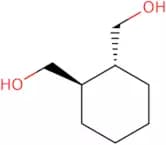
Fórmula:C29H41N5O7SPureza:Min. 95%Peso molecular:603.73 g/mol(1R,2R)-1,2-Cyclohexanedimethanol
CAS:(1R,2R)-1,2-Cyclohexanedimethanol is an isomer of the more common (1S,2S)-1,2-cyclohexanedimethanol. It is a synthetic compound that is used as an analytical reagent in chromatographic and spectroscopic analyses. The two enantiomers of this compound have different stability and reactivity properties. (1R,2R)-1,2-Cyclohexanedimethanol has been shown to be a good photocatalyst for the decomposition of organic compounds. It also has some hydrophobic properties because it can dissolve in organic solvents such as ethers and chlorinated hydrocarbons.Fórmula:C8H16O2Pureza:Min. 95%Peso molecular:144.21 g/mol6-Keto cholestanol
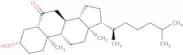
CAS:Producto controlado6-Keto cholestanol is a chemical compound that is structurally similar to cholesterol. It has a phase transition temperature of -65°C, and the hydroxyl group on the side chain can be replaced with other functional groups to alter its properties. 6-Keto cholestanol has been shown to induce autophagy in cells by binding to mitochondria and increasing mitochondrial membrane potential. This compound also increases the level of fatty acid oxidation and decreases levels of glycerolipids in the cell, which may be due to its ability to bind fatty acids. 6-Keto cholestanol binds to the styryl dye, benzalkonium chloride, and inhibits its fluorescence emission. This compound also binds to adenine nucleotide, which may lead to decreased ATP production in cells.Fórmula:C27H46O2Pureza:Min. 95%Peso molecular:402.65 g/mol7-Hydroxyquinoline
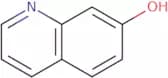
CAS:7-Hydroxyquinoline is a molecule that has been extensively studied in the context of transfer reactions. It is a sodium salt that contains an intermolecular hydrogen bond and an intramolecular hydrogen bond. The proton of 7-hydroxyquinoline can be transferred to the nitrogen atom of a protonated amine, forming an acid complex. This reaction mechanism is kinetically controlled and stabilizes the tautomers of 7-hydoxyquinoline. The hydroxyl group on the quinoline ring can form hydrogen bonds with various groups on other molecules, such as n-dimethyl formamide or deuterium isotope.Fórmula:C9H7NOPureza:Min. 95%Forma y color:Brown PowderPeso molecular:145.16 g/mol2-(4-Methyl-2-phenyl-1-piperazinyl)-3-pyridinemethanol
CAS:2-(4-Methyl-2-phenyl-1-piperazinyl)-3-pyridinemethanol is an impurity in hexane that is generated during the reaction of pyridine with acetonitrile. The impurity is removed by crystallizing it from methanol. 2-(4-Methyl-2-phenyl-1-piperazinyl)-3-pyridinemethanol has a high efficiency, and can be used to synthesize hexamethyldisiloxane. This product can be used as a metal catalyst for reactions involving alkali metals or metal halides. It can also be used as an alcohol solvent, but not hydrogenated.Fórmula:C17H21N3OPureza:Min. 95%Forma y color:White to off white powderPeso molecular:283.37 g/mol4-Chloro-2-iodo-phenol
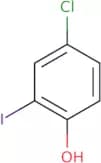
CAS:Please enquire for more information about 4-Chloro-2-iodo-phenol including the price, delivery time and more detailed product information at the technical inquiry form on this pageFórmula:C6H4ClIOPureza:Min. 95%Peso molecular:254.45 g/mol(2-Chlorophenyl)diphenylmethanol
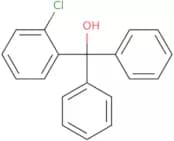
CAS:2-Chlorophenyl)diphenylmethanol is an antifungal drug that blocks the function of a calcium ionophore in fungal cells. It has been shown to be effective against a variety of filamentous fungi, including Aspergillus fumigatus, Candida albicans, and Trichosporon cutaneum. This drug is used as a topical antifungal agent for treatment of skin infections caused by these fungi. 2-Chlorophenyl)diphenylmethanol has been shown to have anti-inflammatory properties in animal models of kidney fibrosis and cell binding. Clinical data suggests that it can be used for the prevention or treatment of stem cell transplantation complications such as graft versus host disease and leukemia.
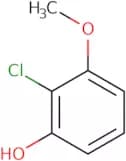
Fórmula:C19H15ClOPureza:Min. 95%Forma y color:PowderPeso molecular:294.77 g/mol2-Chloro-3-methoxyphenol
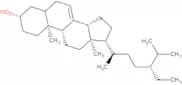
CAS:Please enquire for more information about 2-Chloro-3-methoxyphenol including the price, delivery time and more detailed product information at the technical inquiry form on this pageFórmula:C7H7ClO2Pureza:Min. 95%Peso molecular:158.58 g/molStigmast-7-enol
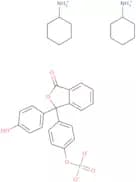
CAS:Producto controladoStigmast-7-enol is a naturally occurring compound found in plants such as Oroxylum indicum and Carthamus tinctorius. It was first isolated from the plant Stigmasta crispa. The chemical composition of stigmast-7-enol includes a hydroxyl group, a carboxylic acid group, and an ester bond. It has been shown to have hypoglycemic effects in animal models. This compound is stable at acidic pH levels, but is unstable at physiological pH levels. Stigmast-7-enol also binds to the mitochondrial membrane potential and inhibits the synthesis of p-hydroxybenzoic acid in cells.Fórmula:C29H50OPureza:Min. 95%Peso molecular:414.71 g/molPhenolphthalein monophosphate di(cyclohexylammonium)
CAS:Phenolphthalein monophosphate di(cyclohexylammonium) is a fine chemical that can be used as a building block in research, reagent, or speciality chemical. It is a versatile building block and reaction component that can be used as an intermediate to make other compounds. Phenolphthalein monophosphate di(cyclohexylammonium) is also used as a scaffold for the synthesis of complex chemicals. This complex compound has CAS number 14815-59-9.Fórmula:C20H15O7P•2C6H13NPureza:Min. 90%Forma y color:PowderPeso molecular:596.65 g/mol7,9-Dimethoxycarbonyl-2-ethoxycarbonyl-1H-pyrrolo-[2,3-f]quinoline-4,5-dione
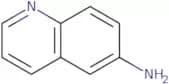
CAS:7,9-Dimethoxycarbonyl-2-ethoxycarbonyl-1H-pyrrolo-[2,3-f]quinoline-4,5-dione is a chemical compound that is used as an intermediate for research chemicals. It has a CAS number of 80721-47-7 and is classified as a fine chemical with the Chemical Abstracts Service (CAS) classification code of 3272. This compound is a versatile building block that can be used in the synthesis of other compounds. 7,9-Dimethoxycarbonyl-2-ethoxycarbonyl-1H-pyrrolo-[2,3f]quinoline 4,5dione can be used to produce high quality products.Fórmula:C18H14N2O8Pureza:Min. 95%Forma y color:Orange PowderPeso molecular:386.31 g/mol6-Aminoquinoline
CAS:6-Aminoquinoline is a chemical compound that is used as an intermediate in the synthesis of other compounds. It has been found to be effective in inhibiting the growth of human cancer cells and cell lines by binding to amines, which are important for cell proliferation. 6-Aminoquinoline also inhibits epidermal growth factor (EGF) and its receptor, which may be due to its ability to inhibit the transfer of phosphate groups from ATP to EGF. 6-Nitroquinoline, which is derived from 6-aminoquinoline, has been shown to have antiinflammatory activity.
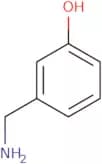
Fórmula:C9H8N2Pureza:Min. 95%Forma y color:Yellow PowderPeso molecular:144.17 g/mol3-(Aminomethyl)phenol
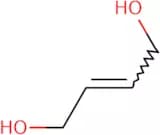
CAS:3-(Aminomethyl)phenol is a potent inhibitor of growth factor receptor kinase (GRK) and protein kinase C. It has been shown to have inhibitory effects on cellular proliferation in mammalian cells and is being investigated as an adjuvant therapy for cancer treatment. 3-(Aminomethyl)phenol has also been shown to inhibit the enzyme cyclooxygenase-2, which is involved in the synthesis of prostaglandins. DISCUSSION: The carbonyl group of 3-(aminomethyl)phenol makes it a potent inhibitor of GRKs and protein kinases C. Kinases are enzymes that catalyze the addition of phosphate groups onto proteins, which affects their activity. As such, 3-(aminomethyl)phenol inhibits the activity of GRKs and protein kinases C by binding to the ATP-binding site, preventing ATP from binding and phosphorylating the enzyme's target proteinsFórmula:C7H9NOPureza:Min. 95%Peso molecular:123.15 g/molcis,trans-2-Buten-1,4-diol
CAS:Product FB158451, cis, trans-2-Buten-1,4-diol, is a versatile chemical compound with the CAS number 110-64-5. It is used a key building block in various chemical synthesis processes, making it an essential component for researchers and industrial applications. Its versatile nature allows it to be employed in the production of polymers, resins, and specialty chemicals, making it a valuable asset for a wide range of applications.
Fórmula:C4H8O2Pureza:Min. 95%Forma y color:Clear LiquidPeso molecular:88.11 g/mol([ring-D5]Phe3)-Octreotide acetate salt
CAS:Producto controladoPlease enquire for more information about ([ring-D5]Phe3)-Octreotide acetate salt including the price, delivery time and more detailed product information at the technical inquiry form on this pageFórmula:C49H61D5N10O10S2Pureza:Min. 95%Peso molecular:1,024.27 g/mol(alphaR)-alpha-[[[2-(4-Nitrophenyl)ethyl]amino]methyl]benzenemethanol hydrochloride
CAS:Intermediate in the synthesis of mirabegron
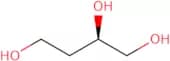
Fórmula:C16H18N2O3·HClPureza:Min. 95%Peso molecular:322.79 g/mol(R)-(+)-1,2,4-Butanetriol
CAS:Producto controlado(R)-(+)-1,2,4-Butanetriol is a molecule that has been shown to have cancer-fighting properties. It is used in clinical trials to treat cancer by inhibiting the growth of cells. This drug binds to the site on the protein that is responsible for cell division and prevents the formation of new cells, thereby preventing tumor growth. The mechanism of action for this drug is not yet fully understood but it may be due to its ability to inhibit calcium channels or interfere with protein synthesis. (R)-(+)-1,2,4-Butanetriol has also been shown in laboratory studies to bind with human immunodeficiency virus (HIV) and prevent it from attaching to CD4 T-cells. This drug has been tested in humans as an anti-HIV treatment and showed promising results in a questionnaire study.Fórmula:C4H10O3Pureza:Min. 95%Peso molecular:106.12 g/molDimethyl benzyl carbinol acetate
CAS:Dimethyl benzyl carbinol acetate is a polymer that forms a film on the skin and prevents water loss. It has been shown to have enzyme-inhibiting properties, which may be due to its ability to prevent geranyl production. Dimethyl benzyl carbinol acetate has also been used as a sealant in microcapsules, which are then broken down by enzymes in order to release the contents of the capsule. Dimethyl benzyl carbinol acetate can also be used as an antimicrobial agent, where it inhibits bacterial cell growth by interfering with fatty acid synthesis.
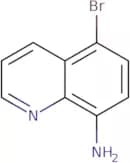
Pureza:Min. 95%5-Bromoquinolin-8-amine
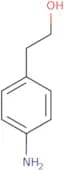
CAS:5-Bromoquinolin-8-amine is a topoisomerase inhibitor that can be used as an antitumor agent. It has been shown to inhibit the growth of tumor cell lines and suppress the growth of colon carcinoma cells in rats and human colon carcinomas in mice. 5-Bromoquinolin-8-amine interacts with DNA, specifically inhibiting the formation of supercoiled DNA. This interaction may lead to the inhibition of tumor cell growth. 5-Bromoquinolin-8-amine also inhibits protein synthesis by interacting with proteins at the ribosomal level, leading to inhibited cell growth.Fórmula:C9H7BrN2Pureza:Min. 95%Peso molecular:223.07 g/mol4-Aminophenethyl alcohol
CAS:4-Aminophenethyl alcohol is a monosubstituted, basic compound that is used in the laboratory as a cell culture medium supplement to promote growth of fibroblasts. This compound has been shown to stimulate human intestinal cells and human peripheral blood mononuclear cells. 4-Aminophenethyl alcohol acts as a hydroxyl group donor, which may be due to its ability to form hydrogen ions when reacted with sodium hydroxide solution. The reaction of this compound with diazonium salt produces an intermediate, which can be hydrolyzed by the addition of sodium hydroxide solution. The resultant chloride ion reacts with the aminophenethyldihydroxylamine (APDA) moiety to produce APDCl. This product has been shown to increase the population growth rate of fibroblasts in culture by causing DNA synthesis and protein synthesis. Linear regression analysis revealed that there was no statistically significant difference between the control and experimental groups for either DNAFórmula:C8H11NOPureza:Min. 95%Peso molecular:137.18 g/mol



![7,9-Dimethoxycarbonyl-2-ethoxycarbonyl-1H-pyrrolo-[2,3-f]quinoline-4,5-dione](/_next/image/?url=https%3A%2Fstatic.cymitquimica.com%2Fproducts%2F3D%2Fthumb-webp%2FFD22201.webp&w=3840&q=75)
![([ring-D5]Phe3)-Octreotide acetate salt](/_next/image/?url=https%3A%2Fstatic.cymitquimica.com%2Fproducts%2F3D%2Fthumb-webp%2FFR110015.webp&w=3840&q=75)
![(alphaR)-alpha-[[[2-(4-Nitrophenyl)ethyl]amino]methyl]benzenemethanol hydrochloride](/_next/image/?url=https%3A%2Fstatic.cymitquimica.com%2Fproducts%2F3D%2Fthumb-webp%2FFN156825.webp&w=3840&q=75)