Alcoholes
Subcategorías de "Alcoholes"
Se han encontrado 5831 productos de "Alcoholes"
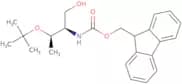
Fmoc-O-tert-butyl-L-threoninol
CAS:Fmoc-O-tert-butyl-L-threoninol is an aminoacyl chloroformate ester that is used in the synthesis of peptides. It has a conjugate acid chloride and a disulfide bond. The chloroformate group reacts with the carboxylic acid moiety of L-threonine to form an ester, which can then be cleaved by hydrolysis to yield L-threonine. This product is also used for the synthesis of peptides in which the threonine residue is conjugated to another amino acid such as cysteine or glutamic acid.
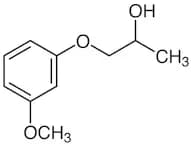
Fmoc-O-tert-butyl-L-threoninol is synthesized from l-threonine and isobutene via a phase chromatography process. The synthetic intermediate Fmoc-(S)-OH is reacted with trifluoroacetic acid (TFA)Fórmula:C23H29NO4Pureza:Min. 98 Area-%Forma y color:White PowderPeso molecular:383.48 g/mol1-(3-Methoxyphenoxy)-2-propanol
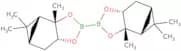
CAS:Fórmula:C10H14O3Pureza:>90.0%(GC)Forma y color:Colorless to Light yellow to Light orange clear liquidPeso molecular:182.22(-)-Bis(pinanediolato)diboron
CAS:(-)-Bis(pinanediolato)diboron is a reactive component that can be used as a reagent. It reacts with alkenes to form pinacolboronates, which are useful for the synthesis of complex compounds. (-)-Bis(pinanediolato)diboron is also an intermediate in the synthesis of diboronic acid and pinacolborane. This compound has broad utility as a building block, scaffold, or intermediate in organic synthesis.
-Pinanediolato boron is also a versatile building block that can be used to synthesize many other chemical compounds. For example, it can be used as an intermediate to synthesize (-)-pinanediol and 3-hydroxy-1-methylpyridinium iodide (3HMPI), which are speciality chemicals.
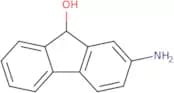
-Pinanediolato boron is also an excellent building block for organic synthesis due to its abilityFórmula:C20H32B2O4Pureza:Min. 95%Forma y color:White SolidPeso molecular:358.09 g/mol2-Amino-9-fluorenol
CAS:2-Amino-9-fluorenol is a hydrophobic compound that binds to RNA. 2-Amino-9-fluorenol has been shown to have a binding constant of 1.2 x 10, which is much higher than the binding constant for curculigoside (5.2 x 10). This substance has shown to be an effective inhibitor of RNA synthesis in HL60 cells and various bacterial strains by binding to the ribose moiety of RNA and preventing transcription. The metabolic pathway for 2-amino-9-fluorenol consists of two steps: one involving a reactive intermediate, potassium ion, and another with methylamine as the reactant. These reactions are catalyzed by enzymes such as acetaldehyde dehydrogenase and amino transferases, respectively.Fórmula:C13H11NOPureza:Min. 95%Forma y color:Yellow solid.Peso molecular:197.23 g/mol2-(Hydroxymethyl)pyridin-4-ol
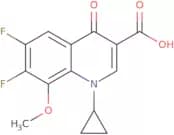
CAS:2-(Hydroxymethyl)pyridin-4-ol is a versatile building block that can be used in the synthesis of complex compounds and research chemicals. This fine chemical is a reagent, speciality chemical, and useful scaffold in organic synthesis. 2-(Hydroxymethyl)pyridin-4-ol is also an intermediate for the production of useful building blocks. It has high purity and can be used as a reaction component or a useful scaffold in organic synthesis.Fórmula:C6H7NO2Pureza:Min. 95%Forma y color:White PowderPeso molecular:125.13 g/mol1-Cyclopropyl-6,7-difluoro-1,4-dihydro-8-methoxy-4-oxo-3-quinolinecarboxylic acid
CAS:Moxifloxacin is an analog of the antibiotic quinolone. It is a prodrug that is hydrolyzed in vivo to its active form, moxifloxacin. Moxifloxacin has been shown to be effective against a variety of bacteria, including methicillin-resistant Staphylococcus aureus (MRSA), Mycobacterium tuberculosis and Mycobacterium avium complex. The reaction yield for the synthesis of moxifloxacin is very high, with an industrial production capacity in excess of 500 tons per year. Impurities are not usually found in the final product due to the use of methyl alcohol as a solvent during the reaction process. The drug has discoloring properties and deuterium atoms are often substituted for hydrogen atoms on the molecule to make it more stable. Deuterium atoms can be easily identified by mass spectrometry analysis. MoxifloxacFórmula:C14H11F2NO4Pureza:Min. 95%Forma y color:PowderPeso molecular:295.24 g/molPhloroglucinol dihydrate
CAS:Phloroglucinol dihydrate is a chemical substance that can be used as a denaturant, conditioner and deodorant. It is soluble in water and has been shown to have enzyme-inhibiting properties. Phloroglucinol dihydrate has been shown to have anti-inflammatory properties by inhibiting the production of prostaglandins. This compound also has optical properties, which are determined by its chromene structure. There is no phase transition temperature for this compound because it does not melt or freeze.
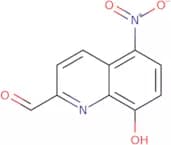
Fórmula:C6H6O3•(H2O)2Pureza:Min. 95%Forma y color:PowderPeso molecular:162.14 g/mol8-Hydroxy-5-nitroquinoline-2-carbaldehyde
CAS:8-Hydroxy-5-nitroquinoline-2-carbaldehyde is a high quality, versatile building block that can be used as a reaction intermediate or to synthesize heterocycles. It is also a useful scaffold for the synthesis of complex compounds. The CAS number of this chemical is 884497-63-6.Fórmula:C10H6N2O4Pureza:Min. 95%Forma y color:PowderPeso molecular:218.17 g/mol3-Methoxyphenylmethylcarbinol
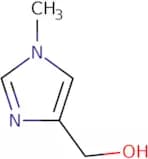
CAS:3-Methoxyphenylmethylcarbinol is a hydrogen tartrate that can be used as an intermediate in the Friedel-Crafts reaction. It is also an imine, which is formed when a nitrogen atom of an amine reacts with a carbon atom of formaldehyde. 3-Methoxyphenylmethylcarbinol has been shown to have stereoselective properties in the Friedel-Crafts reaction, which means that only one product is produced from two reactants. In this case, the hydrogen tartrate and phosphorus oxychloride are reacted to produce oxone and chloride compounds. The selectivity of 3-methoxyphenylmethylcarbinol can be increased by adding triphosgene or dimethylamine to the reaction mixture. This compound dissociates easily into its component parts and can be regenerated by adding ethyl formate or ferrocene.Fórmula:C9H12O2Pureza:Min. 95%Forma y color:PowderPeso molecular:152.19 g/mol(1-Methyl-1H-imidazol-4-yl)methanol
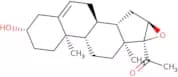
CAS:(1-Methyl-1H-imidazol-4-yl)methanol is a chemical that can be used as a building block for the synthesis of complex compounds. It is an intermediate in organic synthesis, and has been used as a reagent for research and as a speciality chemical. (1-Methyl-1H-imidazol-4-yl)methanol is also a versatile building block for the construction of complex molecules. This compound has been used in the manufacture of pesticides, pharmaceuticals, and dyes. The CAS number for (1-methyl-1H-imidazol-4-yl)methanol is 172892577.Fórmula:C5H8N2OPureza:Min. 95%Forma y color:SolidPeso molecular:112.13 g/mol16α,17α-Epoxypregnenolone
CAS:16alpha,17alpha-Epoxypregnenolone is a synthetic insect odorant that binds to the odorant binding protein (OBP) and has been used in research to investigate the relationship between odorant binding and olfaction. The OBPs are thought to play an important role in the detection of odors by binding to specific odorants, which then initiate a sensory response. 16alpha,17alpha-Epoxypregnenolone has also been shown to bind with recombinant OBP and have fluorescence properties, making it useful for biosensors. This compound may be useful as an experimental or research tool for investigating olfactory receptors in insects or other organisms.
Fórmula:C21H30O3Pureza:Min. 95%Peso molecular:330.47 g/molEthyl 4-oxo-7-(benzyloxy)hydroquinoline-3-carboxylate
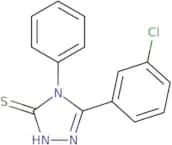
CAS:Please enquire for more information about Ethyl 4-oxo-7-(benzyloxy)hydroquinoline-3-carboxylate including the price, delivery time and more detailed product information at the technical inquiry form on this pagePureza:Min. 95%5-(3-Chlorophenyl)-4-phenyl-4H-1,2,4-triazole-3-thiol
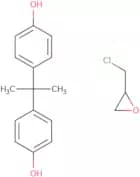
CAS:Please enquire for more information about 5-(3-Chlorophenyl)-4-phenyl-4H-1,2,4-triazole-3-thiol including the price, delivery time and more detailed product information at the technical inquiry form on this pageFórmula:C14H10ClN3SPureza:Min. 95%Forma y color:PowderPeso molecular:287.77 g/molPoly(bisphenol-A-co-epichlorohydrin)
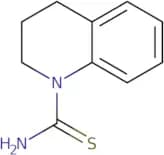
CAS:Poly(bisphenol-A-co-epichlorohydrin) is an epoxy polymer that reacts with a fatty acid to form a cationic polymer. It has a high resistance to thermal expansion and inorganic acids, making it a good sealant. In addition, poly(bisphenol-A-co-epichlorohydrin) is insoluble and not reactive, which makes it resistant to structural analysis. Poly(bisphenol-A-co-epichlorohydrin)'s thermal stability also makes it suitable for use as a boron nitride coating on zirconium oxide.Pureza:(%) Min. 60%Forma y color:Clear LiquidPeso molecular:1.15 g/molAmino-1,2,3,4-tetrahydroquinol-1-ylmethane-1-thione
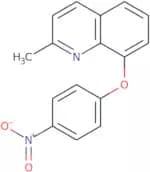
CAS:Please enquire for more information about Amino-1,2,3,4-tetrahydroquinol-1-ylmethane-1-thione including the price, delivery time and more detailed product information at the technical inquiry form on this pagePureza:Min. 95%4-(2-methyl(8-quinolyloxy))-1-nitrobenzene
CAS:Please enquire for more information about 4-(2-methyl(8-quinolyloxy))-1-nitrobenzene including the price, delivery time and more detailed product information at the technical inquiry form on this page
Pureza:Min. 95%2-Chloro-1-(6-methyl(1,2,3,4-tetrahydroquinolyl))propan-1-one
Please enquire for more information about 2-Chloro-1-(6-methyl(1,2,3,4-tetrahydroquinolyl))propan-1-one including the price, delivery time and more detailed product information at the technical inquiry form on this pagePureza:Min. 95%3-(4-Bromophenyl)-5-(hydroxyimino)-7,7-dimethyl-6,7,8-trihydrocinnoline
CAS:Please enquire for more information about 3-(4-Bromophenyl)-5-(hydroxyimino)-7,7-dimethyl-6,7,8-trihydrocinnoline including the price, delivery time and more detailed product information at the technical inquiry form on this page
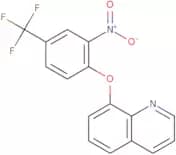
Fórmula:C16H16BrN3OPureza:Min. 95%Forma y color:PowderPeso molecular:346.22 g/mol2-Nitro-1-(8-quinolyloxy)-4-(trifluoromethyl)benzene
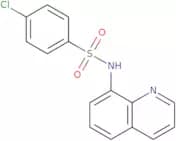
CAS:Please enquire for more information about 2-Nitro-1-(8-quinolyloxy)-4-(trifluoromethyl)benzene including the price, delivery time and more detailed product information at the technical inquiry form on this pageFórmula:C16H9F3N2O3Pureza:Min. 95%Forma y color:PowderPeso molecular:334.25 g/mol((4-Chlorophenyl)sulfonyl)-8-quinolylamine
CAS:Please enquire for more information about ((4-Chlorophenyl)sulfonyl)-8-quinolylamine including the price, delivery time and more detailed product information at the technical inquiry form on this pageFórmula:C15H11ClN2O2SPureza:Min. 95%Forma y color:PowderPeso molecular:318.78 g/mol