Alcoholes
Subcategorías de "Alcoholes"
Se han encontrado 5816 productos de "Alcoholes"
(S)-1,2,3,4,5,6,7,8-Octahydro-1-[(4-methoxyphenyl)methyl]isoquinoline (acetate salt )
CAS:(S)-1,2,3,4,5,6,7,8-Octahydro-1-[(4-methoxyphenyl)methyl]isoquinoline (acetate salt ) is a diphosphine that can be used as a catalyst to produce formic acid from methanol and carbon monoxide. This product is an enantiomer of picric acid and has been shown to be an effective additive in the crystallization of picric acid. The acetate salt is also optically pure.Pureza:Min. 95%4-Hydroxy-7-methoxyquinoline
CAS:4-Hydroxy-7-methoxyquinoline is an anti-malarial drug that belongs to the class of trimethyl, trifluoromethyl group. It is a cyclic compound and its synthesis starts with cyclization of the methyl derivative, which forms a ring. This product is used in clinical practice as an inhibitor of malarial protozoa and has been shown to have mechanistic effects on the cytochrome bc1 complex containing red blood cells. 4-Hydroxy-7-methoxyquinoline also inhibits the growth of bacteria by binding to the enzyme methionine synthase, which is involved in the biosynthesis of methionine from homocysteine. The product also has an inhibitory effect on DNA synthesis and protein synthesis.
Fórmula:C10H9NO2Pureza:Min. 95%Peso molecular:175.18 g/molRac 1,2-bis-palmitoyl-3-chloropropanediol
CAS:Rac-1,2-bis-palmitoyl-3-chloropropanediol is a dispersive molecule that is composed of a fatty acid and a chlorinated derivative of palmitic acid. It is used to calibrate the mass spectrometer and as an internal standard in quantitative analysis. Rac-1,2-bis-palmitoyl-3-chloropropanediol reacts with electrospray ionization with a dose-dependent response. It has been shown to be toxic to kidney cells at high doses but not at low doses. This chemical has been detected in food samples after being absorbed from the gastrointestinal tract. Rac 1,2-bis-palmitoyl 3 chloropropanediol can be found in the dipalmitate form or as formic acid.
Fórmula:C35H67ClO4Pureza:95%NmrForma y color:PowderPeso molecular:587.36 g/mol6-Heptyn-1-ol
CAS:6-Heptyn-1-ol is a naturally occurring chemical compound that has been isolated from the human colon and shown to have potent cytotoxicity against human colon carcinoma cells. 6-Heptyn-1-ol inhibits the growth of cancer cells by inducing apoptosis, the process by which a cell commits suicide. It also inhibits pancreatic lipase, an enzyme involved in fat digestion. 6-Heptyn-1-ol has been shown to be a chiral molecule with two enantiomers that can be synthesized artificially. The (R) form of 6-heptyn-1-ol is more potent than the (S) form in inducing apoptosis and inhibiting pancreatic lipase activity.Fórmula:C7H12OPureza:Min. 95%Peso molecular:112.17 g/mol2-(Dimethylamino)ethanol
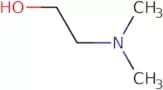
CAS:Producto controlado2-(Dimethylamino)ethanol is a colorless liquid that has a molecular weight of 78.1 g/mol and a boiling point of 176.1 °C. It can be found in many household products as well as cosmetics, pharmaceuticals, and chemical manufacturing. 2-(Dimethylamino)ethanol is a precursor to acetaldehyde and acetic acid, which are important intermediates in the production of polymers such as nylon. It can also be used to synthesize other chemicals such as dimethylformamide, ethylene glycol, and methyl methacrylate. This chemical reacts with calcium to form insoluble calcium 2-(dimethylamino)ethanolate (Ca(DMAE)). This reaction is reversible and the equilibrium can be shifted by changing the pH or adding another reactant such as hydrogen peroxide or hydroxide ions.Fórmula:C4H11NOPureza:Min. 95%Forma y color:Clear LiquidPeso molecular:89.14 g/mol{1-[2-(4-Methylphenoxy)ethyl]-1H-benzimidazol-2-yl}methanol
CAS:Producto controladoPlease enquire for more information about {1-[2-(4-Methylphenoxy)ethyl]-1H-benzimidazol-2-yl}methanol including the price, delivery time and more detailed product information at the technical inquiry form on this page
Fórmula:C17H18N2O2Pureza:Min. 95%Peso molecular:282.34 g/mol4-Cinnolinecarboxaldehyde
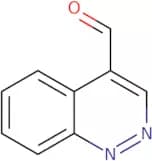
CAS:4-Cinnolinecarboxaldehyde is an organic compound that belongs to the group of cinnoline. It is a colorless liquid that can be used as a precursor in the production of aluminum metal. 4-Cinnolinecarboxaldehyde reacts with lithium aluminum hydride to form a compound that can be used as a reducing agent in organic chemistry. 4-Cinnolinecarboxaldehyde is also used as a precursor for preparing other compounds, such as lithium aluminum hydride and lithium aluminum trihydride.
Fórmula:C9H6N2OPureza:Min. 95%Peso molecular:158.16 g/mol[1-(3-Methylbutyl)-1H-benzimidazol-2-yl]methanol
CAS:Producto controladoPlease enquire for more information about [1-(3-Methylbutyl)-1H-benzimidazol-2-yl]methanol including the price, delivery time and more detailed product information at the technical inquiry form on this pageFórmula:C13H18N2OPureza:Min. 95%Peso molecular:218.29 g/mol1-Docosahexaenoin-2-oleoyl 3-phosphocholine
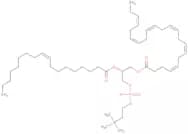
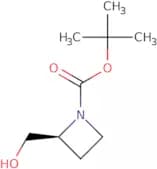
CAS:1-Docosahexaenoin-2-oleoyl 3-phosphocholine is a phospholipid compound that has shown promising potential in cancer research. This compound belongs to the steroid family and has been studied for its diagnostic capabilities in detecting breast cancer. It has also been investigated for its antiviral properties, particularly against HIV-1. Additionally, 1-Docosahexaenoin-2-oleoyl 3-phosphocholine has been researched for its use in diabetes management, with studies exploring its effects on insulin secretion and glucose metabolism. This compound has also been evaluated as a potential therapeutic agent for certain types of tumors due to its ability to inhibit tumor growth.Fórmula:C48H82NO8PPureza:Min. 95%Peso molecular:832.14 g/mol(S)-1-(tert-Butoxycarbonyl)-2-azetidinemethanol
CAS:Please enquire for more information about (S)-1-(tert-Butoxycarbonyl)-2-azetidinemethanol including the price, delivery time and more detailed product information at the technical inquiry form on this page
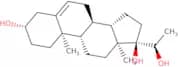
Fórmula:C9H17NO3Pureza:Min. 95%Peso molecular:187.24 g/mol(3b,20R)-Pregn-5-ene-3,17,20-triol
CAS:Producto controladoPlease enquire for more information about (3b,20R)-Pregn-5-ene-3,17,20-triol including the price, delivery time and more detailed product information at the technical inquiry form on this page
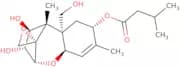
Fórmula:C21H34O3Pureza:Min. 95%Peso molecular:334.49 g/molT2 toxin triol
CAS:Producto controladoT2 toxin triol is a bacterial strain that is used as a model system for the study of zearalenone. It has been shown to inhibit the growth of trifluoroacetic acid-treated cells and prevent the formation of glucuronide conjugates. T2 toxin triol has also been shown to be toxic to rat liver microsomes in vitro, but not to tissue culture or monoclonal antibody-transfected cells. The toxicity was found to be due to its basic structure, which causes an increase in intracellular levels of reactive oxygen species and lipid peroxidation.
Fórmula:C20H30O7Pureza:Min. 95%Peso molecular:382.45 g/mol1,2,3,4-Tetrahydroquinoline-3-carboxylic acid
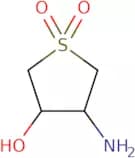
CAS:Tetrahydroquinoline-3-carboxylic acid is a crystalline, water-soluble compound. It is an intermediate in the synthesis of l-phenylalanine, paraformaldehyde and formaldehyde. Tetrahydroquinoline-3-carboxylic acid can be hydrolyzed to produce formic acid and hydrogen chloride. This product is also optically active and can be used as an indicator for hydroiodic acid.Fórmula:C10H11NO2Pureza:Min. 95%Peso molecular:177.2 g/mol4-Aminotetrahydrothiophene-3-ol 1,1-dioxide
CAS:Please enquire for more information about 4-Aminotetrahydrothiophene-3-ol 1,1-dioxide including the price, delivery time and more detailed product information at the technical inquiry form on this page
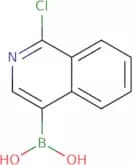
Fórmula:C4H9NO3SPureza:Min. 95%Peso molecular:151.19 g/mol(1-Chloroisoquinolin-4-yl)boronic acid
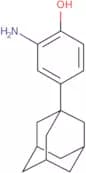
CAS:Please enquire for more information about (1-Chloroisoquinolin-4-yl)boronic acid including the price, delivery time and more detailed product information at the technical inquiry form on this pageFórmula:C9H7BClNO2Pureza:Min. 95%Peso molecular:207.42 g/mol4-(1-Adamantyl)-2-aminophenol
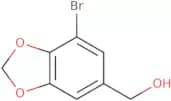
CAS:Please enquire for more information about 4-(1-Adamantyl)-2-aminophenol including the price, delivery time and more detailed product information at the technical inquiry form on this pageFórmula:C16H21NOPureza:Min. 95%Peso molecular:243.34 g/mol(7-bromo-2H-1,3-benzodioxol-5-yl)methanol
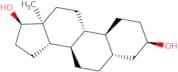
CAS:Producto controladoPlease enquire for more information about (7-bromo-2H-1,3-benzodioxol-5-yl)methanol including the price, delivery time and more detailed product information at the technical inquiry form on this pagePureza:Min. 95%Peso molecular:231.0455a-Estrane-3a,17a-diol
CAS:Producto controladoPlease enquire for more information about 5a-Estrane-3a,17a-diol including the price, delivery time and more detailed product information at the technical inquiry form on this pageFórmula:C18H30O2Pureza:Min. 95%Peso molecular:278.43 g/mol4-[(4-Chlorophenyl)phenylmethyl]-1-piperazineethanol dihydrochloride
CAS:4-[(4-Chlorophenyl)phenylmethyl]-1-piperazineethanol dihydrochloride is a cholinergic drug that is used to treat allergic rhinitis in children and adults. It has been shown to be well tolerated in pediatric patients and geriatric patients, as well as being an innovative, labile, and biopharmaceutical compound. 4-[(4-Chlorophenyl)phenylmethyl]-1-piperazineethanol dihydrochloride is not metabolized by the liver and does not have significant side effects. It has a low potential for abuse because of its low solubility in water. It is an antihistamine that blocks the action of histamine at H1 receptors on smooth muscle cells in the nose, which helps reduce nasal congestion and sneezing.Fórmula:C19H23ClN2O·2HClPureza:Min. 95%Peso molecular:403.77 g/molBromoform - Stabilized with ethanol
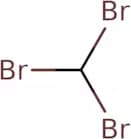
CAS:Bromoform is a colorless, sweet-smelling liquid that was formerly used as an industrial solvent and disinfectant. Bromoform is a potent liver toxin and has been implicated in the development of liver cancer. In animal studies, bromoform causes significant genotoxic effects, including DNA single-strand breaks and chromosomal aberrations. Bromoform also inhibits the activity of enzymes involved in lipid metabolism, which may be due to its ability to bind to proteins in the cell membrane and alter their function. Bromoform is absorbed through the lungs or gastrointestinal tract after inhalation or ingestion. It undergoes rapid metabolism by oxidation followed by conjugation with glutathione, which renders it non-toxic and allows for its elimination from the body.Fórmula:CHBr3Pureza:Min. 95%Forma y color:Clear LiquidPeso molecular:252.73 g/mol
![(S)-1,2,3,4,5,6,7,8-Octahydro-1-[(4-methoxyphenyl)methyl]isoquinoline (acetate salt )](/_next/image/?url=https%3A%2Fstatic.cymitquimica.com%2Fproducts%2F3D%2Fthumb-webp%2FFO29465.webp&w=3840&q=75)




![{1-[2-(4-Methylphenoxy)ethyl]-1H-benzimidazol-2-yl}methanol](/_next/image/?url=https%3A%2Fstatic.cymitquimica.com%2Fproducts%2F3D%2Fthumb-webp%2FFM135811.webp&w=3840&q=75)
![[1-(3-Methylbutyl)-1H-benzimidazol-2-yl]methanol](/_next/image/?url=https%3A%2Fstatic.cymitquimica.com%2Fproducts%2F3D%2Fthumb-webp%2FFM135812.webp&w=3840&q=75)

![4-[(4-Chlorophenyl)phenylmethyl]-1-piperazineethanol dihydrochloride](/_next/image/?url=https%3A%2Fstatic.cymitquimica.com%2Fproducts%2F3D%2Fthumb-webp%2FFC53582.webp&w=3840&q=75)