Alcoholes
Los alcoholes son una amplia gama de moléculas orgánicas derivadas de hidrocarburos que contienen uno o más grupos hidroxilo (grupo OH). Estos compuestos son esenciales en diversas reacciones químicas y se utilizan ampliamente en entornos de laboratorio para síntesis, como disolventes y en química analítica. En CymitQuimica, ofrecemos alcoholes de alta calidad preparados para uso en laboratorio, apoyando sus investigaciones y aplicaciones industriales con productos fiables y efectivos. Nuestra selección garantiza que tenga los alcoholes adecuados para sus necesidades específicas, ya sea para trabajos rutinarios de laboratorio o proyectos de investigación especializados.
Subcategorías de "Alcoholes"
Se han encontrado 5814 productos de "Alcoholes"
Ordenar por
Pureza (%)
0
100
|
0
|
50
|
90
|
95
|
100
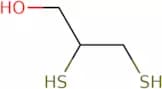
2,3-Dimercapto-1-propanol
CAS:2,3-Dimercapto-1-propanol (DMPC) is an antibiotic that has been shown to have a potent synergistic effect when used in combination with other antibiotics. DMPC inhibits the enzyme fatty acid synthase and prevents the synthesis of long-chain fatty acids. It also inhibits the uptake of long-chain fatty acids by tissues such as liver, muscle, and fat cells. DMPC is also a reactive chemical that reacts with oxygen from the air to form 2,3-dimercapto-1-propanol peroxyl radicals and hydrogen peroxide. These reactive species are toxic to cells exposed to DMPC in tissue culture or in vivo. This chemical is also a potent inducer of all-trans retinoic acid and dehydroascorbic acid production.Fórmula:C3H8OS2Pureza:Min. 95%Forma y color:Clear LiquidPeso molecular:124.23 g/mol1,4-Pentanediol
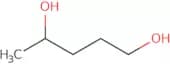
CAS:<p>1,4-Pentanediol is a diol that is used in the manufacture of polyurethanes and other organic compounds. It is produced by the oxidation of benzene with oxygen in the presence of a catalyst such as manganese dioxide. 1,4-Pentanediol can also be prepared from levulinic acid or glycol ethers. 1,4-Pentanediol reacts with an aromatic hydrocarbon in the presence of a homogeneous catalyst to produce viscosity and polycarboxylic acids. The reaction mechanism for this process begins with the addition of water to form hydrogen peroxide and acetaldehyde. Hydrogen peroxide then reacts with an aromatic hydrocarbon to produce glycol ether and hydroxy group. The hydroxyl group then reacts with another aromatic hydrocarbon to produce viscosity and polycarboxylic acid. The reaction products are isolated by distillation or vacuum evaporation, after which they are purified by recrystall</p>Fórmula:C5H12O2Pureza:Min. 95%Forma y color:Colorless Clear LiquidPeso molecular:104.15 g/mol[1-(3-Methylbutyl)-1H-benzimidazol-2-yl]methanol
CAS:Producto controladoPlease enquire for more information about [1-(3-Methylbutyl)-1H-benzimidazol-2-yl]methanol including the price, delivery time and more detailed product information at the technical inquiry form on this pageFórmula:C13H18N2OPureza:Min. 95%Peso molecular:218.29 g/molBromadiolone
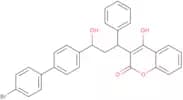
CAS:<p>Bromadiolone NA is a rodenticide that is used in the treatment of rodents in wastewater treatment. Bromadiolone NA has been shown to inhibit the mitochondrial membrane potential, which leads to the release of cytochrome C and activation of caspase 3. Bromadiolone NA also has antioxidative properties that protect against oxidative injury and its metabolites have been found to inhibit human serum albumin. This compound has been used as an antimicrobial agent to control biofilm formation and prevent microbial growth. The mode of action for bromadiolone is through the inhibition of chitosan polymerization, which prevents bacterial attachment and biofilm formation on surfaces. Bromadiolone NA was also shown to bind with DNA, inhibiting replication and transcription.</p>Fórmula:C30H23BrO4Pureza:Min. 95%Forma y color:PowderPeso molecular:527.41 g/mol3-Acetoxyphenol
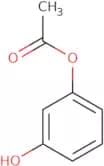
CAS:<p>3-Acetoxyphenol is a cholinergic. It can be used in analytical chemistry to measure the concentration of an alkanoic acid, such as hydrochloric acid, in a sample. It is also used in detergent compositions as an agent that helps break down fatty acids and proteins. 3-Acetoxyphenol has also been shown to have anti-inflammatory properties and can be used to treat skin cells for inflammatory diseases or other skin conditions.</p>Fórmula:C8H8O3Pureza:Min. 95%Forma y color:Red Clear LiquidPeso molecular:152.15 g/molEltrombopag olamine
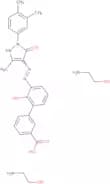
CAS:Eltrombopag olamine is an orally active drug that belongs to the class of thiazolidinones. It has been used for the treatment of thrombocytopenia in patients with chronic liver disease and myelodysplastic syndrome. Eltrombopag olamine inhibits platelet aggregation by binding to glycoprotein IIb/IIIa receptors on the surface of platelets. The drug is a prodrug that is metabolized in vivo to its active form, eltrombopag. This conversion is catalysed by CYP3A4 and CYP2D6 enzymes and can be inhibited by drugs that inhibit these enzymes, such as trifluoroacetic acid and hydroxyl group-containing compounds. Eltrombopag olamine binds to erythrocytes, which may be due to its ability to form intramolecular hydrogen bonds with nitrogen atoms. The synthesis of eltFórmula:C25H22N4O4•(C2H7NO)2Pureza:Min. 95%Forma y color:PowderPeso molecular:564.63 g/mol2,6-Dibromophenol
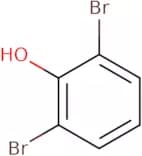
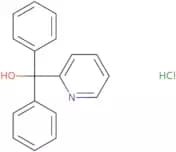
CAS:<p>2,6-Dibromophenol is a chemical compound that is used as an analytical reagent in the determination of bromide ion concentrations. It can be prepared by the debromination of 2-bromophenols using hydrochloric acid and heating to 150°C. This reaction mechanism is best described by kinetic data and a model system. The reaction product of this process is 2,6-dibromo-3-hydroxyphenol. This compound has been shown to have a higher dry weight in strains with high levels of hydroxy group activity.</p>Fórmula:C6H4Br2OPureza:Min. 95%Peso molecular:251.9 g/mola,a-Diphenyl-2-pyridinemethanol hydrochloride
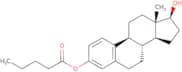
CAS:Producto controladoPlease enquire for more information about a,a-Diphenyl-2-pyridinemethanol hydrochloride including the price, delivery time and more detailed product information at the technical inquiry form on this pageFórmula:C18H16ClNOPureza:Min. 95%Peso molecular:297.78 g/molEstradiol 3-valerate
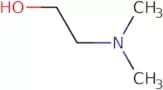
CAS:Producto controlado<p>Please enquire for more information about Estradiol 3-valerate including the price, delivery time and more detailed product information at the technical inquiry form on this page</p>Fórmula:C23H32O3Pureza:Min. 95%Forma y color:PowderPeso molecular:356.5 g/mol2-(Dimethylamino)ethanol
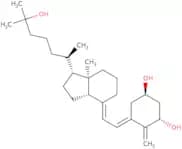
CAS:Producto controlado2-(Dimethylamino)ethanol is a colorless liquid that has a molecular weight of 78.1 g/mol and a boiling point of 176.1 °C. It can be found in many household products as well as cosmetics, pharmaceuticals, and chemical manufacturing. 2-(Dimethylamino)ethanol is a precursor to acetaldehyde and acetic acid, which are important intermediates in the production of polymers such as nylon. It can also be used to synthesize other chemicals such as dimethylformamide, ethylene glycol, and methyl methacrylate. This chemical reacts with calcium to form insoluble calcium 2-(dimethylamino)ethanolate (Ca(DMAE)). This reaction is reversible and the equilibrium can be shifted by changing the pH or adding another reactant such as hydrogen peroxide or hydroxide ions.Fórmula:C4H11NOPureza:Min. 95%Forma y color:Clear LiquidPeso molecular:89.14 g/mol5,6-trans-Calcitriol
CAS:Calcitriol is a vitamin D metabolite that has an important role in bone health. Calcitriol can be quantified by measuring the amount of calcium that is bound to the molecule. This is done using a detector, which detects the emission of light from the calcitriol. The average recovery value for calcitriol was found to be 98%. The diode array spectrometer and mass spectrometer are used to measure the amount of light emitted and identify specific peaks. A workstation is used to analyze data collected by the detector and chromatographic analysis, respectively. The stability tests were conducted to determine how long calcitriol stays stable at various temperatures.Fórmula:C27H44O3Pureza:Min. 95%Forma y color:PowderPeso molecular:416.64 g/mol(R)-(-)-2-Amino-1-butanol
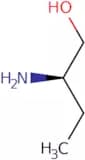
CAS:(R)-(-)-2-Amino-1-butanol is an organic compound that is used as a reagent in the synthesis of pharmaceuticals. It has antimycobacterial properties and can be used to treat tuberculosis. The mechanism for its antimycobacterial activity is not fully understood, but it may involve copper complex formation with the mycobacteria. The chloride ion may also play a role in this process by binding to the copper complex and increasing its solubility in water. This compound may react with aminothiols from the host cell, leading to degradation of DNA, RNA, and proteins. (R)-(-)-2-Amino-1-butanol has been shown to have cytotoxic effects on colorectal adenocarcinoma cells and human lung cancer cells in culture. It also inhibits human colon carcinoma cells in culture through the production of organic acids such as formic acid and acetic acid.Fórmula:C4H11NOPureza:Min. 95%Peso molecular:89.14 g/mol(3α,5α,17Z)-Pregn-17(20)-en-3-ol
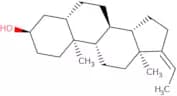
CAS:Producto controlado<p>Please enquire for more information about (3α,5α,17Z)-Pregn-17(20)-en-3-ol including the price, delivery time and more detailed product information at the technical inquiry form on this page</p>Fórmula:C21H34OPureza:Min. 95%Peso molecular:302.49 g/mol11α-Methylandrostan-17β-ol-3-one
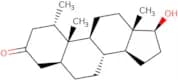
CAS:Producto controlado11alpha-Methylandrostan-17beta-ol-3-one is a pharmacological agent that belongs to the group of androgens. It is an oral preparation and has been used in the treatment of infectious diseases, autoimmune diseases, and metabolic disorders. It has also been used as a matrix effect control in biological samples. The biological effects of 11alpha-Methylandrostan-17beta-ol-3-one are mediated by its direct action on cells or through conversion to testosterone or dihydrotestosterone (DHT). These effects include increasing protein synthesis, promoting bone formation, lowering cholesterol levels, stimulating the production of red blood cells, and decreasing fat deposition. The main side effects are acne vulgaris, male pattern baldness, prostate enlargement, increased risk for prostate cancer, and increased risk for developing breast cancer.Fórmula:C20H32O2Pureza:Min. 95%Forma y color:PowderPeso molecular:304.47 g/mol3b-Acetoxy-6a-chloroergosta-7,22-dien-5a-ol
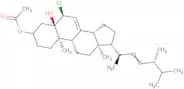
CAS:Producto controladoPlease enquire for more information about 3b-Acetoxy-6a-chloroergosta-7,22-dien-5a-ol including the price, delivery time and more detailed product information at the technical inquiry form on this pageFórmula:C30H47ClO3Pureza:Min. 95%Peso molecular:491.15 g/molDesmethoxy ranolazine
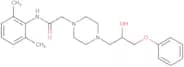
CAS:Please enquire for more information about Desmethoxy ranolazine including the price, delivery time and more detailed product information at the technical inquiry form on this pageFórmula:C23H31N3O3Pureza:Min. 95%Peso molecular:397.51 g/mol3,4-Dihydroisoquinolin-2(1H)-ylacetic acid
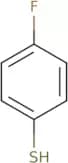
CAS:<p>3,4-Dihydroisoquinolin-2(1H)-ylacetic acid is a chemical compound with the molecular formula of C8H11NO2. It is a useful scaffold for the synthesis of complex compounds and research chemicals. 3,4-Dihydroisoquinolin-2(1H)-ylacetic acid is also a versatile building block for the preparation of fine chemicals. It is used as a reaction component in many organic reactions and can be used as a speciality chemical or reagent due to its high quality.</p>Fórmula:C11H13NO2Pureza:Min. 95%Forma y color:PowderPeso molecular:191.23 g/mol4-Fluorothiophenol
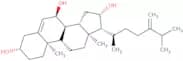
CAS:<p>4-Fluorothiophenol is a reactive chemical that can be used as a monomer for the synthesis of polymers. It has been shown to polymerize with acrylonitrile and methacrylate in the presence of an initiator to form polyacrylonitrile and polymethacrylate, respectively. 4-Fluorothiophenol reacts with unsaturated fatty acids to form thiolates, which are useful intermediates in organic synthesis. 4-Fluorothiophenol also reacts with sulfur transfer agents such as thiourea or mercaptoethanol, leading to S-sulfides that are useful intermediates in organic synthesis. These reactions can be followed by kinetic energy spectroscopy (photoelectron) and nuclear magnetic resonance spectroscopy (NMR). 4-Fluorothiophenol has been shown to undergo intramolecular hydrogen transfer reactions with second order rate constants ranging from</p>Fórmula:C6H5FSPureza:Min. 95%Peso molecular:128.17 g/molErgosta-5,24(28)-diene-3,7,16-triol
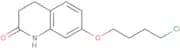
CAS:Producto controlado<p>Please enquire for more information about Ergosta-5,24(28)-diene-3,7,16-triol including the price, delivery time and more detailed product information at the technical inquiry form on this page</p>Fórmula:C28H46O3Pureza:Min. 95%Peso molecular:430.66 g/mol3,4-Dihydro-7-(4-chlorobutoxy)-2(1H)-Quinolinone
CAS:3,4-Dihydro-7-(4-chlorobutoxy)-2(1H)-Quinolinone is a crystalline organic base. It is used as an intermediate in the synthesis of piperazine derivatives. 3,4-Dihydro-7-(4-chlorobutoxy)-2(1H)-Quinolinone can be used to acetylate phenols and amines. This compound also has been shown to be useful in the industrial production of carbostyril and other pharmaceuticals. 3,4-Dihydro-7-(4-chlorobutoxy)-2(1H)-Quinolinone is also a high yield coupling agent for the production of heterocyclic compounds such as 1,5,6,8-tetrahydropyrimidines and benzimidazoles.Pureza:Min. 95%

![[1-(3-Methylbutyl)-1H-benzimidazol-2-yl]methanol](/_next/image/?url=https%3A%2Fstatic.cymitquimica.com%2Fproducts%2F3D%2Fthumb-webp%2FFM135812.webp&w=3840&q=75)