Alcoholes
Los alcoholes son una amplia gama de moléculas orgánicas derivadas de hidrocarburos que contienen uno o más grupos hidroxilo (grupo OH). Estos compuestos son esenciales en diversas reacciones químicas y se utilizan ampliamente en entornos de laboratorio para síntesis, como disolventes y en química analítica. En CymitQuimica, ofrecemos alcoholes de alta calidad preparados para uso en laboratorio, apoyando sus investigaciones y aplicaciones industriales con productos fiables y efectivos. Nuestra selección garantiza que tenga los alcoholes adecuados para sus necesidades específicas, ya sea para trabajos rutinarios de laboratorio o proyectos de investigación especializados.
Subcategorías de "Alcoholes"
Se han encontrado 5814 productos de "Alcoholes"
Ordenar por
Pureza (%)
0
100
|
0
|
50
|
90
|
95
|
100
1,6-Hexanediol
CAS:<p>1,6-Hexanediol is a diol that can be used as a control agent for radiation-sensitive polymeric matrices. It has been shown to bind to the hydroxyl groups of polymers and form hydrogen bonds with other molecules. 1,6-Hexanediol also reacts with trifluoroacetic acid in an electrochemical impedance spectroscopy study to produce low energy electrons. The kinetic data show that the optimum concentration of 1,6-hexanediol is between 0.1 and 0.2 M and the activation energies are in the range of 4.0 - 7.0 kcal/mol.</p>Fórmula:C6H14O2Pureza:Min. 95%Forma y color:PowderPeso molecular:118.17 g/molcis-Verbenol
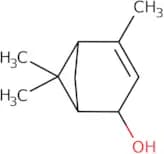
CAS:Cis-Verbenol is a natural compound that has shown to be an inhibitor of the enzyme proton pump H+,K+-ATPase. It also has been shown to inhibit the growth of some cancer cells in vitro. Cis-Verbenol is a terpene alcohol, which is extracted from plants such as the leaves of rosemary and lavender. It is commonly used in food composition as a flavoring agent and preservative. Cis-Verbenol can be detected by gas chromatography with flame ionization detection (GC/FID) or gas chromatography with mass spectrometry (GC/MS).Fórmula:C10H16OPureza:85%MinPeso molecular:152.23 g/mol2-Bromoethane-1-thiol
CAS:<p>2-Bromoethane-1-thiol (2BET) is a hydrogen bond sensitive sensor that can be used in the detection of reactive oxygen species. 2BET has been shown to have a high sensitivity and selectivity to hydrogen peroxide, with an observed response time of less than 1 second. This sensor has been found to be useful for detecting short-term changes in hydrogen peroxide concentrations and can also detect long term changes due to its stability in the membrane. 2BET is also highly selective for hydrogen peroxide and does not react with other compounds, such as nitric oxide or sulfur dioxide. 2BET is a cavity type sensor that consists of two gold electrodes with a polyelectrolyte membrane between them. When exposed to reactive oxygen species, the polyelectrolyte membrane becomes crosslinked and this change in permeability can be detected by measuring the current across the electrodes. 2BET sensors are able to distinguish between isotopomers</p>Fórmula:C2H5BrSPureza:Min. 95%Forma y color:Clear LiquidPeso molecular:141.03 g/mol4-Fluoro-3-nitrobenzyl alcohol
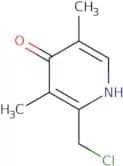
CAS:<p>4-Fluoro-3-nitrobenzyl alcohol (4FNA) is a potent, orally bioavailable, and selective inhibitor of the tyrosine kinase AXL. 4FNA binds to the ATP binding site on AXL and blocks phosphorylation of its tyrosine kinase domain. This binding leads to a conformational change in the AXL protein that prevents it from interacting with downstream signaling molecules, inhibiting T cell activation.</p>Fórmula:C7H6FNO3Pureza:Min. 95%Peso molecular:171.13 g/mol2-Chloromethyl-3,5-dimethylpyridin-4-ol
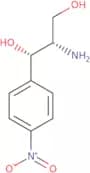
CAS:Please enquire for more information about 2-Chloromethyl-3,5-dimethylpyridin-4-ol including the price, delivery time and more detailed product information at the technical inquiry form on this pageFórmula:C8H10ClNOPureza:Min. 95%Peso molecular:171.62 g/molL-threo-(+)-2-Amino-1-(4-nitrophenyl)-1,3-propanediol
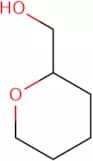
CAS:L-threo-(+)-2-amino-1-(4-nitrophenyl)-1,3-propanediol is a functional group that is composed of a fatty acid and an amino acid. It has been shown to inhibit the growth of corynebacterium glutamicum bacteria by hydrolyzing their cell wall. This compound also inhibits the activity of bacterial enzymes that are involved in the synthesis of proteins. This functional group may be useful for the treatment of chronic lymphocytic leukemia and HIV infection.Fórmula:C9H12N2O4Pureza:Min. 95%Forma y color:PowderPeso molecular:212.2 g/molTetrahydropyran-2-methanol
CAS:<p>Tetrahydropyran-2-methanol is a hydrogenated, hydrated, triflic acid derivative that belongs to the group of organic compounds known as ethers. The presence of a hydroxyl group on one end and a chloride group on the other end provides tetrahydropyran-2-methanol with two reactive sites for reactions with metals. It has been shown to react with metal surfaces in order to form an adduct under acidic conditions that can be used as an ion exchange resin. Tetrahydropyran-2-methanol also reacts rapidly with hydrochloric acid to form tetrahydrothiophene and methanol. This reaction time can be sped up by heating the liquid at atmospheric pressure or by adding sulfuric acid. Tetrahydropyran-2-methanol is also capable of reacting with water in order to produce hydrogen gas and alcohol.</p>Fórmula:C6H12O2Pureza:Min. 98%Peso molecular:116.16 g/mol2-[2-[2-(2-Azidoethoxy)ethoxy]ethoxy]ethanol
CAS:<p>2-[2-[2-(2-Azidoethoxy)ethoxy]ethoxy]ethanol is a PEG polymer categorised as monofunctional (OH-PEG-X). Used as a linker, 2-[2-[2-(2-azidoethoxy)ethoxy]ethoxy]ethanol is used to attached PEG to proteins, peptides, oligonucleotides, nanoparticles and small molecules via pegylation, a bioconjugation technique.</p>Fórmula:C8H17N3O4Pureza:Min. 95%Forma y color:Colorless PowderPeso molecular:219.24 g/mol3-Piperidin-1-ylpropan-1-ol
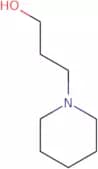
CAS:3-Piperidin-1-ylpropan-1-ol is a substance that is structurally related to biperiden and has affinity for the H3 receptor. It has been shown to have a high affinity for the H3 receptor, which is found in high concentration in the rat brain. 3-Piperidin-1-ylpropan-1-ol has been shown to have antagonistic activity against neuropathic pain in rats, by inhibiting the release of norepinephrine from nerve endings. This substance also has antihistaminic properties, which may be due to its ability to inhibit histamine release. 3-Piperidin-1-ylpropan-1-ol is an enantiomer of piperidine, with a slightly higher affinity for the H3 receptor than its mirror image. The racemic mixture isomeric form (i.e., both enantiomers) inhibits the H3 receptor with an equal potency,Fórmula:C8H17NOPureza:Min. 95%Forma y color:Colorless Clear LiquidPeso molecular:143.23 g/molα-Zearalenol
CAS:a-Zearalenol is a steroidal compound that has been shown to be effective in the treatment of autoimmune diseases. It has been found to have a matrix effect on the transcription of genes and can be used in wastewater treatment. Further, it has been shown to inhibit the activity of complex enzymes such as lysyl oxidase and prolyl hydroxylase. The hybridoma cell line was developed for the production of monoclonal antibodies against zearalenone, and an analytical method using LC-MS/MS with fluorescence detection for a-zearalenol was also developed.Fórmula:C18H24O5Pureza:Min. 95%Peso molecular:320.38 g/molMethallyl alcohol
CAS:<p>Methallyl alcohol is a reactive hydroxide solution that is used as an intermediate in the industrial synthesis of polycarboxylic acids, glycol ethers, and other compounds. It reacts with hydrogen chloride to form methallyl chloride, which can be used to produce polymers. Methallyl alcohol can also be used as a reagent for the synthesis of various esters, amides, and other organic compounds. The enzyme inhibitors it produces inhibit reactions involving fatty acid and aliphatic hydrocarbon oxidation. Methallyl alcohol is produced by the reaction of methanol with allyl chloride. This reaction occurs in vivo under acidic conditions.</p>Fórmula:C4H8OPureza:Min. 98 Area-%Forma y color:Colorless Clear LiquidPeso molecular:72.11 g/mol2,2,4-Trimethyl-1,2-dihydroquinoline
CAS:<p>2,2,4-Trimethyl-1,2-dihydroquinoline is a chemical compound with the formula C8H10N2. It is a white solid that is insoluble in water but soluble in nonpolar solvents such as benzene, toluene and hexane. 2,2,4-Trimethyl-1,2-dihydroquinoline has been shown to induce liver lesions in rats at doses of 1.25 g/kg/day. It also reacts with hydrogen fluoride to form calcium stearate. This compound is also used as a precursor for the synthesis of diazonium salts and has been shown to be carcinogenic in animal studies.</p>Fórmula:C12H15NPureza:Min. 95%Forma y color:Clear Viscous LiquidPeso molecular:173.25 g/mol(D-Thr6,D-Trp8·9,L-alaninol15)-Galanin (1-15)
CAS:<p>Please enquire for more information about (D-Thr6,D-Trp8·9,L-alaninol15)-Galanin (1-15) including the price, delivery time and more detailed product information at the technical inquiry form on this page</p>Fórmula:C84H117N21O18Pureza:Min. 95%Peso molecular:1,708.96 g/mol4-Fluoromethyl-alpha-methylbenzyl alcohol
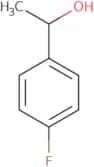
CAS:<p>4-Fluoromethyl-alpha-methylbenzyl alcohol is a nonclassical molecule that has been synthesized. This molecule has been modeled computationally and the results indicate that it exhibits a planar geometry with a diastereomeric ratio of 1:1. The theoretical calculations show that the reaction of 4-fluoromethyl-alpha-methylbenzyl alcohol with water is exothermic, which would result in the formation of an intermediate hydroxide ion. Kinetic studies have shown that this molecule can undergo transfer reactions and dehydrogenation reactions, both of which are possible mechanisms for its reactivity.</p>Fórmula:C8H9FOPureza:Min. 95%Peso molecular:140.15 g/moltert-Butyl 7-bromo-3,4-dihydroisoquinoline-2(1H)-carboxylate
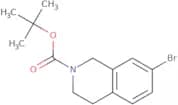
CAS:<p>Please enquire for more information about tert-Butyl 7-bromo-3,4-dihydroisoquinoline-2(1H)-carboxylate including the price, delivery time and more detailed product information at the technical inquiry form on this page</p>Fórmula:C14H18BrNO2Pureza:Min. 95%Forma y color:PowderPeso molecular:312.2 g/mol2,2'-Azanediylbis(propan-1-ol)
CAS:Please enquire for more information about 2,2'-Azanediylbis(propan-1-ol) including the price, delivery time and more detailed product information at the technical inquiry form on this pageFórmula:C6H15NO2Pureza:Min. 95%Peso molecular:133.19 g/molXylenol orange
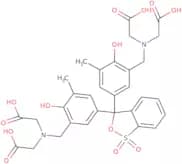
CAS:Xylenol orange is a dye used as a pH indicator. It is typically present as the monosodium salt of xylenol and has an optimum concentration of 0.2-0.5 mg/L. Xylenol orange is highly soluble in water and can be used in aqueous solutions, but it should not be used with strong acids or alkalis, as they will cause the dye to precipitate out of solution. Xylenol orange reacts with acidic substances and changes colour from orange to yellow at pH 7.0 or higher. The mechanism behind this reaction involves the deprotonation of xylenol by acid, followed by protonation of the conjugate base, which then undergoes electrophilic substitution by hydroxide ions (OH−). This reaction is shown below: XO+H+→XO−+H+ XO−+OH−→HO−+X The LangmuirFórmula:C31H32N2O13SPureza:Min. 95%Peso molecular:672.66 g/mol(S)-3,3'-Dibromo-5,5',6,6',7,7',8,8'-octahydro-1,1'-binaphthalene-2,2'-diol
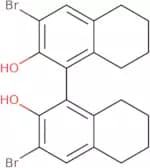
CAS:<p>(S)-3,3'-Dibromo-5,5',6,6',7,7',8,8'-octahydro-1,1'-binaphthalene-2,2'-diol is a synthetic compound that has been prepared by a Diels-Alder reaction. It is used as an asymmetric synthesis catalyst for the production of optically active compounds. The ligands are catalysts for the reaction and can be easily replaced with different ligands to produce different products. This compound has been researched for its potential use in the production of pharmaceuticals and other chemicals.</p>Fórmula:C20H20Br2O2Pureza:Min. 95%Forma y color:White To Yellow SolidPeso molecular:452.18 g/mol5-Iodo-2-methoxybenzyl alcohol
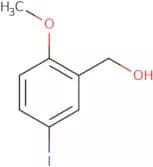
CAS:<p>5-Iodo-2-methoxybenzyl alcohol (5IMB) is a conjugate that inhibits tubulin polymerization and mitochondrial membrane integrity. It has significant inhibitory effects on colchicine-induced apoptosis in colon cancer cells, inducing apoptotic cell death by the activation of caspase 3 and annexin. 5IMB also has an inhibitory effect on mitochondria, leading to mitochondrial membrane depolarization and apoptotic cell death. This conjugate also induces the death of human cancer cells, specifically mcf-7, which are involved in tumour growth and metastasis. The mechanism of action for 5IMB is through its ability to induce mitochondrial membrane depolarization, leading to apoptotic cell death.</p>Fórmula:C8H9O2IPureza:Min. 95%Peso molecular:264.06 g/mol1H-Pyrazol-4-ylmethanol
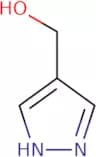
CAS:1H-Pyrazol-4-ylmethanol is a dehydrogenase inhibitor that binds to the heme group of the enzyme and inhibits oxidative metabolism. It has been shown to be an effective inhibitor of human liver alcohol dehydrogenase (ADH) and also reduces the absorption rate constant of pyrazole derivatives. The catalytic mechanism is not yet known, but it has been found to inhibit other enzymes with a similar catalytic mechanism. Techniques such as kinetic studies and model systems have been used to study this enzyme's catalytic mechanism.Fórmula:C4H6N2OPureza:Min. 95%Peso molecular:98.1 g/mol




![2-[2-[2-(2-Azidoethoxy)ethoxy]ethoxy]ethanol](/_next/image/?url=https%3A%2Fstatic.cymitquimica.com%2Fproducts%2F3D%2Fthumb-webp%2FFA09300.webp&w=3840&q=75)