


Alcoholes
Los alcoholes son una amplia gama de moléculas orgánicas derivadas de hidrocarburos que contienen uno o más grupos hidroxilo (grupo OH). Estos compuestos son esenciales en diversas reacciones químicas y se utilizan ampliamente en entornos de laboratorio para síntesis, como disolventes y en química analítica. En CymitQuimica, ofrecemos alcoholes de alta calidad preparados para uso en laboratorio, apoyando sus investigaciones y aplicaciones industriales con productos fiables y efectivos. Nuestra selección garantiza que tenga los alcoholes adecuados para sus necesidades específicas, ya sea para trabajos rutinarios de laboratorio o proyectos de investigación especializados.
Subcategorías de "Alcoholes"
Se han encontrado 5814 productos de "Alcoholes"
Ordenar por
Pureza (%)
0
100
|
0
|
50
|
90
|
95
|
100
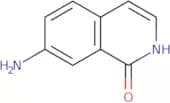
7-Amino-1(2h)-isoquinolinone
CAS:<p>Please enquire for more information about 7-Amino-1(2h)-isoquinolinone including the price, delivery time and more detailed product information at the technical inquiry form on this page</p>Fórmula:C9H8N2OPureza:Min. 95%Peso molecular:160.17 g/mol4-Chlorophenethyl alcohol
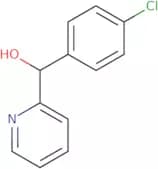
CAS:4-Chlorophenethyl alcohol is a synthetic, primary alcohol. It can be synthesized by reacting 2,4-dichlorobenzoic acid with a Grignard reagent. The reaction produces 4-chlorophenethyl alcohol, which is insoluble in water and reacts with chloride to form chloroform. This procedure can be used to produce other chlorinated alcohols. 4-Chlorophenethyl alcohol has been shown to have acute toxicities that are similar to those of trifluoroacetic acid and it is believed that the toxicity is due to its ability to react with proteins and nucleic acids.Fórmula:C8H9ClOPureza:Min. 95%Forma y color:PowderPeso molecular:156.61 g/mol4-Chlorophenyl-2-pyridinylmethanol
CAS:<p>Please enquire for more information about 4-Chlorophenyl-2-pyridinylmethanol including the price, delivery time and more detailed product information at the technical inquiry form on this page</p>Fórmula:C12H10ClNOPureza:Min. 95%Peso molecular:219.67 g/molrac-1-anthracen-2-yl-ethanol
CAS:<p>Rac-1-anthracen-2-yl-ethanol is an apolar, injecting alcohol. It has two isomers. Rac-1-anthracen-2-yl-ethanol has a selectivity profile that is different from other compounds in its class, and it outperforms amine solvents in the separation of similar compounds. This compound's selectivity profile is due to interactions with the solvent and stationary phase that are unique to this compound. Rac-1-anthracen-2-yl-ethanol also has a low nature and low toxicity profile.</p>Fórmula:C16H14OPureza:Min. 95%Peso molecular:222.28 g/molPridinol methanesulfonate salt
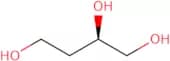
CAS:<p>Pridinol methanesulfonate salt is a water-soluble drug that is used for the treatment of chronic pancreatitis. It has been shown to have a sustained-release effect in the gastrointestinal tract and is absorbed from the mouth. Pridinol methanesulfonate salt interacts with microspheres, which are made of polymers that form a gel matrix. This interaction stabilizes the complex and prevents premature release of the drug. The microspheres are then released by an absorber, which is an agent that binds to the surface of the microsphere and releases it into solution. Pridinol methanesulfonate salt can be found in wastewater as it biodegrades quickly and does not accumulate in tissues or organs.</p>Fórmula:C21H29NO4SPureza:Min. 95%Peso molecular:391.53 g/mol(R)-(+)-1,2,4-Butanetriol
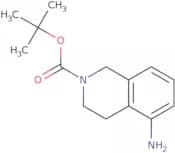
CAS:Producto controlado(R)-(+)-1,2,4-Butanetriol is a molecule that has been shown to have cancer-fighting properties. It is used in clinical trials to treat cancer by inhibiting the growth of cells. This drug binds to the site on the protein that is responsible for cell division and prevents the formation of new cells, thereby preventing tumor growth. The mechanism of action for this drug is not yet fully understood but it may be due to its ability to inhibit calcium channels or interfere with protein synthesis. (R)-(+)-1,2,4-Butanetriol has also been shown in laboratory studies to bind with human immunodeficiency virus (HIV) and prevent it from attaching to CD4 T-cells. This drug has been tested in humans as an anti-HIV treatment and showed promising results in a questionnaire study.Fórmula:C4H10O3Pureza:Min. 95%Peso molecular:106.12 g/mol5-Amino-2-tert-butoxycarbonyl-1,2,3,4-tetrahydroisoquinoline
CAS:<p>Please enquire for more information about 5-Amino-2-tert-butoxycarbonyl-1,2,3,4-tetrahydroisoquinoline including the price, delivery time and more detailed product information at the technical inquiry form on this page</p>Fórmula:C14H20N2O2Pureza:Min. 95%Peso molecular:248.32 g/mol3,5-Bis(trifluoromethyl)phenol
CAS:<p>3,5-Bis(trifluoromethyl)phenol (3,5-TFMP) is a nucleophilic compound that is soluble in organic solvents. It has acidic properties and enhances the rate of nucleophilic substitution reactions. 3,5-Bis(trifluoromethyl)phenol has been shown to be a size-exclusion chromatography stationary phase for separation of organic compounds. 3,5-TFMP has also been shown to have magnetic resonance spectroscopy properties. This compound is stable in supercritical carbon dioxide and can be used as a gravimetric analysis reagent. 3,5-Bis(trifluoromethyl)phenol is also able to form hydrogen bonds with other molecules and has the ability to bind fluorine atoms.</p>Fórmula:C8H4F6OPureza:Min. 95%Forma y color:Colorless Clear LiquidPeso molecular:230.11 g/mol(S)-3-Pyrrolidinol
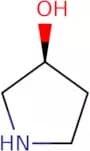
CAS:<p>3-Pyrrolidinol is a synthetic chemical that binds to the nicotinic acetylcholine receptor. It has been shown to inhibit cell growth in vitro, and may be used as an anti-cancer drug. 3-Pyrrolidinol has also been shown to have inhibitory effects on the replication of DNA in cells. The chemical reacts with hydrochloric acid to form a hydrogen bond, which enhances its ability to bind to the receptor. This reaction can be reversed by adding an acetate extract, which removes the hydrogen bond and causes the chemical to dissociate from the receptor. 3-Pyrrolidinol has a lactam ring with three functional groups (an amine group, a hydroxyl group, and a ketone group), which makes it more soluble in water than other compounds with only two functional groups. Its potential use is mainly for treating cancer or inhibiting bacterial growth.</p>Fórmula:C4H9NOPureza:Min. 95%Peso molecular:87.12 g/mol(1R,2R)-1,2-Cyclohexanedimethanol
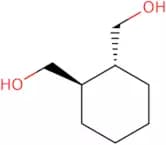
CAS:<p>(1R,2R)-1,2-Cyclohexanedimethanol is an isomer of the more common (1S,2S)-1,2-cyclohexanedimethanol. It is a synthetic compound that is used as an analytical reagent in chromatographic and spectroscopic analyses. The two enantiomers of this compound have different stability and reactivity properties. (1R,2R)-1,2-Cyclohexanedimethanol has been shown to be a good photocatalyst for the decomposition of organic compounds. It also has some hydrophobic properties because it can dissolve in organic solvents such as ethers and chlorinated hydrocarbons.</p>Fórmula:C8H16O2Pureza:Min. 95%Peso molecular:144.21 g/molQuinoline-4-carboxylic acid
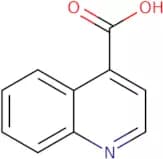
CAS:<p>Quinoline-4-carboxylic acid is a natural compound that is derived from the amino acid tryptophan. It has been shown to have antiinflammatory activity and to be an inhibitor of prostaglandin synthesis. Quinoline-4-carboxylic acid inhibits the growth of carcinoma cells in culture by inducing apoptosis, which is mediated by inhibition of protein synthesis. Quinoline-4-carboxylic acid also has pharmacokinetic properties, including a low volume of distribution, low clearance rate and high bioavailability.</p>Fórmula:C10H7NO2Pureza:Min. 97 Area-%Peso molecular:173.17 g/mol4-Chloro-6-methoxyquinoline
CAS:<p>4-Chloro-6-methoxyquinoline is an inhibitor of bacterial DNA gyrase. It has antibacterial activity against Gram-positive and Gram-negative bacteria, including Staphylococcus aureus, Enterococcus faecalis, and Pseudomonas aeruginosa. 4-Chloro-6-methoxyquinoline is a synthetic compound that was reinvestigated for its antibacterial activity. It has been shown to be effective in the treatment of Staphylococcal infections. The mechanism of action may involve inhibition of topoisomerase II or interference with the synthesis of DNA by binding to the enzyme bacterial DNA gyrase. Quinidine and cinchonidine are quinine derivatives that have been found to inhibit bacterial DNA gyrase. These compounds are found in the bark of Cinchona species, which includes Cinchona ledgeriana, Cinchona officinalis, and Cinchona succirub</p>Fórmula:C10H8ClNOPureza:Min. 95%Peso molecular:193.029445-Chloro-8-hydroxyquinoline
CAS:<p>5-Chloro-8-hydroxyquinoline (5-CQ) is a quinoline derivative that has been used as an anticancer agent. It binds to DNA and inhibits the synthesis of RNA and proteins, leading to cell death. 5-CQ has been shown to be cytotoxic against skin cells in vitro by inhibiting mitochondrial oxidative phosphorylation and decreasing the mitochondrial membrane potential. This compound also has genotoxic effects on cultured choroidal neovascularization cells through the inhibition of DNA synthesis.<br>5-CQ binds to DNA via hydrogen bonds with nitrogen atoms in the purine ring of nucleobases. The overall geometry is that of a distorted octahedron with two faces, each containing six nitrogens in square planar coordination geometry. The binding constants are low for purines but high for pyrimidines, which is why 5-CQ preferentially targets purine rich regions of the genome.</p>Fórmula:C9H6ClNOPureza:Min. 95%Forma y color:Green To Grey SolidPeso molecular:179.6 g/mol3-Piperidin-1-ylpropan-1-ol
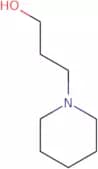
CAS:3-Piperidin-1-ylpropan-1-ol is a substance that is structurally related to biperiden and has affinity for the H3 receptor. It has been shown to have a high affinity for the H3 receptor, which is found in high concentration in the rat brain. 3-Piperidin-1-ylpropan-1-ol has been shown to have antagonistic activity against neuropathic pain in rats, by inhibiting the release of norepinephrine from nerve endings. This substance also has antihistaminic properties, which may be due to its ability to inhibit histamine release. 3-Piperidin-1-ylpropan-1-ol is an enantiomer of piperidine, with a slightly higher affinity for the H3 receptor than its mirror image. The racemic mixture isomeric form (i.e., both enantiomers) inhibits the H3 receptor with an equal potency,Fórmula:C8H17NOPureza:Min. 95%Forma y color:Colorless Clear LiquidPeso molecular:143.23 g/molDiphenolic acid
CAS:Diphenolic acid is a reactive compound that is used as a solid catalyst. It has a hydroxyl group and a fatty acid, which makes it soluble in organic solvents. The methyl ethyl ester of diphenolic acid can be obtained from the reaction of diphenolic acid with methanol, ethanol or ethylene glycol. Diphenolic acid can also be obtained by reacting dibenzalacetone with an alcohol. Diphenolic acid has been used to synthesize monoclonal antibodies and linear calibration curves for electrochemical impedance spectroscopy. The hydroxyl group on diphenolic acid allows it to undergo reactions that are not possible for other compounds such as phenols, leading to its use in surface methodology and flow systems.Fórmula:C17H18O4Forma y color:White PowderPeso molecular:286.32 g/mol2-O-Benzyl-3-O-allyl-sn-glycerol
CAS:<p>Please enquire for more information about 2-O-Benzyl-3-O-allyl-sn-glycerol including the price, delivery time and more detailed product information at the technical inquiry form on this page</p>Fórmula:C13H18O3Pureza:Min. 95%Peso molecular:222.28 g/mol3-Pyridinemethanol
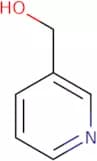
CAS:3-Pyridinemethanol is a chemical compound that is soluble in water. It has a molecular weight of 92.07 grams per mole, and the chemical formula CH3CH2NH. 3-Pyridinemethanol is used as a reagent for the synthesis of organic compounds, such as chlorides, esters, amides, nitriles, and thioamides. 3-Pyridinemethanol reacts with chloride to form an intermediate which reacts with water to produce hydrochloric acid and ammonium chloride. This reaction also produces heat, which can be used to generate energy or power other reactions. br> br> A nanotube was synthesized from 3-pyridinemethanol by using a template made from nickel atoms arranged in a hexagonal pattern on the surface of an indium tin oxide (ITO) glass substrate. The nanotubes are about 5 nm in diameter and can be upFórmula:C6H7NOPureza:Min. 95%Peso molecular:109.13 g/mol4-[(4-Chlorophenyl)phenylmethyl]-1-piperazineethanol dihydrochloride
CAS:<p>Please enquire for more information about 4-[(4-Chlorophenyl)phenylmethyl]-1-piperazineethanol dihydrochloride including the price, delivery time and more detailed product information at the technical inquiry form on this page</p>Fórmula:C19H23ClN2O•(HCl)2Pureza:Min. 95%Peso molecular:403.77 g/molCyclopent-2-en-1-ol
CAS:Cyclopent-2-en-1-ol is a reactive monomer that can react with chloride and hydroxyl groups. It can also undergo reaction with sodium carbonate to form a cyclic ester. Cyclopent-2-en-1-ol can be converted to an epoxide by the use of acid catalyst. This compound also has the ability to polymerize, forming polymers that are used in rayon production.Fórmula:C5H8OPureza:Min. 95%Forma y color:Clear LiquidPeso molecular:84.12 g/mol









![4-[(4-Chlorophenyl)phenylmethyl]-1-piperazineethanol dihydrochloride](/_next/image/?url=https%3A%2Fstatic.cymitquimica.com%2Fproducts%2F3D%2Fthumb-webp%2FFC33627.webp&w=3840&q=75)
