Alcoholes
Los alcoholes son una amplia gama de moléculas orgánicas derivadas de hidrocarburos que contienen uno o más grupos hidroxilo (grupo OH). Estos compuestos son esenciales en diversas reacciones químicas y se utilizan ampliamente en entornos de laboratorio para síntesis, como disolventes y en química analítica. En CymitQuimica, ofrecemos alcoholes de alta calidad preparados para uso en laboratorio, apoyando sus investigaciones y aplicaciones industriales con productos fiables y efectivos. Nuestra selección garantiza que tenga los alcoholes adecuados para sus necesidades específicas, ya sea para trabajos rutinarios de laboratorio o proyectos de investigación especializados.
Subcategorías de "Alcoholes"
Se han encontrado 5814 productos de "Alcoholes"
Ordenar por
Pureza (%)
0
100
|
0
|
50
|
90
|
95
|
100
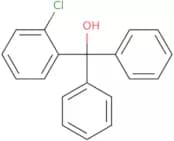
(2-Chlorophenyl)diphenylmethanol
CAS:<p>2-Chlorophenyl)diphenylmethanol is an antifungal drug that blocks the function of a calcium ionophore in fungal cells. It has been shown to be effective against a variety of filamentous fungi, including Aspergillus fumigatus, Candida albicans, and Trichosporon cutaneum. This drug is used as a topical antifungal agent for treatment of skin infections caused by these fungi. 2-Chlorophenyl)diphenylmethanol has been shown to have anti-inflammatory properties in animal models of kidney fibrosis and cell binding. Clinical data suggests that it can be used for the prevention or treatment of stem cell transplantation complications such as graft versus host disease and leukemia.</p>Fórmula:C19H15ClOPureza:Min. 95%Forma y color:PowderPeso molecular:294.77 g/mol4-Chlorophenyl-2-pyridinylmethanol
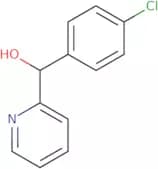
CAS:<p>Please enquire for more information about 4-Chlorophenyl-2-pyridinylmethanol including the price, delivery time and more detailed product information at the technical inquiry form on this page</p>Fórmula:C12H10ClNOPureza:Min. 95%Peso molecular:219.67 g/mol2-Bromo-6-methylpyridin-3-ol
CAS:<p>2-Bromo-6-methylpyridin-3-ol is a heterocyclic organic compound. It is a pyridine ring with two methyl groups attached to the ring at positions 2 and 6. The bromine atom is at position 3. This is an important intermediate in the Suzuki coupling reaction, which uses it as a starting material for the synthesis of many other compounds. The dieckmann condensation reaction produces this compound from 2,6-dichloropyridine and other reagents. Fluorescent when exposed to UV light, this compound has been used as a probe for chloride ions in solution using mass spectroscopy. This substance also yields dieckmann condensation products with alkynes and chlorine or bromine. 2-Bromo-6-methylpyridin-3-ol can be produced by treating pyridine with methylacrylate in the presence of catalysts such as copper(II)</p>Fórmula:C6H6BrNOPureza:Min. 95%Peso molecular:188.02 g/mol4-Aminophenethyl alcohol
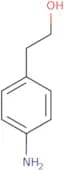
CAS:4-Aminophenethyl alcohol is a monosubstituted, basic compound that is used in the laboratory as a cell culture medium supplement to promote growth of fibroblasts. This compound has been shown to stimulate human intestinal cells and human peripheral blood mononuclear cells. 4-Aminophenethyl alcohol acts as a hydroxyl group donor, which may be due to its ability to form hydrogen ions when reacted with sodium hydroxide solution. The reaction of this compound with diazonium salt produces an intermediate, which can be hydrolyzed by the addition of sodium hydroxide solution. The resultant chloride ion reacts with the aminophenethyldihydroxylamine (APDA) moiety to produce APDCl. This product has been shown to increase the population growth rate of fibroblasts in culture by causing DNA synthesis and protein synthesis. Linear regression analysis revealed that there was no statistically significant difference between the control and experimental groups for either DNAFórmula:C8H11NOPureza:Min. 95%Peso molecular:137.18 g/mol6-Aminoquinoline
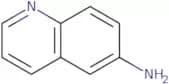
CAS:<p>6-Aminoquinoline is a chemical compound that is used as an intermediate in the synthesis of other compounds. It has been found to be effective in inhibiting the growth of human cancer cells and cell lines by binding to amines, which are important for cell proliferation. 6-Aminoquinoline also inhibits epidermal growth factor (EGF) and its receptor, which may be due to its ability to inhibit the transfer of phosphate groups from ATP to EGF. 6-Nitroquinoline, which is derived from 6-aminoquinoline, has been shown to have antiinflammatory activity.</p>Fórmula:C9H8N2Pureza:Min. 95%Forma y color:Yellow PowderPeso molecular:144.17 g/mol4-Bromo-3,5-dimethylbenzyl alcohol
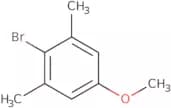
CAS:<p>4-Bromo-3,5-dimethylbenzyl alcohol is a potent anticancer agent that is synthesized from bromoarenes. It has been shown to be effective against cancer cells in the presence of activated carbon, aluminum chloride, and organotellurium. 4-Bromo-3,5-dimethylbenzyl alcohol reacts with peptide hormones and other hormones at the cellular level by inhibiting DNA synthesis. This inhibition prevents the production of proteins that are vital for cell division. The reaction rate is rapid in solvents such as acetonitrile.>>END>></p>Fórmula:C9H11BrOPureza:Min. 95%Forma y color:PowderPeso molecular:215.09 g/molcis,trans-2-Buten-1,4-diol
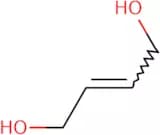
CAS:<p>Product FB158451, cis, trans-2-Buten-1,4-diol, is a versatile chemical compound with the CAS number 110-64-5. It is used a key building block in various chemical synthesis processes, making it an essential component for researchers and industrial applications. Its versatile nature allows it to be employed in the production of polymers, resins, and specialty chemicals, making it a valuable asset for a wide range of applications.</p>Fórmula:C4H8O2Pureza:Min. 95%Forma y color:Clear LiquidPeso molecular:88.11 g/mol2-Chloro-5-pyridylcarbinol
CAS:2-Chloro-5-pyridylcarbinol is an alkene that features a five-membered ring. It is a conformationally rigid molecule, which means it has no rotational or vibrational barriers. The molecule can be classified as a tricyclic heterocycle because the carbon atoms are arranged in three rings. The analogues of this compound feature six-membered carbocycles and intramolecular cycloadditions. 2-Chloro-5-pyridylcarbinol also constitutes one of the azomethine adducts of nicotine, which is a type of tricyclic heterocycle.Fórmula:C6H6ClNOPureza:Min. 95%Peso molecular:143.57 g/molOctreotide trifluoroacetate salt (Dimer, Parallel) (
<p>Please enquire for more information about Octreotide trifluoroacetate salt (Dimer, Parallel) ( including the price, delivery time and more detailed product information at the technical inquiry form on this page</p>Fórmula:C98H132N20O20S4Pureza:Min. 95%Peso molecular:2,038.48 g/mol6-Keto cholestanol
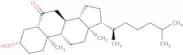
CAS:Producto controlado<p>6-Keto cholestanol is a chemical compound that is structurally similar to cholesterol. It has a phase transition temperature of -65°C, and the hydroxyl group on the side chain can be replaced with other functional groups to alter its properties. 6-Keto cholestanol has been shown to induce autophagy in cells by binding to mitochondria and increasing mitochondrial membrane potential. This compound also increases the level of fatty acid oxidation and decreases levels of glycerolipids in the cell, which may be due to its ability to bind fatty acids. 6-Keto cholestanol binds to the styryl dye, benzalkonium chloride, and inhibits its fluorescence emission. This compound also binds to adenine nucleotide, which may lead to decreased ATP production in cells.</p>Fórmula:C27H46O2Pureza:Min. 95%Peso molecular:402.65 g/molCampestanol
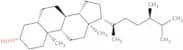
CAS:Producto controlado<p>Please enquire for more information about Campestanol including the price, delivery time and more detailed product information at the technical inquiry form on this page</p>Fórmula:C28H50OPureza:Min. 95%Peso molecular:402.7 g/molPridinol methanesulfonate salt
CAS:<p>Pridinol methanesulfonate salt is a water-soluble drug that is used for the treatment of chronic pancreatitis. It has been shown to have a sustained-release effect in the gastrointestinal tract and is absorbed from the mouth. Pridinol methanesulfonate salt interacts with microspheres, which are made of polymers that form a gel matrix. This interaction stabilizes the complex and prevents premature release of the drug. The microspheres are then released by an absorber, which is an agent that binds to the surface of the microsphere and releases it into solution. Pridinol methanesulfonate salt can be found in wastewater as it biodegrades quickly and does not accumulate in tissues or organs.</p>Fórmula:C21H29NO4SPureza:Min. 95%Peso molecular:391.53 g/mol4-Chloro-7-methoxyquinoline-6-carboxamide
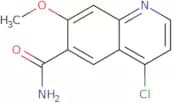
CAS:<p>Intermediate in the synthesis of lenvatinib</p>Fórmula:C11H9ClN2O2Pureza:Min. 95%Peso molecular:236.65 g/mol4-[(4-Nitrophenyl)-azo]-phenol
CAS:<p>4-[(4-Nitrophenyl)-azo]-phenol is a molecular compound that has a nitro group, an azo group, and a phenolic hydroxyl group. It's also known as nitrophenyl diazonium salt. 4-[(4-Nitrophenyl)-azo]-phenol is used in the synthesis of other compounds such as dyes and pharmaceuticals. The magnetic resonance spectroscopy and optical microscope techniques were used to study the chemical structure of 4-[(4-Nitrophenyl)-azo]-phenol. The titration method was used to determine the purity of this compound. 4-[(4-Nitrophenyl)-azo]-phenol has been shown to have mesomorphic properties, which are exhibited by its ability to be either solid or liquid at room temperature (25°C). This property may be due to its functional groups that stabilize it in both states.</p>Pureza:Min. 95%4-Pentyn-1-ol
CAS:4-Pentyn-1-ol is a molecule with the chemical formula of C10H18O. It has intramolecular hydrogen, hydroxyl group and methyl ketones. 4-Pentyn-1-ol is used as a solvent and in perfumery. This compound can be synthesized by hydrochloric acid, hydrogen bond and proton. The FTIR spectroscopy of 4-pentyn-1-ol shows that it has a broad absorption band at 3300 cm−1 and a sharp peak at 1750 cm−1 which are assigned to the O–H stretching vibrations in the hydroxyl group. The IR spectrum also indicates that this compound has an intramolecular hydrogen bond. 4 pentyn - 1 - olFórmula:C5H8OPureza:Min. 95%Peso molecular:84.12 g/mol4-Bromobenzene-1,2-diol
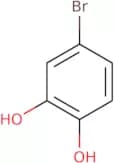
CAS:<p>4-Bromobenzene-1,2-diol is a reactive substance that has been shown to have receptor binding and reaction intermediates. It has been shown to inhibit the formation of reactive oxygen species in rat liver microsomes. The formation rate of 4-bromobenzene-1,2-diol is increased by carbon source such as bromobenzene. This substance has also been shown to be an inhibitor of the reaction mechanism. 4-Bromobenzene-1,2-diol is used as a reactant in organic synthesis reactions and can be found in dry weight measurements.</p>Fórmula:C6H5BrO2Pureza:Min. 95%Peso molecular:189.01 g/mol3-Bromopyridin-4-ol
CAS:3-Bromopyridin-4-ol is a pyrrole that can be used as a cancer therapy. It inhibits the growth of cancer cells by binding to the mkn-45 on the surface of the cell, which prevents it from binding to other proteins and initiating cell proliferation. 3-Bromopyridin-4-ol also inhibits 2-amino-4-hydroxypyridine aminations, which are reactions that produce compounds that promote cancer. This compound class has inhibitory activity against the growth of cancer cells in vitro and in vivo. 3-Bromopyridin-4-ol is an oxindole and amide with a hydroxy group on its side chain. It can be synthesized from 3-bromo-5 hydroxypyridine by reacting it with ammonia or methylamine. The synthesis of this compound can be achieved by reacting 2 chloroacetaldehyde with nitroethane in presenceFórmula:C5H4BrNOPureza:Min. 95%Forma y color:PowderPeso molecular:174 g/molN-Methyl-N-boc-aminopropan-3-ol
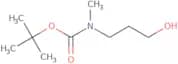
CAS:<p>N-Methyl-N-boc-aminopropan-3-ol is a fine chemical with CAS No. 98642-44-5 that is used in the synthesis of complex compounds, as a reagent for research chemicals, and as a speciality chemical. It is also used in the synthesis of versatile building blocks, reaction components and scaffolds. N-Methyl-N-boc-aminopropan-3-ol has a high quality and can be used as a versatile intermediate or a useful scaffold.</p>Fórmula:C9H19NO3Pureza:Min. 95%Forma y color:Colourless To Pale Yellow LiquidPeso molecular:189.25 g/mol(S)-3-Pyrrolidinol
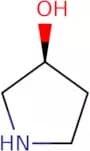
CAS:<p>3-Pyrrolidinol is a synthetic chemical that binds to the nicotinic acetylcholine receptor. It has been shown to inhibit cell growth in vitro, and may be used as an anti-cancer drug. 3-Pyrrolidinol has also been shown to have inhibitory effects on the replication of DNA in cells. The chemical reacts with hydrochloric acid to form a hydrogen bond, which enhances its ability to bind to the receptor. This reaction can be reversed by adding an acetate extract, which removes the hydrogen bond and causes the chemical to dissociate from the receptor. 3-Pyrrolidinol has a lactam ring with three functional groups (an amine group, a hydroxyl group, and a ketone group), which makes it more soluble in water than other compounds with only two functional groups. Its potential use is mainly for treating cancer or inhibiting bacterial growth.</p>Fórmula:C4H9NOPureza:Min. 95%Peso molecular:87.12 g/mol2-Thiopheneethanol tosylate
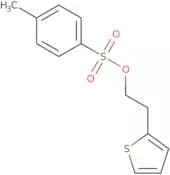
CAS:2-Thiopheneethanol tosylate (2TEtOS) is an antitubercular agent that belongs to the class of thiopheneethanol esters. It is a potent inhibitor of Mycobacterium tuberculosis and other bacteria by blocking the transfer reactions that are required for bacterial growth. The molecular structure of 2TEtOS consists of a thiophene ring with an allyl group attached to it and a chiral sulfur atom in the center. This molecule can be derivatized with various ligands, which enables the control experiments to be performed. 2TEtOS has been shown to have redox potentials and diffraction properties that are similar to those of borohydride reduction agents, suggesting that 2TEtOS may also act as a reducing agent.Fórmula:C13H14O3S2Pureza:Min. 95%Peso molecular:282.38 g/mol




![4-[(4-Nitrophenyl)-azo]-phenol](/_next/image/?url=https%3A%2Fstatic.cymitquimica.com%2Fproducts%2F3D%2Fthumb-webp%2FFN31052.webp&w=3840&q=75)