Aminas
Las aminas son un conjunto de moléculas que contienen un grupo funcional amino (derivado del amoníaco). Esta categoría incluye aminas en cualquier nivel de sustitución: primarias, secundarias, terciarias y sales de amonio. Las aminas son fundamentales en la síntesis orgánica y se utilizan ampliamente en productos farmacéuticos, agroquímicos y ciencias de los materiales. En CymitQuimica, ofrecemos una selección completa de aminas para satisfacer sus necesidades de investigación e industriales. Nuestra gama asegura el acceso a diversas aminas para diferentes procesos químicos e investigaciones innovadoras.
Subcategorías de "Aminas"
- Nitrosaminas(2.606 productos)
- Aminas primarias(30.948 productos)
- Cationes y sales de amonio cuaternario(1.098 productos)
- Aminas secundarias(20.886 productos)
- Aminas terciarias(17.195 productos)
Se han encontrado 8786 productos de "Aminas"
Ordenar por
Pureza (%)
0
100
|
0
|
50
|
90
|
95
|
100
5-[3-Methoxy-4-(4-methoxy-benzyloxy)-benzyl]-pyrimidine-2,4-diamine
CAS:5-[3-Methoxy-4-(4-methoxy-benzyloxy)-benzyl]-pyrimidine-2,4-diamine is a monoclonal antibody that blocks the signal of CTLA-4, a receptor on T cells. It has been shown to be effective in inhibiting skin cancer and primary breast cancers. This drug also has immunomodulatory effects and can be used to treat autoimmune diseases. 5-[3-Methoxy-4-(4-methoxy-benzyloxy)-benzyl]-pyrimidine-2,4-diamine binds to ctla-4 with high affinity and specificity, preventing the interaction of ctla-4 with its ligands such as CD80 (B7.1) and CD86 (B7.2). This prevents the activation of T cells by antigen presenting cells and suppresses the immune response.Fórmula:C20H22N4O3Pureza:Min. 95%Peso molecular:366.41 g/mol2-Amino-1-(2,3-dihydro-benzofuran-5-yl)-ethanolHydrochloride
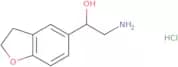
CAS:Producto controladoPlease enquire for more information about 2-Amino-1-(2,3-dihydro-benzofuran-5-yl)-ethanolHydrochloride including the price, delivery time and more detailed product information at the technical inquiry form on this pageFórmula:C10H14ClNO2Pureza:Min. 95%Peso molecular:215.68 g/mol3-Amino-6,7-dimethoxy-2-methylquinazolin-4(3H)-one
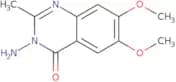
CAS:Producto controladoPlease enquire for more information about 3-Amino-6,7-dimethoxy-2-methylquinazolin-4(3H)-one including the price, delivery time and more detailed product information at the technical inquiry form on this pageFórmula:C11H13N3O3Pureza:Min. 95%Peso molecular:235.24 g/mol2-Phenylpropan-1-amine hydrochloride
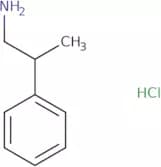
CAS:Producto controladoPlease enquire for more information about 2-Phenylpropan-1-amine hydrochloride including the price, delivery time and more detailed product information at the technical inquiry form on this pageFórmula:C9H14ClNPureza:Min. 95%Peso molecular:171.67 g/mol4-Chlorophenyl 2-aminobenzoate
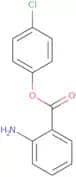
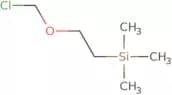
CAS:Producto controladoPlease enquire for more information about 4-Chlorophenyl 2-aminobenzoate including the price, delivery time and more detailed product information at the technical inquiry form on this pageFórmula:C13H10ClNO2Pureza:Min. 95%Peso molecular:247.68 g/mol2-(Chloromethoxyethyl)trimethyl silane - stabilized with ca. 0.1% Diisopropylethylamine
CAS:Silyl protecting group for alcohols; reagent for introducing protected C atom
Fórmula:C6H15ClOSiPureza:Min. 95%Forma y color:Colorless Clear LiquidPeso molecular:166.72 g/molTetrabutylammonium hexafluorophosphate
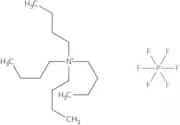
CAS:Tetrabutylammonium hexafluorophosphate is a chemical reagent that is used in organic synthesis. It is a strong Lewis acid that reacts with substrates to form adducts. Tetrabutylammonium hexafluorophosphate reacts with trifluoroacetic acid, ethylene diamine, and hydrogen fluoride to produce the salt tetrabutylammonium hexafluorophosphate dihydrate (TBAPF). The reaction proceeds through an ionic intermediate that involves the abstraction of a proton from the substrate by the tetrabutylammonium cation followed by nucleophilic attack on the anion by water. Tetrabutylammonium hexafluorophosphate dihydrate can be formed via this mechanism as well as through a simple salt metathesis reaction between TBAPF and sodium carbonate. This reagent has been shown to form crystals of good quality forFórmula:C16H36F6NPPureza:Min. 98.0%Forma y color:PowderPeso molecular:387.43 g/molrac benzodioxole-5-butanamine hydrochloride
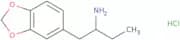
CAS:Producto controladoRacemic benzodioxole-5-butanamine hydrochloride (RAC) is a pharmacologic agent that has been shown to bind to dopamine receptors, thereby activating them. It has been shown to be an effective treatment for depression and other mental illnesses. Racemic benzodioxole-5-butanamine hydrochloride is also used in analytical toxicology as a chromatographic standard. This compound has been synthesized using the asymmetric synthesis of primary amines. RAC is also an enantiomer and can exist in two forms: (+)-RAC and (-)-RAC, which are mirror images of each other. The (+) form of racemic benzodioxole-5-butanamine hydrochloride is the more active form, with greater binding affinity for dopamine receptors than the (-) form.Fórmula:C11H16ClNO2Pureza:Min. 95%Peso molecular:229.7 g/mol3-{[(3,4-Dichlorophenyl)amino]carbonyl}bicyclo[2.2.1]hept-5-ene-2-carboxylic acid
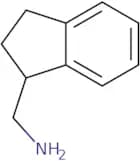
CAS:Please enquire for more information about 3-{[(3,4-Dichlorophenyl)amino]carbonyl}bicyclo[2.2.1]hept-5-ene-2-carboxylic acid including the price, delivery time and more detailed product information at the technical inquiry form on this pageFórmula:C15H13Cl2NO3Pureza:Min. 95%Peso molecular:326.17 g/mol1H-Indene-1-methanamine, 2,3-dihydro-
CAS:Indene-1-methanamine is a drug that has been used for the treatment of neurologic disorders and is an ester of aliphatic hydrocarbons. It has been shown to have antidepressant effects in animal models, which may be due to its ability to bind to 5-HT1A receptors. Indene-1-methanamine also has antimicrobial properties and can be used for treating bladder infections as well as cancer. This drug binds to the quinolizine site on bacterial DNA gyrase, which inhibits DNA synthesis and leads to cell death.Fórmula:C10H13N·HClPureza:90%MinPeso molecular:183.68 g/mol[3-(1-Naphthyl)propyl]amine
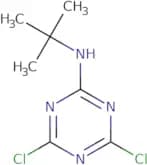
CAS:3-(1-Naphthyl)propyl]amine is an organic compound that is a colorless solid with a melting point of -118°C. It is soluble in water, methanol, and acetone. 3-(1-Naphthyl)propyl]amine forms acid when heated with concentrated hydrochloric acid. The reaction produces hydrogen chloride gas and benzoic acid as a byproduct. 3-(1-Naphthyl)propyl]amine also reacts with pyridine to produce carbamic acid and ammonia gas as a byproduct. This can be rationalized systematically by the loss of the amine group from the nitrogen atom of the amine molecule. Carbamic acid has two acidic protons on it which are stabilized by the carbonyl group on the other side of the molecule. 3-(1-Naphthyl)propyl]amine can also react with anions such as carbonate ions to form carbamate salts,Fórmula:C13H15NPureza:Min. 95%Forma y color:Clear LiquidPeso molecular:185.26 g/mol2-(tert-Butylamino)-4,6-dichloro-1,3,5-triazine
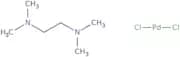
CAS:Please enquire for more information about 2-(tert-Butylamino)-4,6-dichloro-1,3,5-triazine including the price, delivery time and more detailed product information at the technical inquiry form on this pageFórmula:C7H10Cl2N4Pureza:Min. 95%Peso molecular:221.09 g/molcis-Dichloro(N,N,N',N'-tetramethylethylenediamine)palladium(II)
CAS:Producto controladoPlease enquire for more information about cis-Dichloro(N,N,N',N'-tetramethylethylenediamine)palladium(II) including the price, delivery time and more detailed product information at the technical inquiry form on this pageFórmula:C6H16Cl2N2PdPureza:Min. 95%Peso molecular:293.53 g/mol2-[(Dimethylamino)methylene]-5-(2,3,4-trimethoxyphenyl)cyclohexane-1,3-dione
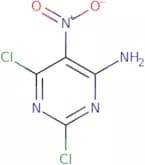
CAS:Producto controladoPlease enquire for more information about 2-[(Dimethylamino)methylene]-5-(2,3,4-trimethoxyphenyl)cyclohexane-1,3-dione including the price, delivery time and more detailed product information at the technical inquiry form on this pageFórmula:C18H23NO5Pureza:Min. 95%Peso molecular:333.38 g/mol2,6-Dichloro-5-nitropyrimidin-4-amine
CAS:2,6-Dichloro-5-nitropyrimidin-4-amine is a chlorinating agent that reacts with aliphatic and aromatic amines to form substituted pyrimidines. The substitution pattern of the product depends on the regioselectivity of the reaction. 2,6-Dichloro-5-nitropyrimidin-4-amine is one of the few chlorinating agents that react with propylamine. Substitution at position 2 of the purine ring has been found to be more selective than substitution at position 6. The 2,6-dichloropyrimidine can also be used as a nitro group source in chemical synthesis or as an intermediate in production of other compounds.
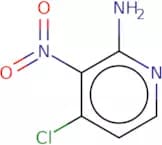
Fórmula:C4H2Cl2N4O2Pureza:Min. 95%Forma y color:SolidPeso molecular:208.99 g/mol2-Amino-4-chloro-3-nitropyridine
CAS:2-Amino-4-chloro-3-nitropyridine is a potent inhibitory molecule that inhibits the activity of the enzyme acetylcholinesterase. It has been used in the treatment of chronic pain, and has been shown to be effective for inhibiting malonate esters and amino acid esters. This drug is an ethyl ester that can be synthesized from chlorobenzene and malonic acid by chlorinating it with chlorine gas. 2-Amino-4-chloro-3-nitropyridine has also been shown to have a high affinity for malonic acid diethyl esters.Fórmula:C5H4ClN3O2Pureza:Min. 98 Area-%Forma y color:PowderPeso molecular:173.56 g/molN-[3-Fluoro-4-[(methylamino)carbonyl]phenyl]-2-methylalanine
CAS:Please enquire for more information about N-[3-Fluoro-4-[(methylamino)carbonyl]phenyl]-2-methylalanine including the price, delivery time and more detailed product information at the technical inquiry form on this pageFórmula:C12H15FN2O3Pureza:Min. 95%Peso molecular:254.26 g/mol4-Amino-1,3-dimethyl-2,6-dioxo-5-nitrosopyrimidine
CAS:4-Amino-1,3-dimethyl-2,6-dioxo-5-nitrosopyrimidine is a monoclonal antibody that binds to cancer cells. It has been shown to be effective in the treatment of leukemia, Hodgkin's disease, and non-Hodgkin's lymphoma. The binding of 4-Amino-1,3-dimethyl-2,6-dioxo-5-nitrosopyrimidine to cancer cells is due to the formation of a coordination geometry between the copper complex and the nitrogen atoms on the amino group. This drug has been shown to inhibit tumor growth by blocking the synthesis of DNA and RNA, which are key components in cell division. 4AADNP also inhibits cancer cells' ability to uptake glucose by inhibiting cellular glucose transporters. The binding affinity of 4AADNP for cancer cells is higher than for normal cells because cancer cells have more receptors for this drugFórmula:C6H8N4O3Pureza:Min. 95%Peso molecular:184.15 g/mol3-Chloro-N-methylpropan-1-amine HCl
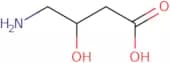
CAS:Please enquire for more information about 3-Chloro-N-methylpropan-1-amine HCl including the price, delivery time and more detailed product information at the technical inquiry form on this pageFórmula:C4H11Cl2NPureza:Min. 95%Peso molecular:144.04 g/mol3-Hydroxy-4-amino-butyric acid
CAS:Producto controlado3-Hydroxy-4-amino-butyric acid is a synthetase that catalyzes the formation of 3-hydroxy-4 amino butyric acid from 3-hydroxy butyric acid and ammonia. This reaction occurs in the presence of chloride ions, ethyl bromoacetate and butyric acid. The isolated yield of this reaction is 47%. The product can be converted to 3-amino butyric acid by dehydrating it with hydrochloric acid. 3-Hydroxy-4 amino butyric acid has been shown to have anticancer properties in vitro. It also has been shown to have antiinflammatory properties, which may be due to its ability to inhibit the production of prostaglandin E2, an inflammatory mediator.Fórmula:C4H9NO3Pureza:Min. 95%Forma y color:PowderPeso molecular:119.12 g/mol
![5-[3-Methoxy-4-(4-methoxy-benzyloxy)-benzyl]-pyrimidine-2,4-diamine](/_next/image/?url=https%3A%2Fstatic.cymitquimica.com%2Fproducts%2F3D%2Fthumb-webp%2FFM31223.webp&w=3840&q=75)

![3-{[(3,4-Dichlorophenyl)amino]carbonyl}bicyclo[2.2.1]hept-5-ene-2-carboxylic acid](/_next/image/?url=https%3A%2Fstatic.cymitquimica.com%2Fproducts%2F3D%2Fthumb-webp%2FFD136060.webp&w=3840&q=75)
![[3-(1-Naphthyl)propyl]amine](/_next/image/?url=https%3A%2Fstatic.cymitquimica.com%2Fproducts%2F3D%2Fthumb-webp%2FFN134365.webp&w=3840&q=75)
![2-[(Dimethylamino)methylene]-5-(2,3,4-trimethoxyphenyl)cyclohexane-1,3-dione](/_next/image/?url=https%3A%2Fstatic.cymitquimica.com%2Fproducts%2F3D%2Fthumb-webp%2FFD134779.webp&w=3840&q=75)
![N-[3-Fluoro-4-[(methylamino)carbonyl]phenyl]-2-methylalanine](/_next/image/?url=https%3A%2Fstatic.cymitquimica.com%2Fproducts%2F3D%2Fthumb-webp%2FFF99416.webp&w=3840&q=75)