Aminas
Las aminas son un conjunto de moléculas que contienen un grupo funcional amino (derivado del amoníaco). Esta categoría incluye aminas en cualquier nivel de sustitución: primarias, secundarias, terciarias y sales de amonio. Las aminas son fundamentales en la síntesis orgánica y se utilizan ampliamente en productos farmacéuticos, agroquímicos y ciencias de los materiales. En CymitQuimica, ofrecemos una selección completa de aminas para satisfacer sus necesidades de investigación e industriales. Nuestra gama asegura el acceso a diversas aminas para diferentes procesos químicos e investigaciones innovadoras.
Subcategorías de "Aminas"
- Nitrosaminas(2.605 productos)
- Aminas primarias(30.947 productos)
- Cationes y sales de amonio cuaternario(1.099 productos)
- Aminas secundarias(20.886 productos)
- Aminas terciarias(17.193 productos)
Se han encontrado 8780 productos de "Aminas"
Ordenar por
Pureza (%)
0
100
|
0
|
50
|
90
|
95
|
100
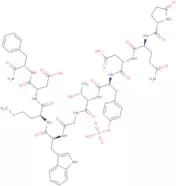
([D2]Gly4)-Cholecystokinin Octapeptide (sulfated) ammonium salt
<p>Please enquire for more information about ([D2]Gly4)-Cholecystokinin Octapeptide (sulfated) ammonium salt including the price, delivery time and more detailed product information at the technical inquiry form on this page</p>Fórmula:C49H60D2N10O16S3Pureza:Min. 95%Peso molecular:1,145.28 g/mol4-Hydroxybenzylamine
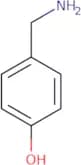
CAS:<p>4-Hydroxybenzylamine is a reactive compound that belongs to the class of amides. It is found in dietary sources and has been shown to have antihypertensive effects. 4-Hydroxybenzylamine is also used as a chemical intermediate in the synthesis of other compounds, such as 4-hydroxybenzoic acid. The mechanism of this reaction involves hydroxylation of the amide nitrogen by an oxidizing agent, such as trifluoroacetic acid, followed by replacement of hydrogen atoms on the carbonyl carbon with a hydroxyl group. The bioavailability of 4-hydroxybenzylamine is low because it is rapidly metabolized in erythrocytes, liver cells, and lung tissue. This metabolite may be responsible for some side effects seen with 4-hydroxybenzylamine therapy, including cardiac arrhythmias and lysinuria.</p>Fórmula:C7H9NOPureza:Min. 95%Forma y color:PowderPeso molecular:123.16 g/molMethyl 4-Amino-2-hydroxybenzoate
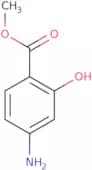
CAS:Methyl 4-amino-2-hydroxybenzoate is a conjugate acid that is used as an intermediate in the synthesis of quinoline derivatives. It has been shown to be an inhibitor of hypochlorous acid, which is a neutrophil-produced oxidant that damages tissues and is involved in the pathogenesis of tuberculosis. Methyl 4-amino-2-hydroxybenzoate also inhibits the formation of chloride ion, which is necessary for the growth of bacteria. This compound binds to chlorine atoms through hydrogen bonds and hydrogen chloride ions through structural formula.Fórmula:C8H9NO3Pureza:Min. 95%Peso molecular:167.16 g/molPiroctone olamine
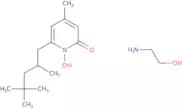
CAS:<p>Piroctone olamine is a detergent composition that has been used to treat skin conditions and in the laboratory as an experimental infection model. It is a fatty acid that belongs to the family of ester compounds, which are antimicrobial agents. Piroctone olamine has been shown to decrease dry weight by inhibiting lipid synthesis. It is also an environmental pollutant that can be found in water, soil, and air. There are no known adverse effects in humans or animals when piroctone olamine is used at low concentrations.</p>Fórmula:C14H23NO2·C2H7NOPureza:Min. 96 Area-%Forma y color:PowderPeso molecular:298.42 g/mol(2-Bromopyridin-4-yl)methanamine
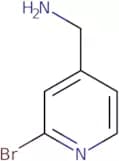
CAS:Please enquire for more information about (2-Bromopyridin-4-yl)methanamine including the price, delivery time and more detailed product information at the technical inquiry form on this pagePureza:Min. 95%(2-{Ethyl-[4-(4-nitro-phenylazo)-phenyl]-amino}-ethoxy)-acetic acid-4-nitro-phenyl ester
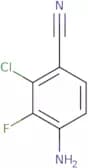
CAS:<p>Please enquire for more information about (2-{Ethyl-[4-(4-nitro-phenylazo)-phenyl]-amino}-ethoxy)-acetic acid-4-nitro-phenyl ester including the price, delivery time and more detailed product information at the technical inquiry form on this page</p>Fórmula:C24H23N5O7Pureza:Min. 95%Peso molecular:493.47 g/mol4-Amino-2-chloro-3-fluorobenzonitrile
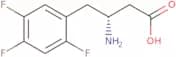
CAS:Please enquire for more information about 4-Amino-2-chloro-3-fluorobenzonitrile including the price, delivery time and more detailed product information at the technical inquiry form on this pageFórmula:C7H4ClFN2Pureza:Min. 95%Peso molecular:170.57 g/mol(R)-3-Amino-4-(2,4,5-trifluorophenyl)butyric acid
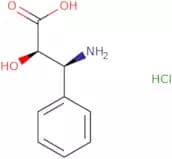
CAS:<p>(R)-3-Amino-4-(2,4,5-trifluorophenyl)butyric acid is an antibacterial agent that inhibits the enzyme acetylcholine esterase. This inhibition prevents the breakdown of acetylcholine, leading to increased levels of this neurotransmitter in the brain and an enhancement of cholinergic transmission. (R)-3-Amino-4-(2,4,5-trifluorophenyl)butyric acid has been shown to be effective against bacterial strains resistant to β-lactam antibiotics. The synthesis of taxol as well as other β-amino acids has been demonstrated using a variety of enzymatic methods. A reaction scheme for the synthesis of nicotinic acetylcholine has also been proposed. (R)-3-Amino-4-(2,4,5-trifluorophenyl)butyric acid is a dipept</p>Fórmula:C10H10F3NO2Pureza:Min. 95%Forma y color:PowderPeso molecular:233.19 g/mol(2R,3S)-3-Amino-2-hydroxy-3-phenylpropanoic acid hydrochloride
CAS:<p>(2R,3S)-3-Amino-2-hydroxy-3-phenylpropanoic acid hydrochloride is an organic compound that is used in the manufacture of taxol, an anticancer drug. It is synthesized by reacting chloroacetic acid with a metal hydroxide, such as sodium hydroxide or potassium hydroxide. The reaction proceeds spontaneously to form the enantiomerically pure (2R,3S) form and unreacted (2S,3R) form. The (2R,3S) enantiomer has been found to be more reactive than the (2S,3R) form. Quaternary ammonium salts are formed when the (2R,3S) enantiomer reacts with quaternary ammonium compounds such as benzyltrimethylammonium chloride. This compound can also be used in catalytic reactions to produce drugs such as carbapenems and pen</p>Fórmula:C9H12ClNO3Pureza:Min. 95%Peso molecular:217.65 g/mol3-[(2-Aminoethyl)dithio]propionic acid
CAS:<p>Dithiobis(3-mercaptopropionate) is an analog of 3-[(2-Aminoethyl)dithio]propionic acid (DTA). It has been used as a cross-linking agent for the synthesis of polymers with acidic pH. Dithiobis(3-mercaptopropionate) is also used for the synthesis of conjugates and bifunctional molecules. Dithiobis(3-mercaptopropionate) can be synthesized by reacting bis(sulfanylmethyl)amine with sodium azide in an acidic solution. The cross-linking reaction will produce a disulfide bond, which is a covalent linkage between two cysteine residues in two different polypeptides or proteins. This crosslink is irreversible, so it cannot be broken down by chemical processes, but can be broken down by enzymatic digestion.</p>Fórmula:C5H11NO2S2Pureza:(%) Min. 95%Forma y color:PowderPeso molecular:181.28 g/molMethyl 3-amino-2-phenylpropanoate HCl
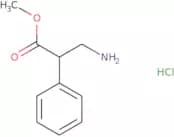
CAS:<p>Methyl 3-amino-2-phenylpropanoate HCl is a chemical intermediate that is synthesized in the biosynthesis of scopolamine and tenellin. It has been found to be an isotopically labeled analog of tropane alkaloids, which are a class of natural products that includes atropine, hyoscyamine, and scopolamine. Methyl 3-amino-2-phenylpropanoate HCl is one of many compounds that can provide structural insights into the biosynthesis and metabolism of these compounds.</p>Fórmula:C10H13NO2·HClPureza:Area-% Min. 95 Area-%Forma y color:PowderPeso molecular:215.68 g/molBoc-N-Methyl-γ-aMinobutyric acid
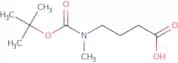
CAS:Please enquire for more information about Boc-N-Methyl-gaMMa-aMinobutyric acid including the price, delivery time and more detailed product information at the technical inquiry form on this pageFórmula:C10H19NO4Pureza:Min. 95%Peso molecular:217.26 g/molPhenolphthalein monophosphate di(cyclohexylammonium)
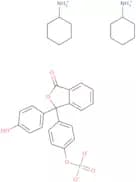
CAS:<p>Phenolphthalein monophosphate di(cyclohexylammonium) is a fine chemical that can be used as a building block in research, reagent, or speciality chemical. It is a versatile building block and reaction component that can be used as an intermediate to make other compounds. Phenolphthalein monophosphate di(cyclohexylammonium) is also used as a scaffold for the synthesis of complex chemicals. This complex compound has CAS number 14815-59-9.</p>Fórmula:C20H15O7P•2C6H13NPureza:Min. 90%Forma y color:PowderPeso molecular:596.65 g/mol2-Amino-4-fluorobenzonitrile
CAS:<p>2-Amino-4-fluorobenzonitrile is a chemical compound that can be used as a radioprotectant. It is also an intermediate in the synthesis of other compounds, such as methoxycyanamides and hypervalent amines. 2-Amino-4-fluorobenzonitrile has shown to have anti-tumour effects by scavenging free radicals. This chemical can be used to produce formic acid or bisphosphonates.</p>Fórmula:C7H5FN2Pureza:Min. 95%Forma y color:PowderPeso molecular:136.13 g/mol2,5-Diaminoterephthalic acid
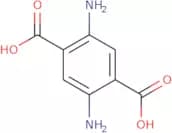
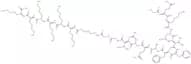
CAS:<p>2,5-Diaminoterephthalic acid is a synthetic organic compound that is used as a building block for the synthesis of polyamides. It has been shown to have high salt adsorption properties and low detection limits for certain analytes. 2,5-Diaminoterephthalic acid has also been found to have photocatalytic activity and can be used in the treatment of cancer. This chemical reacts with nitro groups on nucleophilic attack to form the carcinogenic nitrosamine. The formation rate of this nitrosamine depends on the presence of methoxy groups and nitrogen atoms in 2,5-diaminoterephthalic acid.</p>Fórmula:C8H8N2O4Pureza:Min. 95%Peso molecular:196.16 g/molGly-Amyloid b-Protein (15-25)-Gly-epsilon-aminocaproyl(-Lys)6
CAS:<p>Please enquire for more information about Gly-Amyloid b-Protein (15-25)-Gly-epsilon-aminocaproyl(-Lys)6 including the price, delivery time and more detailed product information at the technical inquiry form on this page</p>Fórmula:C105H178N28O26Pureza:Min. 95%Peso molecular:2,248.71 g/molCaerulein triammonium
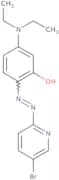
CAS:<p>Caerulein is a hormone that has been shown to have cardiotoxic effects. It is a potent agent that stimulates the release of pancreatic enzymes and causes an increase in the concentration of glucose in blood plasma. Caerulein ammonium salt is used as a pharmacological agent for the treatment of acute pancreatitis and other inflammatory diseases, such as myocardial infarct and infectious diseases. The compound has also been shown to be effective in experimental models of infectious diseases, such as acute pancreatitis.</p>Fórmula:C58H73N13O21S2•(H3N)3Pureza:Min. 95%Forma y color:PowderPeso molecular:1,403.5 g/mol2-(5-Bromo-2-pyridylazo)-5-(diethylamino)phenol
CAS:<p>2-(5-Bromo-2-pyridylazo)-5-(diethylamino)phenol is a chemical that is used for the detection of hydrochloric acid in water vapor. It reacts with zirconium oxide, which generates a red fluorescing complex. The reaction can be detected by using a fluorescence spectrometer with a test sample. 2-(5-Bromo-2-pyridylazo)-5-(diethylamino)phenol is also used to detect the presence of nitrogen atoms and sodium citrate in samples by reacting with them. This chemical reacts with an acid complex to form stable complexes. The analytical method is based on measuring the redox potential of this reaction. The flow system of this technique allows for dehydration of dehydroascorbic acid (DHA).</p>Fórmula:C15H17BrN4OPureza:Min. 95%Forma y color:PowderPeso molecular:349.23 g/mol4-(2',4'-Dimethoxyphenyl-Fmoc-aminomethyl)-phenoxymethyl-polystyrene resin (200-400 mesh)
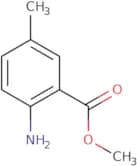
<p>Please enquire for more information about 4-(2',4'-Dimethoxyphenyl-Fmoc-aminomethyl)-phenoxymethyl-polystyrene resin (200-400 mesh) including the price, delivery time and more detailed product information at the technical inquiry form on this page</p>Pureza:Min. 95%Methyl 2-amino-5-methylbenzoate
CAS:<p>Methyl 2-amino-5-methylbenzoate is a chemical substance that is a precursor for the synthesis of picolinic acid. It also has an antitumor activity against various cancer cell lines and microcapsules. In addition, methyl 2-amino-5-methylbenzoate can be used as a reagent in the preparation of amines and sample preparation. The chemical reactions of methyl 2-amino-5-methylbenzoate are catalyzed by hydrochloric acid and sulfamoyl chloride. This chemical substance reacts with carbonyl groups to form nitro compounds.</p>Fórmula:C9H11NO2Pureza:Min. 95%Peso molecular:165.19 g/mol
![([D2]Gly4)-Cholecystokinin Octapeptide (sulfated) ammonium salt](/_next/image/?url=https%3A%2Fstatic.cymitquimica.com%2Fproducts%2F3D%2Fthumb-webp%2FFG110020.webp&w=3840&q=75)

![(2-{Ethyl-[4-(4-nitro-phenylazo)-phenyl]-amino}-ethoxy)-acetic acid-4-nitro-phenyl ester](/_next/image/?url=https%3A%2Fstatic.cymitquimica.com%2Fproducts%2F3D%2Fthumb-webp%2FFE111186.webp&w=3840&q=75)
![3-[(2-Aminoethyl)dithio]propionic acid](/_next/image/?url=https%3A%2Fstatic.cymitquimica.com%2Fproducts%2F3D%2Fthumb-webp%2FFA17745.webp&w=3840&q=75)