


Aminas
Las aminas son un conjunto de moléculas que contienen un grupo funcional amino (derivado del amoníaco). Esta categoría incluye aminas en cualquier nivel de sustitución: primarias, secundarias, terciarias y sales de amonio. Las aminas son fundamentales en la síntesis orgánica y se utilizan ampliamente en productos farmacéuticos, agroquímicos y ciencias de los materiales. En CymitQuimica, ofrecemos una selección completa de aminas para satisfacer sus necesidades de investigación e industriales. Nuestra gama asegura el acceso a diversas aminas para diferentes procesos químicos e investigaciones innovadoras.
Subcategorías de "Aminas"
- Nitrosaminas(2.605 productos)
- Aminas primarias(30.947 productos)
- Cationes y sales de amonio cuaternario(1.099 productos)
- Aminas secundarias(20.886 productos)
- Aminas terciarias(17.193 productos)
Se han encontrado 8781 productos de "Aminas"
Ordenar por
Pureza (%)
0
100
|
0
|
50
|
90
|
95
|
100
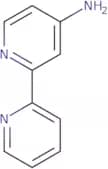
4-Amino-2,2'-bipyridine
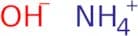
CAS:<p>Please enquire for more information about 4-Amino-2,2'-bipyridine including the price, delivery time and more detailed product information at the technical inquiry form on this page</p>Fórmula:C10H9N3Pureza:Min. 95%Forma y color:PowderPeso molecular:171.2 g/molAmmonium hydroxide - 28% NH3 in H2O
CAS:Producto controlado<p>Ammonium hydroxide is a chemical compound that is used to remove sodium salts from water in the treatment of wastewater. Ammonium hydroxide is also an analytical reagent for the determination of ammonium ions by titration, and is used as a polymerization catalyst. It can be used to produce glycol ethers, which are solvents with low toxicity and high boiling points. The reaction mechanism involves the conversion of hydrogen fluoride (HF) to hydrofluoric acid (HF), which reacts with ammonia to form ammonium fluoride (NH4F). This reaction produces heat and gives off water vapor. Ammonium hydroxide is a weak base, so it will react with any strong acid, such as hydrochloric acid or sulfuric acid, but not with weak acids such as acetic acid or phosphoric acid.</p>Fórmula:NH4OHPureza:Min. 95%Forma y color:Clear LiquidPeso molecular:35.05 g/molRef: 3D-FA35279
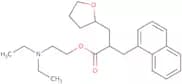
Producto descatalogadoTetrahydro-a-(1-naphthalenylmethyl)-2-furanpropanoic Acid 2-(Diethylamino)ethyl Ester
CAS:Producto controlado<p>Tetrahydro-a-(1-naphthalenylmethyl)-2-furanpropanoic Acid 2-(Diethylamino)ethyl Ester is a fatty acid analog that has antimicrobial properties. It is used in the treatment of bone cancer, and can be used to diagnose and treat other diseases such as glomerular filtration rate, receptor binding, and malonic acid. Tetrahydro-a-(1-naphthalenylmethyl)-2-furanpropanoic Acid 2-(Diethylamino)ethyl Ester binds to receptors on cells, which leads to an increase in the amount of monoamine neurotransmitters released by the cells.</p>Fórmula:C24H33NO3Pureza:Min. 95%Peso molecular:383.52 g/molRef: 3D-FT26121
Producto descatalogado3-Amino-1,2,4-triazole
CAS:<p>3-Amino-1,2,4-triazole is a fine chemical that has been used as a versatile building block in the synthesis of complex compounds. It reacts with many different types of molecules to form covalent bonds, and can also be used as a reactant in many organic reactions, such as the formation of amides. 3-Amino-1,2,4-triazole is not currently available commercially but can be synthesized in the laboratory from readily available starting materials. 3-Amino-1,2,4-triazole is a high quality chemical with few impurities that is suitable for use in research or industrial settings.</p>Fórmula:C2H4N4Peso molecular:84.08 g/molRef: 3D-A-7200
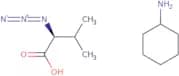
Producto descatalogado(S)-2-Azido isovaleric acid cyclohexylammonium
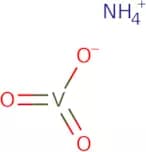
CAS:<p>Please enquire for more information about (S)-2-Azido isovaleric acid cyclohexylammonium including the price, delivery time and more detailed product information at the technical inquiry form on this page</p>Fórmula:C6H13N•C5H9N3O2Pureza:Min. 95%Forma y color:PowderPeso molecular:242.32 g/molAmmonium metavanadate
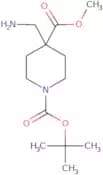
CAS:<p>Ammonium metavanadate is a compound with the chemical formula NH4VO3. It is an oxidizing agent that can be used in wastewater treatment to remove organic and inorganic contaminants from wastewater streams. The product has been shown to be a strong catalyst for the oxidation of ammonium, water vapor, and sulphur dioxide at ambient temperature. Ammonium metavanadate has been studied extensively as a catalyst for the removal of volatile organic substances (VOS) from gas streams, and is considered to be one of the most efficient catalysts currently available. Ammonium metavanadate also increases cytosolic calcium levels in human cells by promoting its release from intracellular stores.</p>Fórmula:NH4VO3Pureza:Min. 98%Peso molecular:116.98 g/molMethyl4-aminomethyl-1-boc-piperidine-4-carboxylate
CAS:<p>Please enquire for more information about Methyl4-aminomethyl-1-boc-piperidine-4-carboxylate including the price, delivery time and more detailed product information at the technical inquiry form on this page</p>Fórmula:C13H24N2O4Pureza:Min. 95%Peso molecular:272.34 g/mol(R,S)-Z-3-Amino-7-chloro-2-oxo-5-phenyl-1,4-benzodiazepine
CAS:Producto controlado<p>Please enquire for more information about (R,S)-Z-3-Amino-7-chloro-2-oxo-5-phenyl-1,4-benzodiazepine including the price, delivery time and more detailed product information at the technical inquiry form on this page</p>Fórmula:C23H18ClN3O3Pureza:Min. 95%Peso molecular:419.86 g/molRef: 3D-FA154498
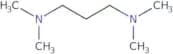
Producto descatalogadoN,N,N',N'-Tetramethyl-1,3-diaminopropane
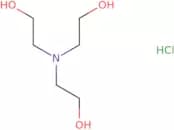
CAS:<p>N,N,N',N'-Tetramethyl-1,3-diaminopropane is a chemical compound that is used as a cross-linking agent. It reacts with fatty acids and hydroxyl groups in the presence of sodium citrate to form cross-links between molecules. This reaction is useful for modifying the transport properties of fat cells. N,N,N',N'-Tetramethyl-1,3-diaminopropane can also be used as a reactive chemical in the synthesis of other compounds such as selenium compounds.</p>Fórmula:C7H18N2Pureza:Min. 98.0 Area-%Forma y color:Clear LiquidPeso molecular:130.23 g/molTriethanolamine hydrochloride
CAS:Producto controlado<p>Triethanolamine hydrochloride, widely known as TEA-HCl, is a buffer used in biochemistry to maintain a stable pH in the range of 7.3 to 8.3 during processes like protein extraction and purification. They are also used in enzyme assays.</p>Fórmula:C6H15NO3·HClPureza:Min. 95%Forma y color:PowderPeso molecular:185.65 g/molAmmonium iron(III) sulfate dodecahydrate
CAS:<p>Ammonium iron(III) sulfate dodecahydrate is a water-soluble inorganic salt that can be used as an oxidizing agent to reduce the color of stains. It has been shown to have good growth kinetics and is easy to use. Ammonium iron(III) sulfate dodecahydrate is an inorganic acid that can be used as a reagent for extractions. It has been found to have good extraction yield and particle size, which makes it ideal for use in polymer films. Ammonium iron(III) sulfate dodecahydrate reacts with hydroxyl groups and forms p-hydroxybenzoic acid, which can be used in clinical pathology tests.</p>Fórmula:NH4Fe(SO4)2•(H2O)12Pureza:Min. 95%Forma y color:PowderPeso molecular:482.19 g/molRef: 3D-FA40933
Producto descatalogado5-Iodo-2,3-dihydro-1H-inden-2-amine hydrochloride hydrate
Producto controlado<p>Please enquire for more information about 5-Iodo-2,3-dihydro-1H-inden-2-amine hydrochloride hydrate including the price, delivery time and more detailed product information at the technical inquiry form on this page</p>Fórmula:C9H13ClINOPureza:Min. 95%Peso molecular:313.56 g/molRef: 3D-FI143304
Producto descatalogadoAmmonium Hexafluoroniobate
CAS:<p>Ammonium hexafluoroniobate is an organosilicon compound that does not react with water and is used as a solvent for other organics. It can be activated to form a reactive surface by treatment with a metal such as copper or aluminum, which can then be used in the treatment of metals. Ammonium hexafluoroniobate has been used as a diagnostic agent and diagnostic reagent in various reactions at different temperatures. It has also been used as the photoreceptor in electrophotographic printing processes, where it is exposed to light-sensitive material and then developed using organic solvents.</p>Fórmula:F6H4NNbPureza:Min. 95%Peso molecular:224.94 g/molRef: 3D-FA78203
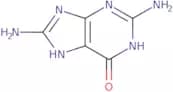
Producto descatalogado8-Aminoguanine
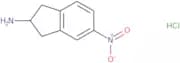
CAS:<p>8-Aminoguanine is an anti-cancer agent that is used to treat leukemia. It is a hydrophobic molecule with a redox potential of −0.20 V and has been shown to inhibit the enzyme ribonucleotide reductase in vitro and in vivo. 8-Aminoguanine inhibits the production of guanine nucleotides, which are necessary for DNA synthesis and cell division. This drug also has angiogenic properties, which may be due to its ability to stimulate the formation of new blood vessels by increasing nitric oxide synthase activity. 8-Aminoguanine has also been shown to improve congestive heart failure by reducing myocardial fibrosis and ventricular hypertrophy through activation of the glycosidic bond cleavage system.</p>Fórmula:C5H6N6OPureza:Min. 95%Forma y color:Off-White PowderPeso molecular:166.14 g/mol2-Amino-5-nitroindan hydrochloride
CAS:Producto controlado<p>Please enquire for more information about 2-Amino-5-nitroindan hydrochloride including the price, delivery time and more detailed product information at the technical inquiry form on this page</p>Fórmula:C9H10N2O2·HClPureza:Min. 95%Peso molecular:214.65 g/molRef: 3D-FA52091
Producto descatalogadoBis(hydroxyethyl)methylamine
CAS:Producto controlado<p>Bis(hydroxyethyl)methylamine is a chemical compound that is used in wastewater treatment. It is a strong base that can be used to remove nitrogen compounds, such as ammonia and nitrite, from wastewater. The process optimization of the thermal expansion of Bis(hydroxyethyl)methylamine has been studied. This chemical has been found to inhibit the growth of bacteria and fungi, which may be due to its ability to disrupt protein synthesis by interfering with the enzyme fatty acid synthase.</p>Fórmula:C5H13NO2Pureza:Min. 95%Peso molecular:119.16 g/molRef: 3D-FB18727
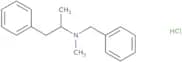
Producto descatalogadorac benzphetamine hydrochloride
CAS:Producto controlado<p>Rac benzphetamine hydrochloride is a repurposed drug that has been shown to have the ability to modulate the activity of various receptors, including the dopamine receptor. Rac benzphetamine hydrochloride is a layered molecule with two stereogenic centers and three chiral centers. It has been shown to have hydroxylase activity, which is catalyzed by the enzyme aryl hydrocarbon hydroxylase. Rac benzphetamine hydrochloride also has potential as an anti-inflammatory agent because it inhibits myelination in mice. Rac benzphetamine hydrochloride was found to be carcinogenic in animal studies, but not in human trials. The drug can be given intravenously or intraperitoneally, depending on the desired effect.</p>Fórmula:C17H22ClNPureza:Min. 95%Peso molecular:275.82 g/molRef: 3D-FR27487
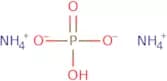
Producto descatalogadoDiammonium hydrogenphosphate
CAS:<p>Diammonium hydrogenphosphate is a monoammonium or diammonium phosphate salt of the phosphoric acid. It is used as a fertilizer and in analytical chemistry. Diammonium hydrogenphosphate is often used in wastewater treatment, because it has high solubility and low toxicity. Diammonium hydrogenphosphate can be synthesized by the reaction of ammonium phosphate with magnesium and ammonium hydroxide. This compound has synergic effects with magnesium, which may be due to its ability to reduce enzyme activities in the cell membrane. Diammonium hydrogenphosphate also has an effect on calcium-protein binding and phosphorus pentoxide crystallization.</p>Fórmula:H9N2O4PPureza:(%) Min. 99%Forma y color:PowderPeso molecular:132.06 g/molRef: 3D-FD44626
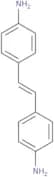
Producto descatalogado4,4'-Diaminostilbene
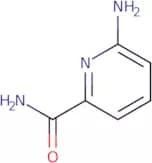
CAS:<p>4,4'-Diaminostilbene is a chemical compound that is stable in the presence of alkali metals. It also has been shown to be titrated with sodium salts and to have a cavity that can be analyzed by fluorescence. 4,4'-Diaminostilbene has been used for the detection of beta-cyclodextrin and sodium ion in analytical methods. The intensity of its fluorescence depends on the concentration of aniline and protonated amines. This compound has been used as a reagent for nmr spectroscopy analysis.</p>Fórmula:C14H14N2Pureza:Min. 95%Forma y color:PowderPeso molecular:210.27 g/mol6-Aminopicolinamide
CAS:<p>6-Aminopicolinamide is a metabolite of nicotinamide, which can be found in the urine of humans and animals. 6-Aminopicolinamide has been shown to have anti-leukemic activity against experimental leukemias in animals. The mechanism of action is not well understood but may involve inhibition of nucleotide synthesis or the inhibition of dehydrogenase activity. Clinical trials are underway to determine its efficacy as an anti-tumor agent.</p>Fórmula:C6H7N3OPureza:Min. 95%Peso molecular:137.14 g/molRef: 3D-FA46017
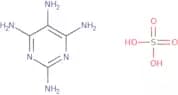
Producto descatalogado2,4,5,6-Tetraaminopyrimidine sulphate
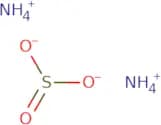
CAS:<p>2,4,5,6-Tetraaminopyrimidine sulphate is a chemical compound that is used for the treatment of leukemic mice. It has shown to have anti-inflammatory and anti-cancer properties. This drug binds to the enzyme p-hydroxybenzoic acid that is involved in the synthesis of collagen and elastin. It also suppresses the production of inflammatory cytokines such as TNF-α and IL-1β. 2,4,5,6-Tetraaminopyrimidine sulphate has been used in clinical trials for the treatment of autoimmune diseases and inflammatory diseases such as psoriasis. The drug is currently being researched for use in cancer treatments due to its ability to inhibit cell division and induce apoptosis. 2,4,5,6-Tetraaminopyrimidine sulphate has also been shown to be effective when applied topically on skin as a cosmetic agent or when administered orally as a supplement for</p>Fórmula:C4H10N6O4SPureza:Min. 95%Forma y color:Slightly Yellow PowderPeso molecular:238.23 g/molAmmonium sulfite
CAS:<p>Ammonium sulfite is a chemical compound that is used as an additive in wastewater treatment and as a reagent in organic synthesis. The reaction solution contains ammonium sulfite, sodium carbonate, and water. It has been shown to be toxic to animals when administered at high doses. Ammonium sulfite does not react with hydrogen fluoride or water and it is not soluble in anhydrous sodium. The polymerase chain reaction (PCR) technique has been used to study the reaction mechanism of ammonium sulfite. The reactions are catalysed by metal hydroxides such as magnesium hydroxide and aluminium hydroxide, which are present at the surface of the solid phase.</p>Fórmula:(NH4)2SO3Pureza:Min. 95%Forma y color:PowderPeso molecular:116.14 g/molRef: 3D-FA164872
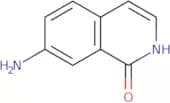
Producto descatalogado7-Amino-1(2h)-isoquinolinone
CAS:<p>Please enquire for more information about 7-Amino-1(2h)-isoquinolinone including the price, delivery time and more detailed product information at the technical inquiry form on this page</p>Fórmula:C9H8N2OPureza:Min. 95%Peso molecular:160.17 g/molRef: 3D-FA154369
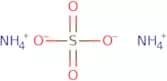
Producto descatalogadoAmmonium sulphate
CAS:<p>Ammonium sulphate is a white, crystalline solid that is used as a fertilizer and in the manufacture of paper. Ammonium sulphate is an ammonium salt of sulfuric acid with the chemical formula NH4HSO4. It is most often used as a fertilizer, although it has many other uses. Ammonium sulfate enhances the absorption of water vapor by plants, which increases their ability to grow. The optimum concentration for ammonium sulfate is from 20-40 g/L. Ammonium sulfate also increases the rate of synthesis of RNA and proteins in cells. This may be because it provides sulfur for enzymes involved in energy metabolism and protein synthesis. Ammonium sulfate has been shown to have synergistic effects with zirconium oxide, allowing more rapid dissolution in water than would be expected from its solubility alone. Ammonium sulfate reacts with bowel disease causing inflammation and ulceration due to its effect on bowel flora (e</p>Fórmula:H8N2O4SPureza:Min. 95%Forma y color:White Clear LiquidPeso molecular:132.14 g/molRef: 3D-FA30582
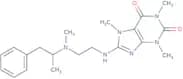
Producto descatalogadoFencamine
CAS:Producto controlado<p>Fencamine is a substrate molecule that is used in the synthesis of peptide hormones. It can be detected in urine samples and has been shown to be a synthetic cannabinoid. Fencamine can be used for diagnostic purposes. Fencamine has been shown to have matrix effects on the bowel disease, hepatitis, and hepatitis C., as well as exerting control analysis of the metabolite molecule. Fencamine has also been shown to have an effect on inflammatory bowel disease, hepatitis C., and toll-like receptor 2.</p>Fórmula:C20H28N6O2Pureza:Min. 95%Forma y color:PowderPeso molecular:384.48 g/molRef: 3D-FF23246
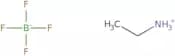
Producto descatalogadoEthylammonium Tetrafluoroborate
CAS:Producto controlado<p>Ethylammonium tetrafluoroborate is an ionic liquid that is a colorless, nonvolatile liquid at room temperature. It has a melting point of -9 °C and a boiling point of 230 °C. This compound is soluble in water and organic solvents, but insoluble in diethyl ether. Ethylammonium tetrafluoroborate can be used as an electrolyte for lithium-ion batteries. The reversible oxidation reaction of ethylammonium tetrafluoroborate can be catalyzed by the addition of fluorine or carbonyl groups to the molecule. The NMR spectra of ethylammonium tetrafluoroborate show that it contains an alcohol group with a phase transition temperature near 35 °C and an activation energy near 15 kJ/mol. This compound also undergoes polymerization reactions with various types of monomers, such as vinyl acetate and methyl methacrylate,</p>Fórmula:C2H7BF4NPureza:Min. 95%Forma y color:PowderPeso molecular:131.89 g/molRef: 3D-FE79944
Producto descatalogado2-Dimethylaminoethanol (+)-bitartrate salt
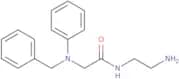
CAS:Producto controlado<p>2-Dimethylaminoethanol (+)-bitartrate salt is a potent, reversible inhibitor of protein synthesis that binds reversibly to the 50S ribosomal subunit. It is used in regulatory toxicology and clinical pathology as a positive control for the study of chronic toxicity and long-term effects. 2-Dimethylaminoethanol (+)-bitartrate salt has shown no treatment effect on ovary weight or estrous cycle length in female Sprague-Dawley rats after chronic exposure and long-term exposure at doses up to 1,000 mg/kg/day. This drug has also shown no effect on rat fertility or reproductive performance, indicating it does not cause reproductive toxicity.</p>Fórmula:C4H11NO·C4H6O6Forma y color:White Off-White PowderPeso molecular:239.22 g/molN-(2-Amino-ethyl)-2-(benzyl-phenyl-amino)-acetamide
CAS:<p>Please enquire for more information about N-(2-Amino-ethyl)-2-(benzyl-phenyl-amino)-acetamide including the price, delivery time and more detailed product information at the technical inquiry form on this page</p>Fórmula:C17H21N3OPureza:Min. 95%Forma y color:White PowderPeso molecular:283.37 g/molRef: 3D-FA111189
Producto descatalogadoEthyl 4-amino-2-mercaptopyrimidine-5-carboxylate
CAS:<p>Please enquire for more information about Ethyl 4-amino-2-mercaptopyrimidine-5-carboxylate including the price, delivery time and more detailed product information at the technical inquiry form on this page</p>Fórmula:C7H9N3O2SPureza:Min. 95%Peso molecular:199.23 g/molRef: 3D-FE10541
Producto descatalogado2-[(2,3-Dimethylphenyl)amino]nicotinic acid
CAS:<p>2-[(2,3-Dimethylphenyl)amino]nicotinic acid is an arylpropionic acid that has been designed for the treatment of cancer. It is a neutral compound that can be crystallized or sterilized and then injected or implanted into tissues. The compound can be used as a diagnostic tool to target specific tissues in the body by using iontophoresis or organic solvents. 2-[(2,3-Dimethylphenyl)amino]nicotinic acid interacts with chlorine ions to form a chloride derivative, which is then transported through the tissue. This process can be reversed by adding an acid solution to the tissue, which will cause the chloride ions to break down into hydrogen and chloride ions.</p>Fórmula:C14H14N2O2Pureza:Min. 95%Peso molecular:242.27 g/mol(+)(1S,2S,4R)-Bicyclo[2.2.1]heptane-2-amine
CAS:<p>(+)(1S,2S,4R)-Bicyclo[2.2.1]heptane-2-amine is a heterocyclic compound that contains a nitrogen atom and an amine group. It has been shown to be a potent inhibitor of the enzyme activities of malonic acid decarboxylase and acetylcholinesterase. This compound can be used as a diagnostic tool for chronic kidney disease, specifically in cases of renal failure and polycystic kidney disease. The palladium complexes can be used for the synthesis of (+)(1S,2S,4R)-bicyclo[2.2.1]heptane-2-amine in high yield from malonic acid and ammonia.</p>Fórmula:C7H13NPureza:Min. 95%Peso molecular:111.18 g/molRef: 3D-FB163197
Producto descatalogado









![2-[(2,3-Dimethylphenyl)amino]nicotinic acid](/_next/image/?url=https%3A%2Fstatic.cymitquimica.com%2Fproducts%2F3D%2Fthumb-webp%2FFD136106.webp&w=3840&q=75)
![(+)(1S,2S,4R)-Bicyclo[2.2.1]heptane-2-amine](/_next/image/?url=https%3A%2Fstatic.cymitquimica.com%2Fproducts%2F3D%2Fthumb-webp%2FFB163197.webp&w=3840&q=75)