Aminas
Subcategorías de "Aminas"
- Nitrosaminas(2.677 productos)
- Aminas primarias(30.948 productos)
- Cationes y sales de amonio cuaternario(1.098 productos)
- Aminas secundarias(20.886 productos)
- Aminas terciarias(17.195 productos)
Se han encontrado 8786 productos de "Aminas"
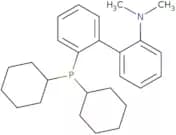
2-Dicyclohexylphosphino-2'-(N,N-dimethylamino)biphenyl
CAS:Ligand used in a Pd-catalyzed Suzuki aryl-aryl couplingFórmula:C26H36NPPureza:Min. 95%Forma y color:White To Yellow SolidPeso molecular:393.54 g/mol2,2'-Dipyridylamine
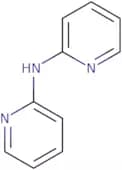
CAS:2,2'-Dipyridylamine is a compound that belongs to the group of low-energy compounds. It has been shown to have antimicrobial activity against bacteria and fungi and has been demonstrated to be effective in treating cancer cells. 2,2'-Dipyridylamine is a molecule with two nitrogen atoms, which are bound by hydrogen bonds. This compound also contains methoxy groups that are coordinated by the nitrogen atoms. The structural analysis shows that there are three open coordination sites for metal ions that can bind with the nitrogen atoms. The x-ray diffraction data show that 2,2'-dipyridylamine crystallizes in a monoclinic system with an orthorhombic unit cell.Fórmula:C10H9N3Pureza:Min. 95%Peso molecular:171.2 g/mol2-(Methylmercapto)-ethylamine
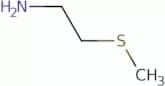
CAS:2-(Methylmercapto)-ethylamine is a chemical that is used in the synthesis of the ruthenium complex, which is used to detect and destroy cancer stem cells. 2-(Methylmercapto)-ethylamine has been shown to be toxicologically safe in animal studies. 2-(Methylmercapto)-ethylamine can react with aziridine and pyrite to form nanogels, which are structures that have potential applications in drug delivery. The optical properties of 2-(methylmercapto) ethylamine are sensitive to its environment, especially pH. 2- (Methylmercapto) Ethylamine can bind to the pleuromutilin derivatives, which are active against infectious diseases such as tuberculosis.
Fórmula:C3H9NSPureza:Min. 95%Peso molecular:91.18 g/mol2,3-Difluorobenzyl amine
CAS:2,3-Difluorobenzyl amine is a versatile building block that is used in the synthesis of complex organic compounds. It is a high quality reagent and can be used as a reaction component. 2,3-Difluorobenzyl amine can be synthesized from 3-fluoroaniline and difluoroacetic acid using a nitrite salt as the oxidant. The reaction yields the desired product in good yield with no side products.Fórmula:C7H7F2NPureza:Min. 95%Forma y color:Colorless PowderPeso molecular:143.13 g/mol4-Amino-1,3-dimethyl-2,6-dioxo-5-nitrosopyrimidine
CAS:4-Amino-1,3-dimethyl-2,6-dioxo-5-nitrosopyrimidine is a monoclonal antibody that binds to cancer cells. It has been shown to be effective in the treatment of leukemia, Hodgkin's disease, and non-Hodgkin's lymphoma. The binding of 4-Amino-1,3-dimethyl-2,6-dioxo-5-nitrosopyrimidine to cancer cells is due to the formation of a coordination geometry between the copper complex and the nitrogen atoms on the amino group. This drug has been shown to inhibit tumor growth by blocking the synthesis of DNA and RNA, which are key components in cell division. 4AADNP also inhibits cancer cells' ability to uptake glucose by inhibiting cellular glucose transporters. The binding affinity of 4AADNP for cancer cells is higher than for normal cells because cancer cells have more receptors for this drugFórmula:C6H8N4O3Pureza:Min. 95%Peso molecular:184.15 g/mol3-Amino-5-bromopyridine
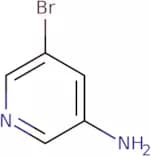
CAS:3-Amino-5-bromopyridine (3ABP) is a linker for the synthesis of cisplatin. It has been shown to have strong bactericidal activity against Escherichia coli and Staphylococcus aureus. 3ABP is cytotoxic to both renal proximal tubule cells and ring-opening cells, which are found in the kidney. It is also an inhibitor of nicotinic acetylcholine receptors (nAChRs), which are proteins that control nerve cell communication. 3ABP's pharmacokinetic properties make it suitable as a linker for cisplatin, as it has good oral bioavailability, low systemic toxicity, and high tissue selectivity.
Fórmula:C5H5BrN2Pureza:Min. 98 Area-%Peso molecular:173.01 g/molS-(-)-Aminoglutethimide D-tartrate salt
CAS:Producto controladoPlease enquire for more information about S-(-)-Aminoglutethimide D-tartrate salt including the price, delivery time and more detailed product information at the technical inquiry form on this page
Fórmula:C17H22N2O8Pureza:Min. 95%Peso molecular:382.37 g/mol6-Amino-1,3,5-triazine-2,4-diol
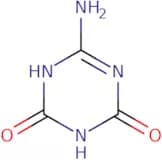
CAS:6-Amino-1,3,5-triazine-2,4-diol is a chemical that is soluble in water and has been shown to be an effective inhibitor of cyanuric acid degradation. It has been used in wastewater treatment and as a model system for the study of melamine and cyanuric acid interactions. 6-Amino-1,3,5-triazine-2,4-diol binds to cyanuric acid by forming a complex with it. This prevents the formation of reactive intermediates that lead to the degradation of cyanuric acid. 6-Amino-1,3,5-triazine-2,4-diol also inhibits the oxidation catalyst activity of sodium carbonate at pH 8.5. The toxicity of this chemical has been studied in rats and was found to be low.Fórmula:C3H4N4O2Pureza:Min. 95%Peso molecular:128.09 g/mol3-Chloro-N-methylpropan-1-amine HCl
CAS:Please enquire for more information about 3-Chloro-N-methylpropan-1-amine HCl including the price, delivery time and more detailed product information at the technical inquiry form on this pageFórmula:C4H11Cl2NPureza:Min. 95%Peso molecular:144.04 g/mol[(4-Methyl-1,3-thiazol-2-yl)methyl]amine dihydrochloride
CAS:Please enquire for more information about [(4-Methyl-1,3-thiazol-2-yl)methyl]amine dihydrochloride including the price, delivery time and more detailed product information at the technical inquiry form on this pageFórmula:C5H8N2SPureza:Min. 95%Peso molecular:128.2 g/mol1,4-Bis[4-(di-p-tolylamino)styryl]benzene
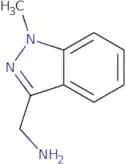
CAS:1,4-Bis[4-(di-p-tolylamino)styryl]benzene is a fluorescent organic semiconductor that has high efficiency and can be used in electronic devices. The benzene molecule has two electron donating groups, which provide an acceptor site for the exciton formed by the electron transfer between donor and acceptor. This process is called fluorescence or phosphorescence, which is the emission of light following absorption of energy. 1,4-Bis[4-(di-p-tolylamino)styryl]benzene emits blue light when excited by an electron beam with a frequency of 300 nm and a current density of 10 mA/cm2. This device shows high efficiencies up to 60% at room temperature and up to 70% at 100°C.Fórmula:C50H44N2Pureza:Min. 95%Peso molecular:672.9 g/mol(1-Methyl-1H-indazol-3-yl)methanamine
CAS:Producto controladoPlease enquire for more information about (1-Methyl-1H-indazol-3-yl)methanamine including the price, delivery time and more detailed product information at the technical inquiry form on this page
Fórmula:C9H11N3Pureza:Min. 95%Peso molecular:161.2 g/mol(2S,3S)-5-[2-(Dimethylamino)ethyl]-3-hydroxy-2-(4-methoxyphenyl)-2,3-dihydro-1,5-benzothiazepin-4-one hydrochloride
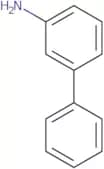
CAS:(2S,3S)-5-[2-(Dimethylamino)ethyl]-3-hydroxy-2-(4-methoxyphenyl)-2,3-dihydro-1,5-benzothiazepin-4-one hydrochloride is a racemic mixture of two enantiomers. It is a prodrug that is hydrolyzed to its active form, diltiazem. The drug has been shown to be effective in the treatment of hypertension and angina pectoris. (2S,3S)-5-[2-(Dimethylamino)ethyl]-3-hydroxy-2-(4-methoxyphenyl)-2,3-dihydro-1,5-benzothiazepin-4-one hydrochloride has been shown to inhibit the activity of the enzyme phosphodiesterase which breaks down cyclic AMP. This inhibition results in an increase in levels ofFórmula:C20H24N2O3S·HClPureza:Min. 95%Peso molecular:408.94 g/mol3-Aminobiphenyl
CAS:3-Aminobiphenyl is a biphenyl compound that is used in the production of dyes and pesticides. It has been detected in human urine samples using an analytical method based on chemical ionization. 3-Aminobiphenyl can be detoxified by conjugation with glutathione, but the conjugation process can be inhibited by the presence of amines such as caffeine, which competitively bind to glutathione. 3-Aminobiphenyl may also cause cancer, but there is no evidence for this theory at present.
Fórmula:C12H11NPureza:Min. 95%Peso molecular:169.22 g/mol5-Iodo-2-aminoindane
CAS:Producto controlado5-Iodo-2-aminoindane is a chemical pesticide that belongs to the group of diallyl trisulfide. It is used for the control of fruit pests such as Drosophila, Ceratitis capitata, and Rhagoletis pomonella. 5-Iodo-2-aminoindane has been shown to inhibit the growth of these pests through in vitro assay. The synthetic cannabinoid activity of 5-iodo-2-aminoindane may be due to its ability to inhibit fatty acid uptake by binding to the fatty acid transporter protein at the cell membrane.Fórmula:C9H10INPureza:Min. 95%Peso molecular:259.09 g/mol3-[(Dimethylamino)methyl]benzoic acid hydrochloride
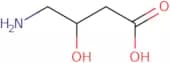
CAS:Please enquire for more information about 3-[(Dimethylamino)methyl]benzoic acid hydrochloride including the price, delivery time and more detailed product information at the technical inquiry form on this pageFórmula:C10H13NO2Pureza:Min. 95%Peso molecular:179.22 g/mol3-Hydroxy-4-amino-butyric acid
CAS:Producto controlado3-Hydroxy-4-amino-butyric acid is a synthetase that catalyzes the formation of 3-hydroxy-4 amino butyric acid from 3-hydroxy butyric acid and ammonia. This reaction occurs in the presence of chloride ions, ethyl bromoacetate and butyric acid. The isolated yield of this reaction is 47%. The product can be converted to 3-amino butyric acid by dehydrating it with hydrochloric acid. 3-Hydroxy-4 amino butyric acid has been shown to have anticancer properties in vitro. It also has been shown to have antiinflammatory properties, which may be due to its ability to inhibit the production of prostaglandin E2, an inflammatory mediator.Fórmula:C4H9NO3Pureza:Min. 95%Forma y color:PowderPeso molecular:119.12 g/mol2-(2-Aminoethoxy)ethanol
CAS:2-(2-Aminoethoxy)ethanol (2-AE) is a natural compound that has been synthesized from ethanol and 2-aminoethanol. It has been shown to react with sodium carbonate to form stable complexes that are resistant to hydrolysis by amines. The stability of the complex is attributed to the formation of an intermolecular hydrogen bond between the hydroxyl group on the 2-AE molecule and the carboxylate group on the sodium carbonate molecule. 2-AE reacts with benzalkonium chloride, a quaternary ammonium salt, in water vapor to produce an alcohol and a fatty acid, which is then hydrolyzed by glycol ethers into glycolates. This mechanism is similar to that of other reactions involving quaternary ammonium salts, such as those in fatty acids or glycol ethers.
Fórmula:C4H11NO2Pureza:Min. 95%Peso molecular:105.14 g/mol2-Amino-1-(2,3-dihydro-benzofuran-5-yl)-ethanol
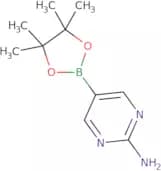
CAS:Producto controladoPlease enquire for more information about 2-Amino-1-(2,3-dihydro-benzofuran-5-yl)-ethanol including the price, delivery time and more detailed product information at the technical inquiry form on this pageFórmula:C10H13NO2Pureza:Min. 95%Peso molecular:179.22 g/mol2-Aminopyrimidine-5-boronic acid pinacol ester
CAS:2-Aminopyrimidine-5-boronic acid pinacol ester is a boronic acid derivative that has been shown to inhibit the activity of protein kinase C. This compound is also an effective linker for cross-coupling reactions and has a low reactivity with nucleophiles, which makes it safer than other boronic acids. 2-Aminopyrimidine-5-boronic acid pinacol ester has been shown to be potent against cancer cells in vitro and in vivo and synthetic cells. 2-Aminopyrimidine-5-boronic acid pinacol ester inhibits the growth of cancer cells by binding to the ATP site on protein kinase C, thereby inhibiting its function.
Fórmula:C10H16BN3O2Pureza:Min. 95 Area-%Forma y color:PowderPeso molecular:221.06 g/mol





![[(4-Methyl-1,3-thiazol-2-yl)methyl]amine dihydrochloride](/_next/image/?url=https%3A%2Fstatic.cymitquimica.com%2Fproducts%2F3D%2Fthumb-webp%2FFM124176.webp&w=3840&q=75)
![1,4-Bis[4-(di-p-tolylamino)styryl]benzene](/_next/image/?url=https%3A%2Fstatic.cymitquimica.com%2Fproducts%2F3D%2Fthumb-webp%2FFB75808.webp&w=3840&q=75)
![(2S,3S)-5-[2-(Dimethylamino)ethyl]-3-hydroxy-2-(4-methoxyphenyl)-2,3-dihydro-1,5-benzothiazepin-4-…](/_next/image/?url=https%3A%2Fstatic.cymitquimica.com%2Fproducts%2F3D%2Fthumb-webp%2FFD45531.webp&w=3840&q=75)

![3-[(Dimethylamino)methyl]benzoic acid hydrochloride](/_next/image/?url=https%3A%2Fstatic.cymitquimica.com%2Fproducts%2F3D%2Fthumb-webp%2FFD124093.webp&w=3840&q=75)